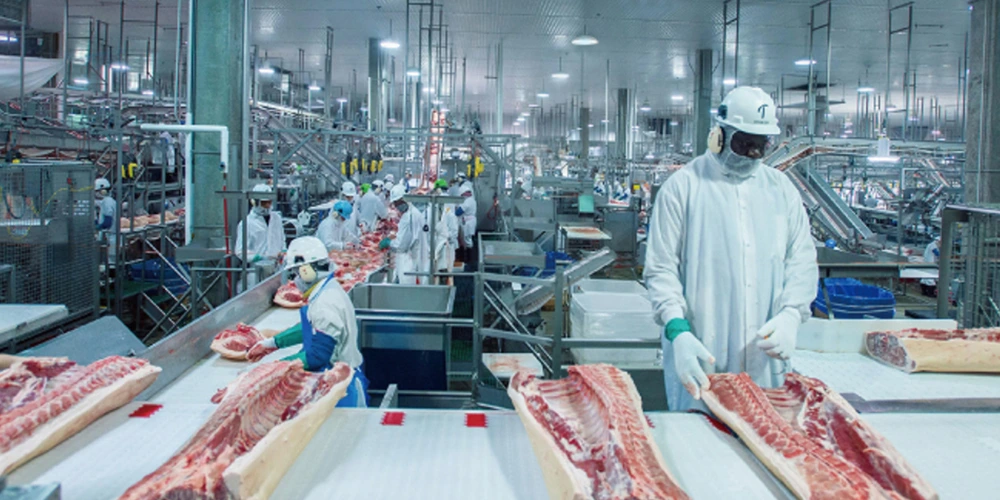
For a food processing plant, the floor plan is rarely one uniform open space. It’s often a mix. An open receiving or holding area here, a long conveyor or cutting line there, a packing corridor somewhere else, all under the same roof.
The generic advice, use a UFO high bay for tall, open spaces and a linear high bay for shorter aisle-shaped areas, still points in the right direction. But for food processing lighting, ceiling height is only part of the decision.
The better approach is to choose between round and linear high bay lights based on how the space is used and where each fixture type is most exposed to water, cleaning chemicals, and washdown conditions. So, a food processing facility may need both types.
UFO vs Linear High Bay for Food Processing Plants
|
|
UFO High Bay |
Linear High Bay |
|
Shape/beam pattern |
Symmetric beam, concentrated straight down |
Long and narrow, elongated beam along its length |
|
Best fit in a food plant |
Receiving docks, storage and holding rooms, freezers, chillers, and larger packaging spaces |
Conveyor belts, trimming lines, processing lines, and packing corridors |
|
Main washdown weak point |
Lens material and exposed mounting screws |
End caps and their seal |
What Is the Core Difference Between UFO and Linear High Bays?
Both round and linear high bay lights must survive daily high-pressure, high-temperature washdowns with aggressive chemicals in food processing plants. They must also present a smooth, crevice-free surface that does not trap food residue or harbour bacteria.
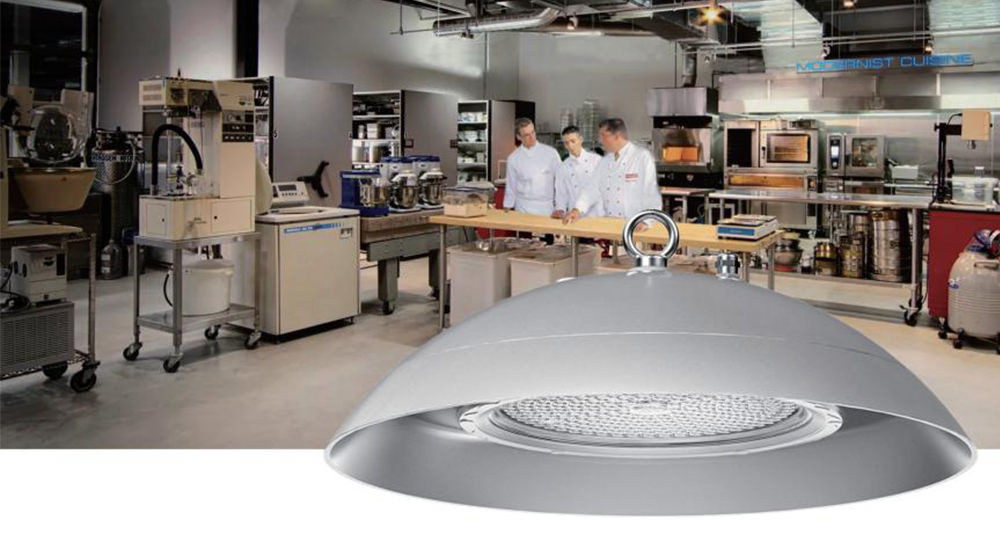
Our HB06 (round high bay) and LHB44 (linear high bay) are built to these rules. The core differences between them are the photometric geometry and housing shape.
Round high bay lights utilize concentric SMD LED arrays or circular optic engines to project a radially symmetrical beam. Light projects evenly in all horizontal directions, providing multi-angle overlap that softens shadows.
Linear high bays arrange LEDs in parallel rows along an extruded or fabricated body, producing an elongated, rectangular footprint. This matches directional processing equipment, throwing light directly along conveyor belts without wasting lumens on aisles or side walls.
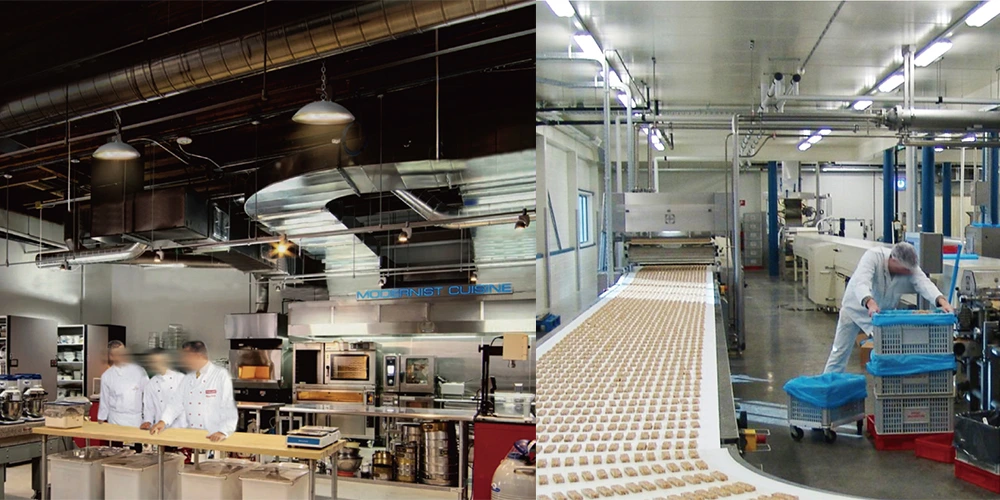
Long Production Lines: Linear High Bays
For line-based areas such as conveyor belts, trimming lines, processing lines, and packing corridors, operators often work side-by-side along a defined production path. Equipment, conveyors, and workers can create shadows on the task area, making it harder to see products clearly and increasing the risk of errors.
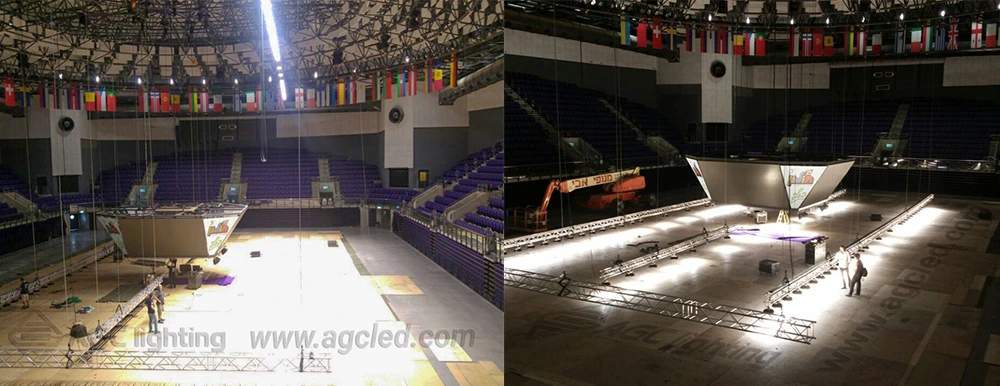
Linear high bays are well suited to these spaces because their light distribution matches the long, narrow layout. Installed parallel to the production line, they provide continuous illumination along the length of the workstation instead of concentrating light in isolated spots.
This layout also helps maintain more consistent light levels between fixtures and along the working surface.
Open Floor Areas: UFO High Bays
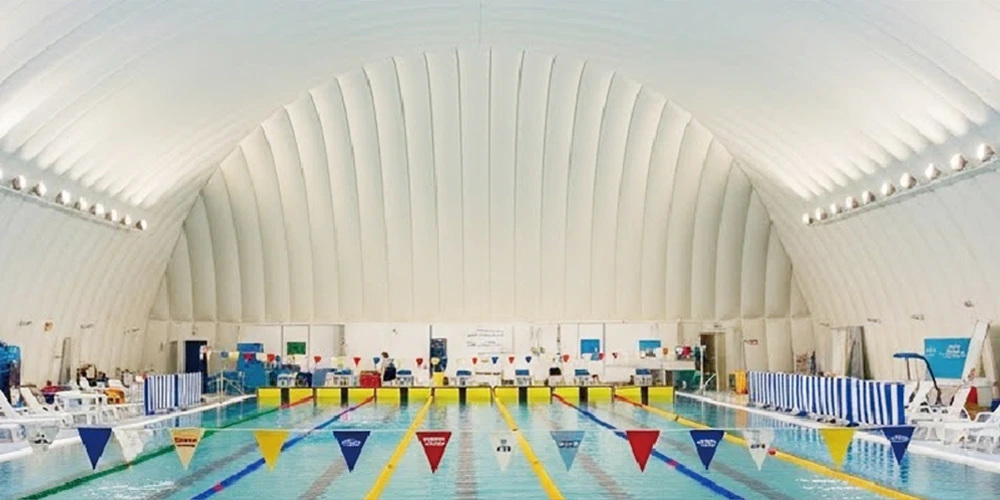
Open areas such as receiving docks, storage and holding rooms, freezers, chillers, and larger packaging spaces are closer to a warehouse-style layout. These areas generally have wider, unobstructed floor space.
UFO high bays are a practical choice for these applications because their broad, symmetrical light distribution works well with a regular grid layout.
Proper spacing is important. When fixtures are laid out as a coordinated lighting system, light from adjacent high bays helps maintain illumination between fixtures and reduces dark areas as workers move through the space.
Hygiene, Washdown, and NSF Sanitation Considerations
In food and beverage operations, mechanical design is just as critical as light output. Fixtures installed in wet or washdown areas may be exposed to high-pressure water, elevated temperatures, condensation, and aggressive cleaning chemicals. The enclosure, seals, lens, fasteners, and materials all need to be selected for the actual cleaning conditions.
For wet food-processing areas, key cleanability and durability considerations include:
- Water Shedding: Housings must have downward angles to prevent puddling.
- Smooth Extrusions: Zero exposed heat-sink fins where bio-matter lodges.
- Fastener Elimination: Screwless front frames prevent bacteria harboring.
- Shatterproof Optics: PMMA or polycarbonate lenses avoid glass hazards.
UFO High Bays: A Practical Shape for Cleanability
The smooth, sloped conical body of a food-grade UFO high bay naturally drains rinse water, sanitizing foams, and condensation. With no external cooling fins and a compact circular body, cleaning crews can wash down the fixture from the ground without chemical foam clinging to top crevices.
But shape alone does not make a high bay suitable for food processing.
A cracked glass lens on a fixture directly above a production line can create a foreign-material contamination risk. Exposed metal screws that back out or corrode over time carry the same risk.
That is why our HB06 high bay is designed for food-processing applications with a polycarbonate cover and recessed screws. The design reduces exposed hardware and helps protect the fixture from the conditions associated with routine cleaning.
Linear High Bays: Pay Attention to the End Caps
Linear high bays can provide excellent coverage along long production lines, but their construction deserves particular attention in wet processing areas.
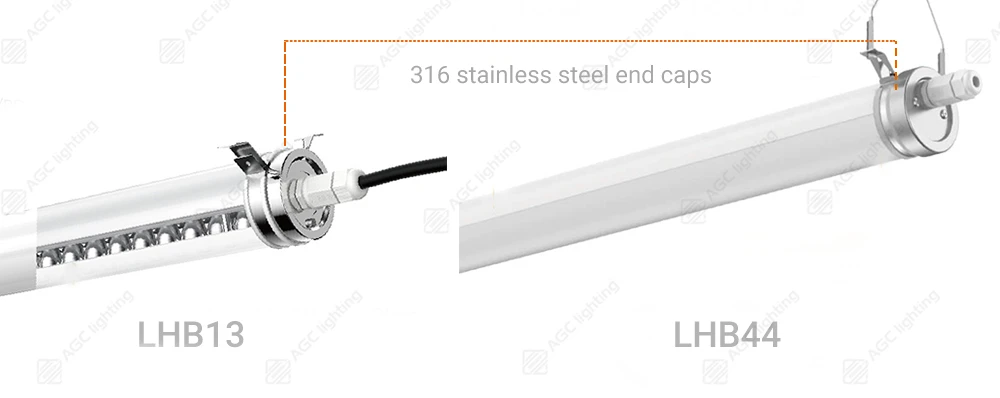
The main housing may be easy to clean, while the end caps and the joints around the seals can become more vulnerable to repeated washdown.
Over time, a corroded end cap can allow water to enter the housing. For this reason, evaluating a linear high bay should go beyond checking its IP rating. Inspect the sealing system, end-cap construction, fasteners, materials, and cable entries, and make sure they are appropriate for the facility's actual cleaning process.
To solve the problem, our LHB13 and LHB44 use 316 stainless steel end caps to improve corrosion resistance in washdown environments.
Need lighting solutions for food processing plants? Contact us. We can recommend the best solution to fit your needs.