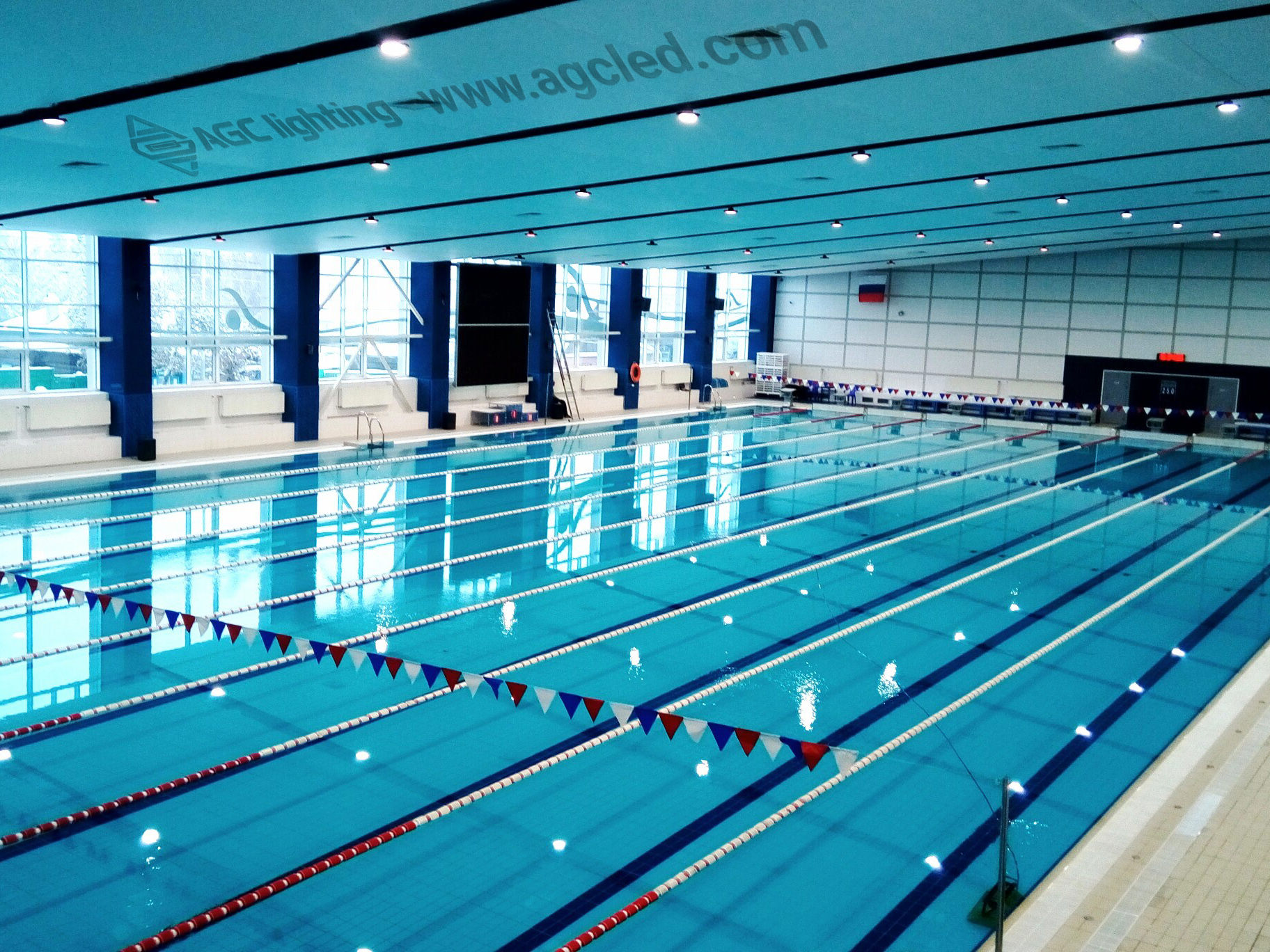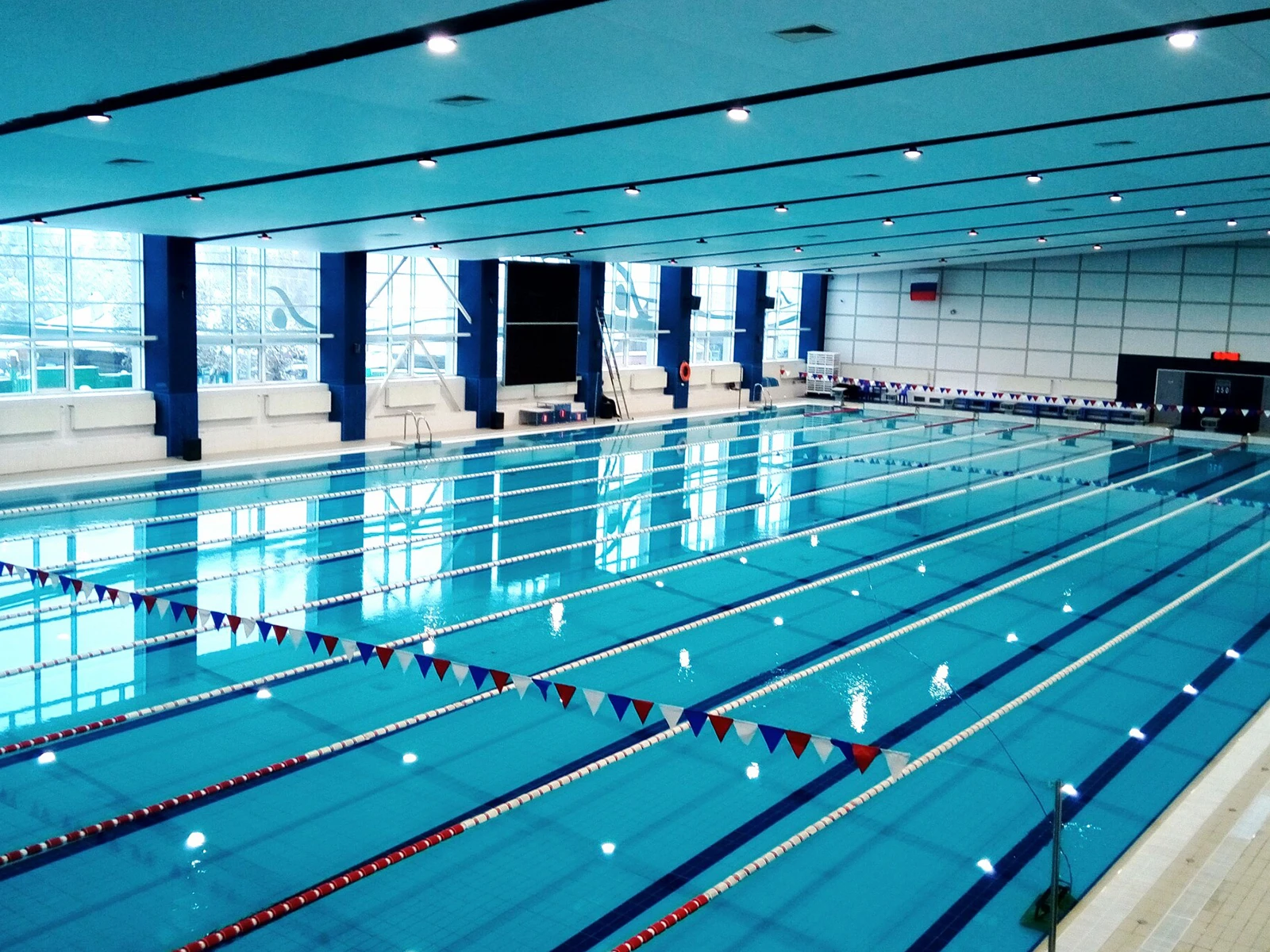
Designing lighting for an indoor pool involves much more than just reaching brightness levels. You have to provide excellent visibility while managing reflective water surfaces and a notoriously corrosive environment. AGC provides lighting solutions that are comfortable, efficient, and anti-corrosion.
Solving Glare with Indirect Lighting
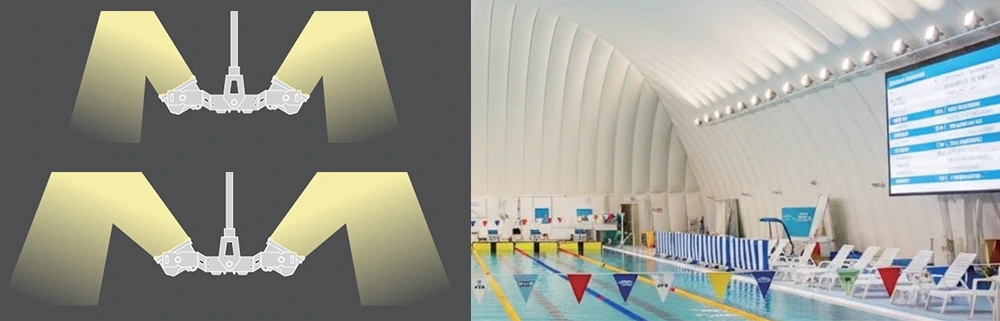
Direct lighting often turns the water into a glaring mirror. This surface reflection is uncomfortable for swimmers, but more importantly, it creates dangerous blind spots for lifeguards trying to see the bottom of the pool.
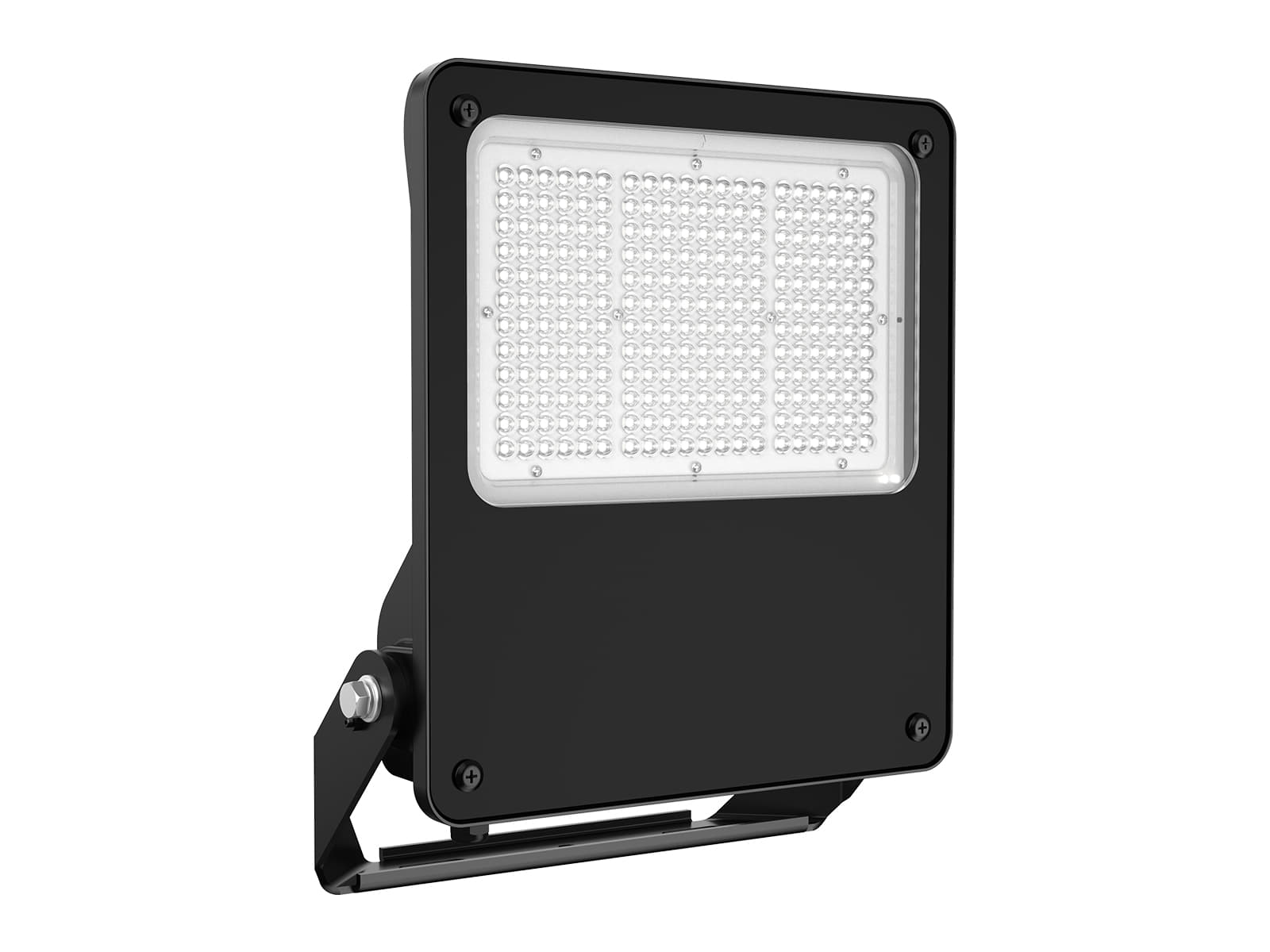
The most effective way to solve this is through indirect lighting. Instead of pointing fixtures down at the water, our SP60 LuminaFlex aim light upward. By reflecting the light off the ceiling or structural surfaces, we create a soft, uniform, and glare-free glow. This removes the direct light source from the line of sight, ensuring lifeguards have a clear, unobstructed view of the pool floor to maximize swimmer safety.
Protecting Against the Corrosive Environment
The indoor pool environment is uniquely harsh due to highly oxidizing chlorine ions in the air. Standard fixtures degrade quickly in these conditions, which is why aquatic lighting requires industrial-grade resilience.
Our solutions are built for this specific environment by utilizing special anti-corrosion surface treatments. We offer solutions capable of meeting C5 anti-corrosion standards to ensure long-term durability in even the most aggressive environments.
We also provide an option to replace the standard breathing vent with a specialized gland to keep the luminaire completely sealed against chlorine-heavy air, ensuring outstanding durability with minimal maintenance.
Optimized Illumination and Efficiency
Indoor pools often lack natural light and require long operational hours. Our products provide the high lumen output and optical efficiency needed to ensure optimal visibility throughout the facility. By choosing the right distribution, including asymmetric and symmetric options, we ensure light is directed exactly where it is needed. This helps facilities achieve required light levels while effectively managing energy consumption.