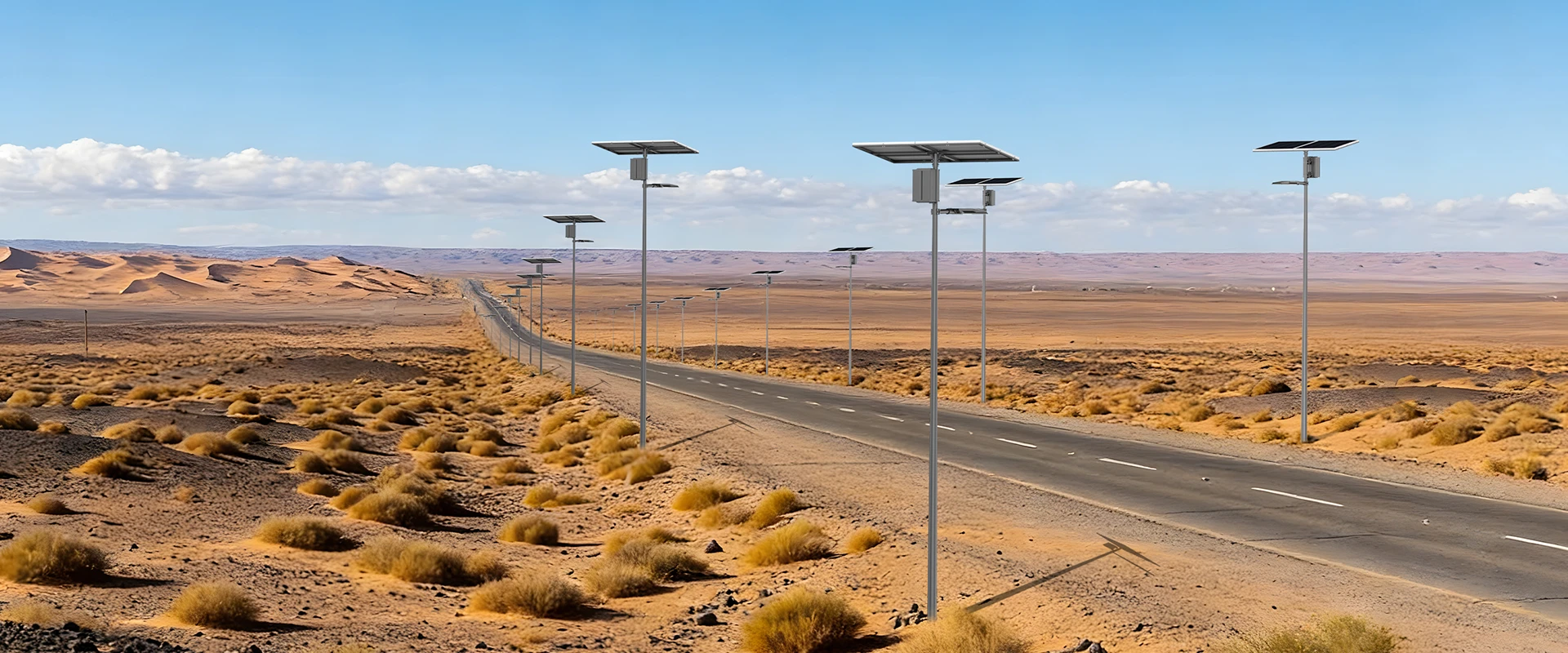
Why Desert Environments Are Ideal for Solar Lighting
With abundant sunshine and limited or no access to electrical grid infrastructure, desert regions are ideal for solar lighting.
Abundant Solar Resources
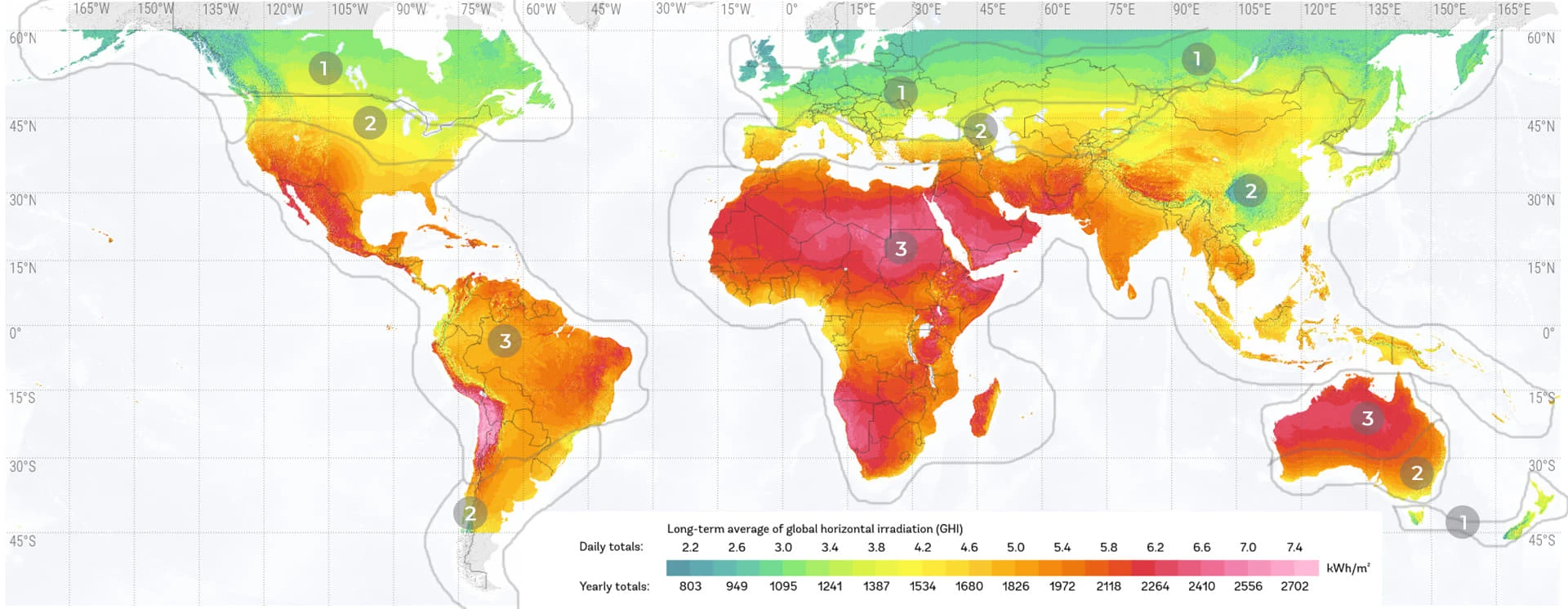
Desert regions receive exceptional levels of solar radiation, making them among the most favorable locations worldwide for solar-powered systems.
- Regions near the equator receive higher solar radiation year-round
- Low humidity and clear skies optimize panel efficiency
Remote Locations Without Grid Access
Most desert areas are far from urban centers with limited or no electrical grid infrastructure. Installing conventional AC power lines is prohibitively expensive and logistically challenging.
- Solar lighting systems are require no trenching or wiring
- No ongoing electricity costs
Desert Environmental Challenges
While deserts offer abundant sunshine, harsh environmental conditions require specialized equipment and intelligent design.
Extreme Heat and Temperature Swings
Temperatures frequently exceed 50°C, with daily swings of 15–30°C, stressing batteries and electronics. Lead-acid batteries degrade rapidly in heat, while LiFePO₄ batteries remain stable above 50°C. Poor heat dissipation can cause LED dimming or automatic shutdown.
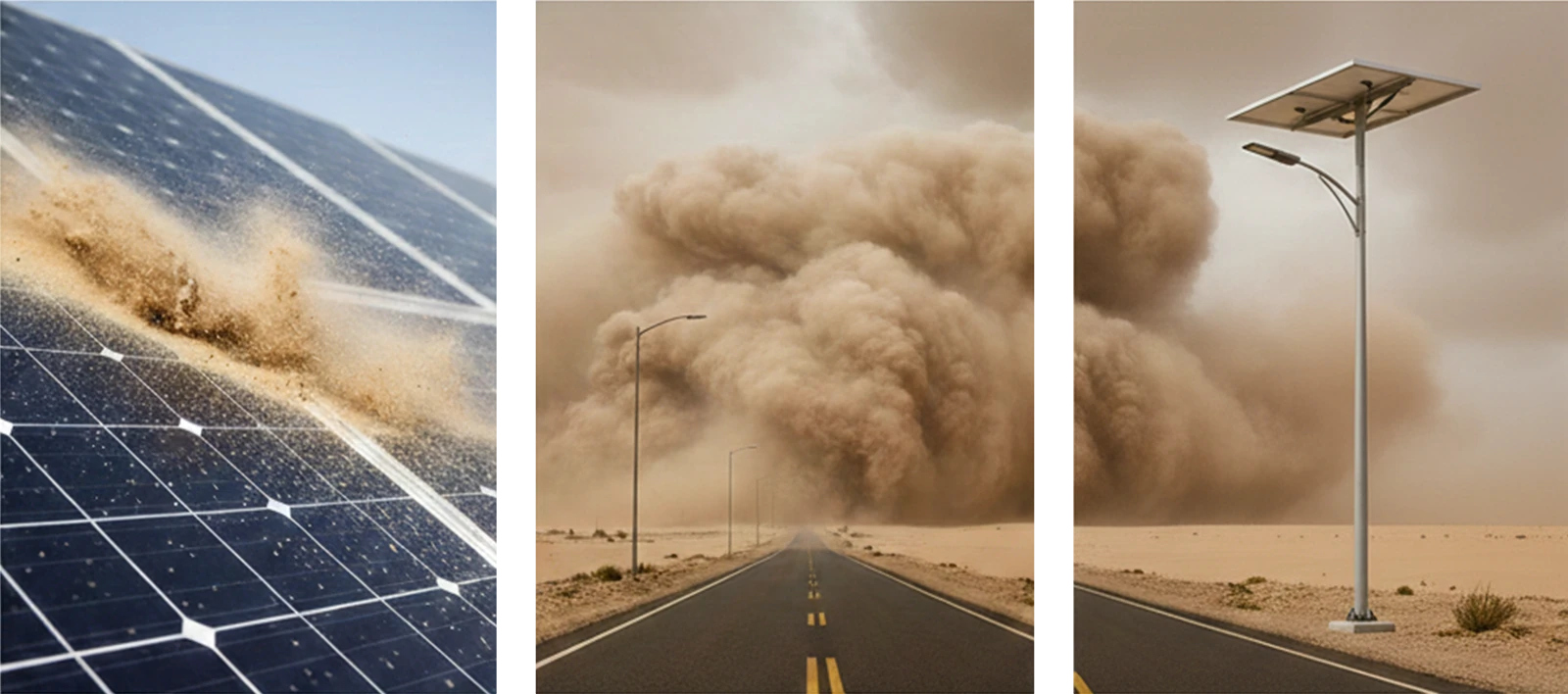
Dust Accumulation and Sandstorms
Dust and sand reduce panel efficiency and can cause long-term surface damage. NREL reports soiling-related power losses of up to 50% annually in parts of the Middle East. Sandstorms can cover panels within minutes, severely limiting power generation
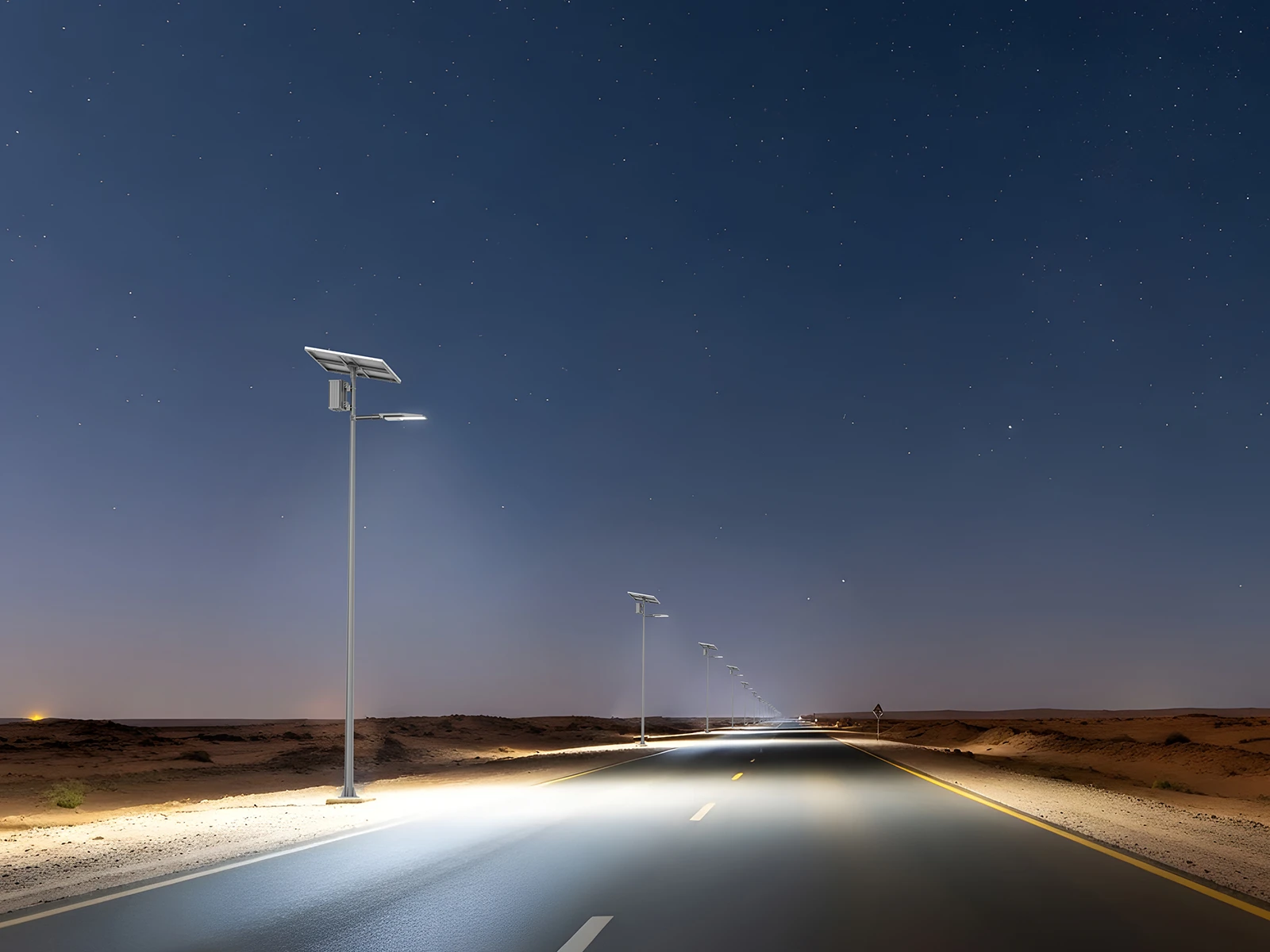
Engineered for Desert Performance
We offer both all-in-one and all-in-two solar lighting configurations to suit different needs. Premium components, intelligent design, and innovative features ensure reliable illumination in desert environments.
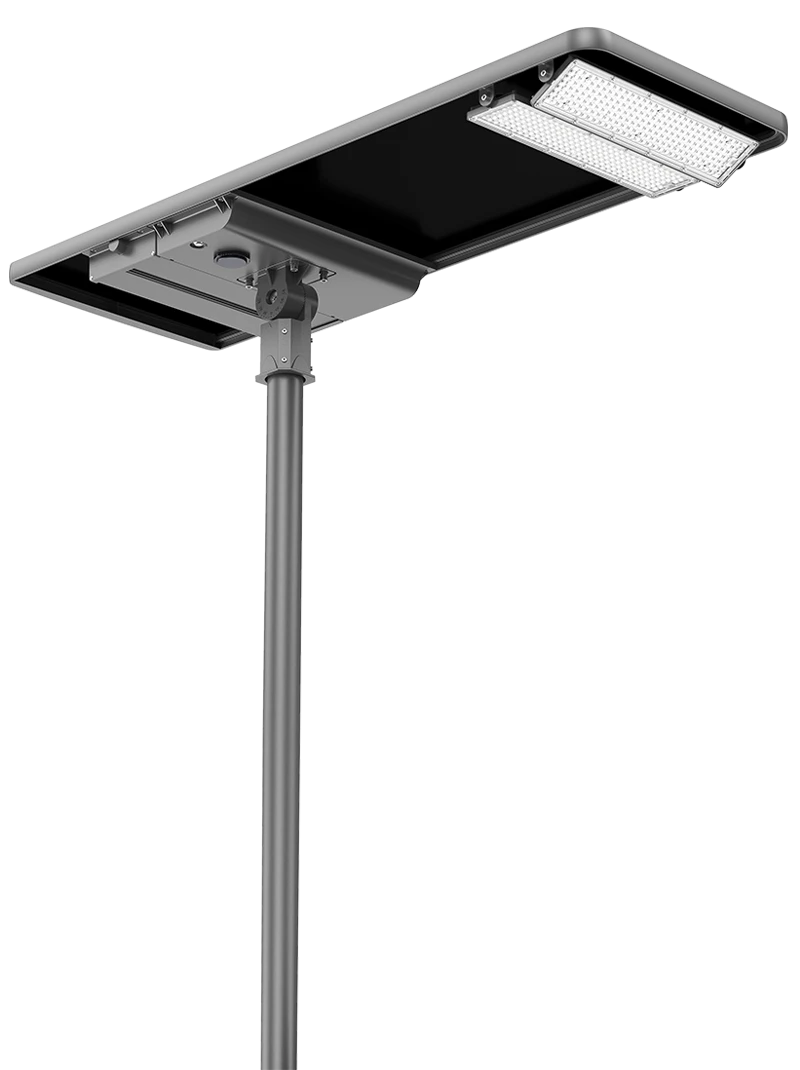
All-in-One Solar Lights
Compact units combining solar panel, battery, controller, and LED light source into a single fixture.
- Simple and fast installation
- Often equipped with motion sensors for longer operating time
- Ideal for residential areas, industrial estates, and locations with lower power requirement
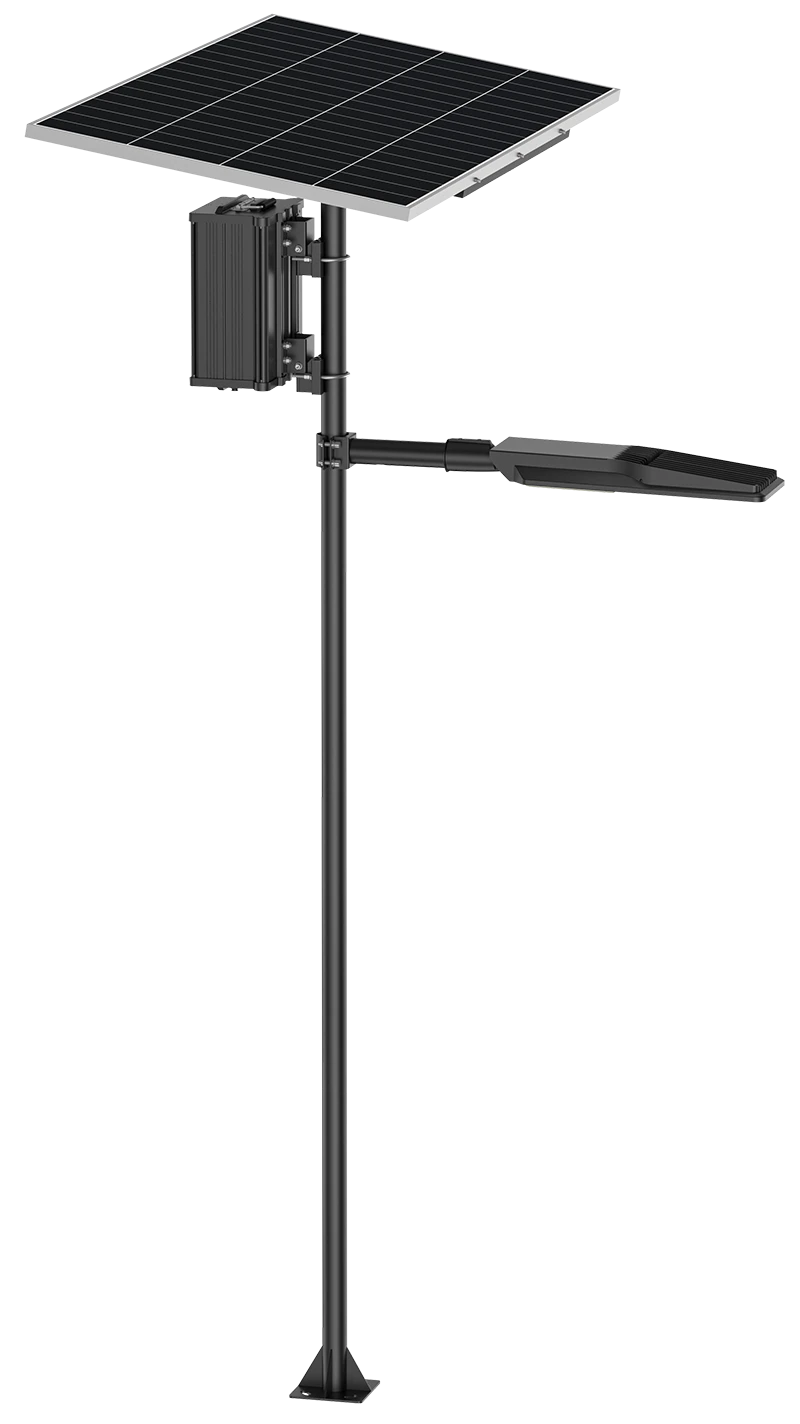
All-in-Two Solar Lights
Separated panel and luminaire configuration allows flexible positioning and higher power output.
- Optimized panel placement for maximum solar exposure
- Higher power output capability
- Ideal for highways, parking lots, high-traffic areas, and applications requiring higher illuminance level
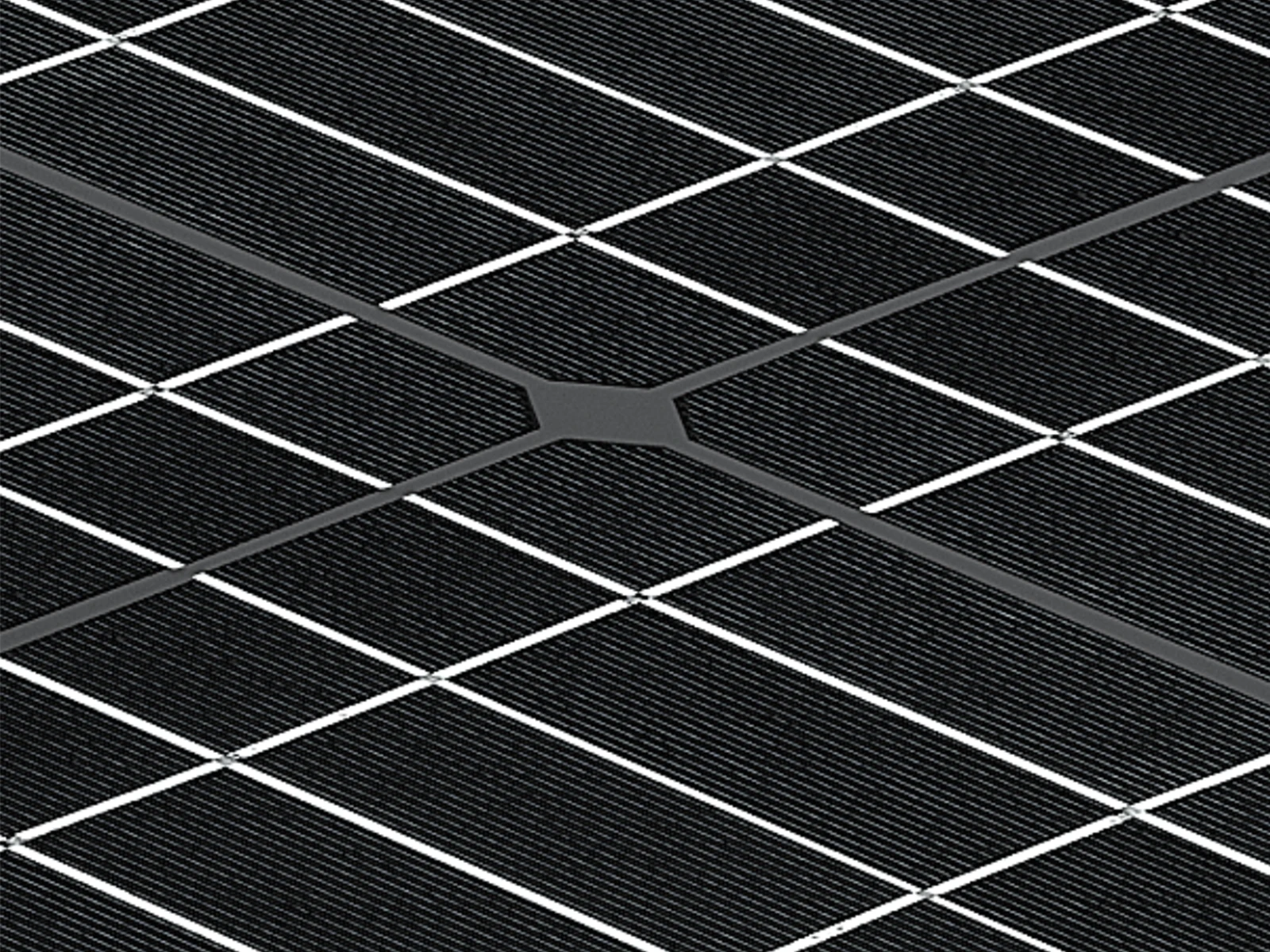
Monocrystalline Silicon Solar Panels
- High-efficiency monocrystalline panels deliver strong charging performance.
- Reinforced anti-abrasion structures with ultra-hard nano-ceramic coatings (Mohs hardness 7+) resist high-speed sand impact.
- Adjustable, heavy-duty mounting brackets optimize tilt angles, allowing sand to slide off naturally while maximizing solar exposure.
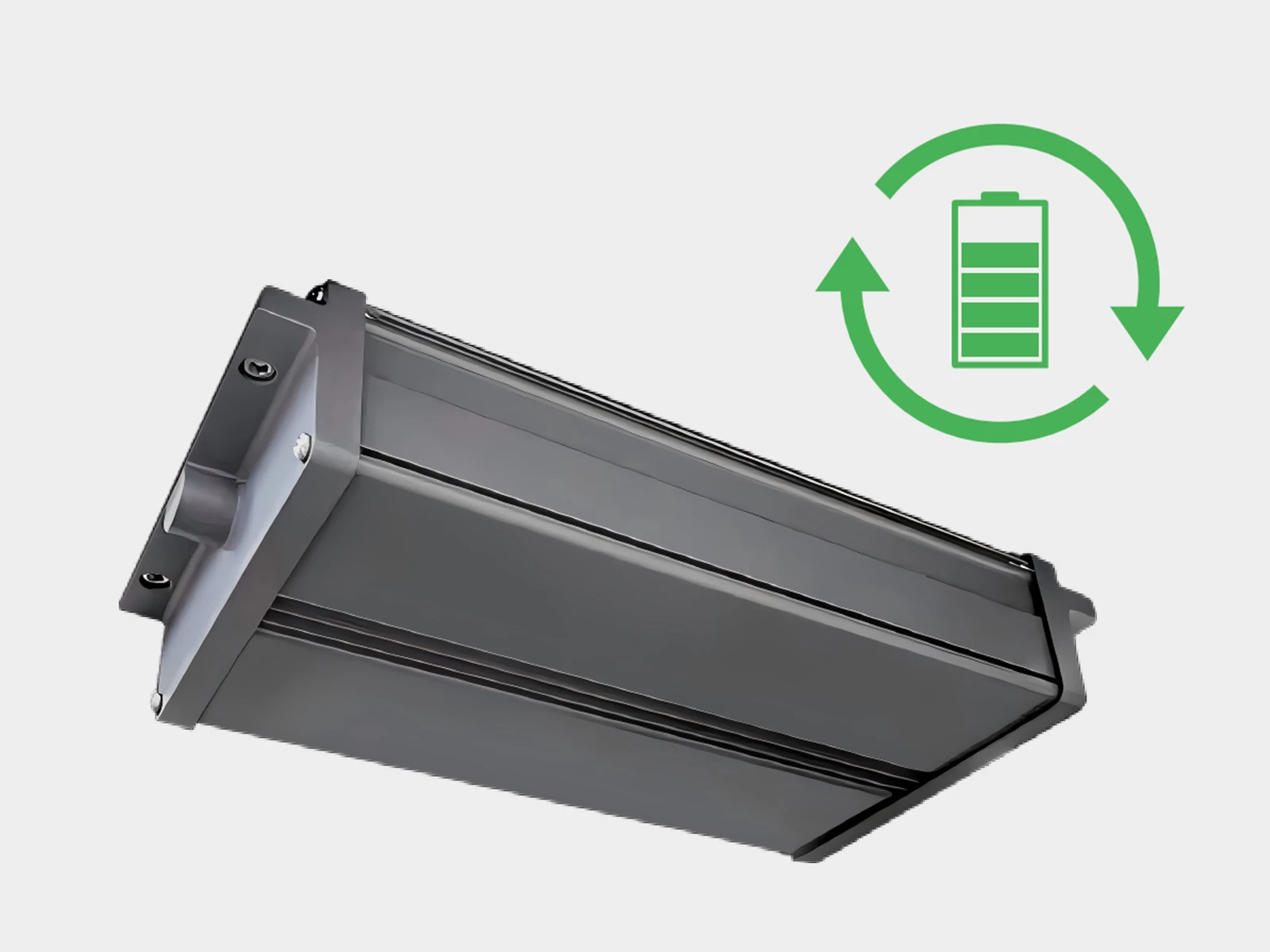
LiFePO₄ Batteries
- High energy density extends nighttime operation and reduces replacement needs.
- Fast charging adapts to changing sunlight conditions.
- Built-in protection against overcharging, over-discharging, and overheating meets international safety standards.
- Seamless die-cast aluminum housings prevent sand ingress and provide excellent dust and abrasion resistance.
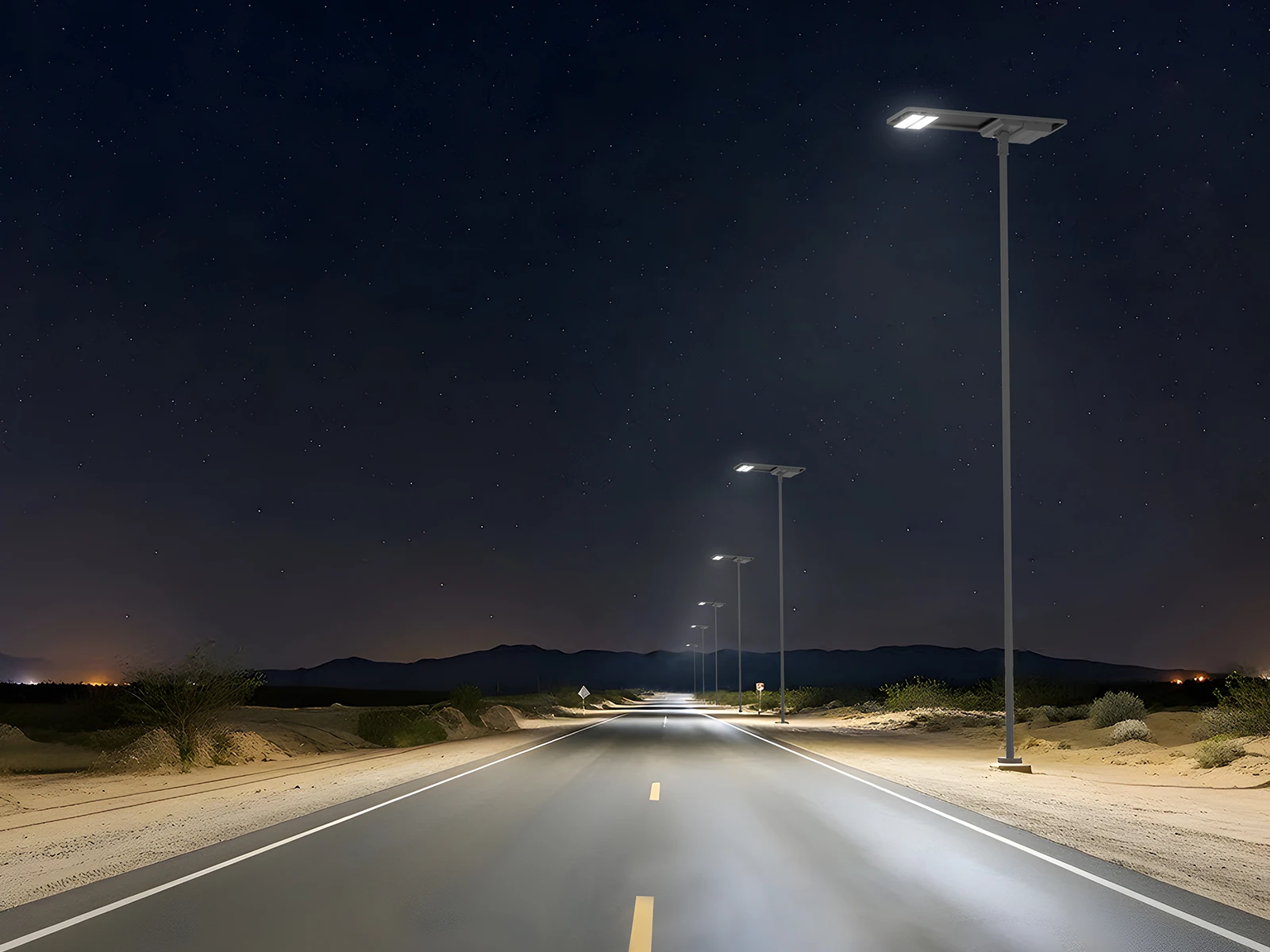
High Efficacy Up to 200lm/W
- Light output up to 200 lm/W delivers about 40% higher efficiency than conventional fixtures.
- Lower power demand allows 30–40% smaller solar panels and batteries, reducing cost and weight.
- Compact, lightweight components improve resistance to severe sandstorms.
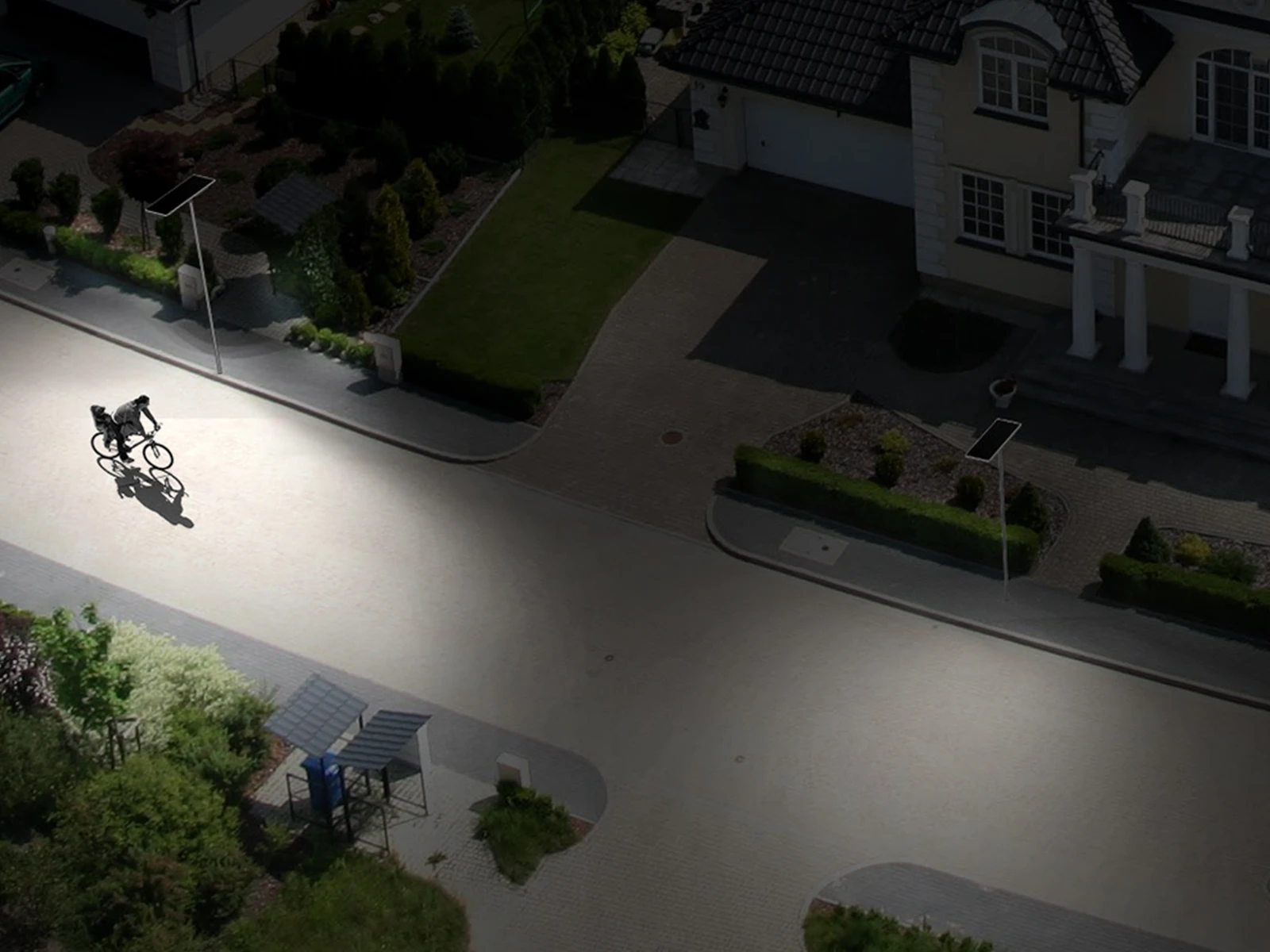
Intelligent Control Systems
- Smart controllers protect batteries by managing charging and discharging.
- PIR and microwave sensors adjust brightness based on activity, reducing energy use during low-traffic periods.
- Even in extended cloudy conditions, systems operate for 3–5 nights.
- Advanced optical design ensures uniform road illumination while minimizing light waste and light glare.
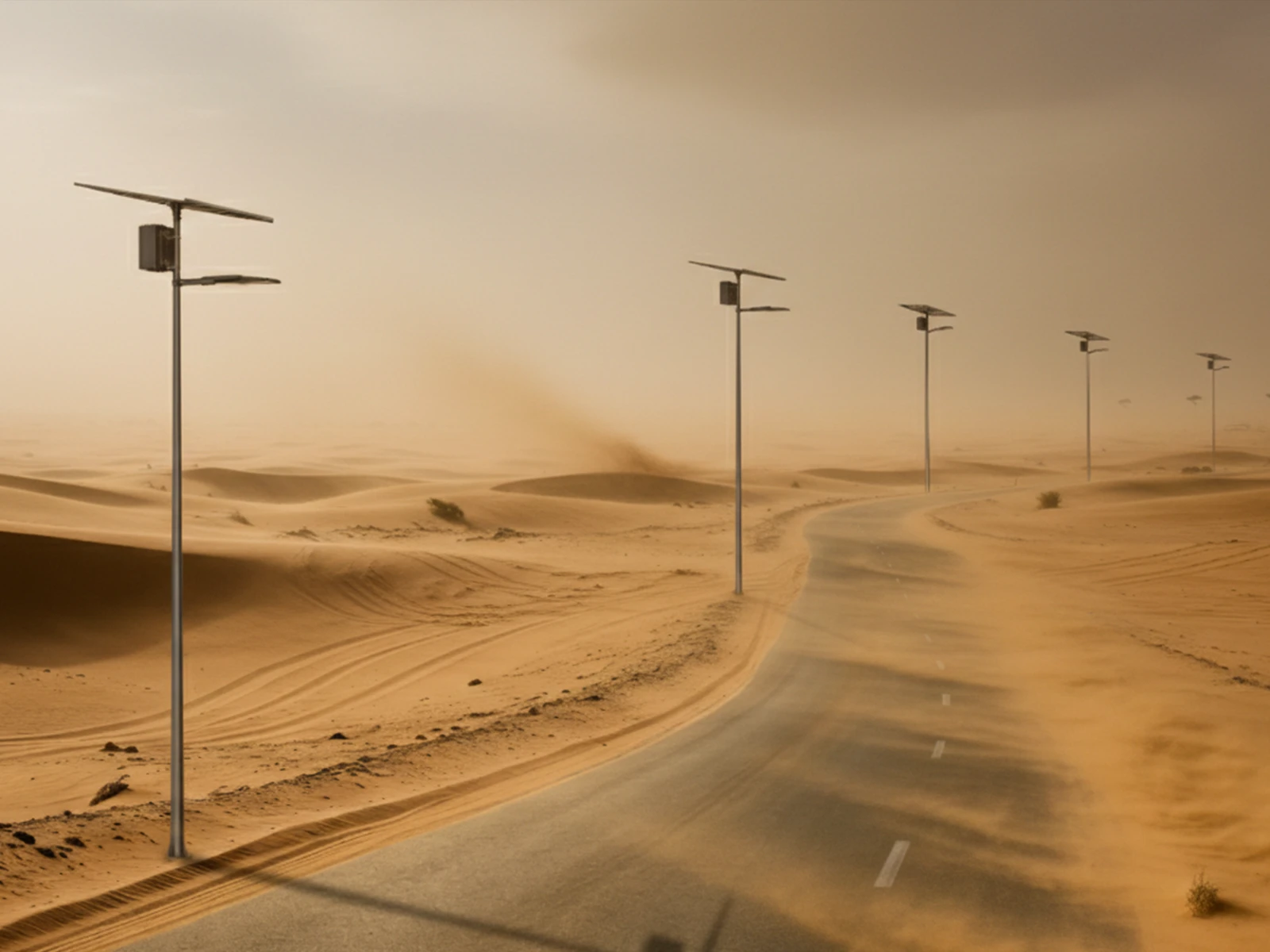
Structural Durability and Wind Resistance
- Poles and mounting brackets meet Grade 12 wind resistance standards.
- Robust structures withstand harsh weather, while deep-set concrete foundations ensure stability during sandstorms.