Solar Street Lights
Efficient solar street lights engineered for roads, highways, and parking areas. Featuring long-autonomy LiFePO4 batteries, MPPT controllers, and intelligent controls, they deliver reliable, multi-night illumination even through overcast weather.
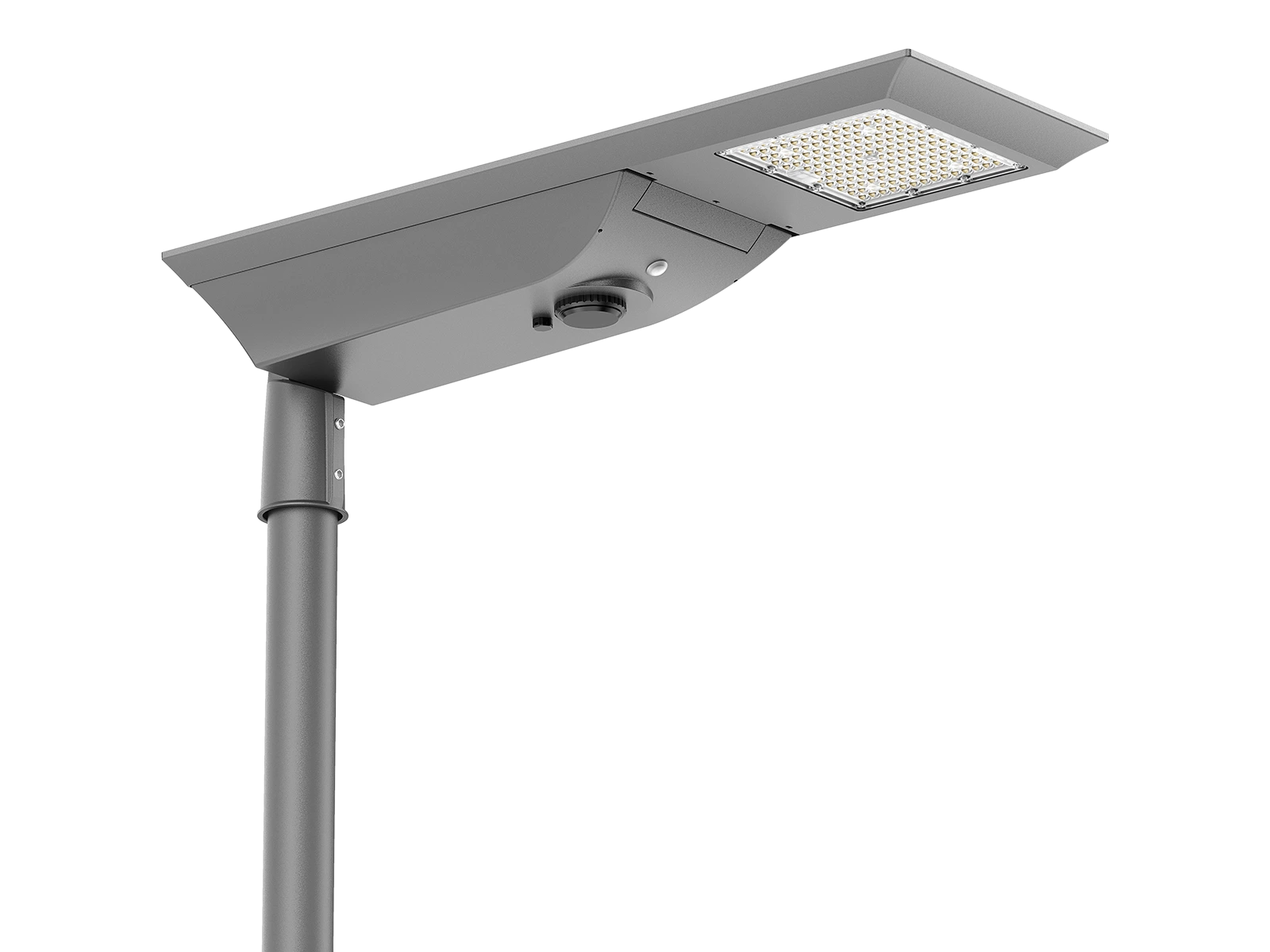
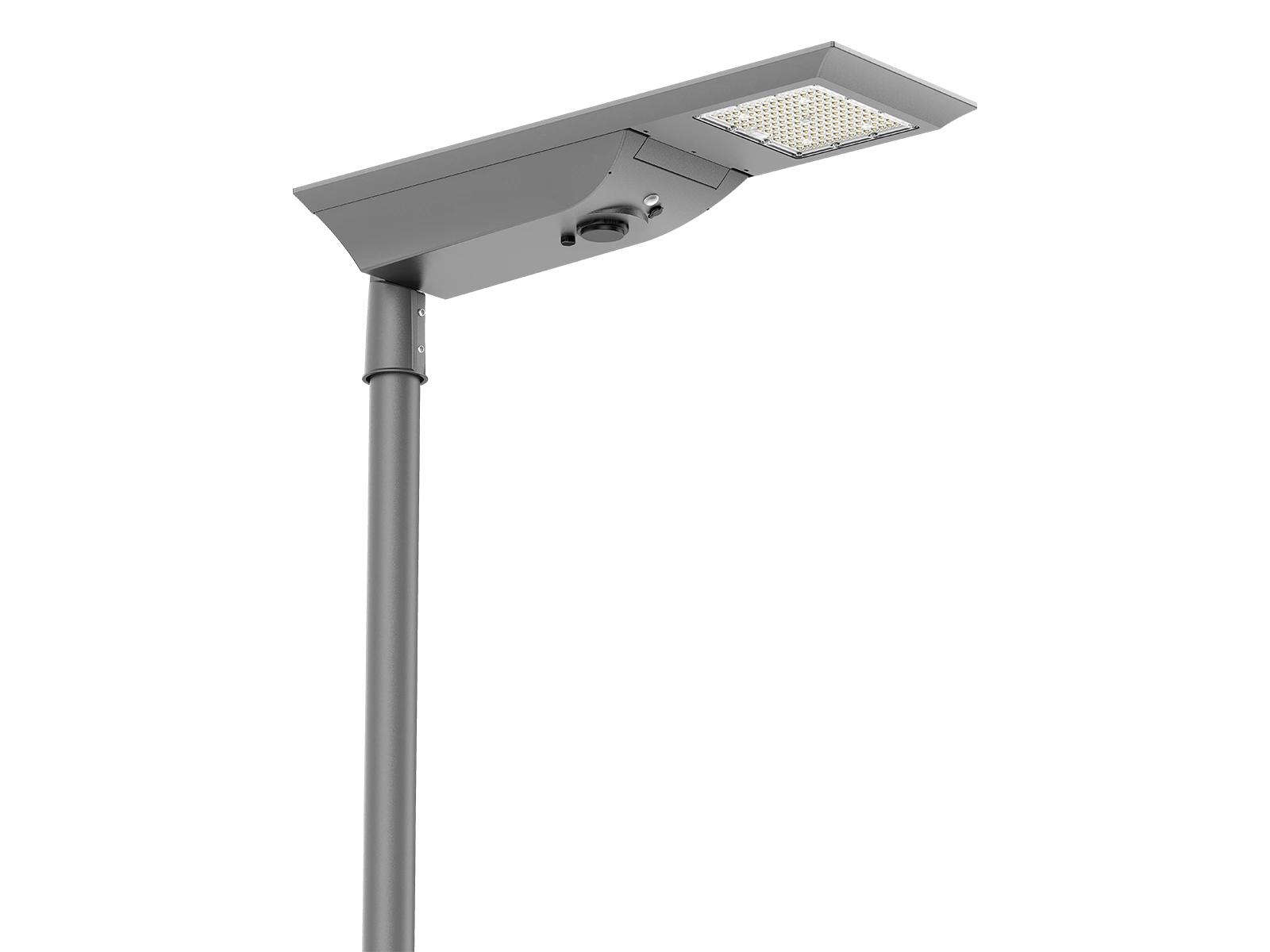
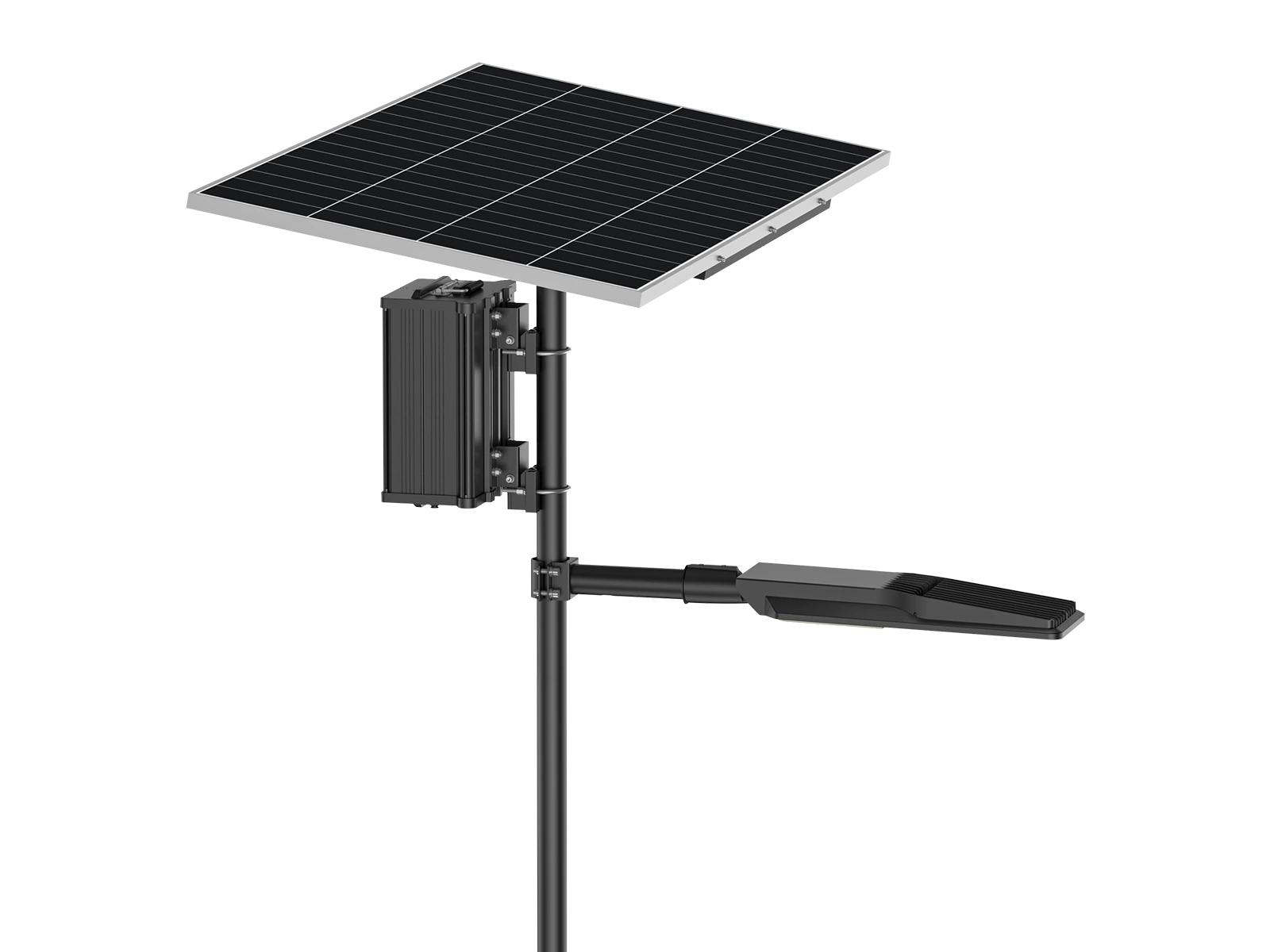
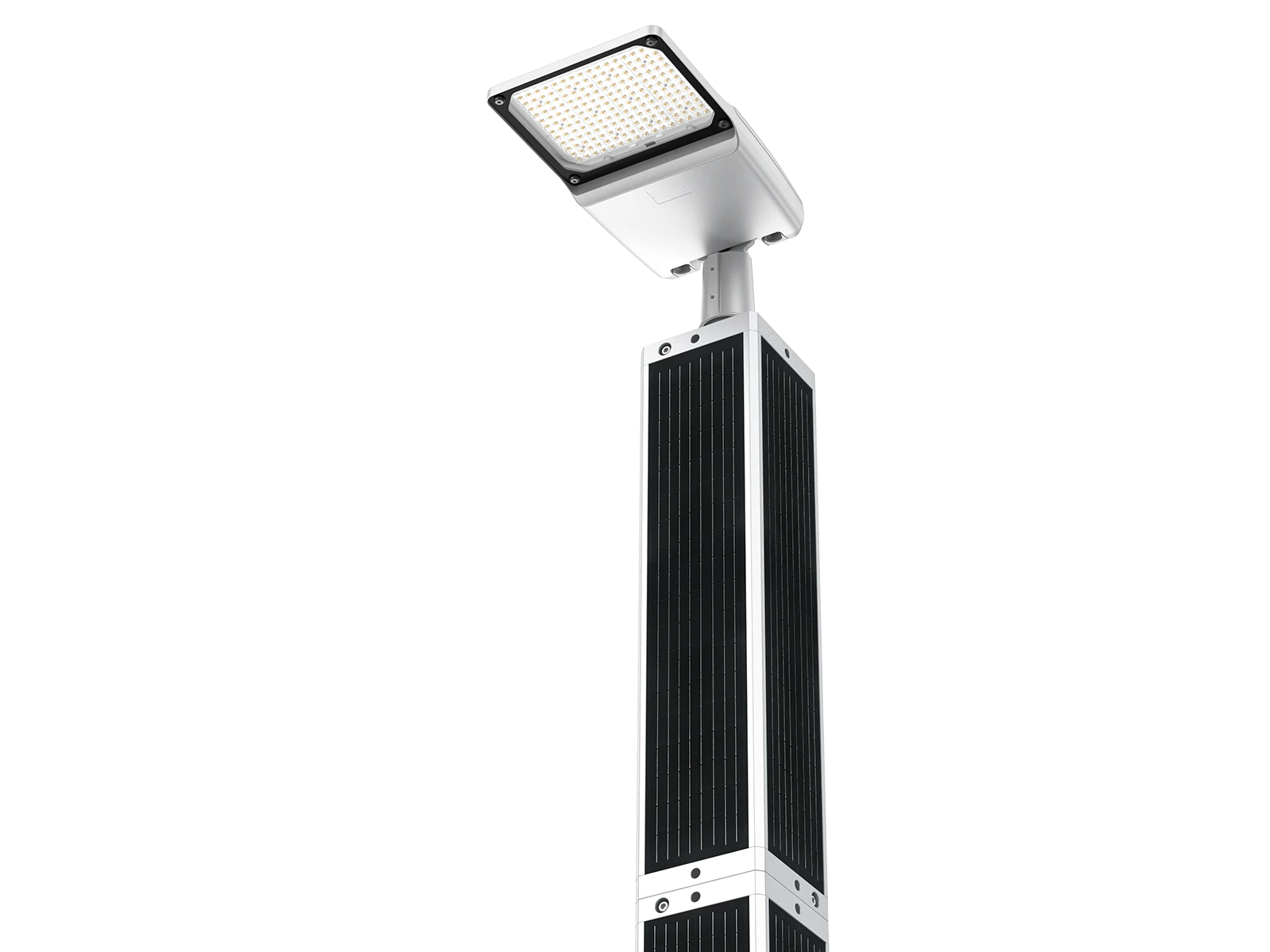
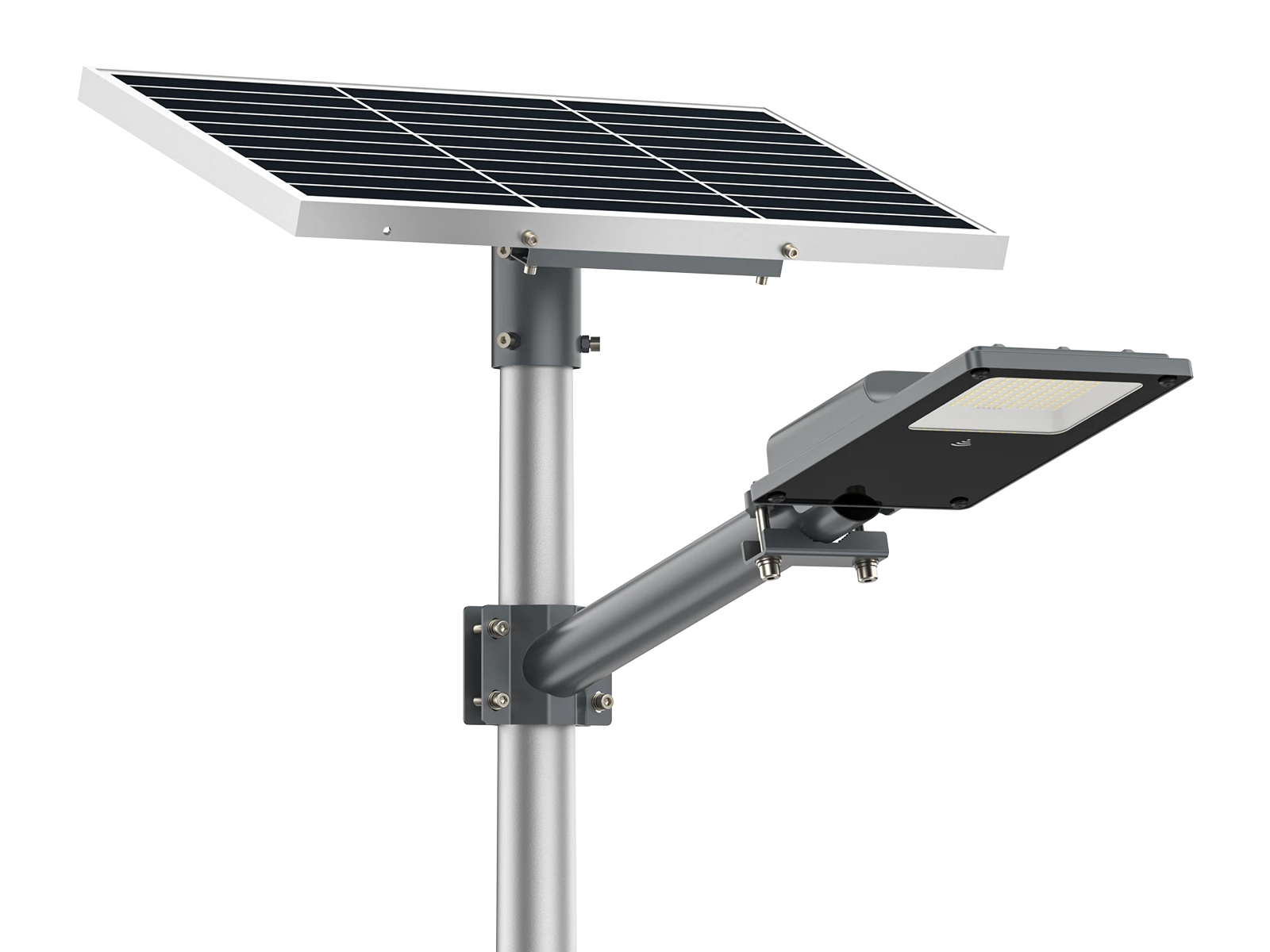

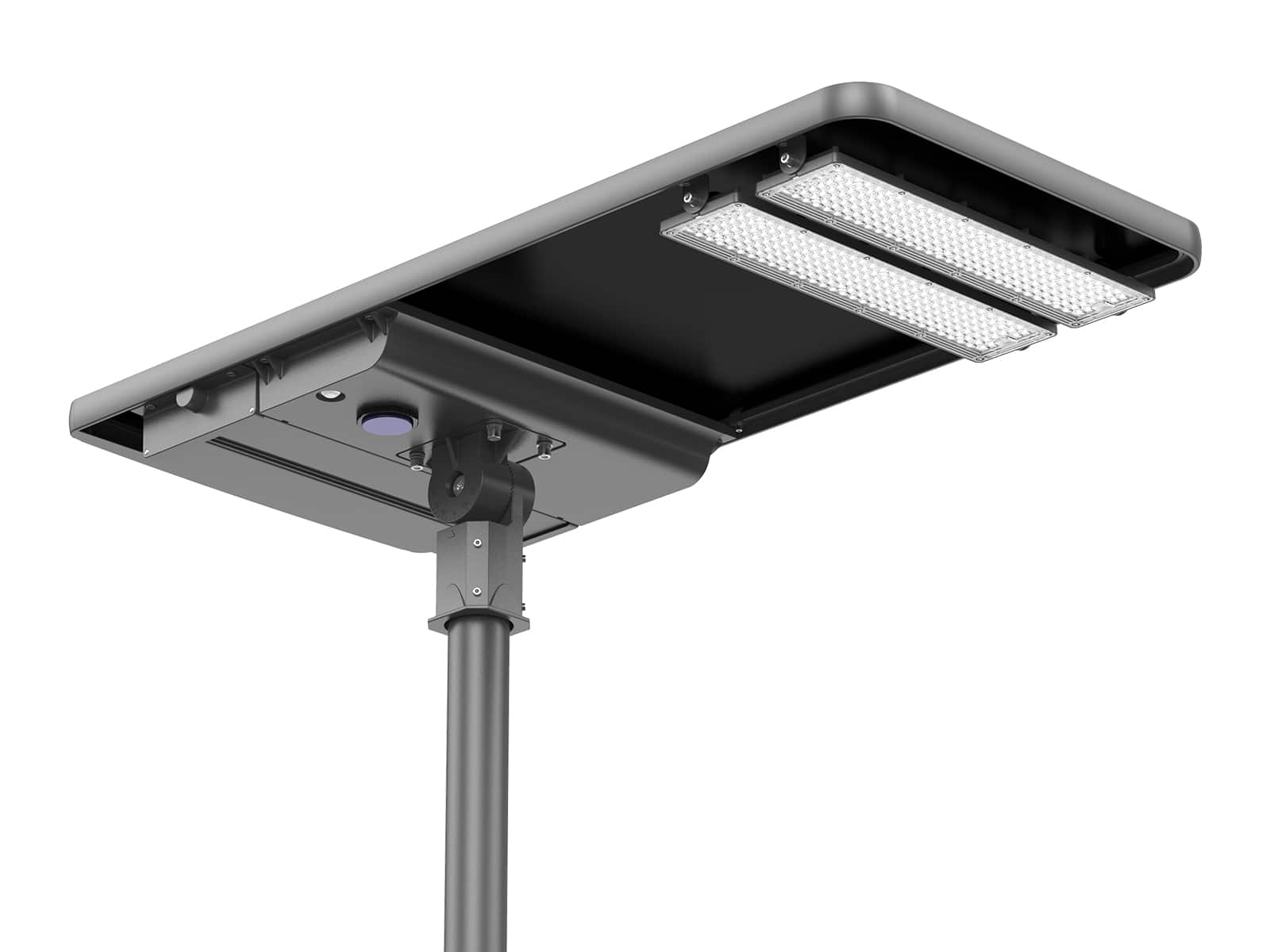
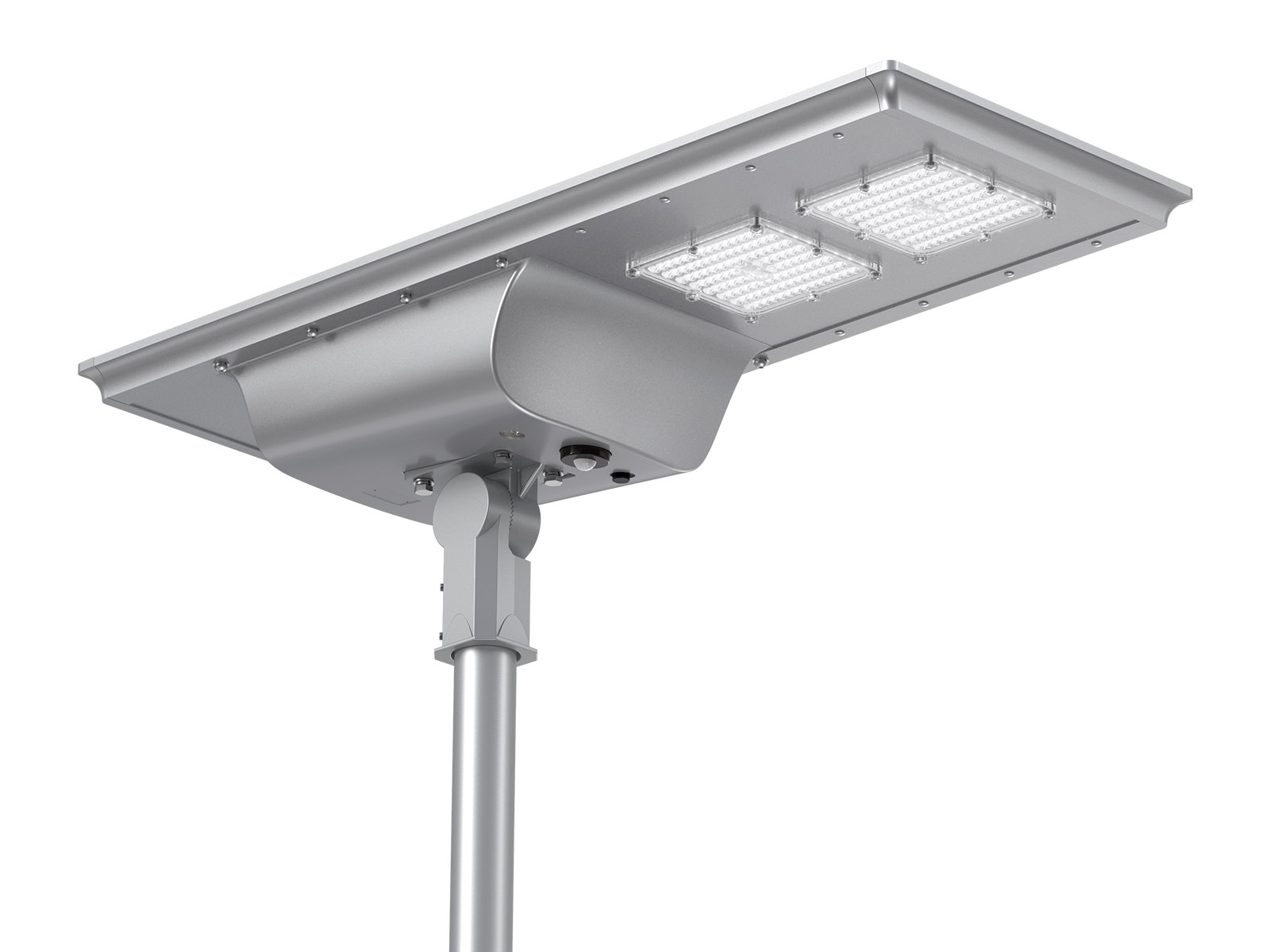
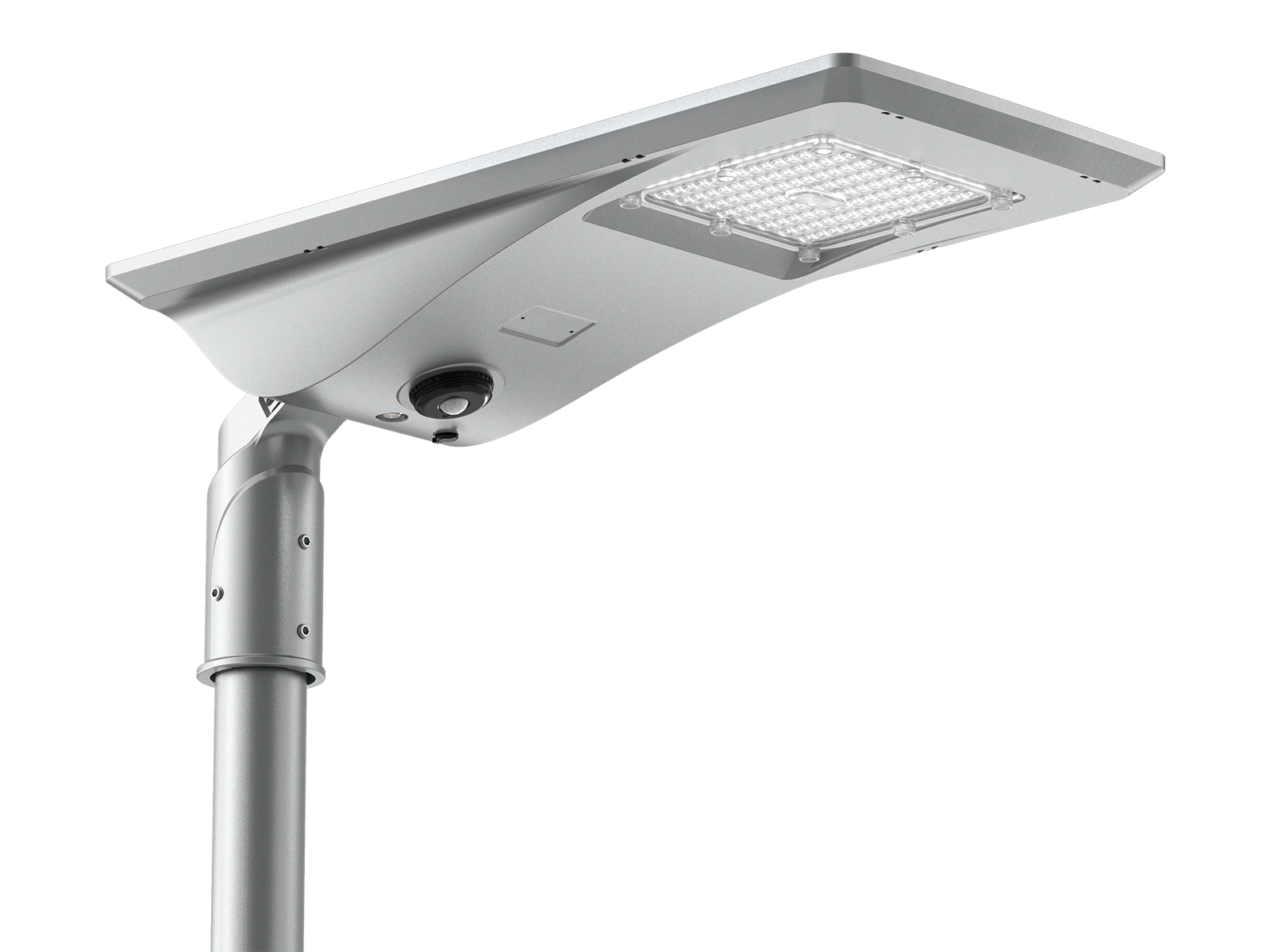
AGC solar street lights are designed for roads, pathways, parking areas, courtyards and other outdoor spaces where reliable lighting is required without a permanent grid connection.
We offer all-in-one, split and modular solar street light designs, with different power levels, battery configurations, optical options and control systems for different project requirements.
Street Lighting Classes Under EN 13201
Road lighting for motorised traffic is set by EN 13201, which sorts roads into classes M1 through M6. Class M1 is the most demanding, applied to high-speed, high-volume mainlines, while M6 applies to low-traffic rural or secondary access roads.
For mainlines and traffic corridors, road lighting adequacy is measured by road surface luminance (Lav) rather than horizontal illuminance alone. Correct optical distribution prevents dangerous driver fatigue and visual distortion.
| Class | Application | Average Luminance (Lav) | Overall Uniformity (U0) | Longitudinal Uniformity (Ul) | Max Glare (TI) |
|---|---|---|---|---|---|
| M1 | High-speed expressways, heavy traffic mainlines | 2.0 cd/m² | ≥ 0.40 | ≥ 0.70 | ≤ 10% |
| M2 | Major arterial roads, high traffic flow | 1.5 cd/m² | ≥ 0.40 | ≥ 0.70 | ≤ 10% |
| M3 | Secondary traffic routes, urban connectors | 1.0 cd/m² | ≥ 0.40 | ≥ 0.60 | ≤ 15% |
| M4 – M6 | Residential roads, low-speed access lanes | 0.3 – 0.75 cd/m² | ≥ 0.35 – 0.40 | ≥ 0.40 – 0.60 | ≤ 15% – 20% |
What each metric governs
Maintained Average Luminance (Lav)
Ensures adequate road surface brightness for driver vision at target speeds.
Overall Uniformity (U0)
Eliminates dark patches across the carriageway to maintain continuous background contrast.
Longitudinal Uniformity (Ul)
Prevents the “zebra effect”, distracting light-and-dark banding along the driving lane.
Threshold Increment (TI)
Limits disability glare from luminaire lenses to protect driver visibility.
Surround Ratio (EIR / SR)
Provides adequate illumination on shoulders and verges to reveal peripheral hazards.
Junctions, roundabouts and crosswalks fall under C-classes
At complex junctions, roundabouts, and pedestrian crosswalks, driver viewing distances shorten and visual directions shift constantly. Under these conditions, luminance calculations become impractical. These locations are classified under C-classes (Conflict Areas), which mandate horizontal illuminance (Eav) rather than road surface luminance.
Key Factors for Designing Solar Street Lighting
Typical street pole height, with spacing set at three to four times the height.
Charge temperature reached by cold-weather battery chemistry or built-in heating elements. Standard lithium cells cannot charge below 0 °C.
Mounting Height and Pole Spacing
Street poles usually range from 6 to 14 meters high, with spacing set at 3 to 4 times the pole height. The height determines how far the light reaches across the road, while the spacing ensures a smooth, continuous beam without dark gaps. Pole positions should always be driven by official lighting standards, not just by fitting a budget.
Choosing the Right Light Pattern (Optics)
Roads need light thrown forward and along the driving lanes, which is why Type III and Type IV asymmetric lenses are standard. Symmetrical optics (like Type V) throw light equally in all directions, wasting energy on side verges or neighbouring yards and causing the road to fail safety checks.
Stopping the “Zebra Effect” (Longitudinal Uniformity)
Measured down the centre of a lane, longitudinal uniformity prevents distracting bright and dark bands from flickering across a driver’s line of sight. Hitting the target requires the right combination of pole spacing and optic design — simply cranking up the lumen output won’t fix a bad layout.
Controlling Glare
Glare limits keep the fixture from blinding oncoming drivers. Using proper cut-off lenses and keeping the tilt angle low ensures the light stays on the road where it belongs, preserving driver comfort and visibility.
Panel Tilt and Orientation
Solar panels in the Northern Hemisphere should face true south to capture as much winter sun as possible. Winter brings shorter days and higher power demands; a panel mounted flat or facing the wrong direction quietly cuts down system autonomy right when you need it most.
Wind Resistance and Pole Safety
Street poles are tall, and a solar panel acts like a sail in strong winds. The pole, mounting brackets, and foundations must be structural-grade and rated to handle local wind speeds, making this as much an engineering safety check as a lighting one.
Battery Temperature Ratings
Standard lithium batteries cannot charge below freezing (0 °C). For cold-climate installations, systems need low-temperature battery chemistry or built-in heating elements. Quality cold-weather batteries can safely charge at temperatures down to −40 °C, ensuring reliable operation year-round.
FAQ
The class follows the road function: speed, traffic volume, and how separated the carriageways are. A high-speed mainline points to M1 or M2, a residential street to M4 through M6, and a junction to a C class rather than the M class of the straight run. National adoptions differ, so the applicable class should be confirmed from the local standard before the system is sized, not read from the road width.
It depends on the road class and width. Road poles commonly run from 6 m to 14 m, with spacing around three to four times the height.
Yes, solar street lights work on highways. However, highway installations have much stricter technical requirements. So, on highways, a hybrid arrangement is more acceptable.
Two to seven days covers most sites, with the figure taken from the local winter rather than the annual average.