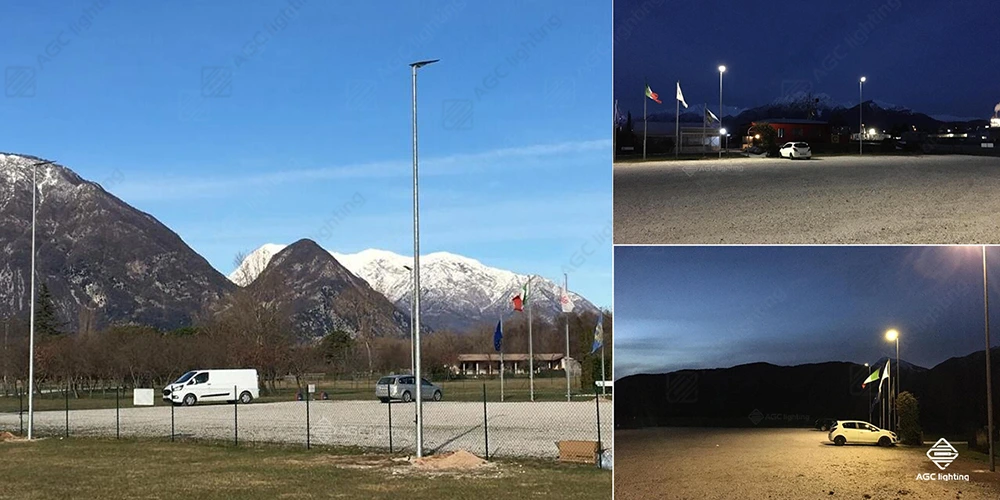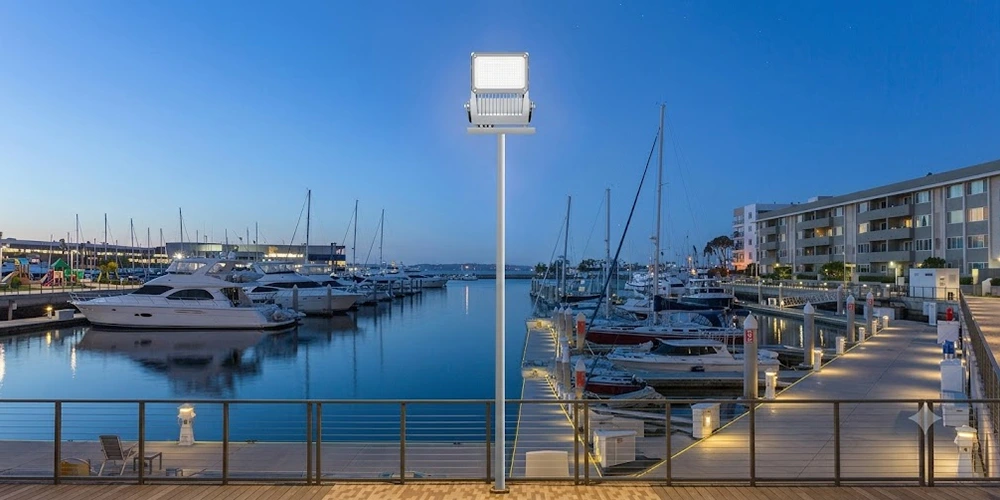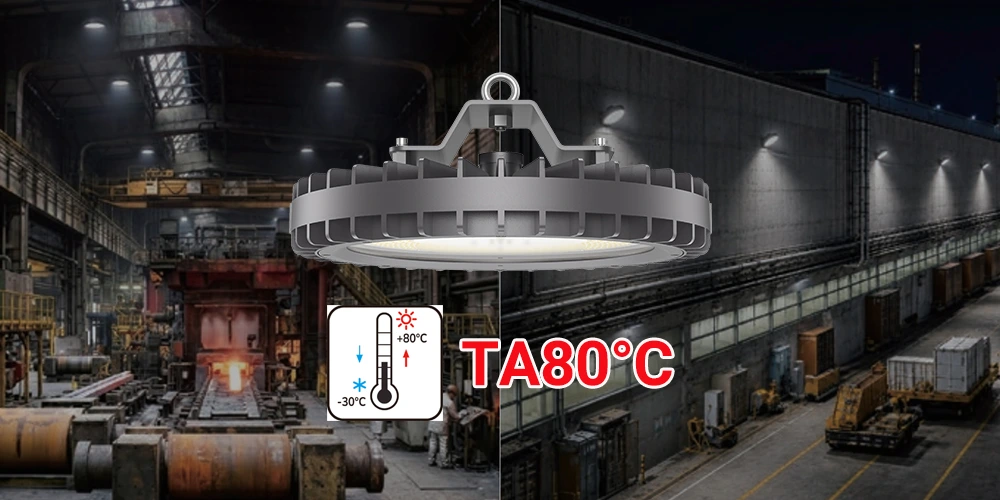
When engineering a sports field lighting project, fixture selection usually gets most of the attention. Engineers focus on lumen output, glare control such as GR < 50, optical distributions, and high CRI or TLCI ratings for 4K broadcast clarity. But on the job site, the control system is often where projects encounter unexpected friction.
A well-designed lighting control system gives operators more flexibility, supports energy savings, and allows the venue to create different lighting scenarios. These can include single-fixture operation, half-field lighting, nighttime kickoffs, training sessions, and goal celebrations.
Today, three control approaches are common in sports lighting: DMX, DALI (DALI-2 / D4i), and wireless mesh systems. Wireless solutions can include platforms such as Synapse, Bluetooth-based systems, and wireless interfaces using standards such as Zhaga Book 18 and ANSI C136.41 NEMA.
In this article, we will compare how each approach works in real sports lighting applications, where each performs well, where it can create challenges, and how to choose the right control system for the venue's operational, installation, and maintenance requirements.
Quick Comparison
|
|
DMX |
DALI-2 / D4i |
Wireless Mesh |
|
Best for |
Arenas, Class I Stadiums, RGB Shows |
Gymnasiums, Single Fields |
Large outdoor complexes, multi-field sites, retrofits |
|
Primary Strength |
Real-time dynamic shows & broadcast sync |
Bidirectional telemetry & energy monitoring |
Rapid installation, zero control cabling |
|
Control Style |
Fast, individual addressing |
Precise digital control |
App / web / local |
|
Dynamic Effects
|
Very fine, broadcast-grade |
Fine, addressable per fixture |
Fine, addressable per fixture |
|
Physical Wiring Required |
Shielded 120-ohm cable (Strict Daisy-Chain) |
Standard 2-wire polarity-free control cable |
None (AC power line only) |
DMX512 / RDM: The Choice for Dynamic Show Control & High-Speed TV Broadcast
DMX512 was developed for the entertainment industry and remains a strong choice for venues that need fast, precise, and dynamic lighting control. Each fixture or fixture group is assigned an address, allowing a controller to send commands over a dedicated data network.
For sports facilities, this makes DMX well suited to applications that require rapid scene changes and coordinated lighting effects. Operators can switch from full match mode to a celebration scene after a goal, create color effects for player introductions, or run programmed lighting sequences during halftime events.
At AGC Lighting, many of our LED sports and flood lighting products support DMX control.
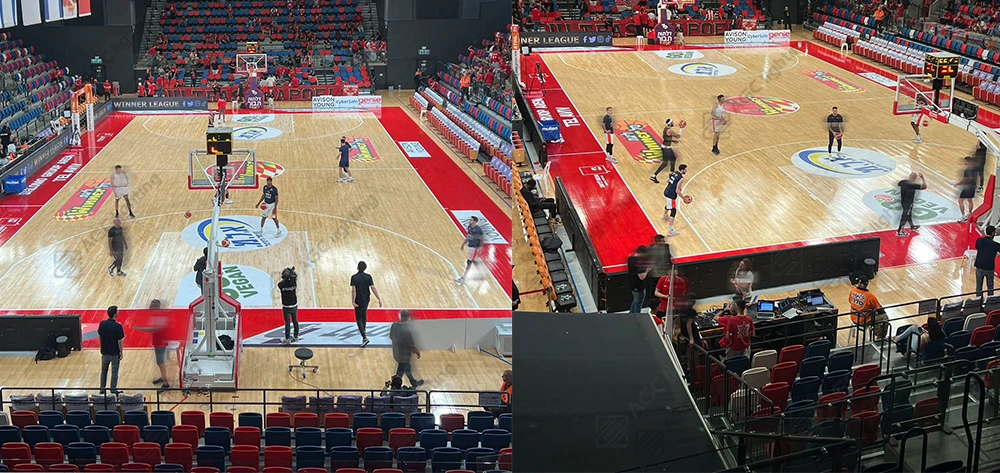
For example, one basketball hall project used 152 FL08 flood lights with DMX control. The project had demanding broadcast requirements, so the lighting system was designed to provide stable, flicker-controlled illumination while also supporting dynamic lighting effects. The completed installation provided even coverage across the basketball court while maintaining the required lighting levels and glare control.
However, if you choose DMX, the control network needs careful attention during installation.
DMX uses a daisy-chain topology. The control cable should be a suitable 120-ohm twisted-pair cable, and the DMX line should be properly terminated at the end of each run.
Avoid tee connections and star topologies unless the system uses appropriate DMX distribution hardware. An improperly designed or terminated network can cause signal reflections and communication errors, which may result in unstable fixture behavior or flickering during operation.
Furthermore, the amount of operational data available through DMX/RDM depends on the fixtures and control equipment used. For applications that require extensive energy monitoring, diagnostics, or asset data, a DALI-2 or D4i-based system may provide more structured device information.
DALI-2 / D4i: Bi-Directional Control and Asset Management
DALI-2, or Digital Addressable Lighting Interface, and D4i are designed for precise lighting control, energy management, and luminaire-level data.
DALI-2 is a two-way digital lighting control protocol. Compatible devices can communicate with the control system, allowing operators to address individual luminaires, adjust light levels, create scenes, and receive device information. With compatible equipment, the system can also provide data such as operating hours, energy consumption, and diagnostic information.
DALI-2 can also integrate with building management systems and other facility systems. This makes it a practical option for indoor sports halls, multi-purpose arenas, and facilities where lighting is part of a broader building automation strategy.
D4i extends DALI-2 capabilities by defining requirements for luminaire data and intelligent control gear. This can provide a more structured way to collect information about the luminaire, LED driver, energy consumption, and operating conditions. The actual data available still depends on the D4i-certified components used in the system.
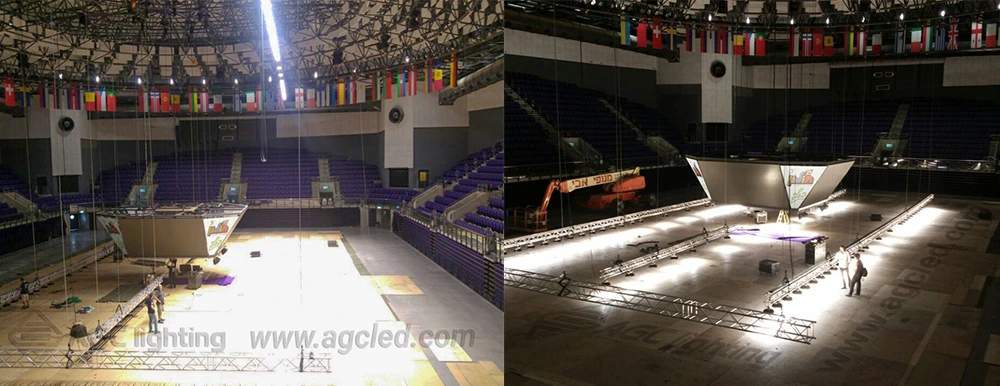
For example, in one international arena project, AGC supplied 160 DALI-controlled high-bay luminaires installed at a mounting height of 25 metres. The system delivered approximately 1,200 lux on the playing surface while providing individual luminaire control and flexible scene management. This level of control is useful for facilities that need different lighting levels for competition, training, cleaning, maintenance, and other activities.
The main limitation is speed. DALI-2 is well suited to scheduled scenes, dimming, and general sports lighting control, but it is not designed for the rapid, synchronized effects that DMX can provide. DALI systems also have defined bus capacity limits, so larger installations may require multiple buses, gateways, or carefully planned system architecture.
Wireless Mesh Controls: Built for Distance and Retrofit Projects
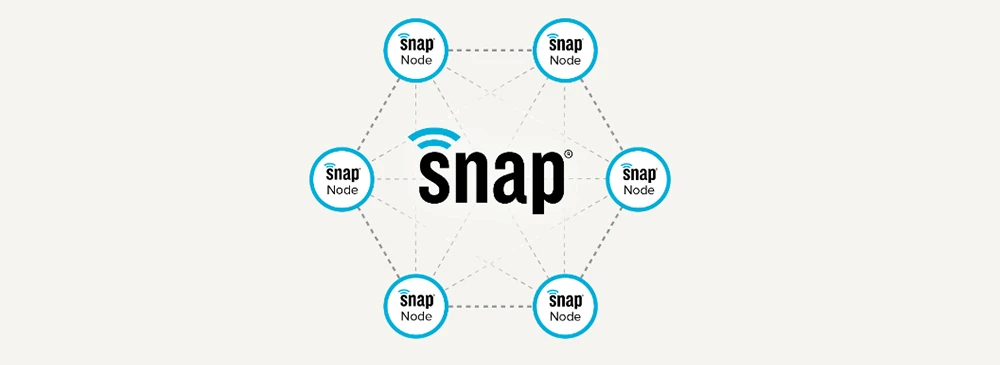
Wireless mesh control systems replace long runs of control cable with a network of radio nodes. Each luminaire, or a controller connected to the luminaire, acts as a network node that can send and receive control signals. In a mesh network, nodes can also relay signals to other nodes, allowing communication to continue through multiple paths.
Many wireless lighting systems operate in the 2.4 GHz or sub-GHz radio bands. Some use open or widely adopted standards such as Bluetooth Mesh, while others use proprietary wireless protocols designed for specific range, reliability, and control requirements. A gateway or base station typically connects the wireless network to a local network or cloud platform, enabling functions such as remote access, scheduling, monitoring, and user management.
Wireless mesh is particularly useful for outdoor multi-field sites and retrofit projects where installing new control cables would require extensive trenching, road crossings, or other disruptive construction work. Communication distances can range from tens to hundreds of metres, depending on the radio frequency, antenna design, node placement, obstructions, and local RF conditions. Larger sites can be divided into multiple network sections or supported by additional gateways.
AGC works with established wireless control platforms for sports lighting applications. These include Synapse Wireless SimplySNAP for multi-field outdoor sites and campus-style facilities. AGC also supports Casambi wireless control, which uses Bluetooth Mesh technology and can be suitable for sports pitches, courts, and smaller outdoor installations where app-based control, scenes, and scheduling are priorities.
Wireless mesh is not the best choice for every application. It generally has more latency than a hard-wired DMX system, making it less suitable for highly synchronized theatrical effects. Radio performance also depends on network design and site conditions. Large venues, dense structures, long distances, and RF interference can affect communication, so a site survey is recommended for larger or more complex installations.
So Which Control System Should You Choose?
Is broadcast or entertainment lighting a major requirement?
Lean toward DMX512 / RDM when the project requires rapid scene changes, synchronized lighting effects, precise fixture control, or integration with an entertainment lighting system.
Is the project an indoor or mid-size facility that needs fixture-level control, energy management, and operational data without a complex lighting effects system?
Lean toward DALI-2 / D4i when individual luminaire control, energy data, diagnostics, and integration with building management systems are priorities.
Is it a large outdoor site, multi-field complex, or retrofit where installing new control cables would be expensive or disruptive?
Lean toward wireless mesh when flexible installation, remote control, scheduling, and reduced cabling are important.
Need Help Choosing the Right Sports Lighting Control System?
AGC Lighting can help you evaluate DMX512 / RDM, DALI-2 / D4i, and wireless mesh control based on your project's actual requirements. We can also help match the control system with the appropriate LED sports lighting, dimming requirements, and lighting scenes.
Planning a new sports lighting project or retrofit? Contact AGC Lighting to discuss your field, venue, control requirements, and project specifications