With the rapid development of the economy and fierce competition, the demand for lighting of the owners of enterprises shows higher requirements, which are no longer limited to providing basic brightness, but include providing appropriate brightness in different warehouse operation areas and creating a people-oriented lighting control mode, especially in the field of smart control, different lighting standards are required to provide for different operation areas.
The traditional manual switch mode has been far behind the requirements of lighting control. Whether to save energy or to improve the quality of lighting, an integrated intelligent lighting control system is the trend in lighting control and meets the needs of control.
DALI control protocol, as a typical open intelligent lighting energy-saving system protocol, has also been widely used in industrial lighting control. There are many cases of applying the DALI system to LED industrial lighting in Europe and America. With the continuous promotion and application of LED lighting, this technology will become more and more popular.
What is DALI?
DALI (Digital Addressable Lighting Interface) is a data transfer protocol. DALI defines digital communication between a lighting appliance and a system device controller.
DALI control can be combined with a wide range of LED lighting, not only for general commercial lighting, but also for various industrial applications. In many large industrial lighting projects, it is a favored lighting control scheme, welcomed by business owners.
The DALI control system brings great flexibility to the lighting control.
The owners of enterprises can design and adjust the corresponding lighting scheme according to their needs. This adjustment can still be used during the operation after the installation of lighting fixtures like LED high bay lights and LED linear high bay lights without any changes to the circuit.
How do LED high bay lights work with DALI control in factories?
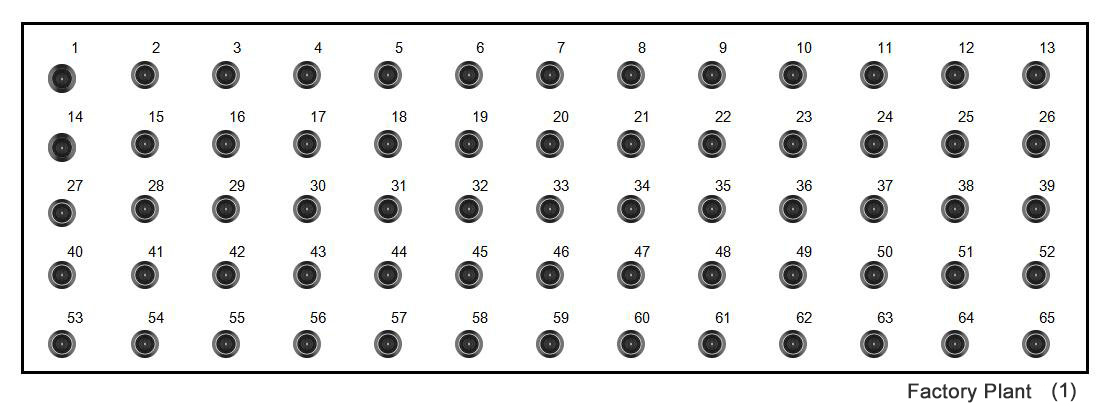
You must know that the reason why these high bay lights can be intelligently controlled is not determined by the lamps themselves, but by the DALI ballast, DALI driver, DALI relay, etc. They are usually used in conjunction with lamps. Suppose you have installed our high bay lights in a factory in the way shown below (1) and have given them a separate numeric address.
In a real application, the lamp's address is automatically generated by the DALI-controlled interface through the gateway induction of the DALI-controlled area. Of course, you can also go into the DALI app interface and modify it to make it easier to tag or fit your habits. Such operation is allowed, and many DALI app designers have considered this convenience property.
How do LED high bay lights connect to DALI control?
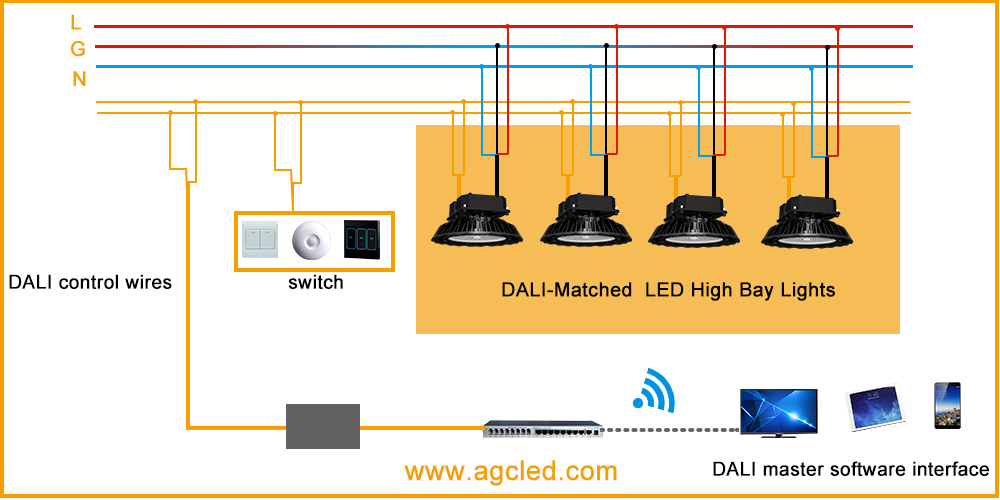
Generally, the DALI-matched lamps can be seen in the DALI master software interface, which is also what we mentioned above, the “DALI app interface”. DALI can achieve the function of
- Turn on /off the light (by single/ by group/by scene )
- Dimming up /down the light (by single/ by group/by scene )
- Detect the broken lights in all DALI-matched lights
- Monitor the condition of every light ( whether on or not, whether broken or not). The ratio of lumen output / which group the light is in? )
- Adjust CCT (correlated color temperature )
- Control the lighting color of lights ( not for LED high bay lights)
Turn the single light on/off
All DALI-matched LED high bay lights can be randomly chosen to turn them on/off.
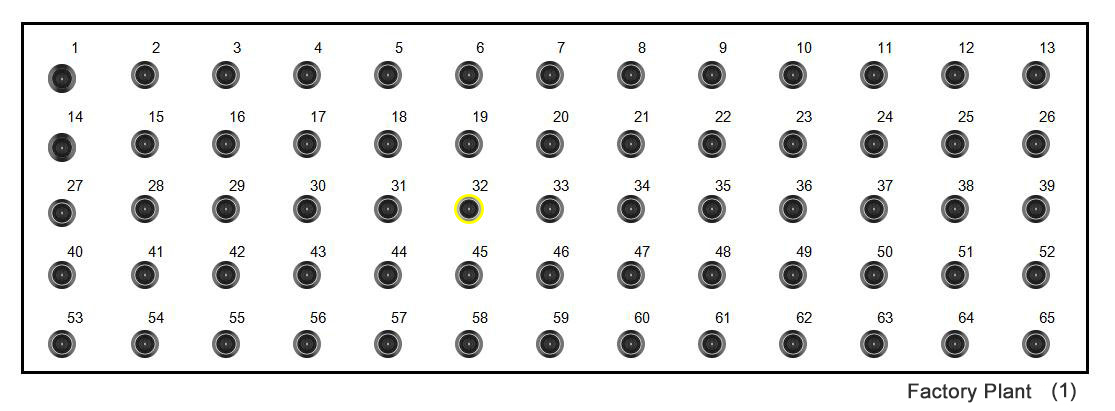
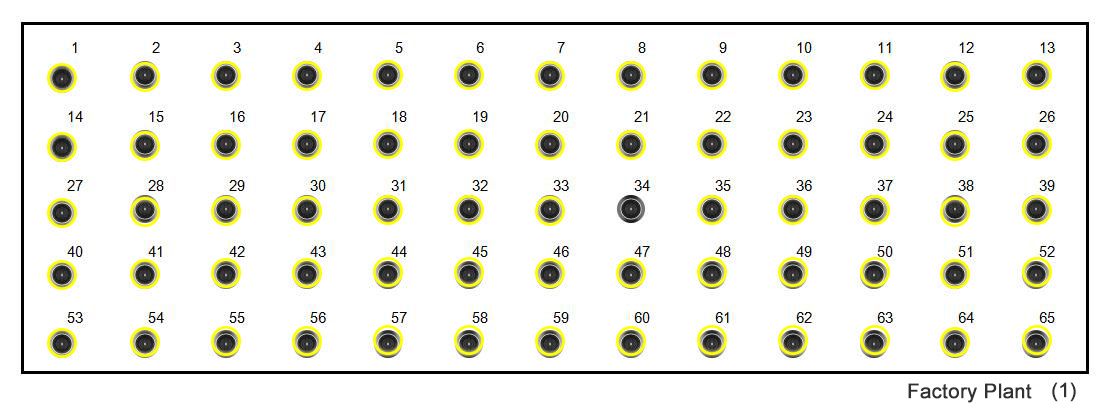
In the figure below, the left figure shows the LED high bay light NO.32 is turned on singly, while in the right figure, the NO.34 LED high bay light is turned off solely. You don't need to run around the factory to do the operation. All that can be done on the DALI master software interface.
Turn on/ off the light by group
You can group the lights you want to turn on as you like and control them through groups. This is more convenient than turning on the lights one by one, and you don't have to repeat instructions.
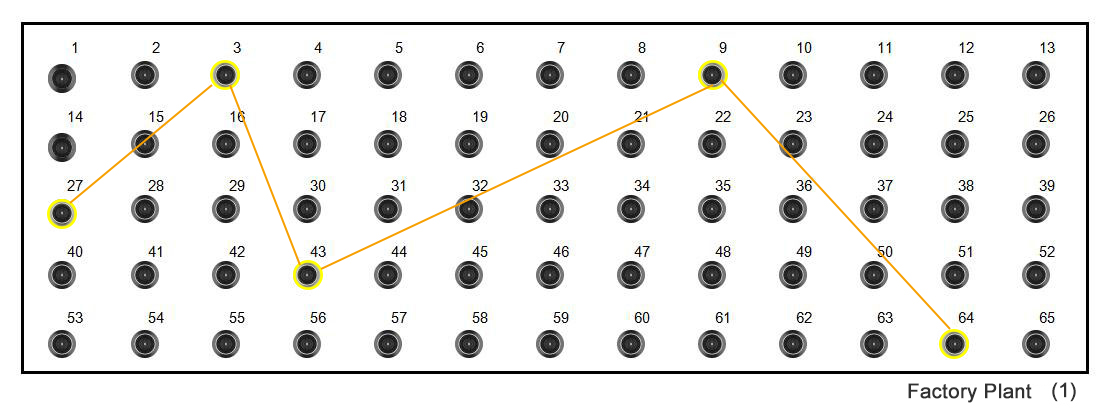
Now, suppose you want to turn on lights NO.3, NO.9, NO.27, NO.43, and NO.64, and first you can group them through DALI and turn them on/off all at once. It doesn't matter how irregular the positions are. All operations will not be affected. That is the benefit of DALI digital address location.
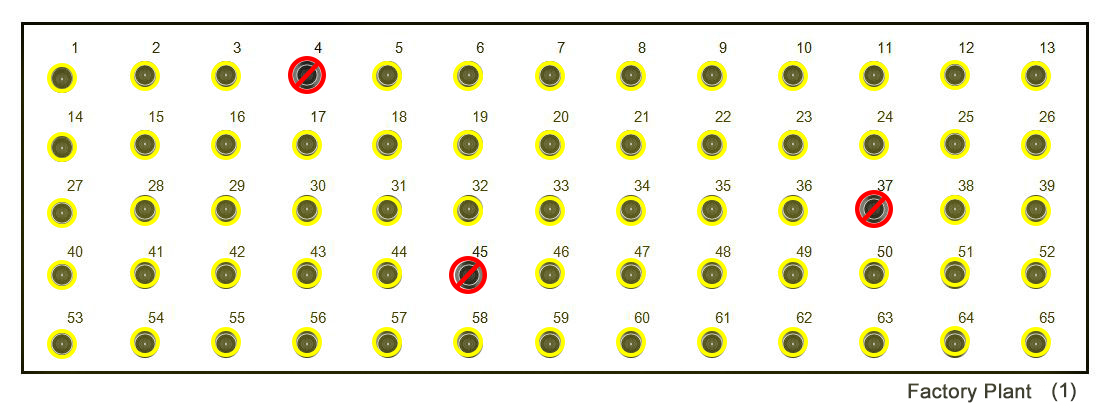
As for detecting the broken lights, DALI can detect if there are broken lighting fixtures in the factory. You can clearly be told which lamp is out of order in the DALI master software interface and easily locate the lamp and fix it.
DALI can only tell you which light is broken, but it cannot tell you exactly why. Many vendors claim that DALI can detect what kind of glitches are occurring in the lamps. This is an exaggerated advertisement that is currently hard to realize. Advanced systems may combine DALI data with sensors or logging to help pinpoint the exact cause more accurately.
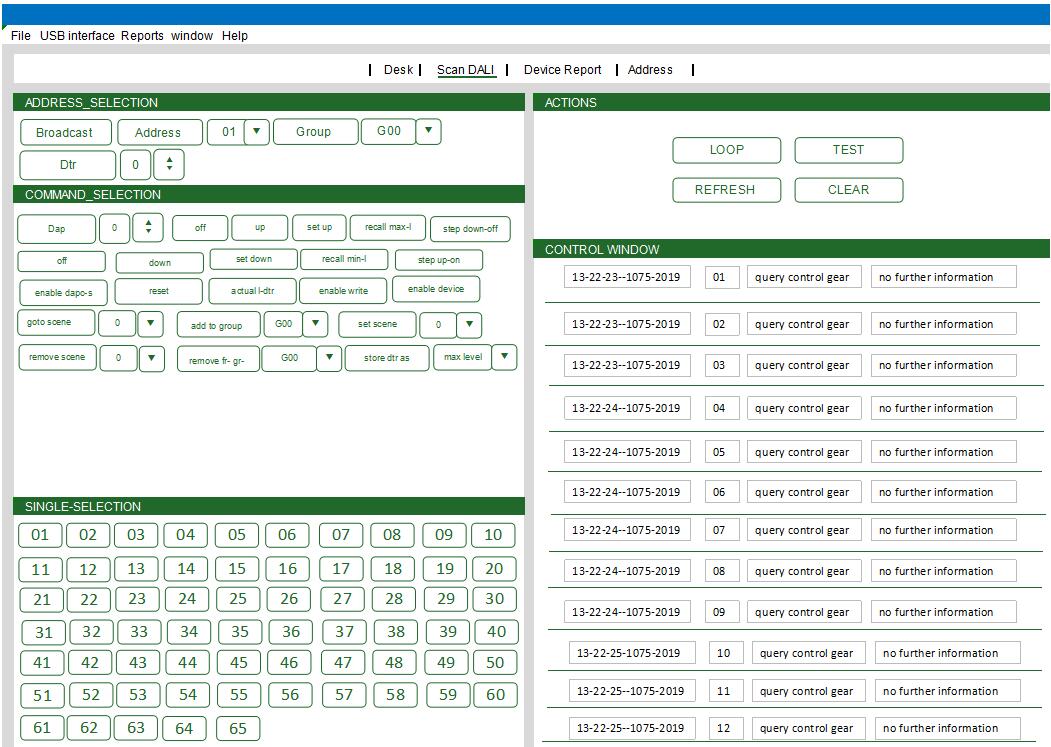
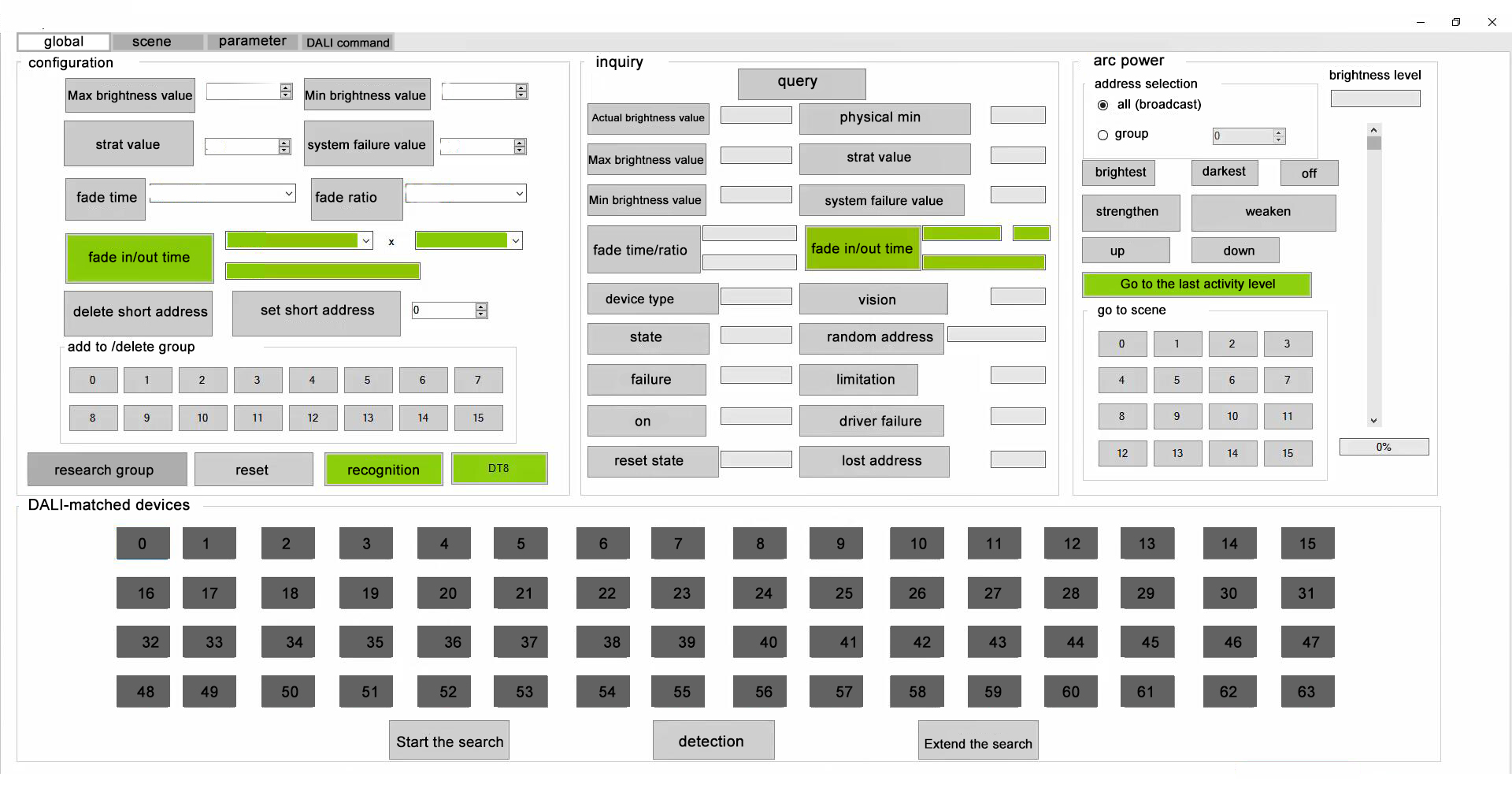
If you haven't used DALI before, you must be curious about the interface of the DALI master software. What are the functions above?
Here are two of many DALI master software interfaces. Different DALI suppliers, their master control software interface is not the same, and the operation method is also different. So you need to consult before you apply it.
What are the benefits of LED high bay lights combined with DALI control?
- Realize intelligent lighting control.
- Improve the working environment and work efficiency.
- Provide uniform illumination.
- Considerable energy-saving effect.
- Prolong the lifespan of lights.
- Improve management level and reduce maintenance costs.
More and more lighting equipment, control equipment are equipped with a DALI interface. DALI is more and more widely used, from a production workshop to a number of workshops and even the entire industrial park. Especially for industrial production with large power consumption, the application of DALI control has great practical significance.
AGC also provides high bay lights and linear high bay lights that work with the DALI control system. Feel free to contact us for more details.