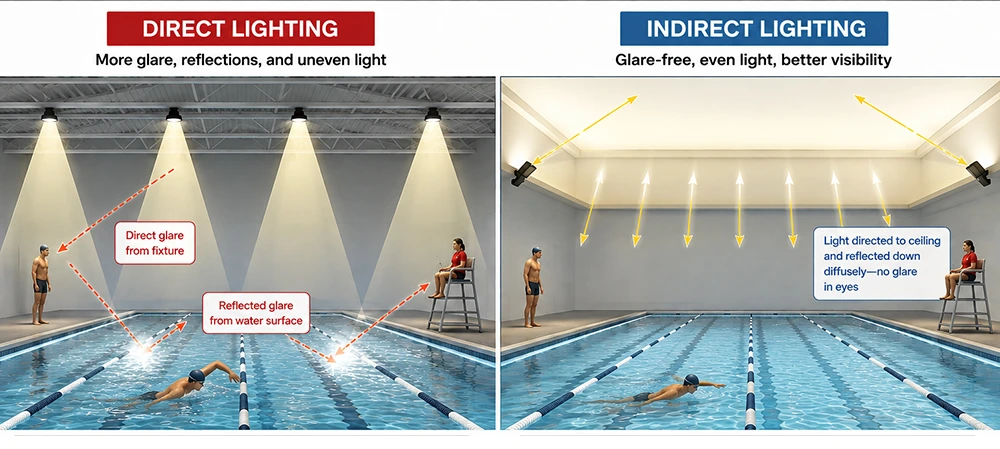
Light behaves differently over water than over a dry floor. When overhead fixtures point directly toward a pool, the water surface acts like a horizontal mirror. Light reflected from the surface can enter the eyes of swimmers, coaches, lifeguards, and spectators, creating glare.
At the same time, underwater visibility can become harder because of veiling reflections. Direct lighting can also create uneven brightness across the pool, with bright areas beneath fixtures and darker zones between fixtures or near the pool walls.
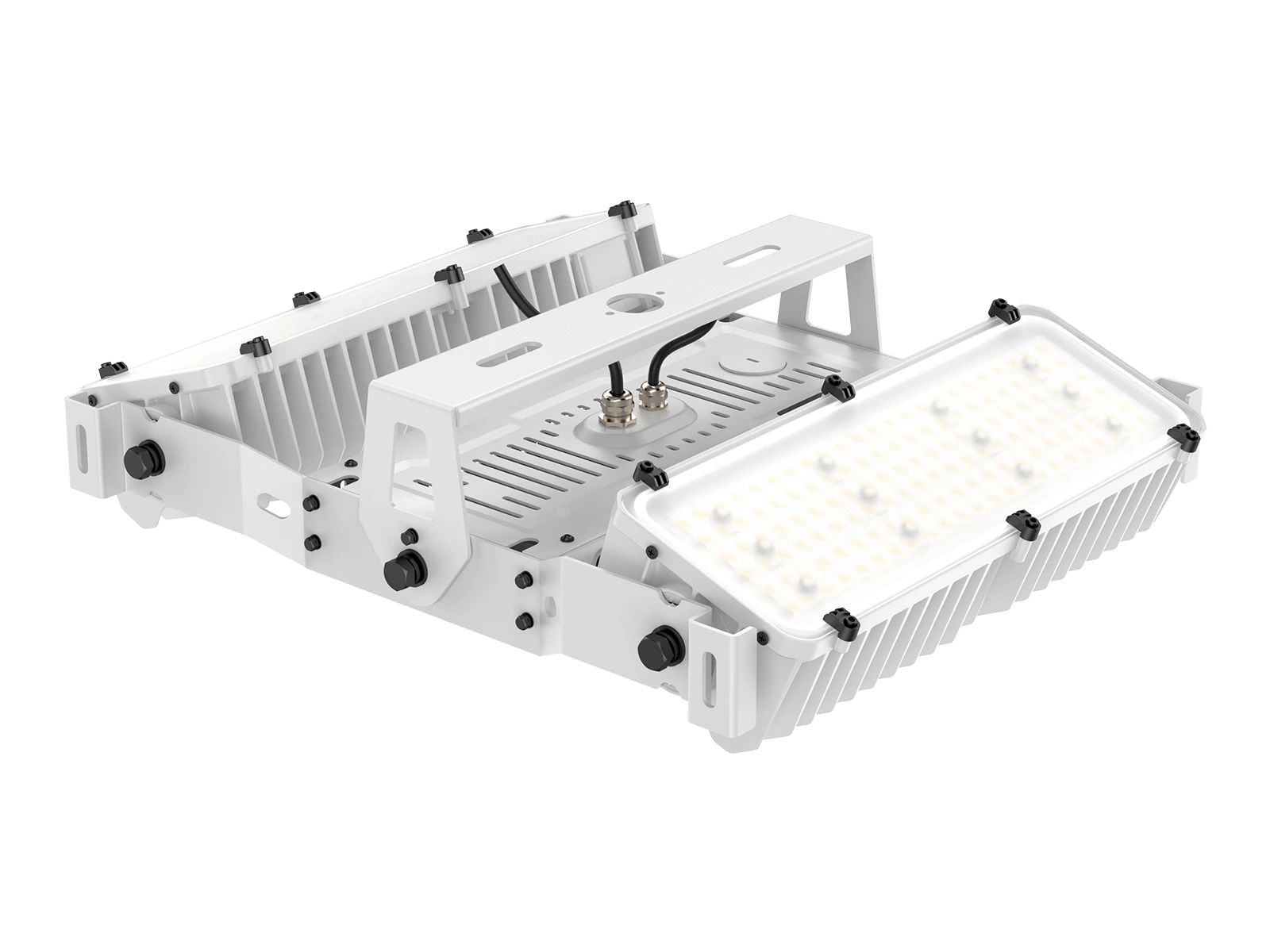
Indirect lighting provides a way to control this optical problem. Our SP60 is designed for indirect illumination strategies. Its adjustable module allows the fixture to direct light toward ceilings or upper wall structures, using these surfaces to reflect and diffuse light across the pool area.
Natatorium Glare and Water Reflection
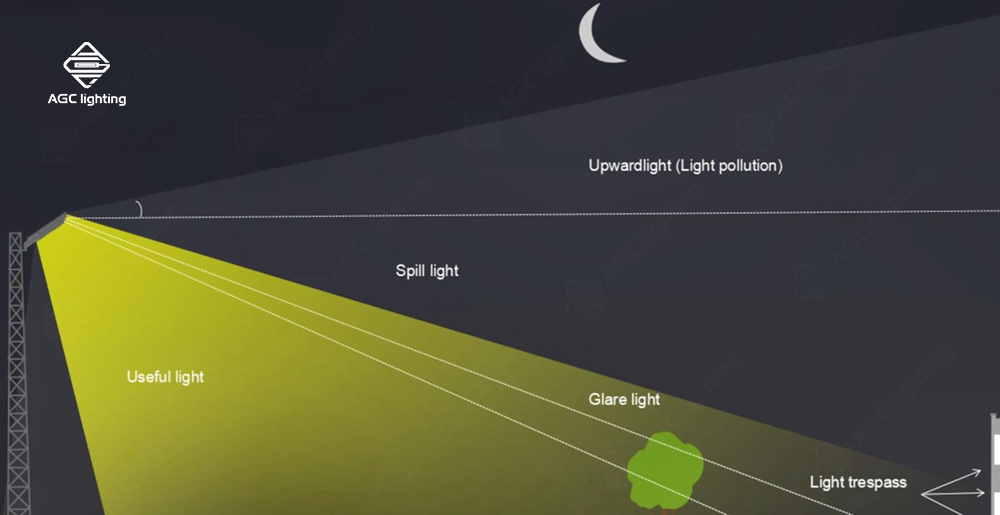
Direct lighting is common in indoor sports facilities, but direct downlighting in a natatorium can create two forms of visual disruption.
- Direct glare: Bright light from the luminaire can enter the eyes of swimmers, coaches, lifeguards, and spectators, particularly when they look upward or across the pool.
- Reflected glare: Light that strikes the water surface can be reflected toward people viewing the pool. The problem is more noticeable when light reaches the water at angles that produce strong specular reflections.
Water is a dynamic reflective surface. As the surface moves, reflected light changes continuously, creating bright patterns across the pool rather than one fixed reflection. These reflections can interfere with underwater visibility and make it harder for lifeguards and instructors to observe swimmers clearly.
For a natatorium, glare control is therefore part of providing a clean visual environment for supervision and training.
How Indirect Lighting Reduces Surface Reflections
Indirect lighting changes the path that light takes before it reaches the pool.
Instead of directing high-output light straight toward the water, the fixture directs light upward toward a suitable ceiling or upper structural surface. That surface then reflects the light downward and across the natatorium.
The result is a larger and more diffuse light source than the luminaire itself. This can provide several practical benefits:
- Reduced specular glare: By avoiding intense direct beams onto the water, indirect lighting can reduce strong reflections from the pool surface.
- More consistent illuminance: Ceiling-reflected light spreads over a larger area, helping reduce hot spots beneath fixtures and darker areas between them.
- Better vertical illuminance: A more diffuse distribution can provide more even illumination on swimmers, instructors, and other vertical surfaces without exposing occupants to intense direct beams.
How a 180° Adjustable Module Changes the Distribution
Not every floodlight or sports luminaire is suitable for swimming pool lighting. Fixed-bracket fixtures can make it difficult to optimize the beam angle around sloped roofs, glulam beams, structural members, and ventilation equipment.
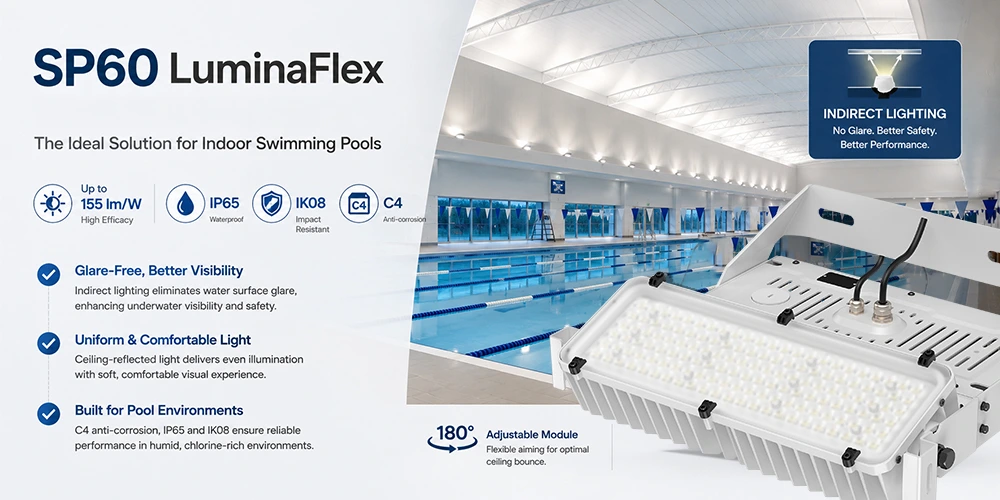
The SP60 LED Sports Light features a 180° adjustable optical module. This allows installers to mount the fixture on walls or trusses and adjust the light direction to target the ceiling or upper structure.
This flexibility helps the lighting designer control where the light is reflected and how it spreads across the pool. It can also help keep the fixture's optical output outside the direct line of sight of spectators and other occupants.
For recreational and training pools, lighting requirements commonly fall within the range of approximately 300 to 500 lux, depending on the application and applicable lighting standards. Uniformity is also important. For example, a minimum-to-average illuminance ratio of 0.7 or higher may be specified for some applications.
The adjustable module of SP60 does not automatically guarantee these values. It gives the designer more control over the distribution.
High Efficacy Helps Offset Reflection Losses
Indirect lighting introduces an unavoidable trade-off: some light is lost when it is reflected from the ceiling or other surfaces. Even a clean, light-colored natatorium ceiling does not reflect 100% of the incident light.
For this reason, an indirect lighting system needs sufficient lumen output and optical efficiency to deliver the required illuminance at pool level without excessive installed power.
The SP60 is available in 300W and 500W configurations, with efficacy up to 155 lm/W. The high lumen output provides the capacity needed to compensate for losses in the indirect light path while keeping energy consumption under control.
DALI and D4i control options also allow the lighting system to be dimmed based on occupancy, operating schedules, or other control strategies. This means the installed lighting capacity does not have to operate at full output when the facility does not require maximum illuminance.
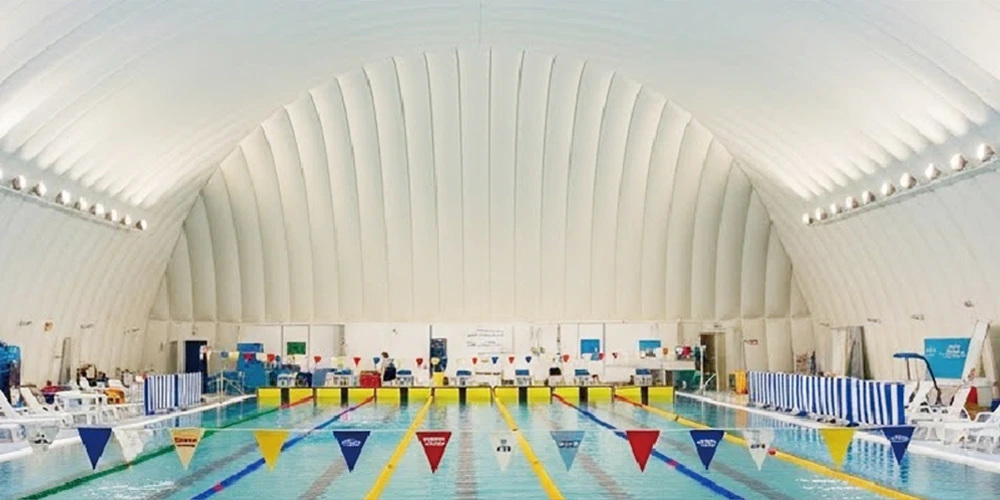
Bouncing light effectively requires precise positioning to hit target lux levels on the water deck. Contact our lighting engineering team for a Dialux photometric simulation tailored to your facility's geometry.