In most industrial facilities, eyewash stations are critical emergency devices that protect workers from chemical splashes, airborne dust, and other hazardous exposures.
ANSI Z358.1 specifies that an injured worker has no more than 10 seconds to reach an eyewash station to help prevent permanent eye damage or blindness. In those moments, the individual is likely in pain, disoriented, and may be experiencing blurred vision or eyes that are forced shut by chemical irritation.
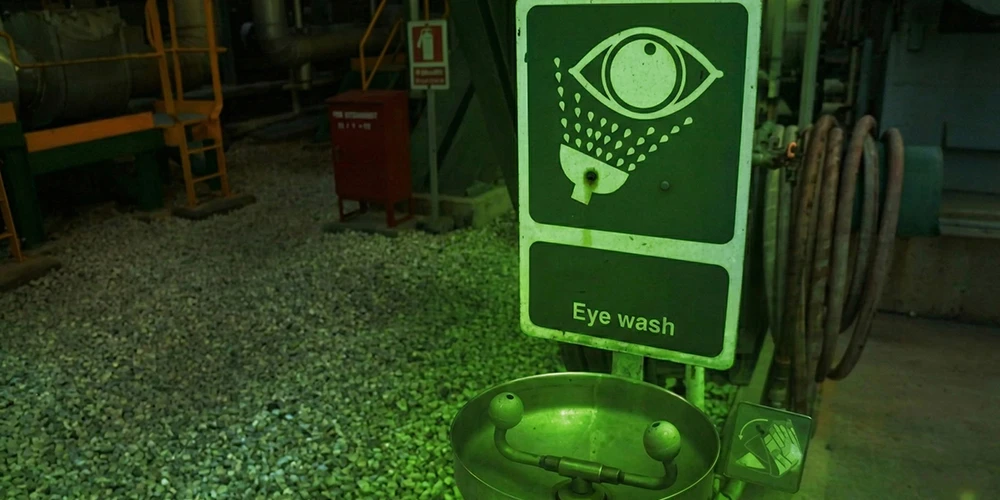
Because visibility and response time are so crucial, many facilities install green LED indicator lights on their eyewash stations. These bright, highly recognizable lights make it easier for workers to locate the station quickly, even when their vision is compromised.
This raises two important questions: Why are green LED lights used, and how do you choose the right lighting solution for your eyewash stations?
Why Green LED Lights for Eyewash Stations
The use of green LED lights on eyewash stations is supported by both human biology and established safety standards.
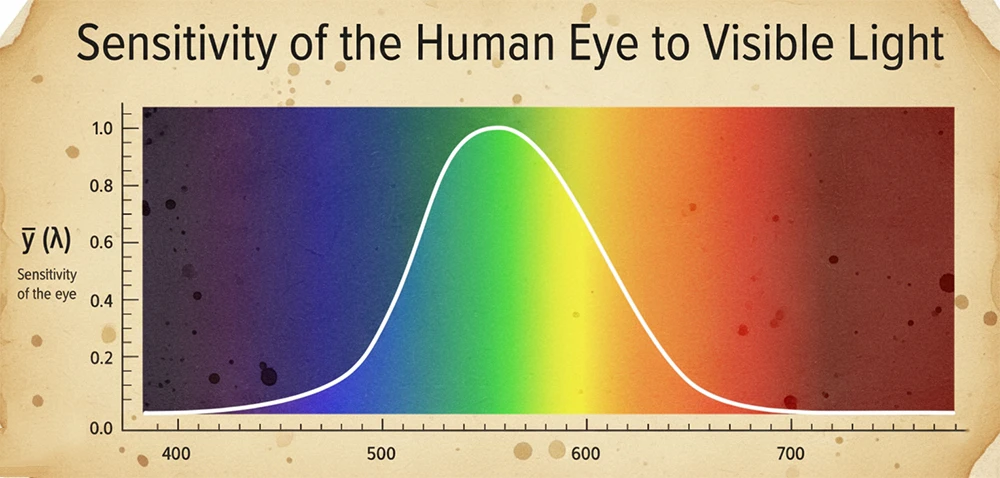
First, the human eye is highly sensitive to green light.
Not all colors are perceived equally. The human eye responds most strongly to wavelengths in the yellow-green range, which makes green light appear brighter and more defined than red or blue light at the same intensity. In an emergency, when a worker may be in pain, experiencing blurred vision, or operating in a smoke-filled or dimly lit environment, green LEDs remain more visible and can cut through visual obstacles more effectively.
Second, green aligns with universal safety color psychology and codes.
Green is widely recognized as the color of safety, guidance, and "go" signals. Its meaning is intuitive and does not require training. ANSI Z535.1 (Safety Color Code) reserves red for fire equipment and "Stop/Danger" warnings, so using green helps prevent confusion. Other colors, such as white or yellow, can blend into the surroundings, especially in industrial facilities where safety yellow is commonly used for guardrails, barriers, and equipment. Green remains visually distinct and reduces the likelihood that an eyewash station will be lost in the visual noise of the factory floor.
How to Choose the Right Green LED Solution for Eyewash Stations
In places like chemical plants and laboratories, safety stations are extremely important, and they need to meet all the proper regulations and standards. One key point is that the green LED lights must follow the required safety guidelines. It is also important to consider things such as durability and overall reliability so the equipment can operate safely over time.
Compliance and Standards
Regulatory bodies such as ANSI (American National Standards Institute) and OSHA (Occupational Safety and Health Administration) provide clear guidelines to ensure that emergency equipment is both accessible and effective. But interestingly, neither ANSI nor OSHA explicitly mandates “a green light”. However, they do mandate performance, and it provides some references for green LED lighting solutions.
ANSI Z358.1, which requires that emergency eyewash equipment be "identified with a highly visible sign" and located within a 10-second travel distance from hazard areas. While the standard doesn't mandate specific lighting colors, it emphasizes visibility as a critical safety factor, making green LED lights an increasingly popular compliance solution.
OSHA regulations under 29 CFR 1910.151 require employers to provide suitable facilities for quick drenching or flushing of the eyes where workers may be exposed to injurious corrosive materials. Furthermore, OSHA Standard 1915.82 (Lighting) recommends a minimum illumination of 30 foot-candles (approx. 323 lumens/m²) for first aid stations.
Environmental Protection
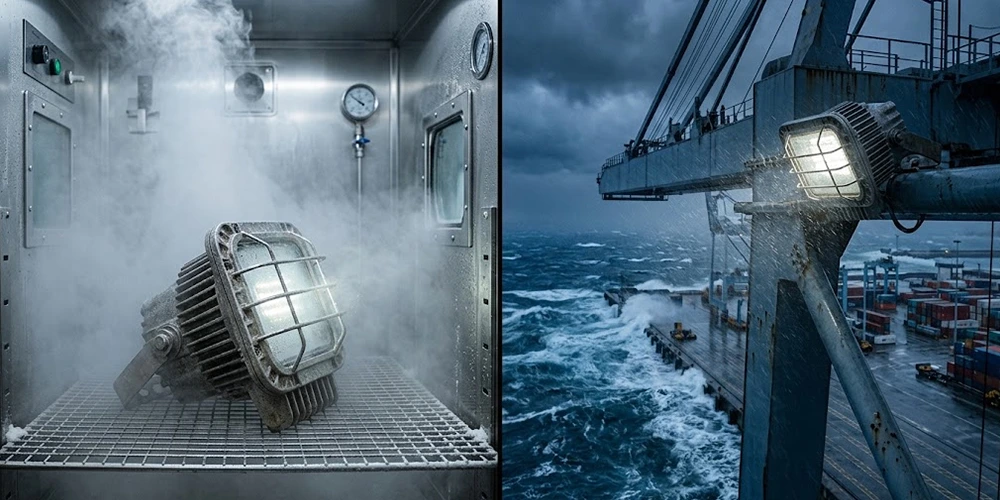
Eyewash stations are often exposed to moisture, dust, temperature extremes, vibration, corrosive atmospheres, and sometimes even explosive environments. Because of these challenges, the lighting fixtures used on eyewash stations must be designed with adequate protection to ensure safe and reliable operation.
Look for lights with a minimum IP65 rating to ensure resistance to water and dust. Additional features such as industrial-grade housings and appropriate environmental certifications are also important for withstanding harsh operating conditions.
Hazardous Location Certification
Certain workplaces, including chemical plants, refineries, paint booths, and grain elevators, operate within classified hazardous areas. In such environments, the presence of combustible gases or dust means that even a small spark can ignite an explosion. To prevent this risk, lighting fixtures must be certified for use in hazardous locations.
Green LED lights with explosion-proof certification for Class I, Division 1 or Division 2 areas are suitable for these environments and ensure compliance with safety requirements.
Battery Backup
Chemical accidents can occur alongside broader facility failures, such as fires or explosions that interrupt main power. A hardwired light without backup power becomes ineffective during a blackout. For this reason, the lighting fixture should include an emergency battery backup that automatically activates when power is lost and keeps the green beacon illuminated for at least 90 minutes.
Green LED Lights for Eyewash Station
At AGC Lighting, we offer fully customized lighting solutions to meet the unique needs of your project. Below are some examples of green LED lights custom-built for our clients.
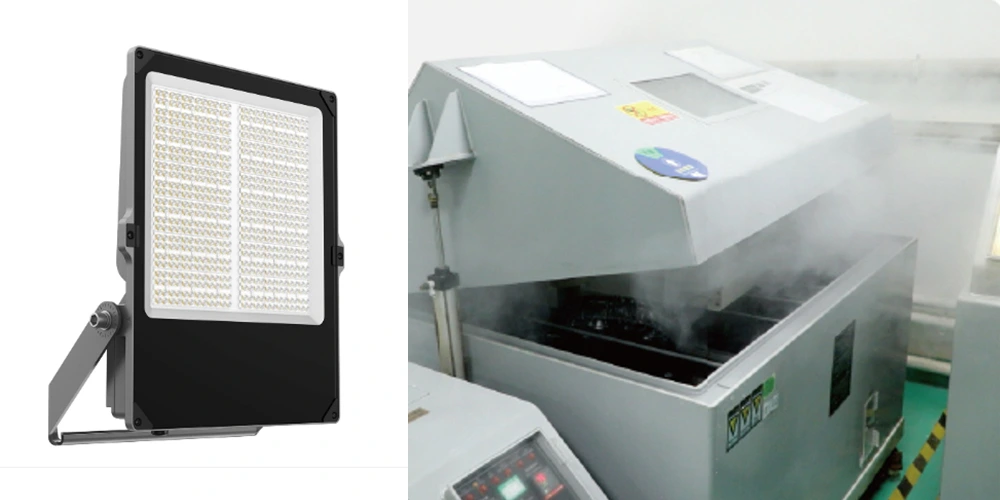
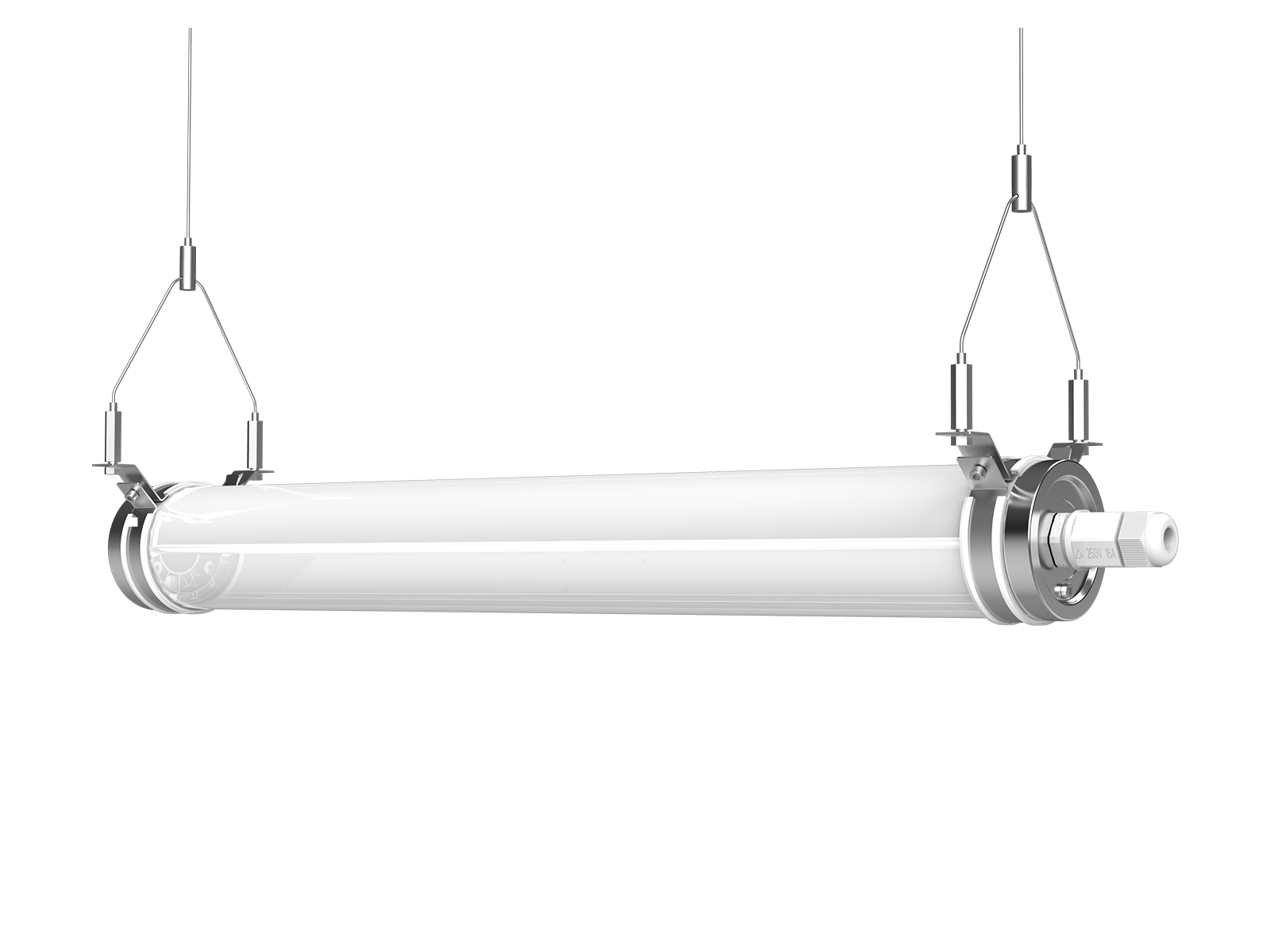
Our customer requested a green light for an eyewash station located in an area where hazardous chemicals are present. We recommended the 20W LHB13 Roline, which offers IP69K protection and corrosion-resistant construction, ensuring reliable performance in harsh environments. While the standard Roline model comes in white light, we customized it with a green LED (530 nm wavelength) to meet the customer’s specific requirement.
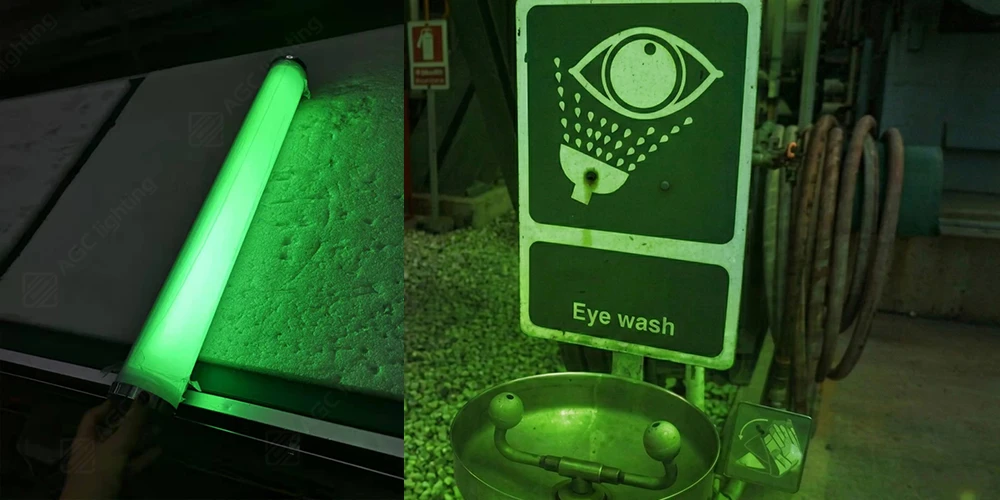
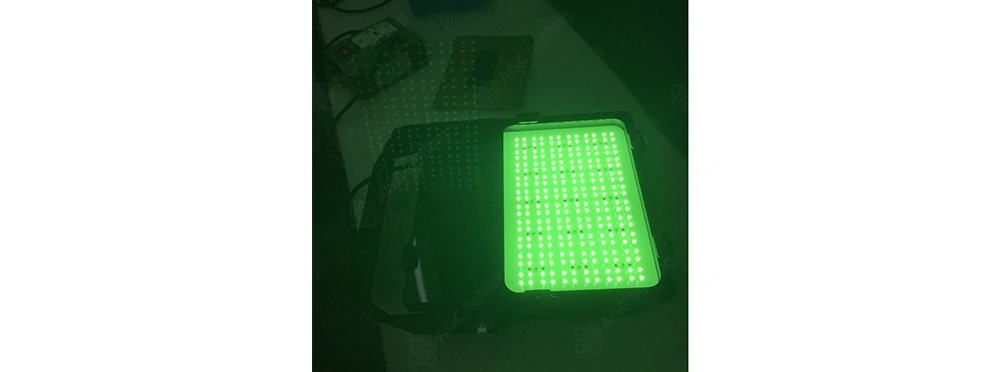
We also delivered a green LED flood light solution tailored to the customer’s specific needs.
But what if your environment demands more, such as areas where flammable dust or explosive gases may be present?
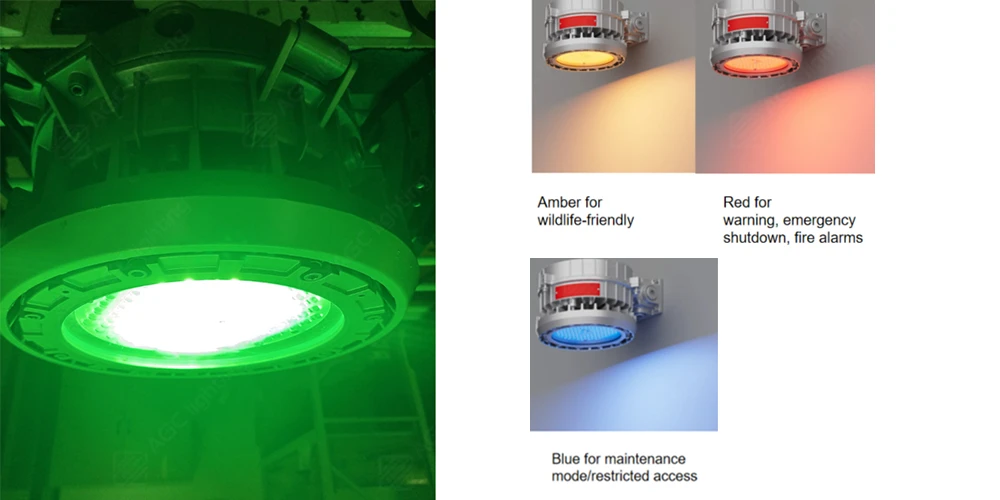
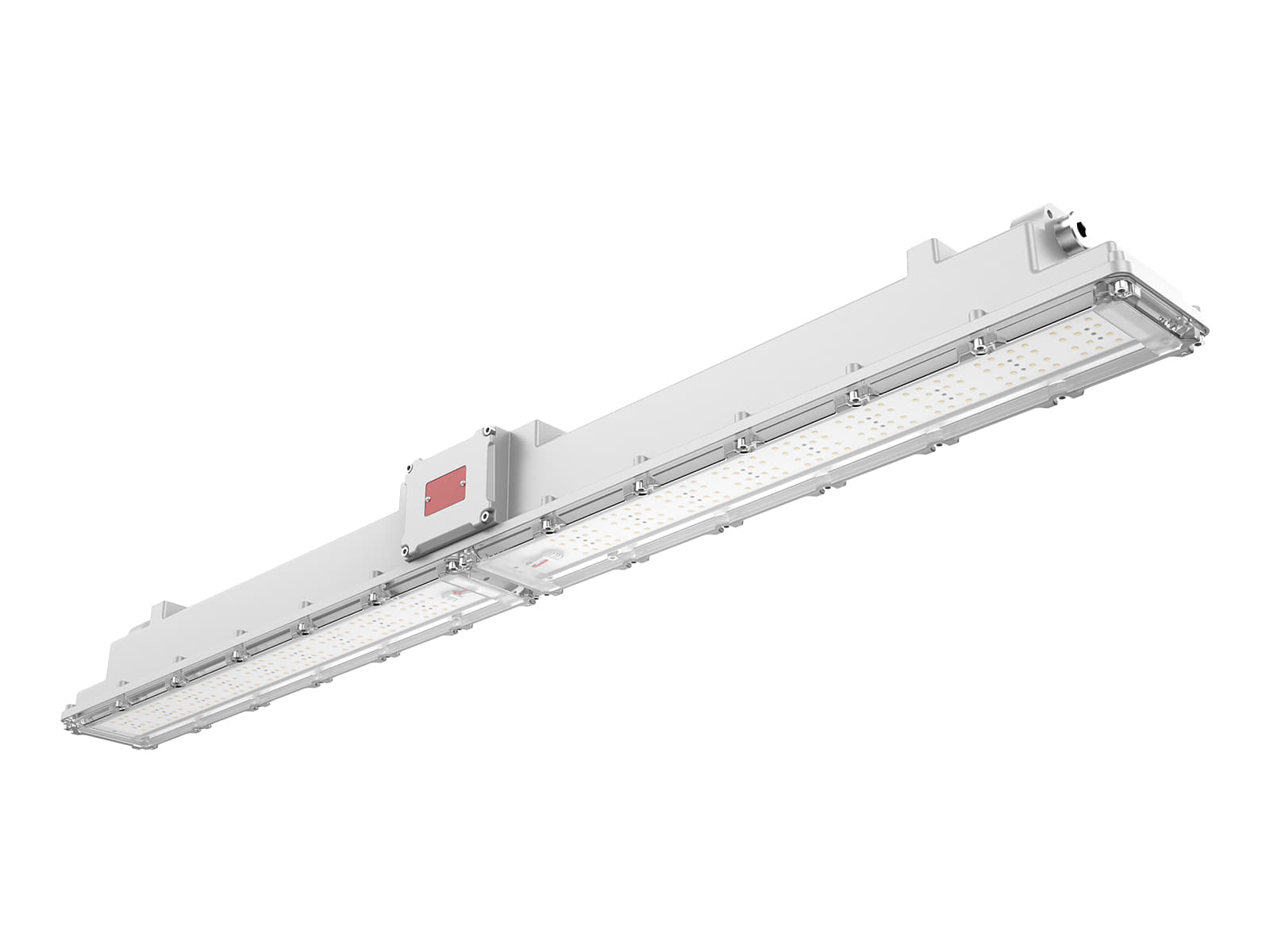
AGC Lighting also provides green explosion-proof lighting. Our HA05 explosion-proof high bay light, certified for Zone 2 and CID2 hazardous locations, delivers reliable illumination and improved safety in challenging environments. The HA05 is available in green, as well as red, blue, and amber, giving you versatile options for a wide range of industrial applications.