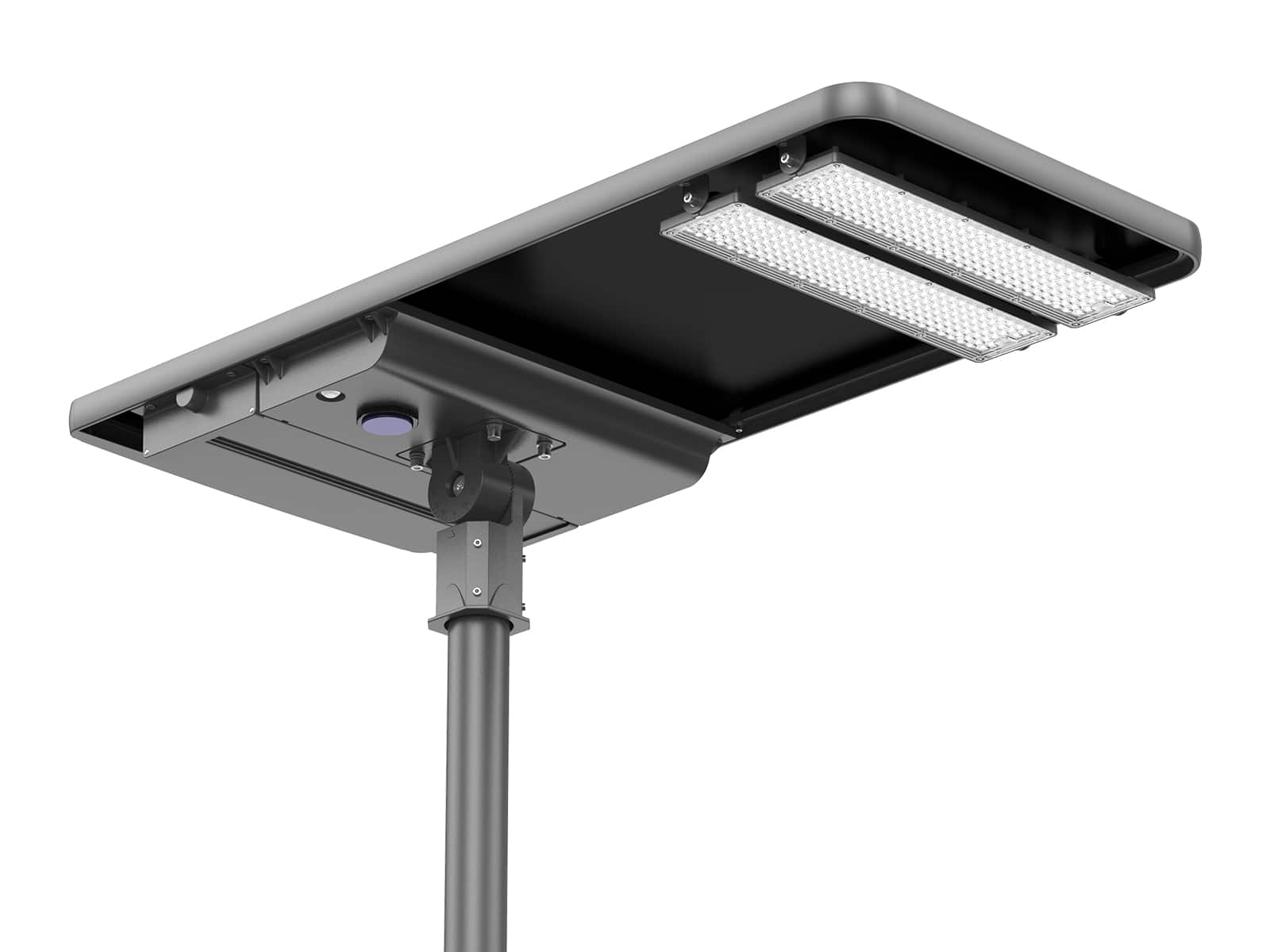
Solar lighting is an excellent choice for saving energy and supporting sustainability. It runs on sunlight, so there are no electricity bills, and because it’s wireless and off-grid, installation is simple and cost-effective.
However, as cities and communities aim for smarter, greener solutions, basic solar lights are no longer enough. Meeting today’s sustainability goals and smart city standards requires more advanced technology.
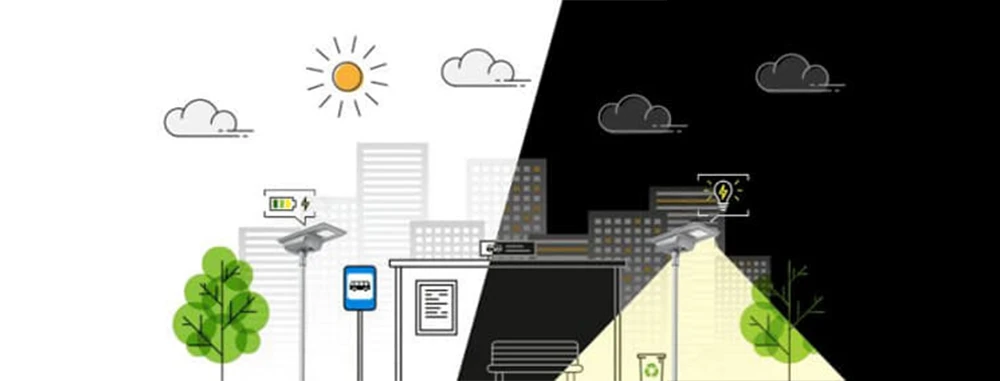
That’s why smart control is now essential. When solar lights are combined with smart controls, like motion sensors and automatic dimming, they become more efficient and responsive. These features help save more energy and allow lighting to adjust based on actual needs. Some are even equipped with central control units or gateway controllers, contributing to smart cities.
How Smart Solar Lighting Works
Smart solar lights are self-powered systems that generate and manage their own energy without relying on the electrical grid. During the day, they use solar panels, made from monocrystalline silicon, to capture sunlight and convert it into electricity. This energy is not used immediately. Instead, it is stored in LiFePO4 batteries.
The smart features come from built-in control units. These sensors detect things like surrounding light levels, movement, and occupancy. Based on the information collected, the system can automatically adjust the lighting.
In addition to working independently, smart solar lights can be connected wirelessly through technologies such as Zigbee, Bluetooth, or LoRaWAN. This allows users to monitor and control the lights remotely using a central system. Through this connection, users can manage groups of lights, set lighting schedules, check battery levels, and receive maintenance alerts.
AGC Smart Solar Lighting Solutions
At AGC, we make solar lighting smarter. Our solar lights use sensors and smart controls to save energy, provide reliable lighting, and work even during cloudy days or at night.
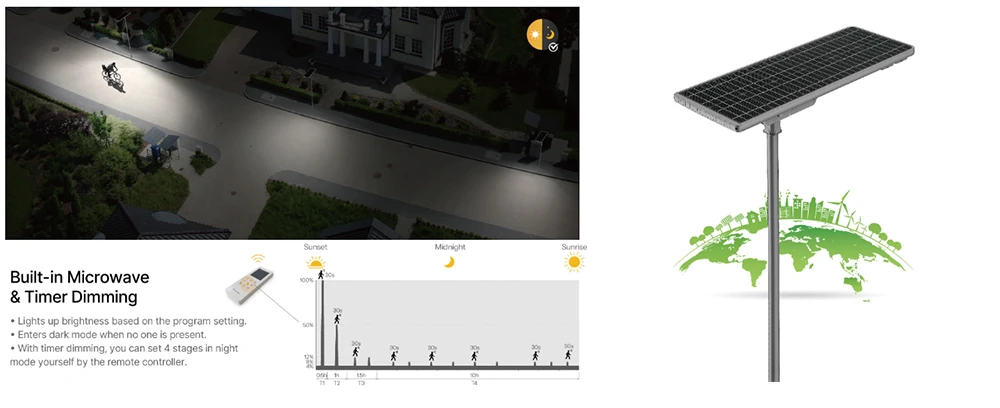
Most of our solar lights have built-in motion and light sensors. These sensors help the lights adjust automatically. When no one is around, the light dims to save power. When someone walks by, the light becomes brighter. The lights also turn on and off based on daylight or the time of day. This helps save energy and make sure the lights work only when needed.
Take our SL01 SunRay solar light as an example. It has built-in motion sensor and timer. You can program different brightness levels for different times at night. If no one is around, it dims the light to save power. With a remote control, you can set up to four stages throughout the night, depending on your needs.
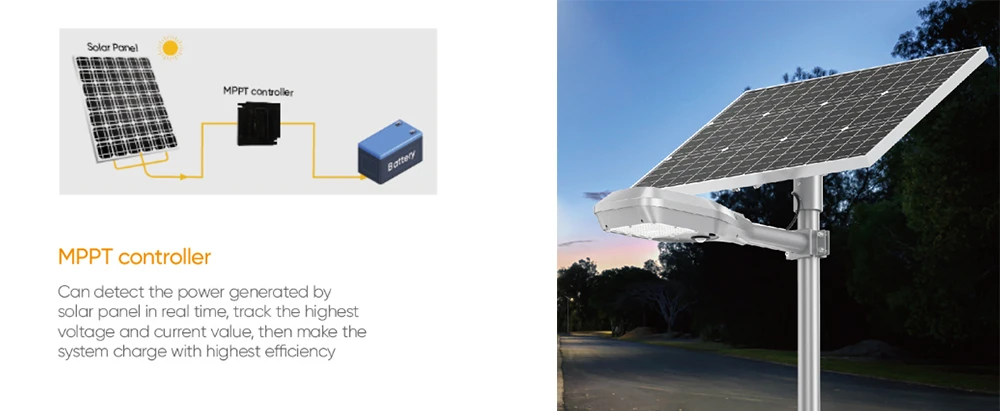
Our solar lights also include an MPPT controller. This technology helps collect as much energy as possible from the sun. It adjusts the voltage and current automatically to get the best results from the solar panel.
For example, our ST57 Fino solar light has an MPPT controller that checks the power coming from the solar panel in real time. It finds the best voltage and current levels to make the system work at the highest efficiency. This means better performance, even when sunlight changes during the day.
In addition to these features, AGC solar lights are also built with the smart city in mind. Through the UCC (Unified Central Controller) or a gateway collector, it connects the lights to a Central Management System (CMS), which allows remote control and monitoring. This connectivity provides numerous benefits:
Real-time Monitoring
Each solar light can transmit data on its performance, battery status, solar charging levels, and potential issues. If a fault is detected, such as battery failure or light not turning on, an automatic alert is sent to the CMS. This enables faster response times, reduced downtime, and lower maintenance costs.
Remote Control
You can change settings like brightness levels and on/off times without visiting each light. Everything is done from a computer or tablet. This saves time and reduces labor costs.
Works with SIM Cards
The system supports SIM cards with GPRS, 2G, 3G, or 4G. this means the lights can stay connected in cities in remote areas without internet cables.
Map-Based Interface
The CMS uses a map to show where each light is located and what its current status is. This makes it easy to manage large areas like cities, campuses, or industrial parks.
Whether you’re managing a city block, a campus, or a commercial property, our smart solar lighting solutions are built to adapt, perform, and save. Contact us for more details.