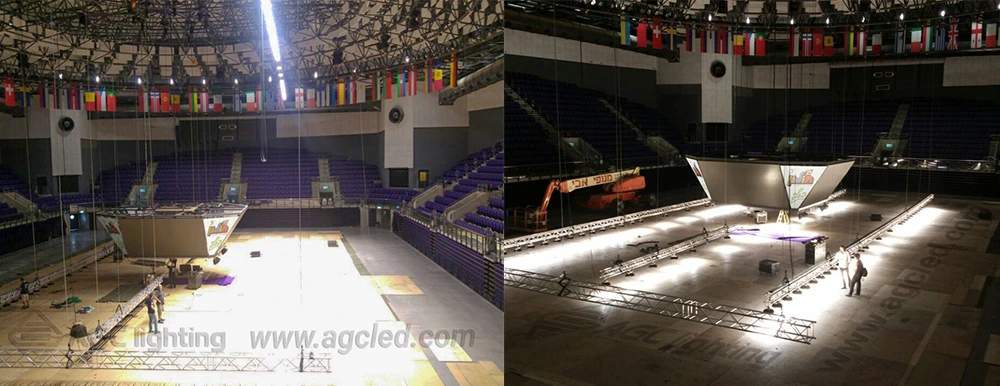
Furnace areas are hard on lighting. You’re dealing with high ambient temperatures, strong radiant heat, constant thermal cycling, and vibration. In some processes, flammable gases or combustible dust may also be present.
That leads to a common question on furnace projects:
Do you need explosion-proof fixtures, or will high-temperature lighting do the job?
These are two different issues. Don’t treat them as the same. You need to separate a hot zone from a hazardous zone.
Most furnace areas are hot zones. They don’t require explosion-proof lighting. They require fixtures that can withstand heat and keep working over time.
However, some furnace environments are hazardous. This is common in aluminum smelting and certain chemical processing operations where flammable gases or dust may be present. In these cases, explosion-proof lighting is required by code.
The Real Conditions Around Industrial Furnaces
When people think about furnace areas, they focus on temperature, and yes, ambient air around industrial furnaces can run anywhere from 50°C to 100°C (122°F to 212°F), depending on the process.
But ambient temperature is only part of the story. In many cases, it’s not even the main cause of failure.
What actually takes fixtures out is the combination of high ambient temperature, radiant heat, thermal cycling, vibration, and airborne contaminants. If you consider lighting based on ambient temperature alone, you’re setting it up to fail.
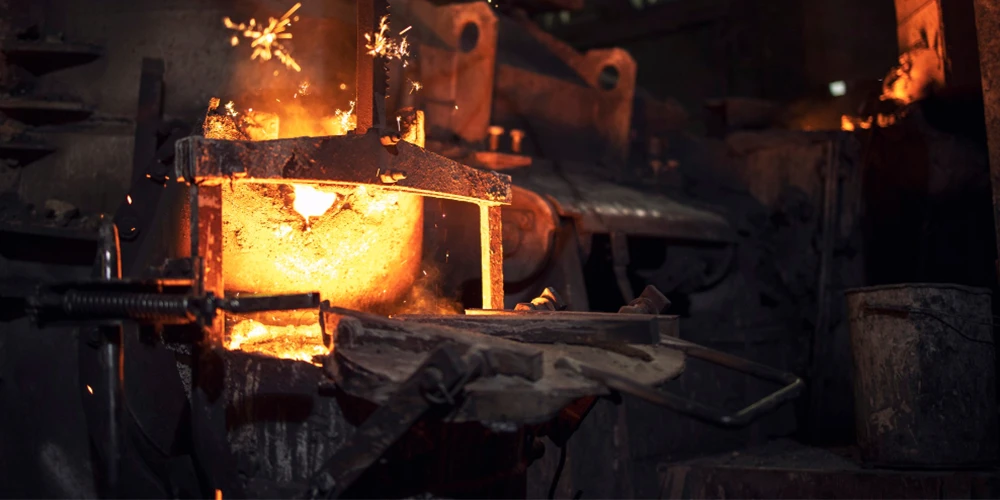
Radiant Heat
Furnaces radiate intense thermal energy outward every time a door or tap opens. A fixture exposed to that direct radiation can run much hotter internally than the surrounding air temperature suggests. This is heat soak, and it is the primary reason fixtures fail in furnaces, even if they appear correctly rated.
That’s why you should never place fixtures directly in the path of furnace exhaust or extremely hot air. The intense heat coming off those air streams can damage the fixtures if they’re exposed to it
Thermal Cycling
Furnaces are not always running at full temperature. They heat up, cool down, shut off for maintenance, and start again.
Every thermal cycle expands and contracts the fixture housing, lenses, and internal components. Over time, this mechanical fatigue cracks seals, loosens connections, and degrades materials.
Vibration
Furnace areas are mechanically active. Overhead cranes, billet handling, forging, and rolling equipment all generate constant vibration and occasional shock. Fixtures take a beating from constant vibration, sudden impacts, and structural resonance from heavy machinery.
If the fixture isn’t built and mounted for it, components work loose, drivers fail, and mounting hardware becomes a safety issue.
Airborne Contaminants
Depending on the furnace type and process, the surrounding air may carry metallic dust, carbon particles, oil mist, or chemical vapors. These contaminants coat optical surfaces and reduce light output over time.
The bigger issue is that some of these materials, like aluminum dust, coal dust, or certain vapors, are combustible. This is where the environment crosses from a high-temperature challenge into a potentially hazardous location, and that distinction changes everything about how you choose lighting.
Choosing Between Explosion-Proof and High-Temp Lighting
A common mistake in furnace projects is assuming that “explosion-proof” means heavy-duty. It does not.
Explosion-proof is an engineering certification for containment. It means the fixture is designed to prevent an internal spark or ignition source from igniting a hazardous surrounding atmosphere. It is not a guarantee that the fixture can survive high heat.
Just as important, the presence of a furnace does not automatically make the area hazardous.
The right choice between explosion-proof and high-temperature lighting depends on the atmosphere around the fixture. If the issue is heat, use high-temperature lighting. If the issue is ignition risk, use explosion-proof lighting.
High Temperature Lighting Is Enough When the Atmosphere Is Clean
If the furnace area does not contain flammable gases, vapors, or combustible dust, then explosion-proof fixtures are unnecessary.
In this case, what matters most is the fixture’s ability to handle ambient temperature, radiant heat, and thermal cycling.
Common applications include:
- Electric arc furnace bays
- Steel reheating furnaces and rolling mill furnaces
- Glass and ceramic kilns
- Heat treatment furnaces
High-temperature lighting is engineered specifically to perform in elevated ambient temperatures and under continuous thermal stress. The design priority is heat management: efficient heat dissipation, stable driver performance, and long LED life.
For example, our HB58 HiRobust is built for ambient temperatures up to 70°C, with thermal management features that protect LED life in high-heat environments. It features a remote driver and larger heat sinks for better airflow and longer service life.
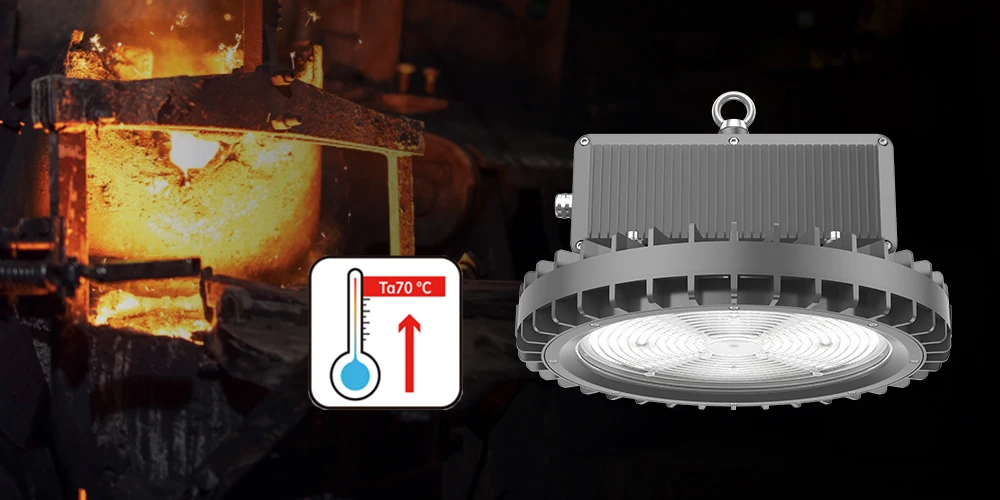
At AGC Lighting, all high-temperature fixtures are tested to verify stable performance under extreme operating temperatures. Watch the video to see how our products are evaluated inside the lab.
Explosion-Proof Is Required When the Atmosphere Is Hazardous
If flammable gas, vapor, or combustible dust is present, the furnace area is a hazardous location. The lighting must be certified for that classification.
Common furnace-adjacent situations include:
- Aluminum and magnesium smelting (combustible metal dust)
- Coke ovens and coal-fired furnaces (flammable gases)
- Chemical processing furnaces (volatile vapors)
- Foundries using certain resins or binders (combustible dust)
In these environments, the fixture must meet two demands at the same time: hazardous location certification and the ability to operate at the actual site temperature.
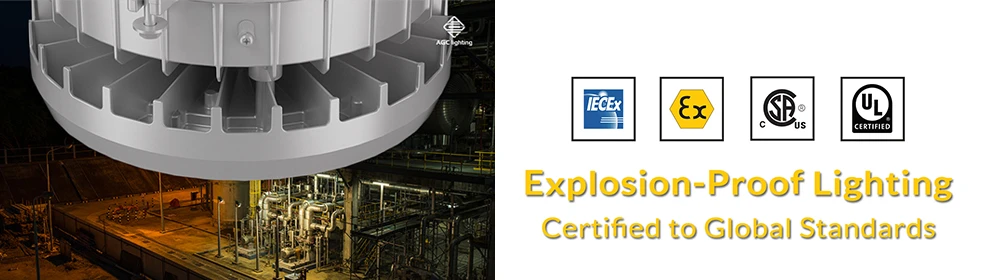
In North America, the NEC Class and Division system applies. In Europe and on international projects, the ATEX and IECEx Zone system applies. AGC Lighting provides professional explosion-proof lighting for the global market. Visit our website for more details on explosion-proof lighting.
T-Rating (Temperature Class) also matters in hazardous applications.
T-rating defines the maximum surface temperature the fixture can reach during operation. It is a hard limit tied to safety.
Every flammable gas, vapor, or dust has a defined ignition temperature. The fixture’s T-rating must be lower than that value.
If the fixture surface temperature can reach the ignition point of the surrounding atmosphere, the protection concept fails, regardless of enclosure design.
|
T-Rating |
Max Surface Temp |
|
T1 |
450°C |
|
T2 |
300°C |
|
T3 |
200°C |
|
T4 |
135°C |
|
T5 |
100°C |
|
T6 |
85°C |
The Right Questions to Ask on Every Furnace Project
Before we recommend any fixture, we need a clear picture of the environment it’s going into. The more we know up front, the faster we can get you to a solution that actually works.
Below are the core details that matter. Share what you have, and our team will take it from there.
About the Environment
What type of furnace is it, and what process is taking place?
What is the measured or estimated ambient temperature in the lighting zone?
About the Atmosphere
Has the area been formally classified for hazardous locations?
What materials are present? gases, vapors, or dusts?
Which regulatory framework applies: NEC, ATEX, or IECEx?
About the Installation
What mounting heights and structural attachment points are available?
About the Project Requirements
What illuminance levels are required for the tasks in this space?
Are there any local authority or insurance requirements we need to account for?
What service life do you expect from the fixtures?
If you are working on a furnace lighting project and want a second set of eyes on the specification, we are happy to work through it with you. That is what we are here for.