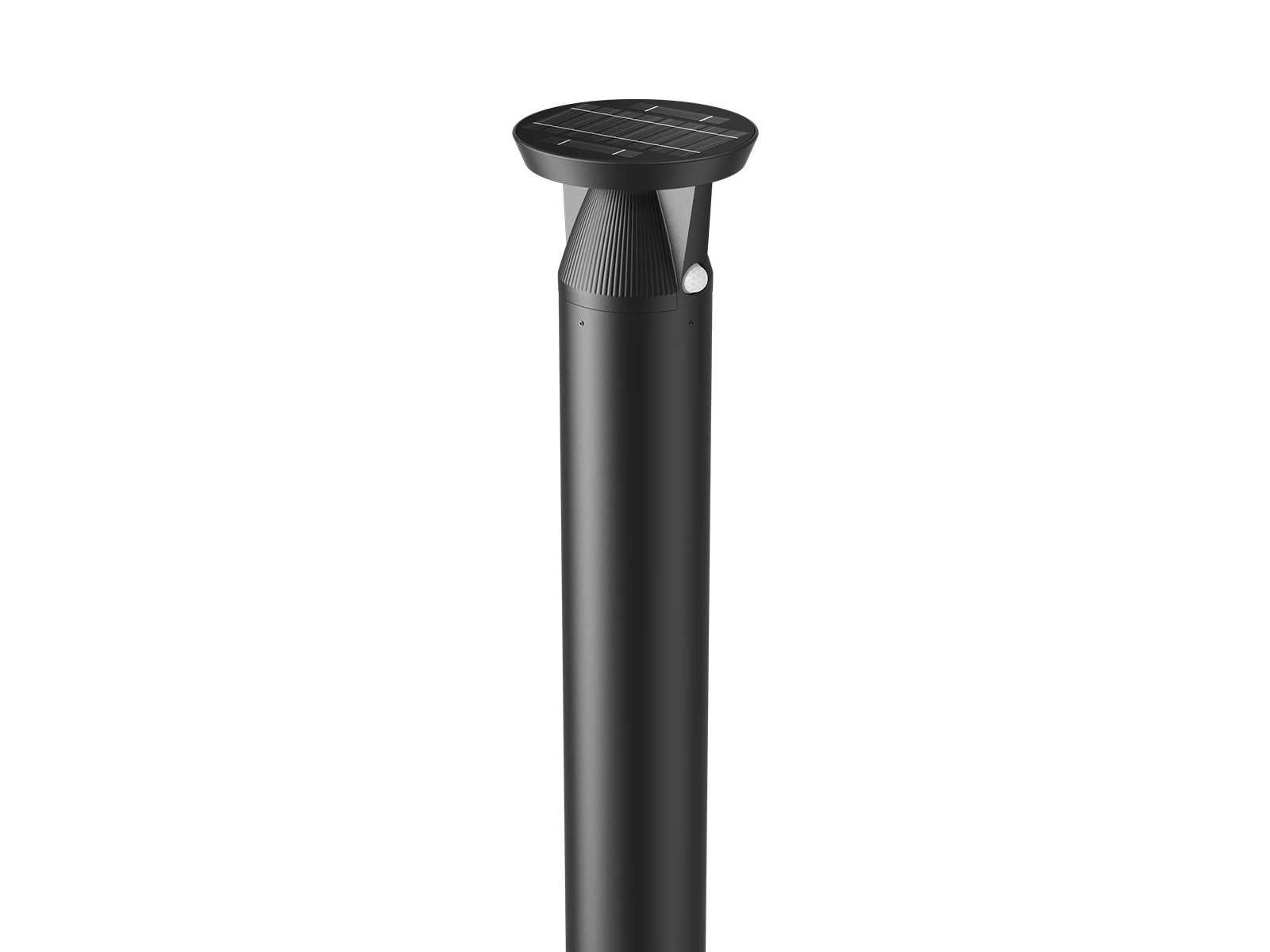
Solar lighting is often the natural choice for coastal areas. Boardwalks, beachfronts, marine promenades, and remote seaports where trenching and grid connection would be expensive, disruptive, or simply not permitted.
But solar lighting that was not specifically designed for the coast will fail there. Salt air and wind-driven sand are the conditions that expose every weakness in a system not built to handle them.
Coastal ecosystems are among the most ecologically sensitive environments on earth. Getting the lighting right means understanding how artificial light affects the wildlife that depends on darkness, and designing around that from the start.
This is what we have learned from working on coastal solar lighting projects. It is not complicated, but it does require getting several things right simultaneously.
How salt spray quietly destroys lighting systems
Standard outdoor fixtures are built for rain and humidity, not for a salt-laden marine atmosphere. They are tested to IEC 60068 conditions, which use freshwater spray rather than salt fog.
But in the coastal zone, salt ions dissolved in sea spray act as an electrolyte, driving an electrochemical reaction that attacks metal surfaces far more aggressively than freshwater ever would.
Protective coatings that perform reliably in an urban environment begin to break down within months at the shoreline. Once that barrier fails, the aluminium underneath corrodes, fasteners seize, and electrical connections inside the housing degrade.
At AGC, our coastal solar fixtures are manufactured from high-quality aluminium alloys with anti-corrosion coatings formulated for salt-spray environments. Our products also pass dedicated salt spray testing.
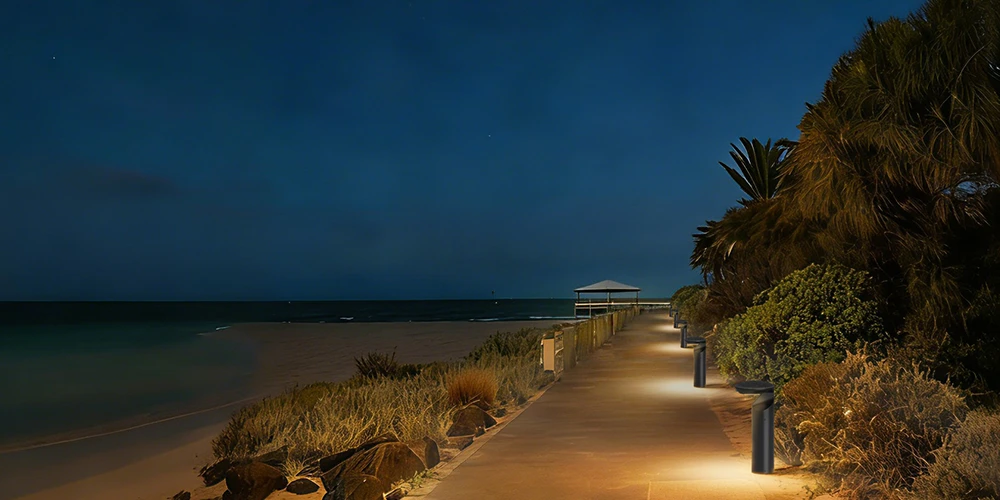
Solar lighting is usually the smarter choice for coastal sites
In a city, connecting a streetlight to the grid is routine. In a coastal environment, it rarely is. Sandy soil gives poor structural support to buried conduit. Dune systems, wetland margins, and marine reserve buffer zones are subject to excavation restrictions that can delay or block planning approval entirely. And even where trenching is permitted and completed, a single cable fault from ground movement, corrosion, or storm damage can extinguish lighting across an entire promenade at once.
A blackout on a beachside walkway is a safety incident. In an area near active sea turtle nesting beaches, it can also be a compliance issue.
Solar lighting removes these problems entirely. There is no trench, no cable run, no shared infrastructure to fail.
Our coastal solar range, from bollard lights to street lights, is designed to cover the different scale and output requirements that coastal sites present, all without grid dependency.
Lighting the coast without harming the wildlife
Artificial light at night is a stressor on coastal ecosystems. Sea turtles, shorebirds, and marine invertebrates evolved over millions of years in environments where darkness after sunset was reliable.
Artificial light disrupts behaviours that depend on that darkness, including nesting, hatching, feeding, and migration.
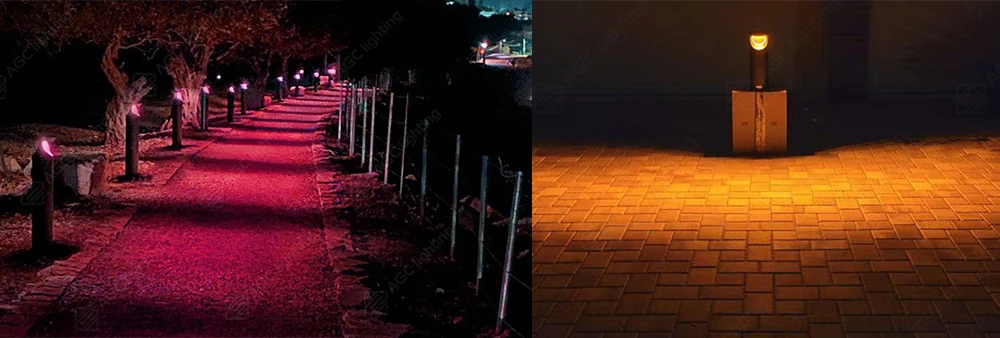
For sea turtles, the mechanism is specific and well-studied. Nesting females avoid beaches with visible artificial light. Hatchlings, which navigate toward the ocean by the natural brightness of the open horizon, become disoriented by artificial light sources and move inland, an error that is frequently fatal. The spectral composition of the light determines the impact. Sea turtles are highly sensitive to short-wavelength blue and white light. They show significantly less response to long-wavelength amber and red light above approximately 580 nm.
This is why the Florida Fish and Wildlife Conservation Commission (FWC) has turtle-friendly lighting guidelines, which require coastal lighting to be kept low, shielded, and long-wavelength.
We have helped clients meet these requirements on projects, and the results show that wildlife-friendly lighting and good human lighting are not in conflict when the specification is right.
We have provided amber and red solar bollard lights for walkways, creating a visually distinctive nighttime atmosphere while providing warm, comfortable lighting for evening pedestrians.
Intelligent energy management keeps solar lights on
Coastal climates are variable. Overcast days, storm periods, and seasonal shifts in daylight hours require energy management that adapts continuously to available resources.
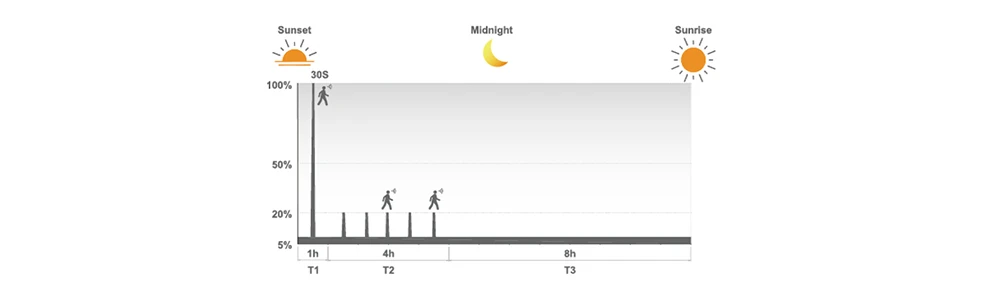
Our coastal solar bollard lights are equipped with built-in PIR sensors that adjust output based on actual presence. This means the system preserves battery reserve through low-traffic hours without switching off entirely, maintaining ambient illumination for safety and orientation.
These solar lights operate in intelligent mode for up to 3 days without sunlight. The system survives consecutive overcast nights without needing intervention. Reduced light emission during low-activity hours is also a contribution to wildlife protection, cutting light exposure on nesting beaches during the hours when human activity is lowest and ecological sensitivity is highest.
The coast demands more from a solar lighting system on every dimension: more material resilience, more care around ecological impact, and more intelligence in how energy is managed across variable conditions.
Explore AGC’s coastal solar lighting solutions or get in touch with our team to talk through your project.