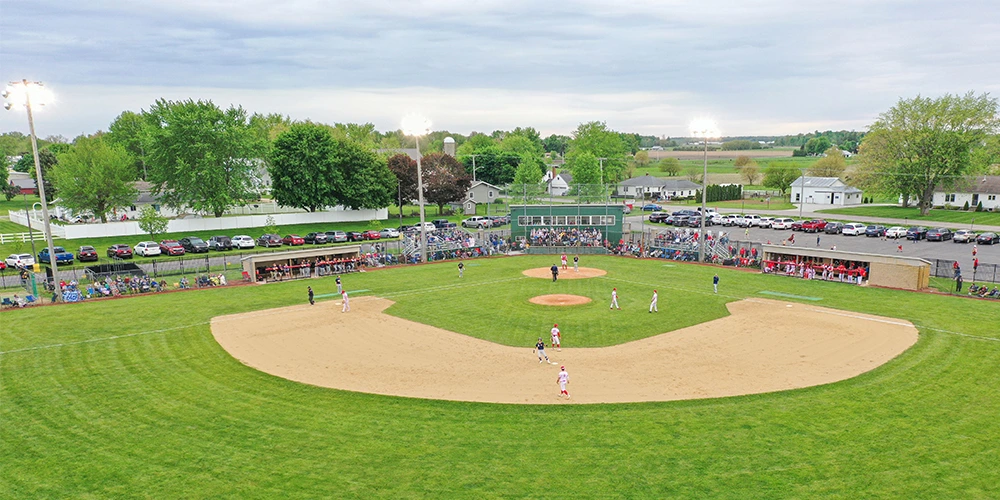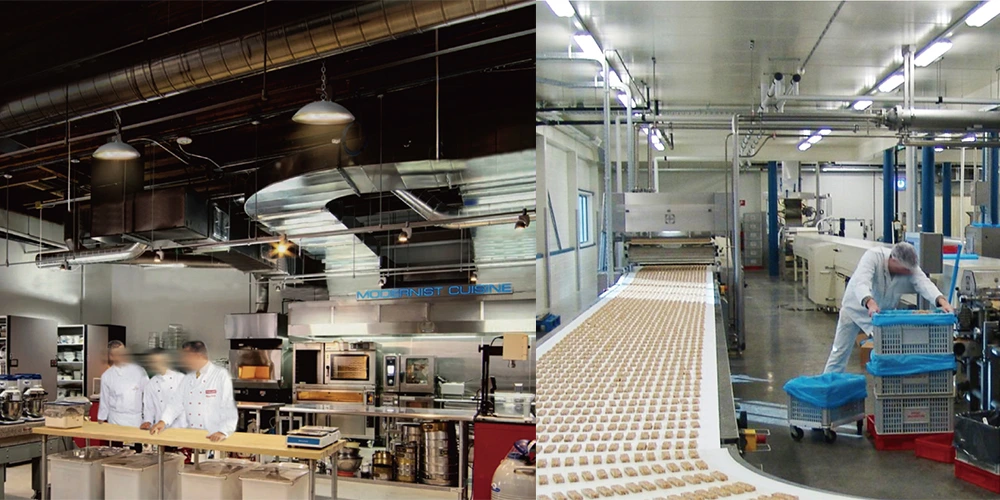
Golf course lighting is challenging because every area of the course has different lighting requirements.
A driving range needs long-distance projection to illuminate balls traveling down a narrow hitting corridor. A fairway requires consistent coverage across a large playing area, often from poles positioned away from the line of play. A green needs controlled, uniform illumination with careful glare management because players are close to the light source. A cart path only requires enough light for safe navigation.
Because each zone has different geometry and viewing conditions, choosing the right light distribution is one of the most important decisions in golf course lighting design. The right optics help achieve two goals that are often in conflict: providing enough light for players to track the ball while controlling glare, spill light, and unnecessary energy use.
- Why golf courses require different light distributions
- Distance varies significantly across a golf course
- Pole locations influence lighting design
- Controlling spill light protects the surrounding areas
- Light distribution selection, zone by zone
- Long-Range Target Illumination for Driving Ranges and Fairways
- Balanced Coverage for Tee Boxes
- Uniform Lighting for Putting Greens
- Matching Optics to Every Area of the Course
Why golf courses require different light distributions
A golf course is not a single lighting environment. It includes areas with different distances, elevations, viewing angles, and player requirements. Achieving proper illumination requires a combination of optical distributions designed for specific applications.
Distance varies significantly across a golf course
Different areas of a golf course require very different light throw distances.
A driving range may require light to project more than 100 yards down a narrow hitting area. The optical system needs enough intensity and reach to illuminate the flight path while maintaining uniformity across multiple hitting lanes.
A putting green has completely different requirements. It is a smaller, more concentrated area where players are close to the light source. A narrow beam may create bright spots and uneven shadows, while an overly wide beam can increase glare and waste light outside the playing area.
Pole locations influence lighting design
Golf course lighting poles cannot always be installed where the light is needed most.
Unlike sports fields with fixed boundaries and predictable pole locations, golf courses must consider playability, aesthetics, maintenance access, and safety. Poles are often positioned away from fairways, tee boxes, and greens to avoid interfering with players and course operations.
When fixtures are mounted farther from the target area or at an angle, the beam distribution becomes critical. The optics must compensate for the pole position to provide even coverage without creating bright spots, dark areas, or excessive glare.
Controlling spill light protects the surrounding areas
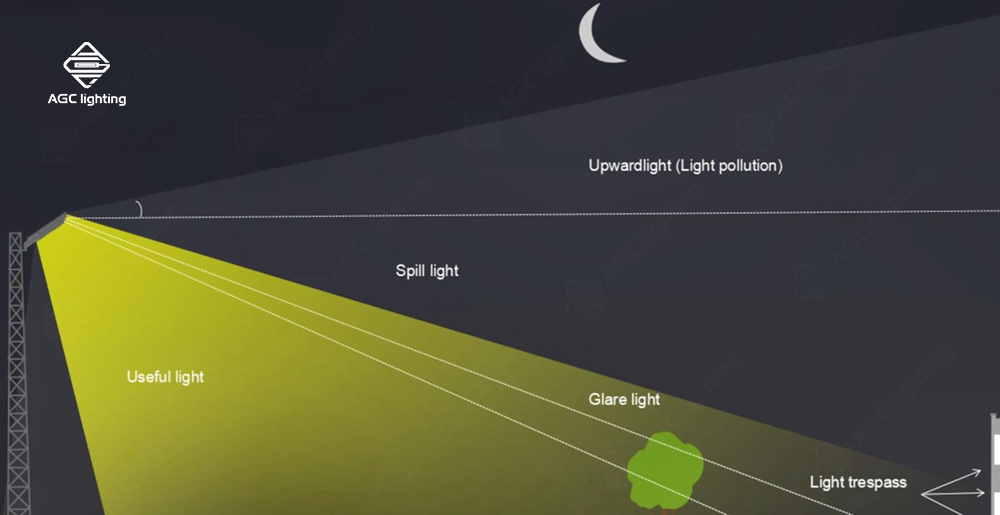
Golf courses often include neighboring holes, residential areas, roads, and environmentally sensitive spaces nearby. Excessive spill light can affect surrounding properties, disturb nearby areas, and create challenges in meeting local golf lighting requirements.
A well-designed optical system directs light only where it is needed. This improves visibility for players, reduces glare, minimizes wasted energy, and helps golf facilities maintain good relationships with surrounding communities.
Light distribution selection, zone by zone
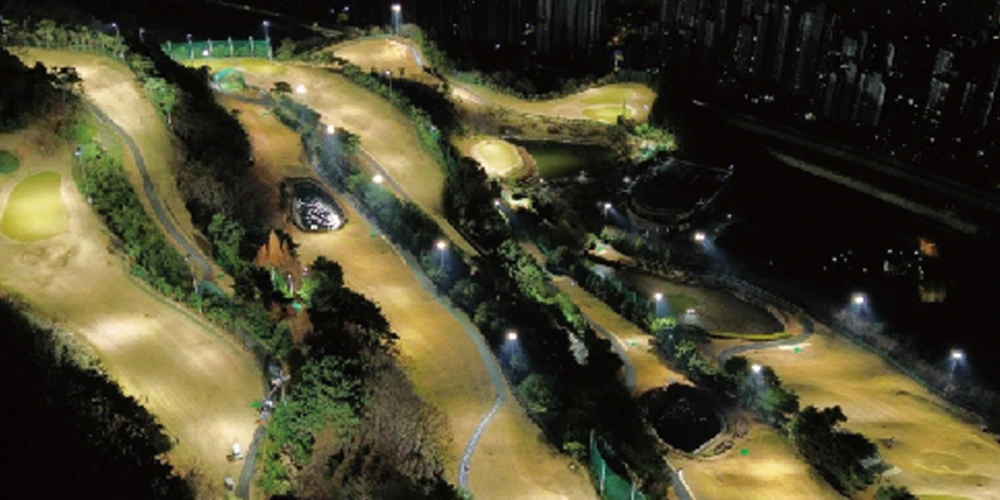
Long-distance areas require concentrated beams to maintain visibility, while player areas require wider and softer distributions to create comfortable, uniform illumination.
Our SP17 floodlight offers a complete range of symmetrical optical distributions, from narrow 12° beams to wide 60° beams. This range allows lighting designers to match the beam pattern to each area of the golf course, delivering the required throw distance, uniformity, and glare control.
Long-Range Target Illumination for Driving Ranges and Fairways
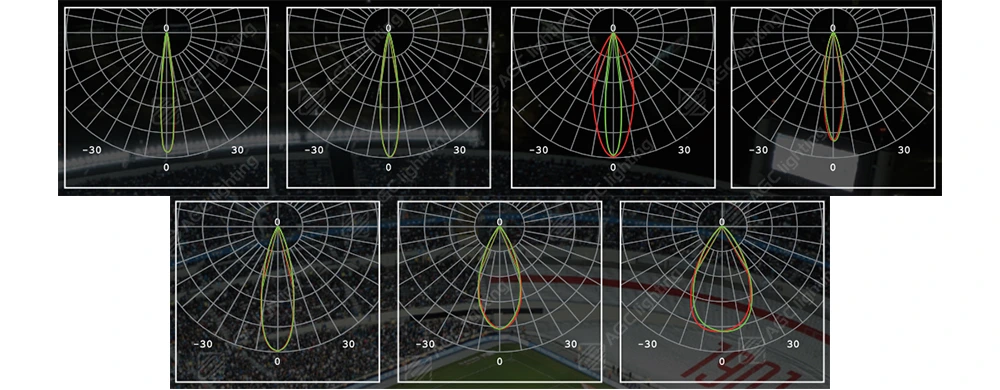
For these areas, we provide precision elliptical 15°x45° optics. While this optic maintains a balanced profile for consistent output, the elliptical shape is specifically engineered to project a focused, elongated beam. This allows for superior "throw" down the length of a fairway or driving range while controlling the width to minimize spill into the rough.
For other long-distance needs, our narrow symmetrical beams (12°, 17°, 22°, and 30°) concentrate intensity to project light farther while maintaining visibility for ball tracking.
These distributions are designed for applications where fixtures are mounted farther away from the target area. By controlling the beam spread, they provide better light utilization and reduce the need for excessively high mounting poles or higher fixture output.
For driving ranges, this helps players follow the ball flight path more easily against the night sky while maintaining consistent illumination across multiple hitting lanes.
Balanced Coverage for Tee Boxes
Tee boxes require a different approach. Unlike a driving range, the target area is compact and players are positioned close to the illuminated surface. The priority is not maximum throw distance, but uniform light coverage with minimal glare.
Medium and wide distributions, such as 30° and 45° optics, are better suited for tee areas because they provide broader coverage and reduce the risk of bright spots and uneven lighting.
Fixture position is also critical. Tee box luminaires are typically installed to the side or behind the hitting area and aimed carefully to minimize glare and prevent players from creating shadows that interfere with their stance and swing.
Uniform Lighting for Putting Greens
Players need to clearly see the putting surface, slopes, and ball movement without uncomfortable glare or harsh contrast.
Wider optical distributions, such as 45° and 60° beams, provide a more even light spread across the green surface. Compared with narrow beams, these wider patterns reduce hot spots and dark areas, creating better visual conditions for reading the green.
The goal is consistent horizontal illumination with controlled vertical light, allowing players to see the surface clearly while maintaining visual comfort.
Matching Optics to Every Area of the Course
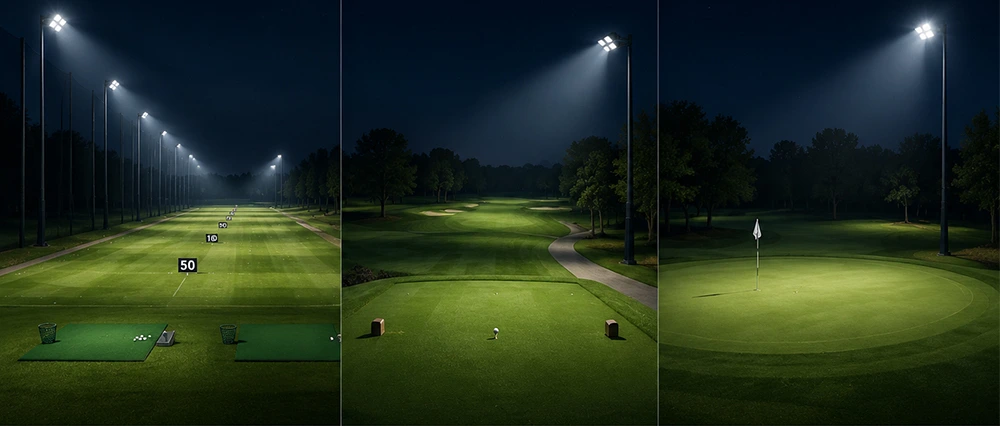
A successful golf course lighting design does not rely on a single beam angle. It combines different optical distributions based on mounting height, pole location, playing distance, and visual requirements.
Contact our lighting specialists to discuss your project requirements and find the right optical solution for your golf course.