In a cement plant, grain processing facility, woodworking shop, and other heavy industrial environments, dust gets everywhere, also the high bay lights.
Over time, this dust buildup on lighting fixtures reduces light output, makes work spaces noticeably darker, increases energy consumption, and requires more frequent cleaning at height.
In facilities where lights run 16 to 24 hours a day, that translates directly into unplanned maintenance costs, higher operating costs and avoidable downtime. Additionally, cleaning helps, but it does not address the root cause.
At AGC Lighting, we have worked with many customers facing these challenges. Based on their needs, we developed a practical solution: a specially designed reflector that also functions as a dust cover for high bay lights.
How Dust Buildup Causes High Bay Light Failure
Most industrial high bay lights use aluminum heat sinks with deep cooling fins. These fins increase surface area, allowing heat generated by the LEDs and driver to dissipate into the surrounding air.
In a dusty environment, however, this design backfires.
Airborne particles, such as wood dust, flour, cement dust, paper fibers, or metal debris, settle inside the cooling channels. Over time, the gaps between the fins become packed with dust, forming a thick layer across the heat sink.
The photo below was taken at a paper mill operated by one of our customers. You can see how heavily dust has accumulated on the high bay fixture. The buildup restricted heat dissipation so severely that the fixture experienced overheating, resulting failures.
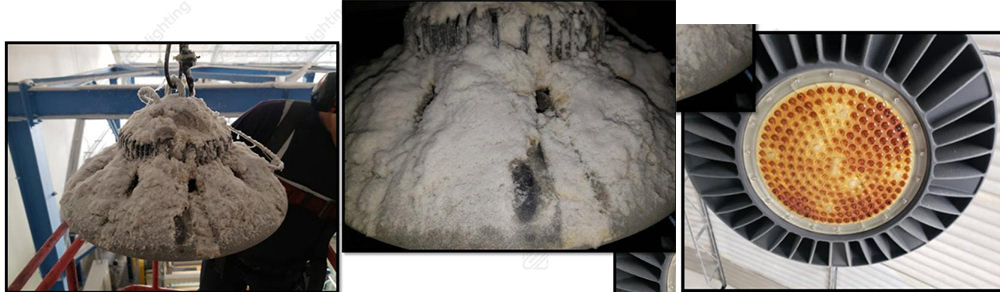
Dust buildup not only makes a fixture look dirty, but also prevent heat from escaping through the heat sink. As heat becomes trapped inside the fixture, the internal operating temperature rises. When this happens, two common problems follow: faster lumen depreciation and premature driver failure.
Why High IP Ratings Don't Prevent Dust Buildup
When discussing dusty industrial environments, many people assume the solution is simple: choose a high bay light with a high IP rating, such as IP65 or IP66.
This is good advice, but only up to a point.
An IP6X rating means the fixture is dust-tight. Dust cannot enter the enclosure and reach critical components such as the LED board or driver. This protection helps prevent contamination and improves reliability in harsh environments.
However, IP ratings only apply to what gets inside the fixture. In other words, IP ratings protect the internal components from dust ingress. They do not prevent dust from accumulating on the outside of the fixture.
That is why the high bay light shown in the previous photo is IP65 rated, but dust still cause problems.
How a Specially Designed Reflector Reduces Dust Accumulation
For facilities with heavy airborne dust, the challenge is not only keeping dust out of the fixture. It is also reducing dust accumulation on the fixture itself.
Our approach is simple but effective: reduce exposed areas where dust can settle.
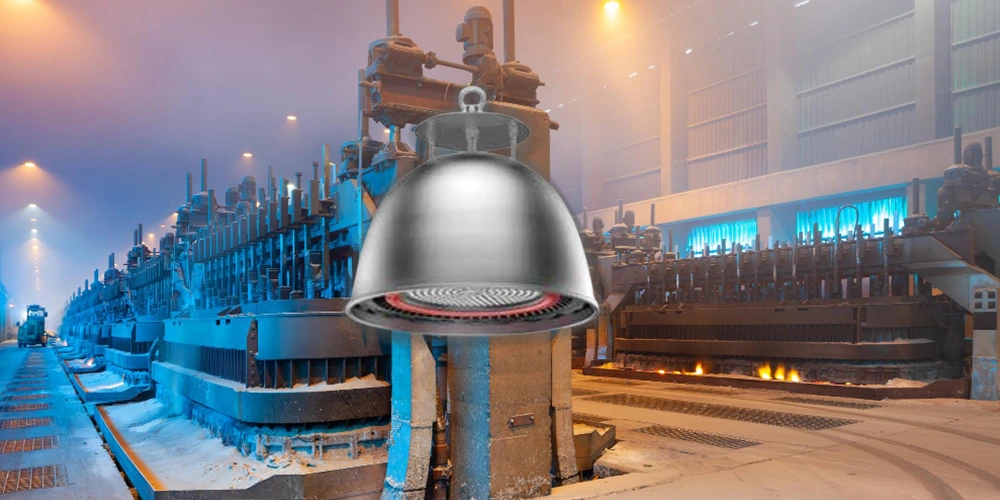
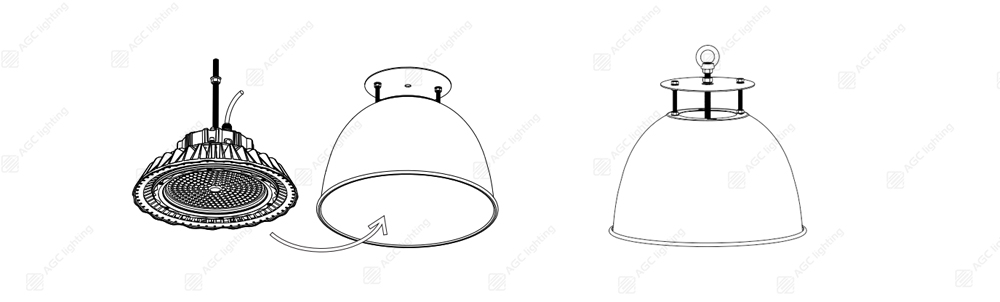
To do that, we developed an aluminum reflector that also functions as a dust cover for high bay lights.

A UFO high bay has exposed heat sink fins, flat surfaces, and horizontal ledges. These features help trap airborne dust and make cleaning more difficult over time.
Our reflector changes that geometry.
Its smooth, dome-shaped surface covers the upper portion of the fixture and minimizes exposed areas where dust tends to accumulate. Instead of settling deep inside cooling fins and corners, dust is more likely to remain on the outer surface, where it can slide off naturally or be removed more easily during routine maintenance.
At the same time, the reflector continues to direct light downward where it is needed while protecting the fixture from direct dust exposure.
The reflector is manufactured from aluminum, providing a balance of performance and durability. It adds minimal additional load to the suspension system while offering good mechanical strength and corrosion resistance for humid industrial environments.
What About Heat? How the Design Stays Cool
At this point, you may be asking an obvious question:
“If you cover a high bay light with a large metal reflector, doesn't that trap heat inside?”
It is a fair concern.
If the reflector were completely enclosed with no airflow path, heat would build up inside the fixture and reduce performance. That is exactly what this design avoids.
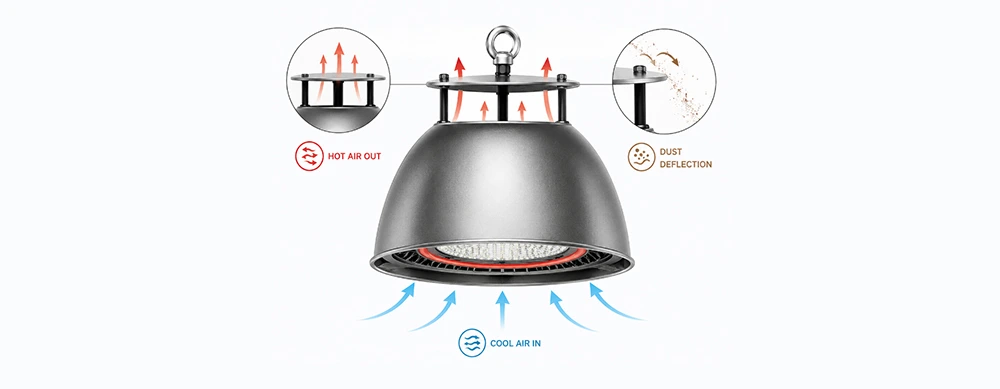
The reflector uses an open chimney cooling structure combined with a protective top cap to maintain airflow while reducing dust accumulation on high bay lights.
First, the reflector itself is made from aluminum, a material with good thermal conductivity. This aluminum structure helps transfer and spread heat across a larger surface area, where it can dissipate into the surrounding air.
Second, the reflector maintains a ventilation gap between the dome and the top cover.
As the high bay operates, warm air naturally rises through this opening and exits the upper section of the fixture. This upward airflow continuously draws cooler air in from below, creating passive air circulation through natural convection.
This chimney effect allows heat to escape while maintaining airflow around the fixture.
Finally, the top cap helps protect this airflow path from direct dust deposition.
The cap acts as a shield. Dust tends to collect on the outer surface or slide off the curved reflector rather than entering the cooling path.
What About Combustible Dust Environments?
Some facilities face a different challenge: combustible dust.
Industries such as woodworking, grain processing, flour milling, metal processing, and chemical manufacturing can generate fine airborne particles that may create an explosion hazard under certain conditions.
In these environments, lighting fixtures must comply with the applicable hazardous location standards and be selected based on the dust classification requirements of the project.
For these applications, AGC Lighting offers explosion-proof lighting certified to both ATEX/IECEx and UL844/NEC 500 standards, covering the full range of international project requirements.
For projects where dust accumulation on fixture surfaces is also a concern, reflector options are available to help reduce external dust buildup while maintaining airflow around the fixture.
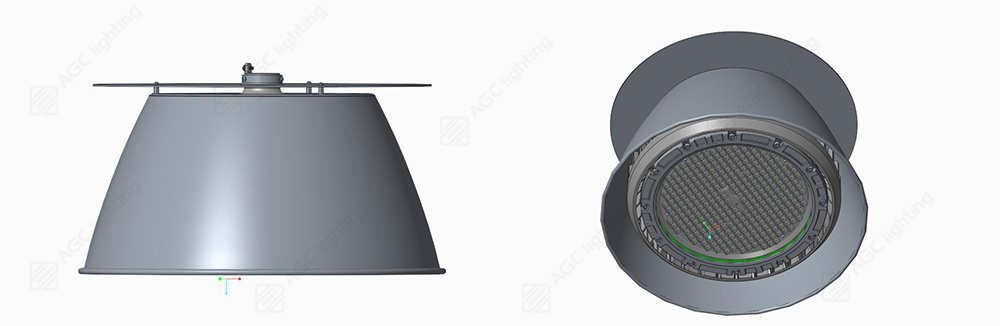
This is the lighting solution we provided for the paper mill plant. We use an HA05 explosion-proof light and a bell-shaped reflector to help reduce dust buildup. There is also a gap between the metal plate and the reflector to allow air to flow through, which improves ventilation and helps release heat.
At AGC Lighting, we provide lighting solutions based on the operating environment and project requirements, from fixture selection to accessory configuration and technical support.
If you are working on a demanding industrial or hazardous-area project, contact us. Our team can help evaluate the application and recommend a suitable solution.