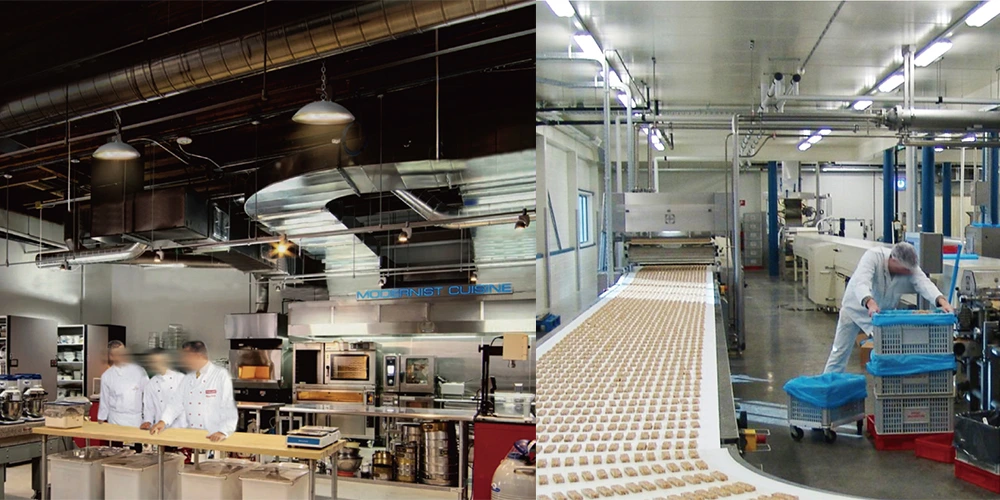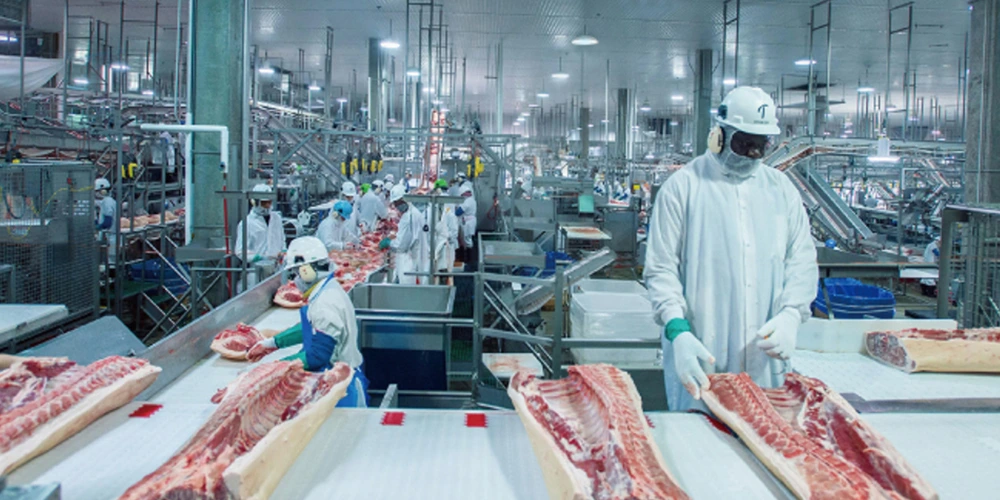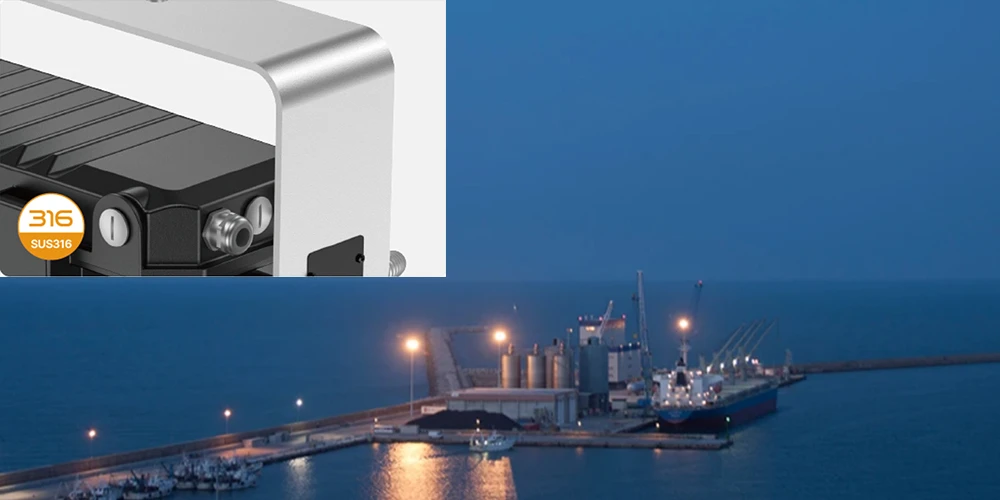
Corrosion one of the fastest ways to shorten the life of a lighting system. Salt-laden coastal air, chemical washdowns in food-processing facilities, and outdoor exposure in urban environments all put constant stress on lighting systems.
316 stainless steel is widely used in these conditions because it resists pitting, rust, and long-term corrosion far better than standard metals. But corrosion doesn’t start with the housing alone; it often starts at smaller hardware points, like mounting brackets, end caps, screws, and fasteners, where exposed to moisture and contaminants.
Once corrosion starts, fixture integrity, sealing performance, and structural safety can all be affected.
So we use 316 stainless steel in these components for most of our products. It helps maintain durability, structural strength, and long-term reliability in harsh environments.
- What Is 316 Stainless Steel and Why It Matters
- 304 vs. 316 vs. 316L Stainless Steel, What’s the Difference?
- Harsh Environments That Require 316 Stainless Steel
- Salt, Spray, and Chlorides
- Chemicals and Cleaning Agents
- Moisture and temperature cycling
- Combined Mechanical and Chemical Stress
- Where We Use 316 Stainless Steel in Our Fixtures
- Long-Term Reliability Starts with the Small Details
What Is 316 Stainless Steel and Why It Matters
316 stainless steel is an austenitic alloy made primarily of chromium, nickel, and molybdenum. Like other stainless steels, chromium and nickel provide the base level of corrosion resistance. What makes 316 different is the addition of molybdenum, typically around 2–3%.
That added molybdenum improves resistance to chloride-related corrosion, especially pitting and crevice corrosion. These are some of the most common failure mechanisms in coastal areas, marine environments, chemical facilities, and other harsh outdoor conditions.
For industrial and outdoor lighting, material choice directly affects fixture lifespan and reliability. Using 316 stainless steel in critical components helps fixtures remain structurally secure, corrosion-resistant, and easier to maintain over the years of exposure.
304 vs. 316 vs. 316L Stainless Steel, What’s the Difference?
304, 316, and 316L are all widely used stainless steel grades in industrial and outdoor lighting. They look similar, but their corrosion resistance and application range are different, especially in harsh environments.
The main difference comes down to alloy composition, particularly the presence of molybdenum and carbon content.
|
|
304 |
316 |
316L |
|
Chromium |
18–20% |
16–18% |
16–18% |
|
Nickel |
8–10% |
10–14% |
10–14% |
|
Molybdenum |
None |
2–3% |
2–3% |
|
Carbon Content |
0.08% max |
0.08% max |
0.03% max |
|
Corrosion Resistance |
Good |
Excellent |
Excellent |
|
Chloride Resistance |
Moderate |
High |
High |
|
Relative Cost |
$ |
$$ |
$$ |
304 is the most commonly used stainless steel grade. It provides good corrosion resistance for general indoor applications and mild outdoor environments.
316 stainless steel adds 2–3% molybdenum to the alloy. That addition greatly improves resistance to pitting and crevice corrosion caused by salt, moisture, and chemicals.
Because of this, 316 is commonly used in coastal areas, marine applications, food-processing facilities, and wastewater plants.
316L is a low-carbon version of 316 stainless steel. The lower carbon content improves weldability and reduces the risk of corrosion in welded areas after fabrication. The choice of 316 and 316L usually depends on how much welding or fabrication is involved in the component design.
We use 304 and 316 stainless steel depending on the application requirements and environmental conditions. We also provide customization to match specific project needs, including higher-corrosion installations where 316L is preferred.
If you need products for corrosive or even hazardous environments, contact us for more details.
Harsh Environments That Require 316 Stainless Steel
Any environment with constant exposure to salt, moisture, chemicals, or wide temperature swings can accelerate corrosion in lighting systems. In these conditions, 316 stainless steel is often the safer long-term choice.
Salt, Spray, and Chlorides
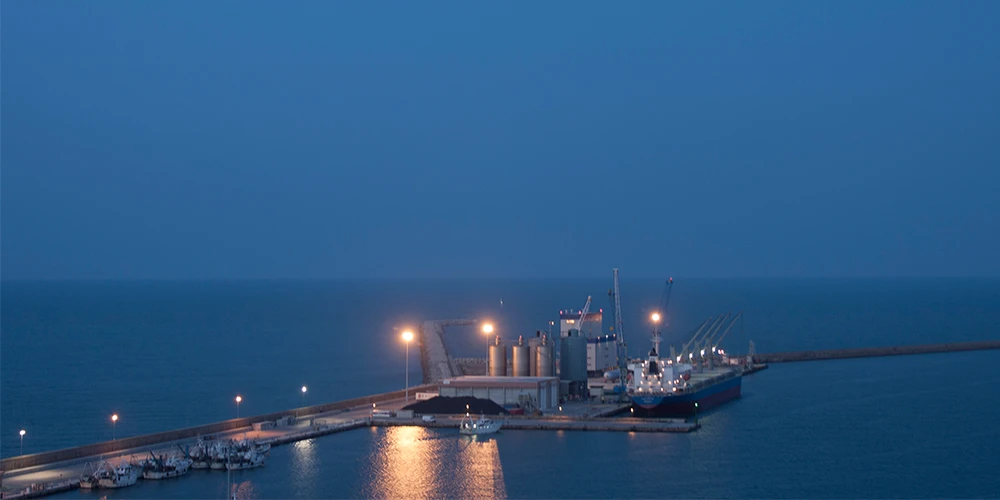
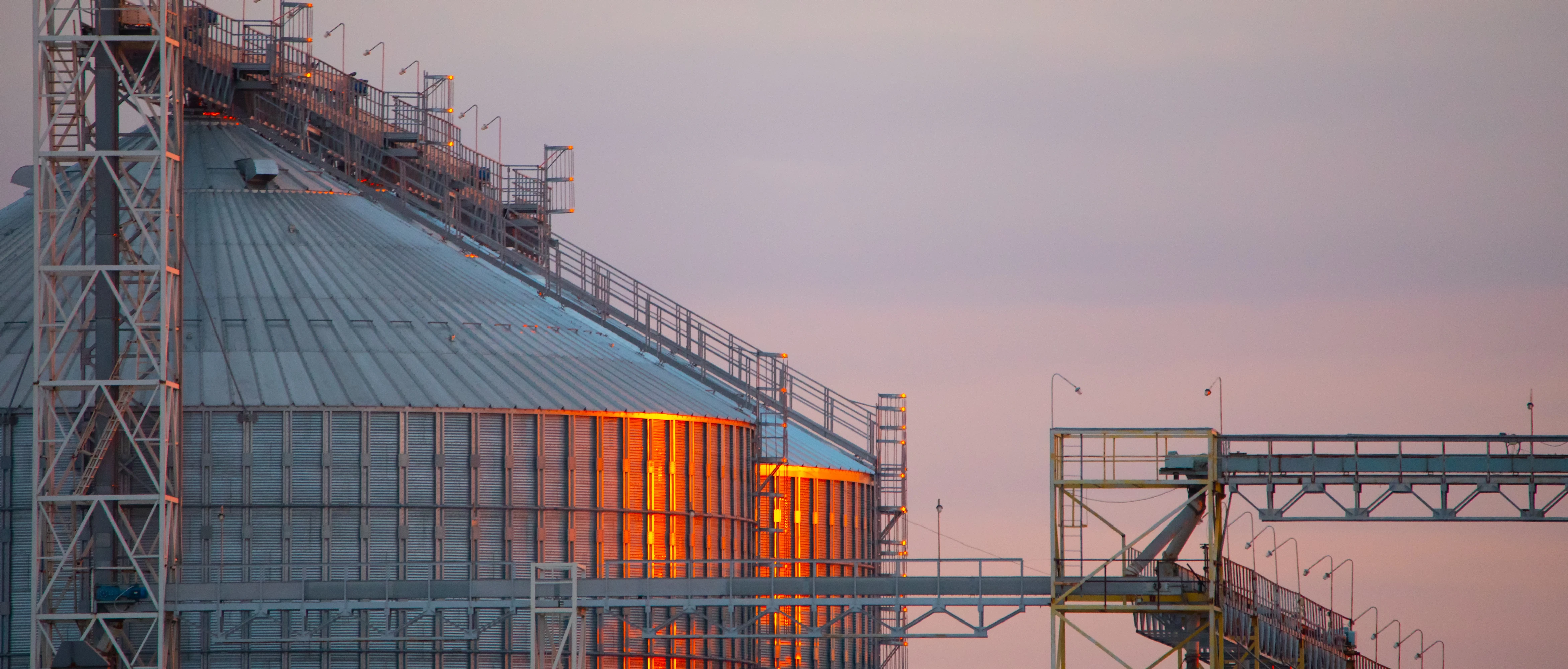
Coastal and marine environments are some of the most aggressive conditions for metal. Offshore platforms, ports, bridges, and marine vessels are constantly exposed to airborne salt and chloride contamination.
These chlorides can quickly cause pitting corrosion. Even installations located several miles inland from the coastline can experience accelerated corrosion over time.
Chemicals and Cleaning Agents
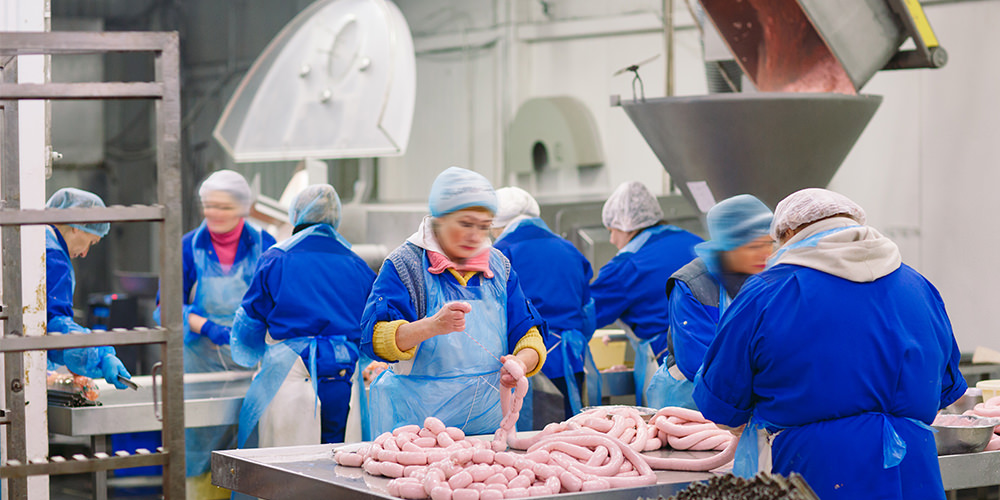
Food-processing plants, pharmaceutical facilities, chemical plants, and wastewater treatment sites regularly expose lighting systems to harsh cleaning chemicals, washdowns, and corrosive vapors.
In these environments, corrosion also affects hygiene standards, maintenance schedules, and regulatory compliance.
Moisture and temperature cycling
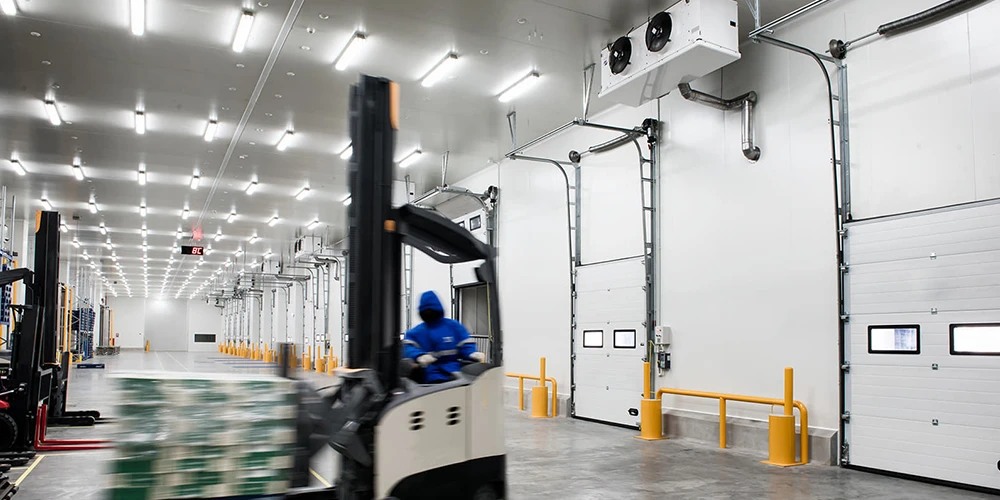
Cold storage facilities, refrigerated areas, tunnels, and outdoor urban infrastructure often experience constant condensation and repeated temperature changes.
When moisture combines with pollution, acid rain, or de-icing salts, corrosion can develop much faster than expected, especially around brackets, fasteners, and welded areas.
Combined Mechanical and Chemical Stress
Mining sites and heavy industrial facilities add vibration, abrasion, and mechanical stress to already corrosive conditions. In these applications, hardware failure can create both maintenance problems and safety risks.
Where We Use 316 Stainless Steel in Our Fixtures
Although 316 stainless steel offers excellent corrosion resistance, it is not necessary for every part of a fixture. Aluminum and ZAM materials remain the better choices for the main housing because they provide efficient heat dissipation, lower weight, and better overall cost efficiency.
We use 316 stainless steel where corrosion protection matters most, in the components directly exposed to harsh environments and most likely to fail first, such as screws, mounting brackets, and end caps.
Fasteners and Screws
Fasteners are often overlooked in fixture specifications, but they are one of the most critical points of failure.
When screws corrode, sealing pressure weakens, and the fixture’s IP protection can be compromised. Moisture can then enter the electrical compartment, leading to internal corrosion, electrical failure, and shortened fixture life.
Mounting Brackets
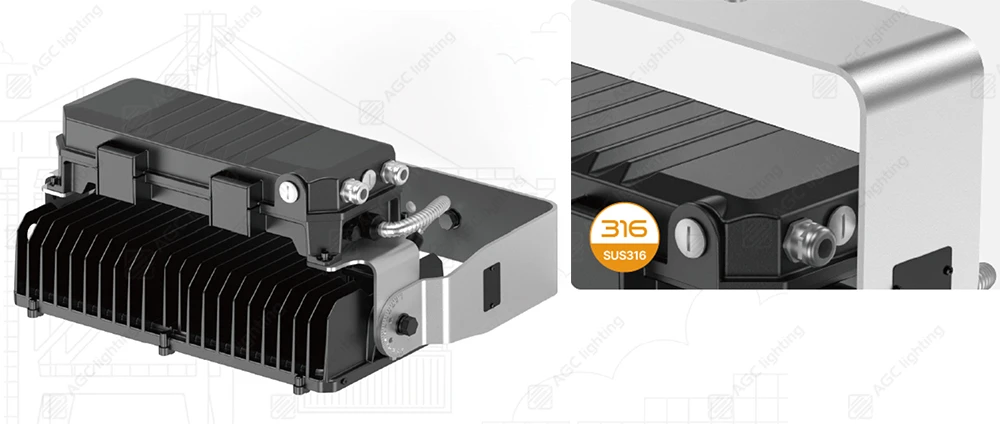
Mounting brackets carry the full weight of the fixture while remaining fully exposed to the environment.
Unlike cosmetic corrosion, bracket failure can create direct safety and maintenance problems. In coastal and industrial environments, brackets are exposed not only to salt air and moisture but also to vibration, wind load, and continuous thermal cycling.
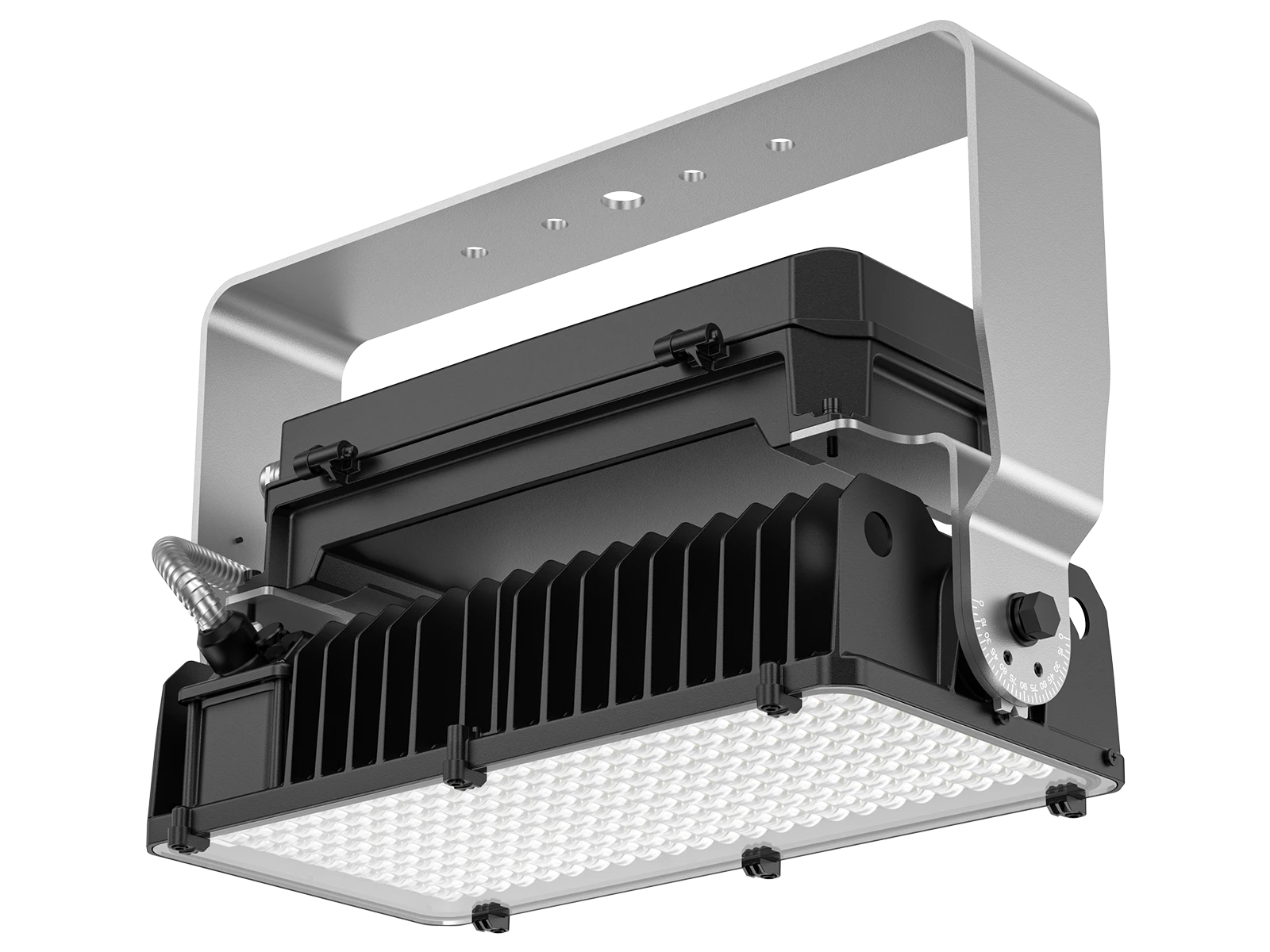
Our FL87 flood light, commonly used in ports and terminal applications, is designed with 316 stainless steel brackets and screws to maintain structural stability in these demanding conditions.
End Caps
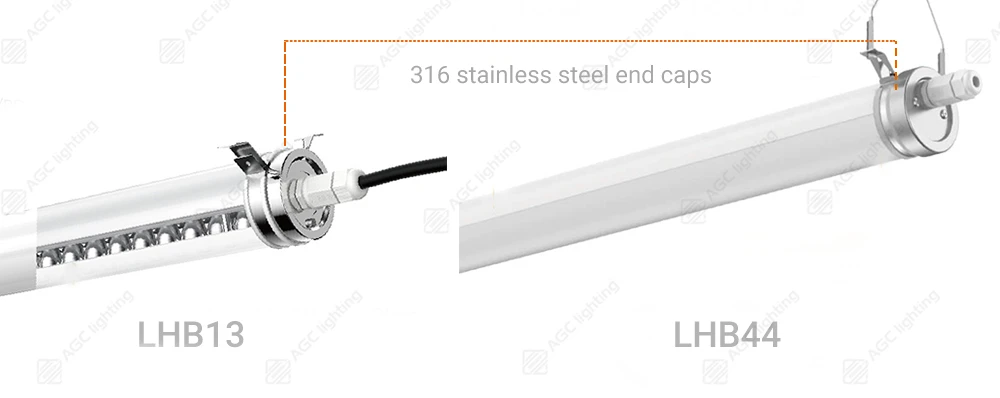
End caps protect the terminal sections of the fixture and help seal internal electrical and optical components from moisture, dust, and chemical ingress.
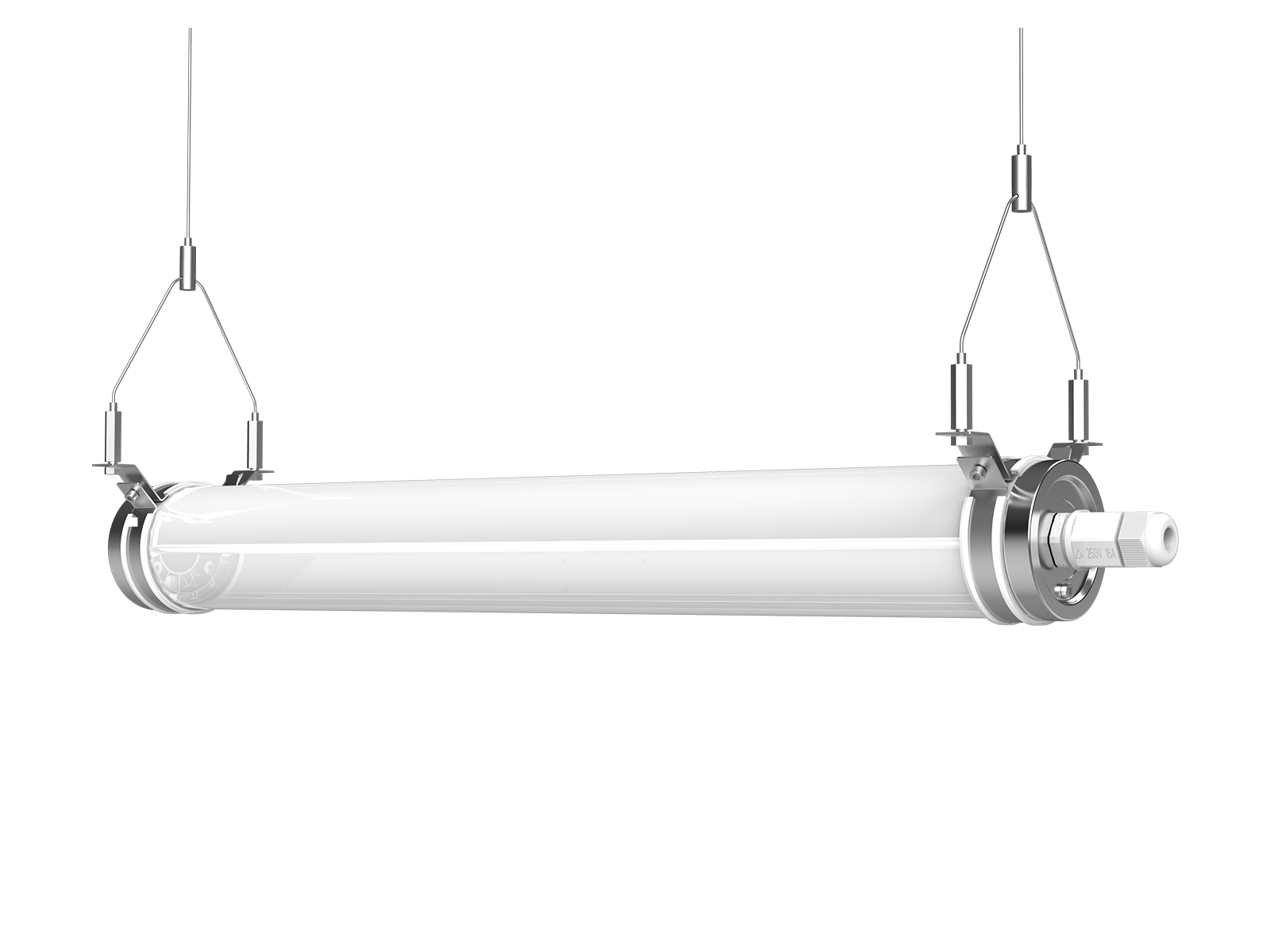
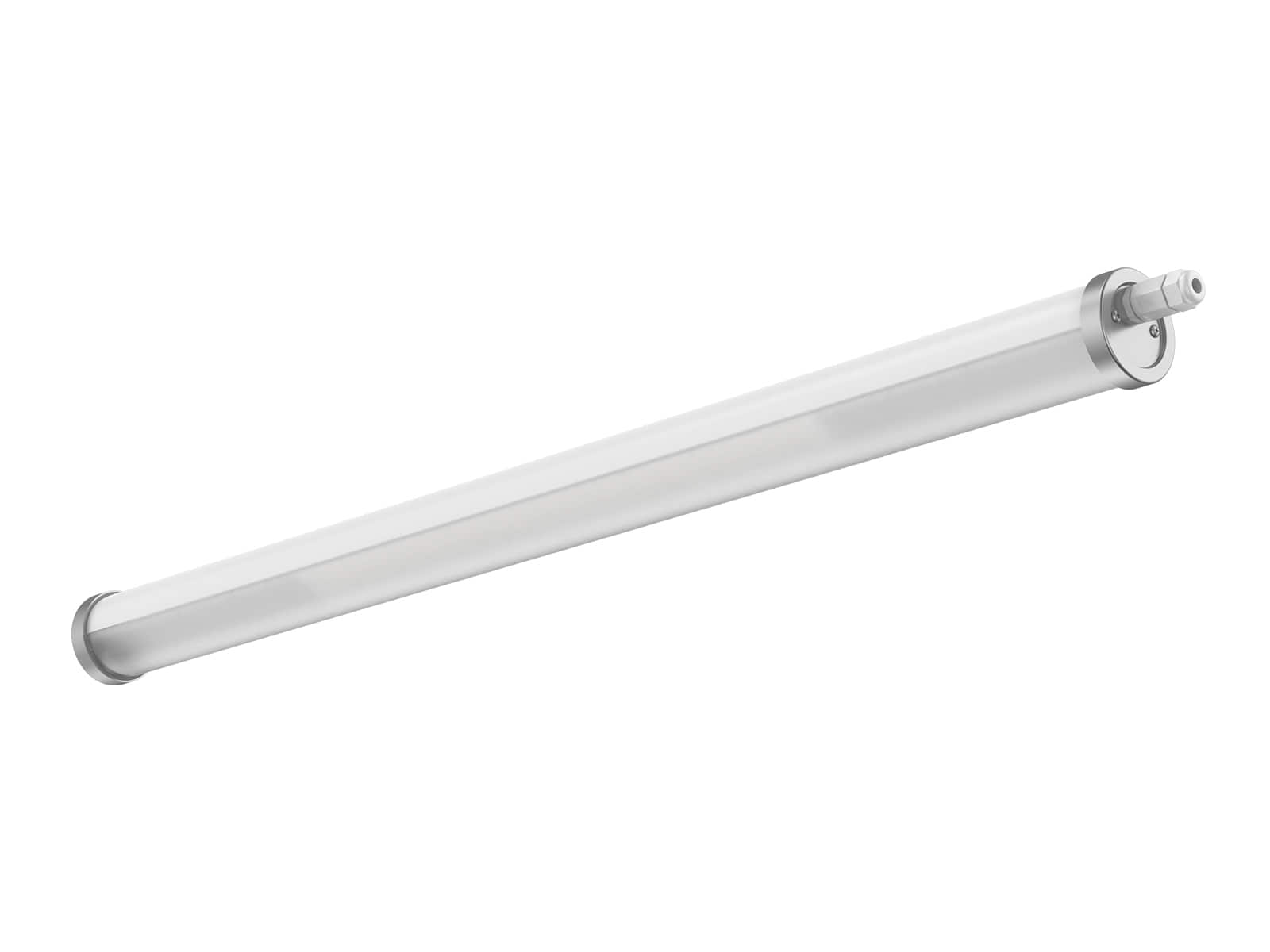
In food-processing and beverage facilities, corrosion around sealing points can also create hygiene and maintenance concerns. That is why our LHB44 and LHB13 linear high bays are equipped with 316 stainless steel end caps and screws for these environments.
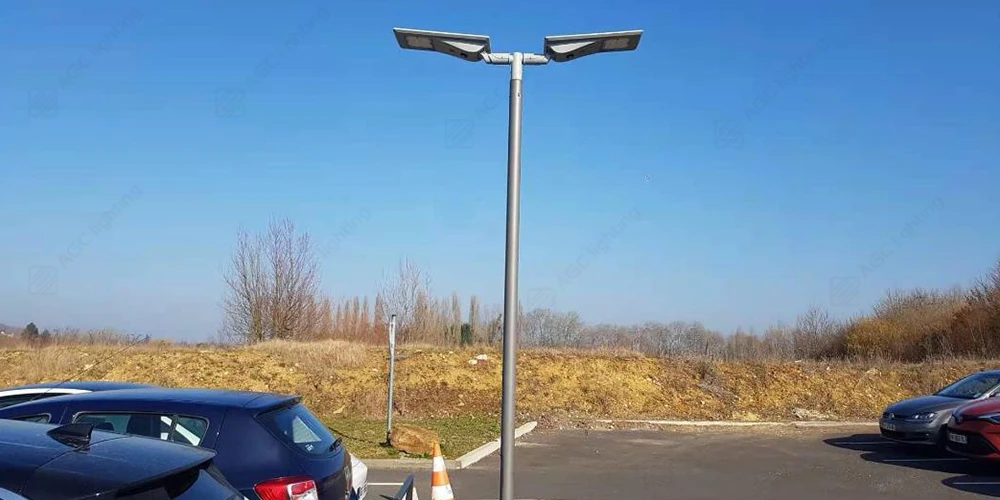
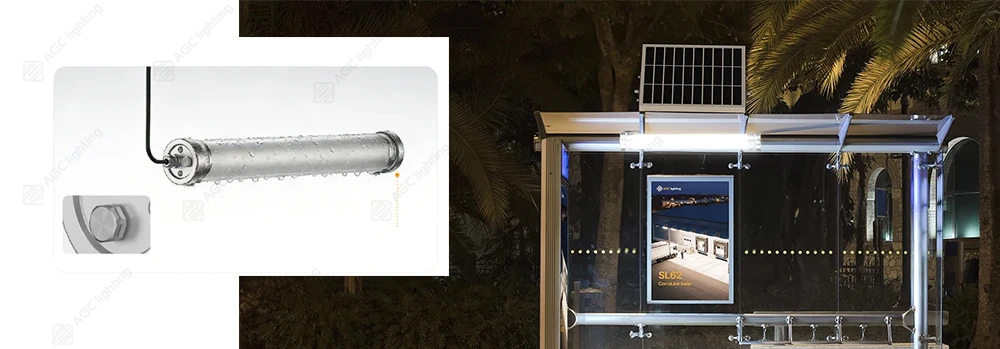
Urban infrastructure can also be highly corrosive due to pollution, moisture, and road salt exposure. For this reason, our SL62 solar lighting designed for bus shelters also uses 316 stainless steel end caps to improve long-term durability in outdoor public environments.
Long-Term Reliability Starts with the Small Details
A reliable lighting system is not defined by one specification alone. It is the result of hundreds of engineering and material decisions.
The use of 316 stainless steel in our fasteners, brackets, and end caps is one example. These may seem like small components, but they are important in long-term reliability, safety, and maintenance performance in harsh environments.
We pay close attention to the parts that many manufacturers overlook. For us, material selection is never an afterthought. Every component choice is based on how the fixture will actually perform in the field.
That attention to detail reflects how we approach product design as a whole. Not just focusing on lumen output and efficiency, but also on thermal management, structural durability, corrosion resistance, maintenance requirements, and long-term operating reliability.
Have a project in a demanding environment?
Contact us to discuss your application and project requirements.