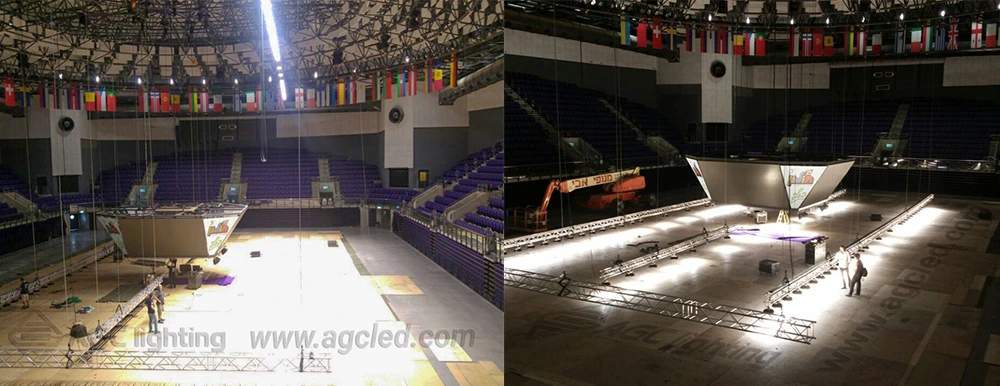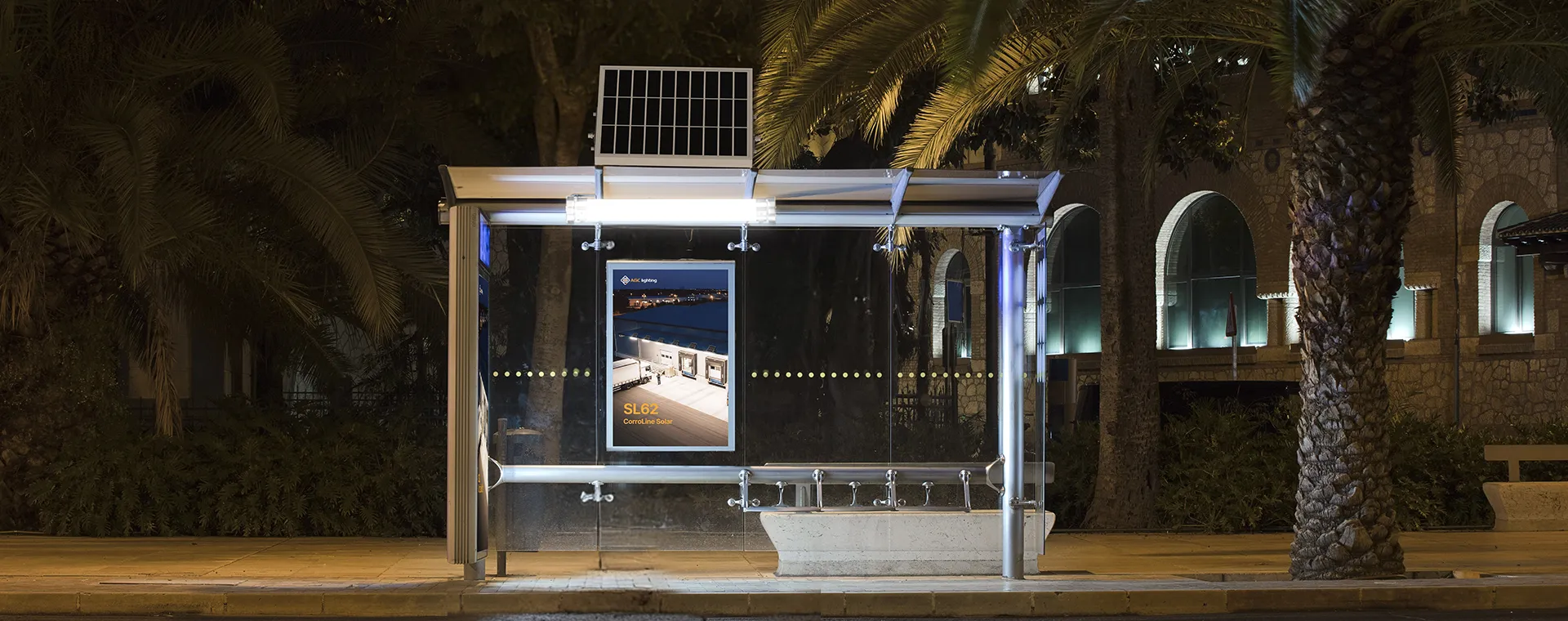

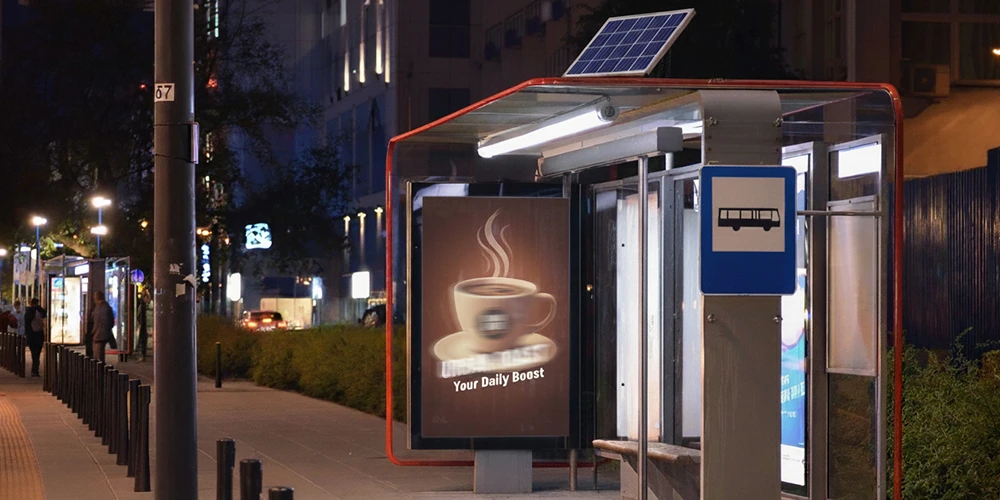
How do you light a dark bus shelter?
The obvious solution is grid power. Run a cable, install a fixture, and pay the monthly utility bill. Simple, right?
Not exactly.
Trenching and installing just 50 meters (about 164 feet) of copper wire can easily cost $1,500 or more. And that is before factoring in permits, labor, traffic control, and utility coordination.
In most cases, the real cost of lighting a bus stop is not the fixture itself. It is the expense of bringing grid power to the curb.
That is why more municipalities and transit agencies are turning to solar lighting. It provides reliable lighting for safer bus stops after dark without trenching, cabling, or connecting to the grid.
- Dark Bus Stops Are a Safety and Liability Problem
- Where Solar Bus Shelter Lighting Makes the Most Sense
- Where Most Solar-Powered Bus Shelter Lighting Falls Short
- What a Reliable Solar Bus Shelter Lighting System Actually Requires
- Compliance and Safety Standards
- Proper Solar Panel and Battery Sizing
- Optical Design for Real Safety
- Easy Installation and Maintenance
- How AGC Engineers Solar Shelter Lighting That Actually Holds Up
Dark Bus Stops Are a Safety and Liability Problem
A dark bus stop is a safety risk and a liability problem.
It is recommended 5-10 lux for low-activity areas and up to 20+ lux for high-activity urban hubs for a bus shelter. If a passenger can’t see the transition from the shelter to the bus boarding leaf, the risk of a "slip and fall" claim skyrockets.
From a bus driver’s perspective, a dark shelter creates a blind spot. If the driver cannot clearly see passengers waiting inside the structure, they may pass the stop entirely or fail to notice someone approaching the curb until it is too late.
Poor lighting also increases the likelihood of vandalism and property damage.
If you can't afford to dig, you can't afford to leave the stop unlit. That is why solar bus shelter lighting has become a practical solution for municipalities and transit agencies looking to improve safety and visibility after dark without connecting to the grid.
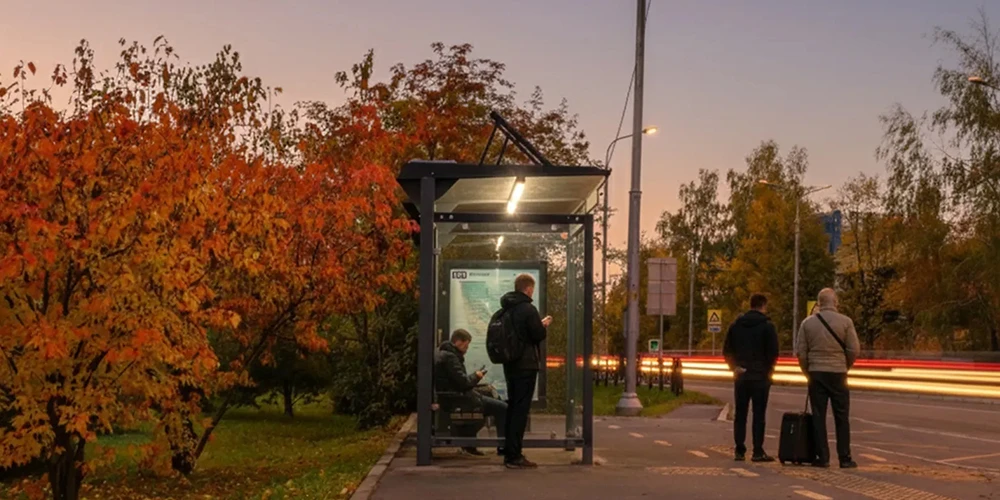
Where Solar Bus Shelter Lighting Makes the Most Sense
Honestly, if a bus stop already sits next to an existing electrical connection, such as a transit terminal, commercial property, or roadway with nearby grid-powered street lighting, conventional power may still be the more practical option.
Solar becomes most valuable when the cost, complexity, or disruption of bringing grid power to the stop outweighs the cost of a properly designed standalone system.
Here are the situations where solar bus shelter lighting makes the most sense:
- Remote and rural routes
- Urban bus stops where grid extension is difficult and expensive
- Temporary and even-based routes
- Landscape protection and heritage zones
Where Most Solar-Powered Bus Shelter Lighting Falls Short
Solar lighting is not a new idea. The common complaints are familiar:
“It won’t work in winter.”
“The batteries fail after two years.”
“It is not bright enough to feel safe.”
In many cases, those concerns are justified. Most off-the-shelf solar lighting systems are designed for residential use, not for public infrastructure that must operate reliably every night, in every season.
With more than 12 years in the lighting industry, we have found that most failed solar lighting systems suffer from the same engineering problems: undersized solar panels, insufficient battery storage, poor autonomy design, and basic charge controllers that cannot properly manage power during extended low-sunlight conditions.
The core problem for solar lighting failing in winter is the energy balance.
During summer, even poorly designed systems may appear to work because long daylight hours provide enough solar charging to recharge the battery each day. Winter is different. Shorter days, lower sun angles, storms, and consecutive cloudy weather reduce charging capacity dramatically.
If the system is not designed for the worst solar month of the year, the battery gradually falls into a charging deficit. Once that happens, lighting performance drops quickly, or the system shuts down entirely.
Proper solar bus shelter lighting design starts with local solar insolation data, actual peak sun hours, operating load, and required battery autonomy to ensure performance in low-sunlight conditions.
What a Reliable Solar Bus Shelter Lighting System Actually Requires
A reliable solar bus shelter lighting system is not just about attaching a solar panel to a light fixture. A system that works reliably in public infrastructure requires balancing safety, lighting standards, energy calculations, weather resistance, installation efficiency, and long-term maintenance.
Compliance and Safety Standards
Lighting must support safe boarding and alighting, clear visibility of curbs and steps, readable schedules, and visibility between passengers and approaching drivers.
A bus stop can meet horizontal lux targets while still leaving passengers difficult to be recognized from the roadway. Vertical illumination is critical for driver visibility, passenger security, and CCTV performance.
According to the IES (Illuminating Engineering Society), pedestrian pathway lighting generally requires a minimum average illumination level of around 5 lux. For bus shelter waiting areas, a typical target is 10 to 20 lux average at ground level, with a uniformity ratio no worse than 4:1.
Electrical and structural compliance also matters. Certifications or conformity marks shall be provided as required by the local market, including but not limited to UL, ETL, CE, UKCA, CSA, SAA, or other region-specific electrical and safety standards.
Fixtures should be designed with appropriate IP ratings for outdoor exposure. Materials and construction must withstand rain, wind, temperature fluctuations, UV exposure, and long-term public use.
Proper Solar Panel and Battery Sizing
The most important part of a reliable solar lighting system is correct system sizing.
Solar panels and batteries must be sized for winter operating conditions at the installation latitude, not for summer performance.
Battery capacity must also provide enough autonomy to maintain lighting through multiple cloudy or stormy days without deep discharge.
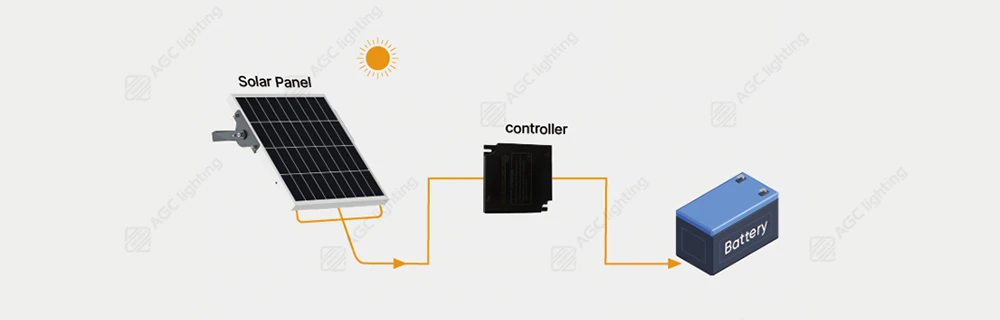
The controller also plays a critical role. A proper power management system should protect the battery from overcharging and deep discharge while adjusting output intelligently based on battery condition and available solar energy.
Adaptive dimming schedules and overnight power management help preserve battery capacity during extended low-sunlight periods without leaving the shelter completely dark.
AGC Lighting uses monocrystalline solar panels, LiFePO4 batteries, an MPPT controller, and an intelligent working mode for the solar bus shelter lighting system because they provide better charging efficiency, longer cycle life, and improved thermal stability for outdoor applications.
Optical Design for Real Safety
A poorly designed fixture can create glare, harsh shadows, or silhouettes that make passengers harder to see. At the same time, the lighting must avoid excessive glare for both passengers and bus operators.
Effective bus shelter lighting should produce soft, even illumination across the waiting area with controlled light distribution. The goal is to illuminate passengers, curbs, seating areas, and boarding zones clearly without throwing unnecessary glare toward the roadway or toward waiting passengers.
We use a specialized milky-white PMMA lens that provides a soft, even glow. This design reduces glare and provides comfortable lighting.
Easy Installation and Maintenance
For municipalities and transit agencies, installation and maintenance costs are just as important as lighting performance.
While solar energy itself is free, installation labor, equipment access, traffic coordination, and long-term maintenance can become significant operating expenses. Every maintenance visit costs time, labor, and service resources.
That is why easy installation and maintenance design matter. Our product with split configurations can significantly reduce service time and operating costs.
Panel placement also matters. Partial shading from trees, nearby buildings, advertising panels, or accumulated dirt can severely reduce charging performance even when the lighting fixture itself is operating correctly. Split design also provides more flexible solar panel placement.
How AGC Engineers Solar Shelter Lighting That Actually Holds Up
At AGC, we design solar lighting systems specifically for transit infrastructure. The SL62 CorroLine was developed for bus shelters, canopies, and covered public waiting areas where reliability, low maintenance, and consistent nighttime visibility matter.
The SL62 CorroLine is a split-type solar tubular lighting system designed specifically for bus stops. The split design with a 5 m DC cable simplifies installation, reduces visible wiring, and eliminates the need for trenching or external power connections.
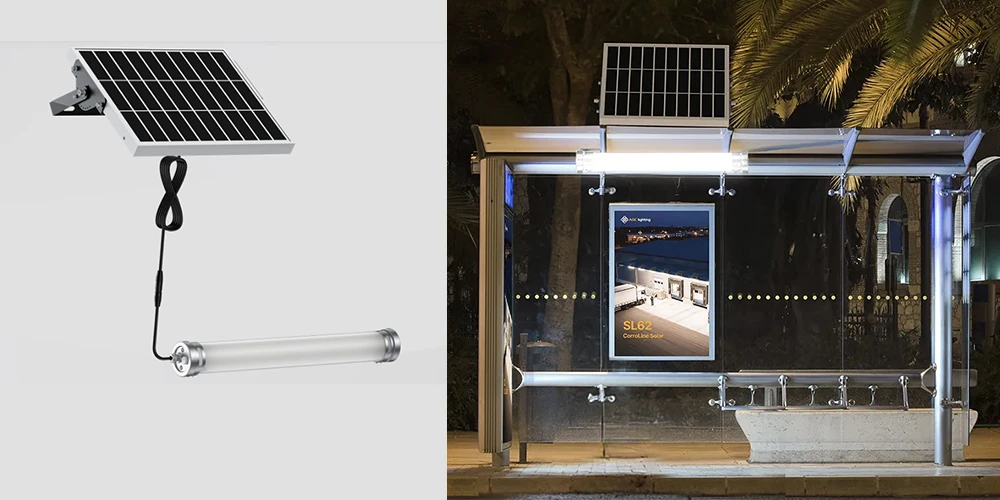
The system uses monocrystalline solar panels, LiFePO₄ battery storage, and an MPPT charge controller with intelligent power management built in. Under designed operating conditions, the system can continue operating for up to two consecutive nights without solar recharge.
The fixture delivers 20W output with efficacy up to 180 lm/W. Better efficacy extends operating runtime and reduces the solar panel and battery capacity required to maintain target illumination levels.
It also provides bright light without glare. The PMMA lens provides more than 85% light transmittance while maintaining a soft, diffused distribution pattern.
CorroLine is reliable in an outdoor environment. The end caps are 316 stainless steel, not 304. Grade 316 stainless steel provides significantly better resistance to chloride corrosion caused by salt air and road treatment chemicals. A stepped adjustable support bracket improves stability and wind resistance.
If you need a reliable solar bus shelter lighting system designed to meet real municipal and transit requirements, contact our team to discuss your project.