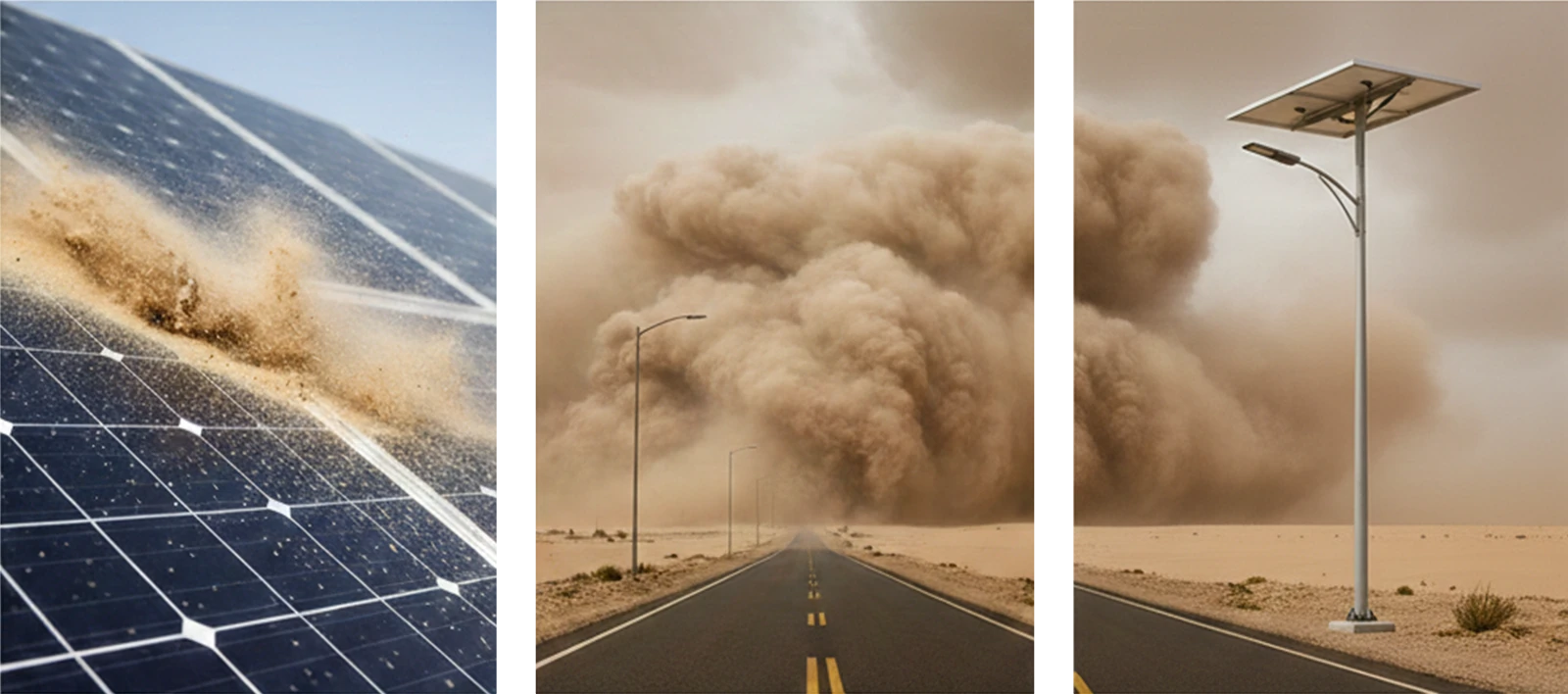

Dust accumulation and sand abrasion get a lot of attention in desert solar lighting projects. We covered those issues in our previous article on how dust and sand damage solar streetlights and how to design systems that resist them.
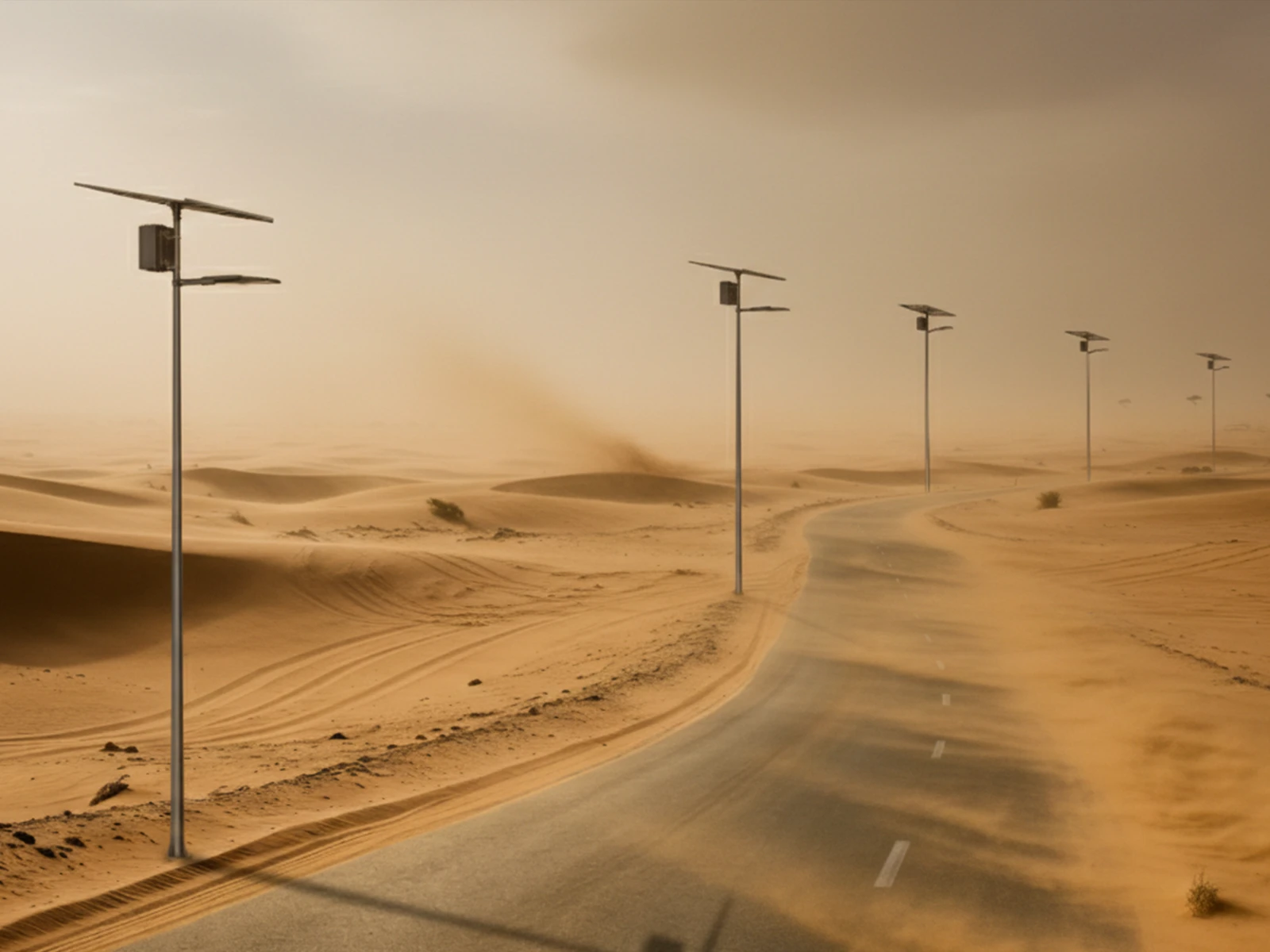
But in many desert regions, including North Africa, the Middle East, and Central Asia, the bigger challenge is the sandstorm. Wind gusts can reach 25 m/s or even higher, placing continuous sideways pressure on the entire lighting structure for hours at a time.
Under these conditions, the key question becomes simple: will the solar streetlight remain structurally stable during sustained high-speed winds?
Our solar streetlights are engineered as a complete structural system. From the fixture and pole to the bracket and foundation, every component is designed to handle wind loads and keep the streetlight stable during severe desert storms.
Wind Force on a Solar Streetlight
In desert regions, a serious haboob or shamal can expose solar streetlights to strong winds for several hours, sometimes longer. During these storms, the lighting system is under continuous wind pressure and changing wind directions. In severe conditions, wind force can reach Beaufort scale 12 or higher.
To understand what the structure must withstand, the wind force is calculated using the following formula:
Fd = 1/2 ρ V^2 Cd A
Where:
- Fd = wind force (N)
- ρ = air density, typically 1.25 kg/m³ at sea level
- Cd = drag coefficient, based on the shape of the surface
- A = projected area facing the wind (m²)
- v = wind speed (m/s)
In lighting design, this is often simplified into “effective projected area” (EPA) and a design wind speed. The total wind load on the pole is then:
Fₜₒₜₐₗ = qz EPA
Where:
- qz= wind pressure at a specific height (N/m²)
- EPA = effective projected area of the complete lighting structure (m²)
These calculations also show an important design reality: wind does not act on only one part of the solar streetlight. The solar panel, fixture housing, bracket, pole, and even the foundation all work together as one structural system.
We can see four levels that are critical to keep a solar streetlight standing in desert winds: reduce area, lower drag coefficient, control height, and a stable foundation.
Compact, Streamlined Fixture and Solar Panel
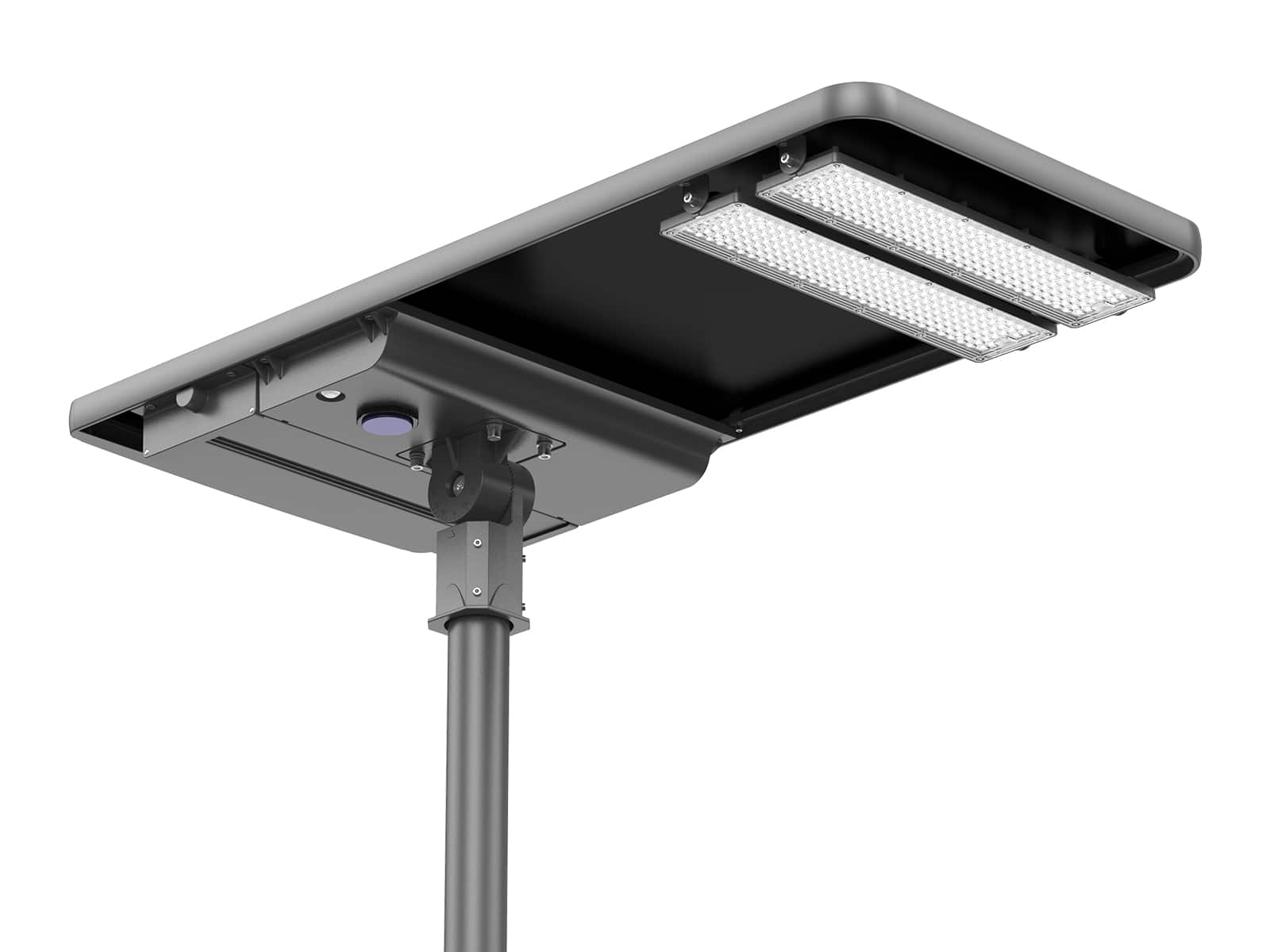
To improve wind resistance, the goal is simple: reduce the surface area exposed to the wind and lower the drag coefficient. A compact, streamlined fixture creates less drag, so the wind has fewer surfaces to push against.
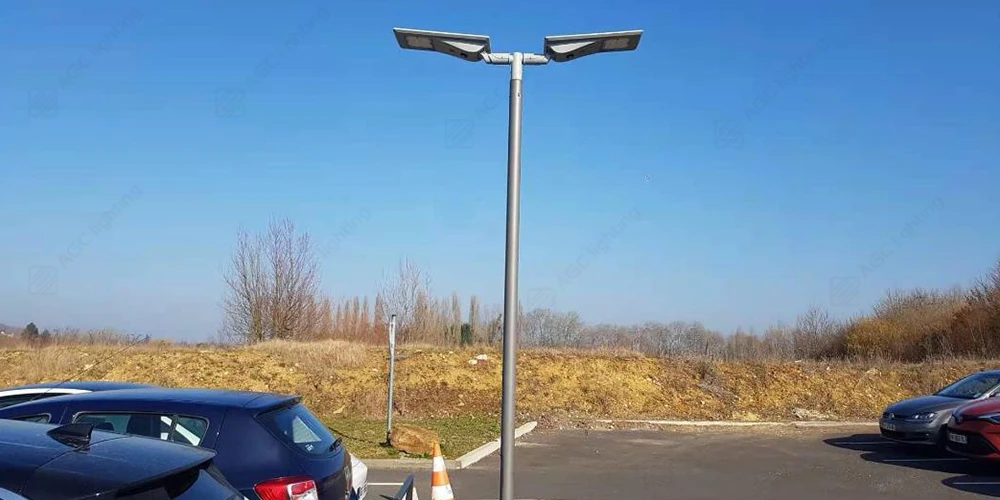
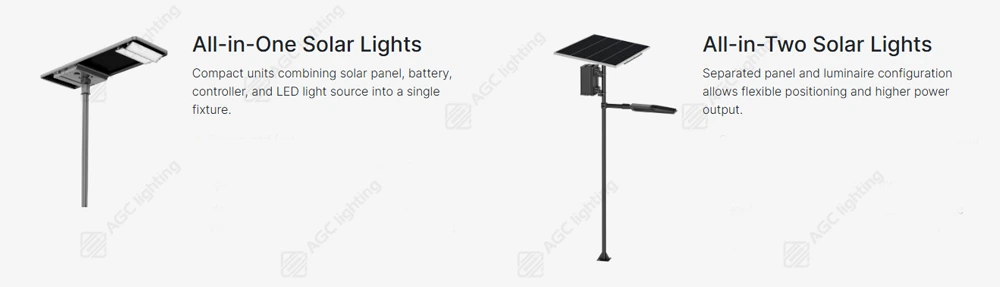
For all-in-one solar streetlights, the integrated design helps a lot. Because the fixture and solar panel are combined into one compact unit, there is less wind exposure and lower overall wind load. The smoother shape also improves aerodynamic performance in high winds.
All-in-two solar streetlights are different because the solar panel is mounted separately from the light fixture. The additional panel increases the area exposed to the wind, which means higher wind load on both the pole and mounting structure.
At first glance, using a smaller solar panel may seem like a good way to reduce wind pressure. But that creates another problem. A smaller panel collects less solar energy, which can reduce battery charging, shorten backup time, and affect lighting performance.
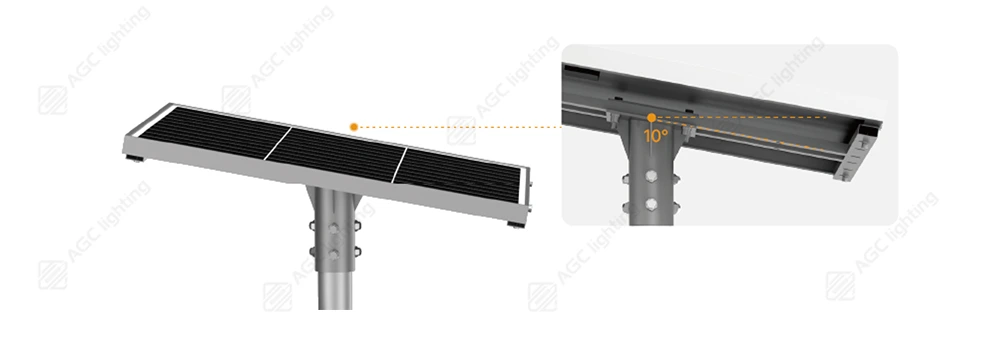
To balance wind resistance and solar efficiency, our solar streetlights designed for desert environments feature adjustable tilt angles. The panel can be tilted to reduce wind stress on the panel and buildup of sand and dust during sandstorms, while capturing as much solar energy as possible.
Thicker, Shorter Light Poles
The fixture and solar panel are both mounted on the light pole, so the pole itself must be strong enough to support the entire system. In desert environments, the pole not only carries the weight of the fixture, bracket, and solar panel, but also withstands strong wind forces acting on those components. In many projects, the pole is designed to resist Beaufort Scale 12 winds or even higher.
It is easy to understand why a thicker pole improves wind resistance. A larger pole diameter and thicker wall provide higher structural strength and better resistance to bending.
But why does a shorter pole also perform better in high winds?
The reason comes down to bending moment. The wind force acting on the fixture and solar panel creates stress at the base of the pole. The basic bending moment formula is:
M=Ftotal⋅h
Where:
- M = bending moment at the pole base (N·m)
- h = height of the center of pressure above ground (m)
The formula shows that as pole height increases, the bending moment also increases
That is why shorter solar streetlight poles are generally more stable in desert environments with strong winds and sandstorms. Reducing pole height lowers the bending stress and helps improve the overall structural stability of the lighting system.
Heavy-Duty Brackets
The bracket connects the pole to the light fixture and solar panel. It carries loads from both components at the same time, making it one of the most important structural parts of a solar streetlight system. But when people talk about wind resistance, the bracket is often overlooked.
In desert sandstorms, the wind does not blow in one steady direction. Wind speed and direction change constantly, creating strong gusts and turbulence. These forces cause the solar panel and fixture to vibrate, twist, and repeatedly shift under load. Over time, this creates shear stress and metal fatigue in the bracket and mounting points.
That is why our desert solar streetlights use heavy-duty brackets designed for high-wind environments. These brackets are made from thicker, high-tensile structural steel to handle repeated wind loads and vibration. They are also hot-dip galvanized to protect against corrosion caused by sand, dust, moisture, and long-term outdoor exposure.
Deep, Solid, Secure Foundations
In urban environments, solar streetlight foundations are usually installed in stable, compact soil or clay. Desert conditions are very different. Desert soil is often loose, dry, and low in density, which makes it much harder for the foundation to hold the pole securely. If the foundation is too shallow, the entire structure can gradually tilt, shift, or even lift under strong wind loads.
That is why deeper foundations are critical in desert installations. The goal is to reach more compact and stable subsoil beneath the loose surface sand. Increasing the foundation depth by 30% to 50%, depending on soil conditions and pole height, can significantly improve stability and resistance to overturning forces caused by high winds.
Another critical area is the connection between the pole and the concrete foundation. The anchor bolts and base plate must be strong enough to transfer wind loads safely into the concrete mass.
Every Desert Site Is Different. Let’s Talk About Yours.
Wind speed, soil condition, pole height, sandstorm frequency, and installation environment all affect how a solar streetlight system should be designed. That is why proper structural design, foundation planning, and component selection matter from the beginning of the project.
If you are planning a solar streetlight project in a desert or high-wind environment, contact us. We provide desert solar lighting solutions for long-term stability and reliable performance.