When it comes to port and terminal lighting, most people default to cool white light in the 5000–6000K range. It performs well in clear conditions, offering strong brightness and good visibility across large working areas.
But in sea fog, the situation changes quickly.
Visibility can drop from hundreds of meters to just a few dozen. In these conditions, cool white light tends to scatter more, increasing glare and reducing contrast instead of improving sightlines.
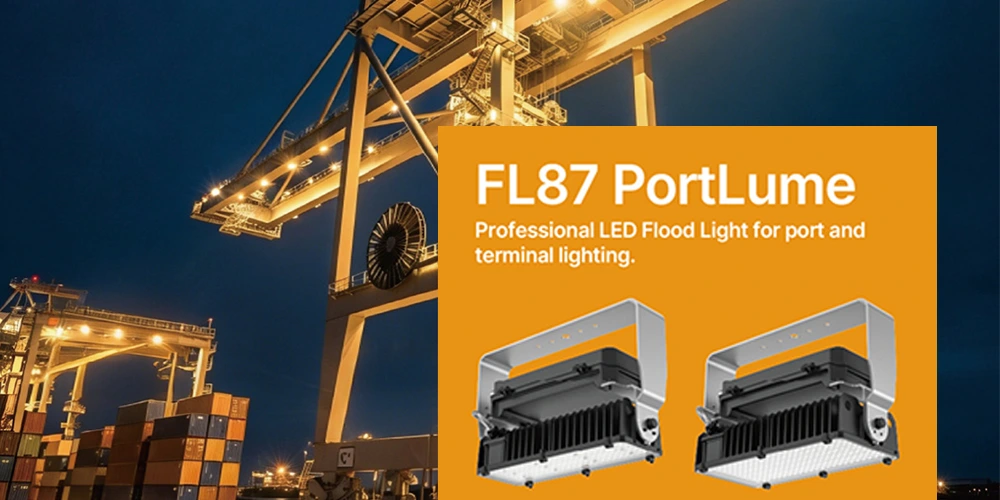
That is why we developed the FL87 PortLume, a marine-grade floodlight, available with an optional 3000K warm white light for foggy environments.
Sea Fog and Its Challenges for Lighting
Sea fog (also called advection fog) forms when warm, moist air moves over colder ocean water. The air cools down quickly, and the water vapor turns into tiny droplets floating in the air. These droplets are usually only 5–15 microns wide, but there are millions of them. Together, they form a thick layer that can reduce visibility to just a few meters.
You may have experienced something similar while driving in heavy fog. You turn on high beams expecting better visibility, but instead you get a bright white glow in front of you. The light bounces off the fog and makes it harder to see what’s ahead.
Sea fog creates the same issue in ports and coastal areas, just on a larger scale.
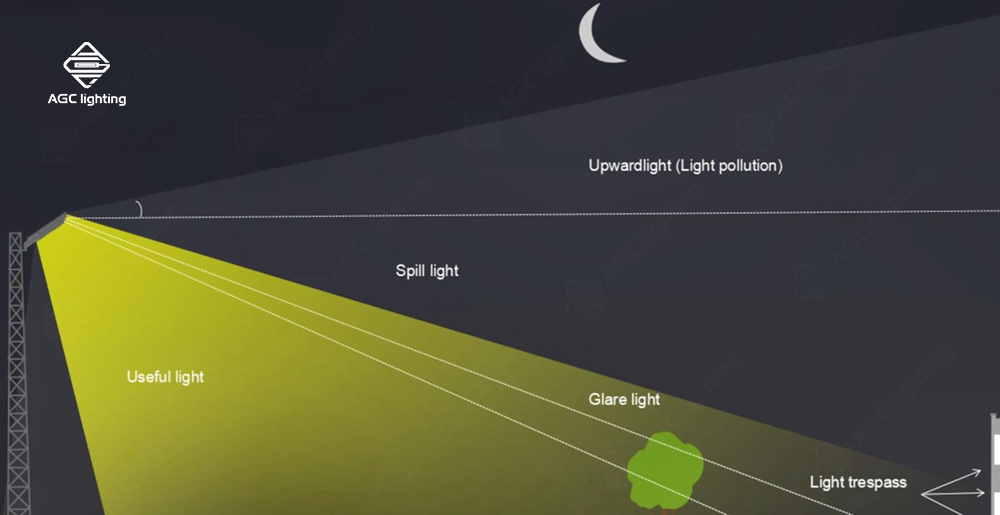
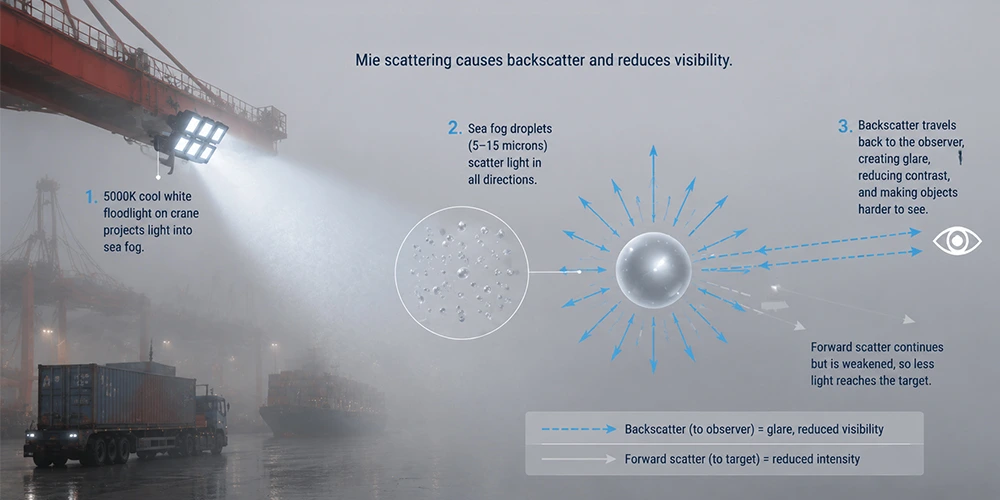
When floodlights shine into dense fog, the light hits those water droplets and scatters in all directions. Some of it reflects back toward the viewer. This is called backscatter, and it creates a bright haze in the air. That haze reduces contrast, making ships, cranes, and structures harder to see clearly.
This is the key limitation in fog conditions: higher output and bright white light simply increase backscatter and glare.
Why the Eye Needs 3000K Light in Foggy Environments
If bright white light in sea fog mainly increases backscatter and glare, the next question is obvious: why use 3000K warm white light? And does warmer light actually “cut through” fog?
To answer that, we need to be clear about what is really happening in the air.
Some people assume fog behaves like smoke, where certain colors pass through more easily. That idea is linked to Rayleigh scattering, which favors shorter particles like gas molecules. But Rayleigh scattering is not the dominant effect in sea fog.
Sea fog is made up of water droplets that are much larger than the wavelength of visible light. In this case, the governing effect is Mie scattering.
Mie scattering does not selectively block or pass certain colors. It scatters all visible wavelengths in many directions when light hits the droplets. That is why fog looks white or grey, no matter what color the light source is.
So why does 3000K light help?
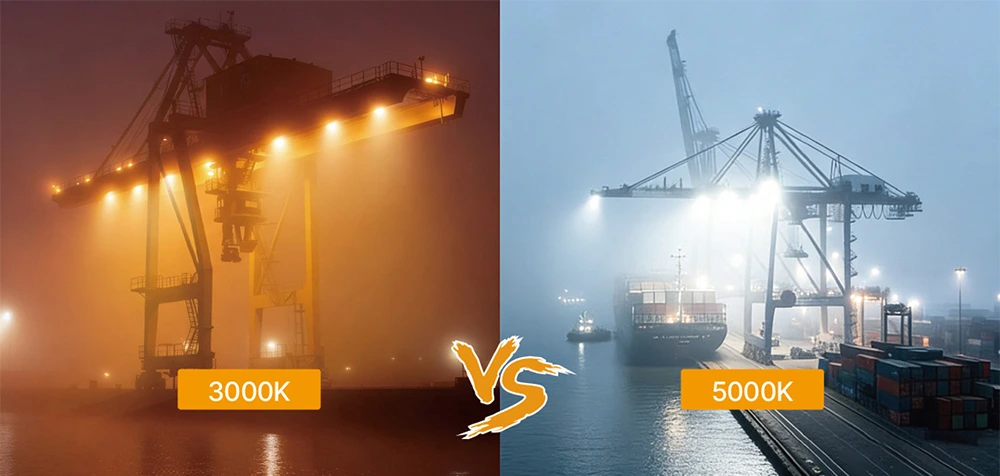
While Mie scattering affects all visible light, shorter wavelengths (blue-rich light found in 5000K–6000K sources) tend to scatter more strongly and create more perceived glare in the human eye. Warmer light at around 3000K has fewer short wavelengths and more longer wavelengths (yellow–amber range), which results in less harsh backscatter and a more stable visual field in foggy conditions.
So this improves contrast. Objects such as ship outlines, cranes, and quay edges appear less washed out against the background haze.
There is also a human factor.
From a visual comfort standpoint, 3000K lighting is easier on the eye in low-visibility environments. Cool white light with high blue content tends to increase perceived glare and makes it harder for the eye to maintain contrast sensitivity in fog. Warmer light reduces that strain and helps operators track objects more steadily over time.
What Else Makes a Floodlight "Fog-Ready"
Color temperature is an important factor in how lighting performs in sea fog, but it is only one part of the system. Beam control and optical design are just as critical. How a floodlight shapes and directs its light has a direct impact on backscatter, glare control, and overall efficiency.
This is why our FL87 PortLume application-specific optics match the lighting requirements of the crane, based on the operating height and working geometry.
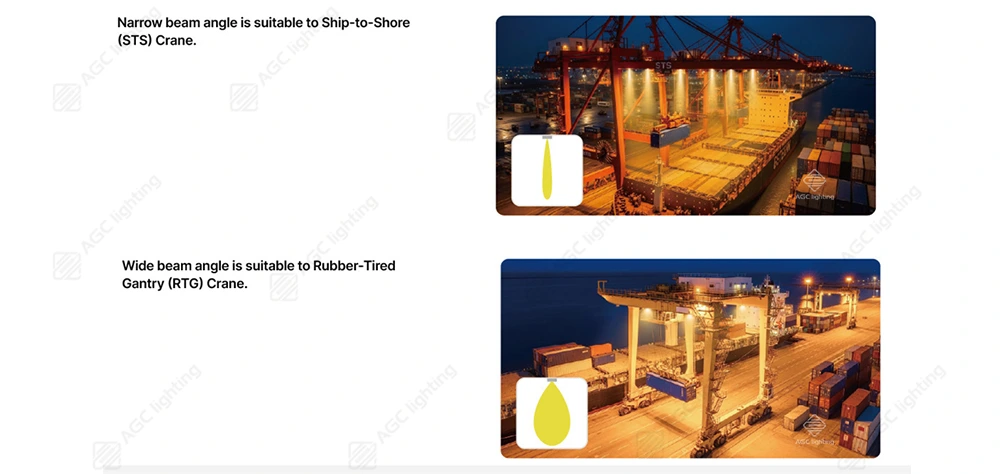
Narrow Beam Angles for Ship-to-Shore (STS) Cranes
Ship-to-shore (STS) cranes operate at extreme heights between 40 and 70 meters. In dense sea fog, a wide beam at this height lights up a large volume of fog instead of the target area. The result is high backscatter and poor visual definition at deck level.
A narrow beam optic solves this by concentrating light into a tighter, more controlled column. This directs more usable light to the working zone, such as container twistlocks and ship deck interfaces, while reducing unnecessary light spill into the fog layer. The result is better contrast where operators actually need to see, with less glare in the air.
Wide Beam Angles for Rubber-Tired Gantry (RTG) Cranes
RTG cranes work at lower heights but cover wide container yards. These areas need even illumination across stacks, aisles, and truck lanes to support safe movement and handling.
For this application, a controlled wide beam is more appropriate. It provides uniform coverage across the working field while keeping vertical light distribution under control. This helps avoid excessive upward spill into the fog layer while still maintaining visibility across the ground plane.
Marine-Grade Flood Lighting Built for Port and Terminal
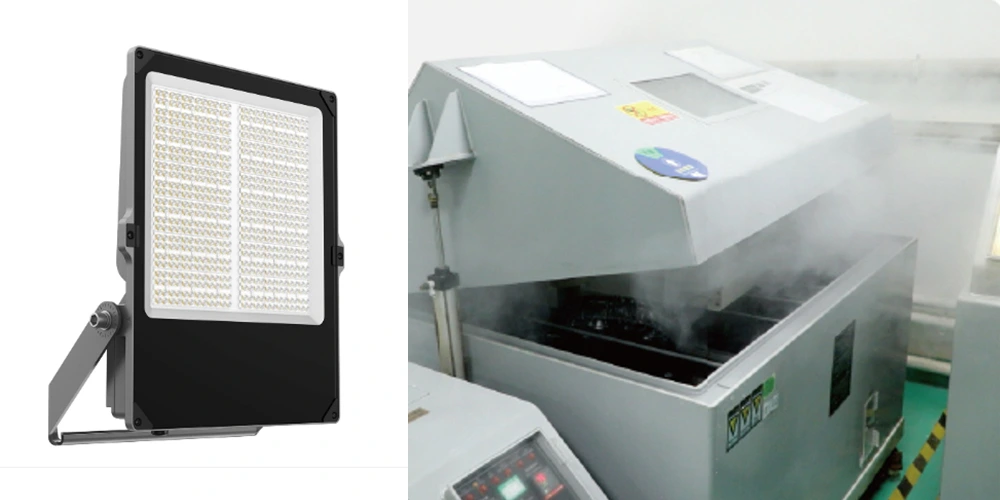
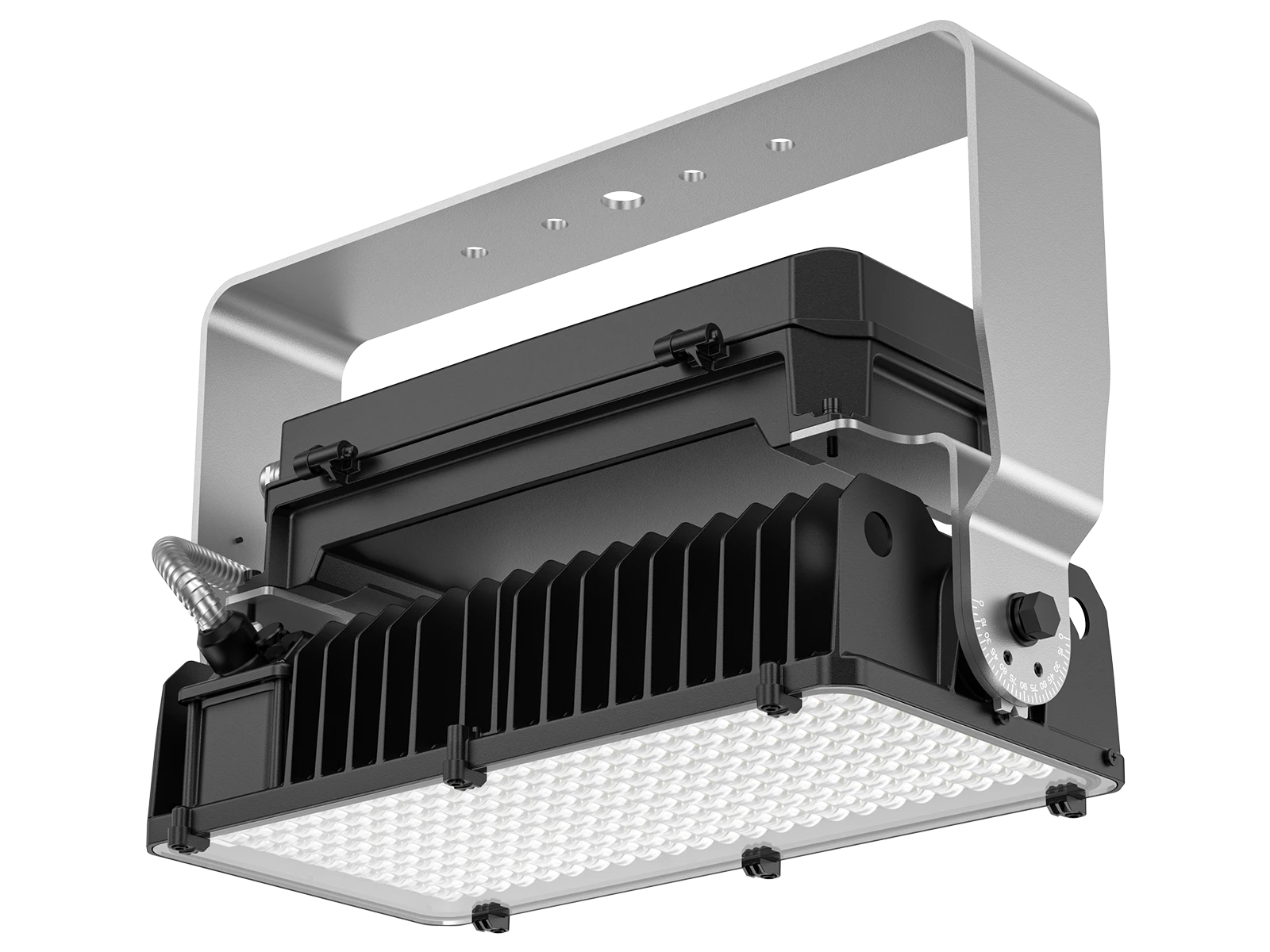
FL87 PortLume is a marine-grade LED floodlight designed for crane lighting in ports and terminal operations. In addition to application-specific beam options for STS and RTG cranes, and an optional 3000K warm white CCT, it is built to withstand harsh coastal environments where salt, vibration, and wind loads are constant challenges.
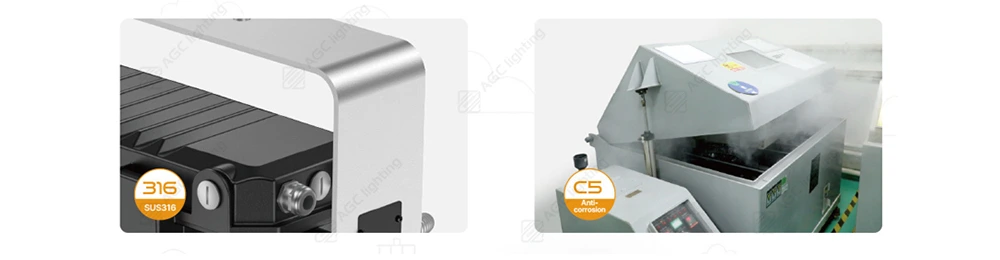
SUS 316 stainless steel and C5 corrosion protection
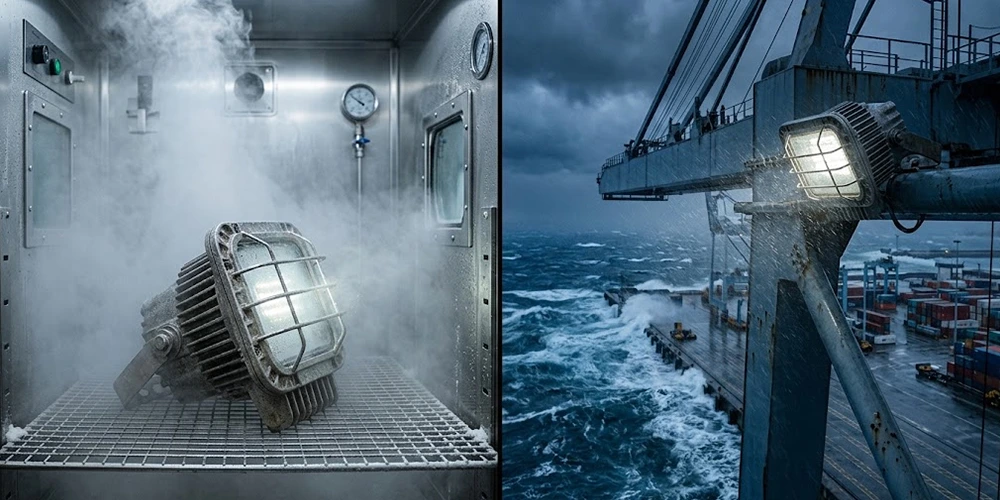
The bracket is made from SUS316 stainless steel, and the fixture is rated for C5 corrosion environments. This combination is intended for high-salinity coastal and offshore conditions, providing long-term resistance against salt spray and humidity exposure.
6G Vibration Resistance
FL87 PortLume is designed to withstand up to 6G vibration levels and wind speeds of ≥55 m/s. These conditions are common on cranes and large port machinery, where constant motion and mechanical shock can affect lighting alignment over time.
To maintain consistent performance, the fixture uses a reinforced mechanical structure and a secure locking system. These ensure the light direction remains stable, even under sustained vibration and sudden mechanical impact.
Sea fog is a constant part of marine operations, but lighting still has to perform safely and consistently in those conditions.
If you are planning a port or terminal project and need a reliable marine lighting solution, contact us. We are here to help you select the best solution based on your needs.