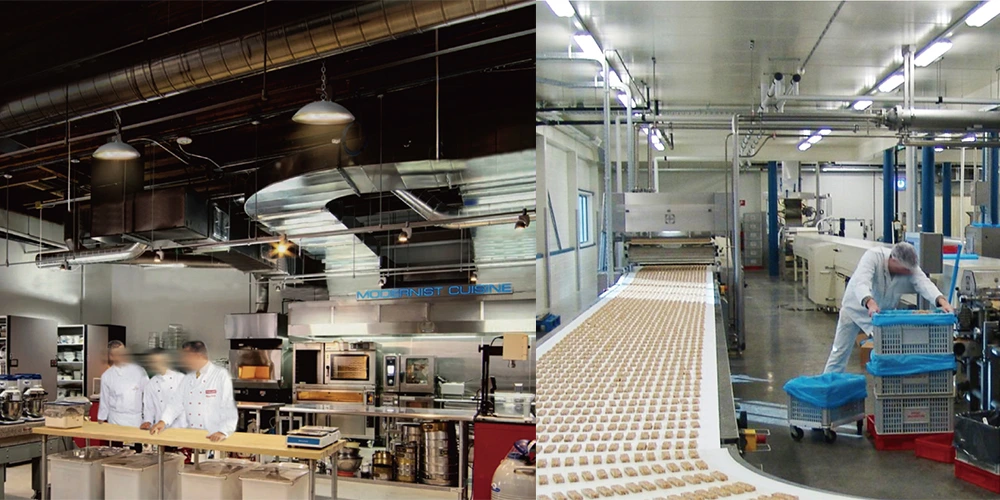
If you work on lighting projects in food processing, chemical handling, cold storage, or heavy industrial environments, you already understand the constant challenges created by moisture, dust, chemicals, and extreme temperatures. These tough conditions require lighting that can withstand continuous exposure without losing performance.
This is why hermetic luminaires are so important. These fixtures are completely sealed to prevent moisture, dust, debris, and corrosive contaminants from entering. Their durable construction and high IP ratings help ensure long-term reliability and safety in demanding applications.
In this blog, we will explain what hermetic lighting is, the industry standards that apply to it, and the design features that make a luminaire truly hermetic. We will also introduce several hermetic lighting solutions that are ideal for dusty, wet, and corrosive environments.
What Is Hermetic Lighting?
Hermetic lighting refers to luminaires that are specifically designed with fully sealed housings to keep environmental contaminants away from internal electrical components. The word “hermetic” traditionally means airtight. In lighting, it describes fixtures that offer exceptional protection against the intrusion of solid particles and liquids.
Some people confuse hermetic lighting with fixtures that are simply labeled as “waterproof.” While hermetic lights are indeed waterproof, they go far beyond that. These luminaires are also vapor-tight, meaning they can block not only water and dust but also corrosive gases, chemical vapors, and other airborne contaminants.

Standards for Hermetic Lighting
Hermetic lighting must be tested and compliance with relevant standards to ensure fixtures deliver the protection levels they claim and meet safety requirements for specific environments.
IP (Ingress Protection) Rating (IEC 60529)
The primary measure of a fixture’s hermetic quality is its IP rating. This two-digit code defines exactly what the enclosure protects against: the first digit addresses solids (dust), and the second addresses liquids (water).
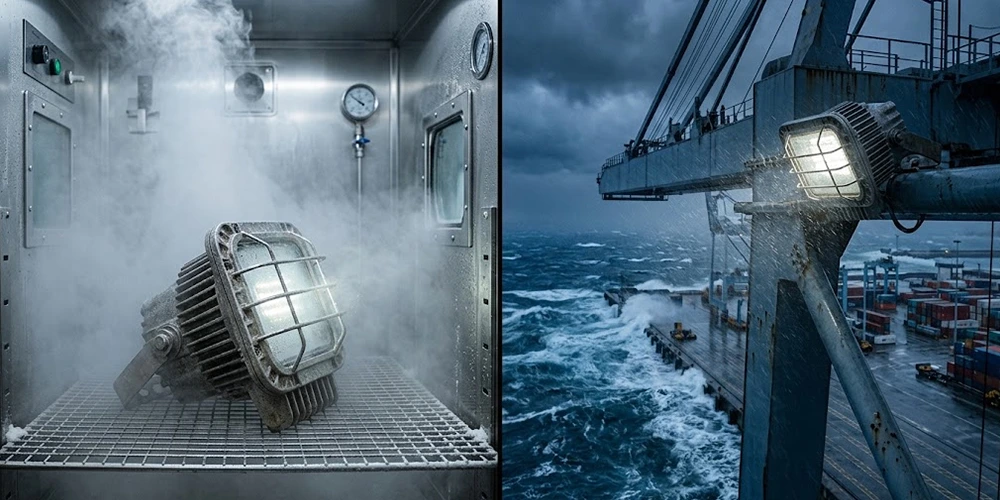
For true hermetic performance, the IP rating should be at least IP66, meaning the fixture is totally dust-tight and protected against powerful water jets.
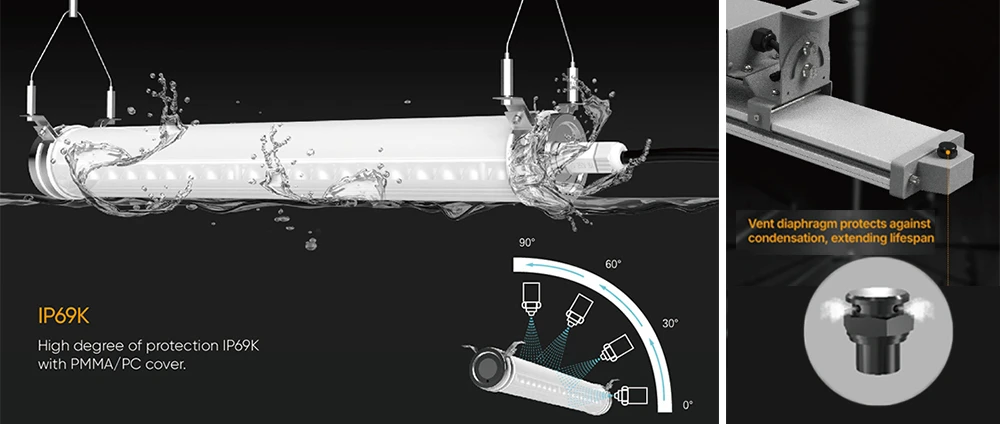
However, for places like food and beverage plants, the standard is much higher: IP69K. This rating signifies protection against high-pressure, high-temperature water jets, which can be common during intensive sanitation procedures.
IK Rating (IEC 62262)
IK rating measures impact resistance. Measured from IK00 to IK10, this standard guarantees the seal won’t be compromised by accidental damage. IK08 or higher is essential, providing the fixture can withstand a significant physical impact. This is critical for industrial environments where fixtures face potential collision with forklifts, equipment, or tools.
Safety Certifications
Electrical safety approvals from recognized testing laboratories like UL, CE, and IEC certifications are also important. For food processing environments, NSF certification ensures materials and construction meet sanitary requirements. Hazardous location applications demand ATEX/IECEx certifications for explosive atmospheres. These certifications guarantee that lighting solutions are not only durable but also safe for operations.

What Makes Lighting Hermetic?
Hermetic lighting is built through a highly controlled design and manufacturing process. Every potential entry point for moisture, dust, chemicals, or vapor is sealed, from the main housing to the wiring glands and internal electronics.
Sealed Housing
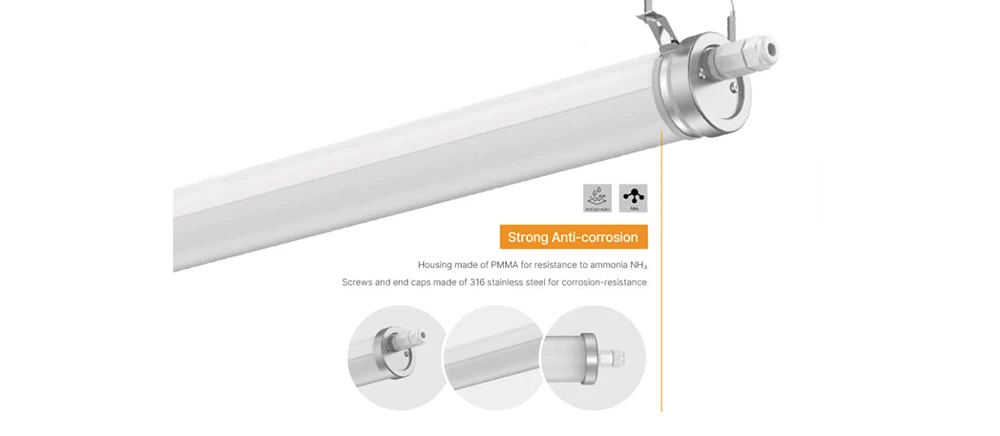
The housing is typically made from die-cast aluminum or PMMA to reduce seams and joints that could allow contaminants to enter. The lens is securely fastened to the body using stainless steel clips or specialized hardware that applies even, high-pressure force along the entire gasket line.
The diffuser is usually made of impact-resistant polycarbonate or tempered glass. It is thick and rigid enough to avoid flexing that might compromise the seal. Together, these features create a continuous, compressed seal capable of meeting demanding standards such as IP69K washdown.
Gasket Design
Instead of basic rubber strips, hermetic luminaires use gaskets engineered for the specific environment.
- Silicone gaskets are used for extreme temperature ranges.
- EPDM gaskets offer excellent weather and UV resistance.
- Fluoroelastomer gaskets (such as Viton) provide superior protection in chemical or corrosive environments.
These materials maintain their shape and sealing performance over time, even under constant mechanical and thermal stress.
Sealed Cable Entry Points
Cable entry points are another critical part of hermetic protection. High-quality brass or stainless steel cable glands are used, each with multiple sealing layers. The external threads lock the gland to the housing, while an internal compression ring grips the cable jacket. An elastomer seal then compresses around the cable when the gland is tightened.
Internal Pressure Management
A fully sealed fixture must also manage pressure changes caused by heating and cooling cycles. As internal air expands and contracts, pressure can build up and stress the gasket system.
To prevent this, hermetic luminaires use Pressure Equalization Vents (PEVs). These vents are usually made from a porous ePTFE membrane, which allows air molecules to pass through but blocks liquid water, dust, and vapor. This keeps the internal environment stable, clean, and dry over time.
Some advanced designs also include internal pressure equalization vents, like GORE vents. These vents allow small pressure changes to stabilize without allowing external air or moisture inside, protecting the fixture throughout its lifespan without compromising the hermetic seal.
Internal Electronic Protection
The LED driver and LED chips are the most sensitive components inside a luminaire. Some hermetic fixtures often use glass-to-metal seals (GTMS) at key entry points for electrical conductors. Unlike polymer seals, GTMS prevents moisture and gas permeation at the molecular level, keeping electronic components isolated in a fully dry environment.