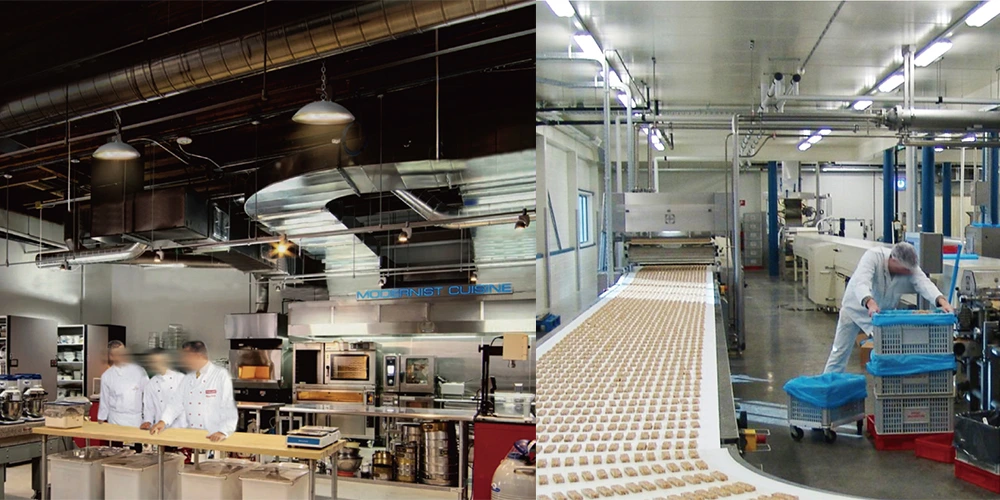
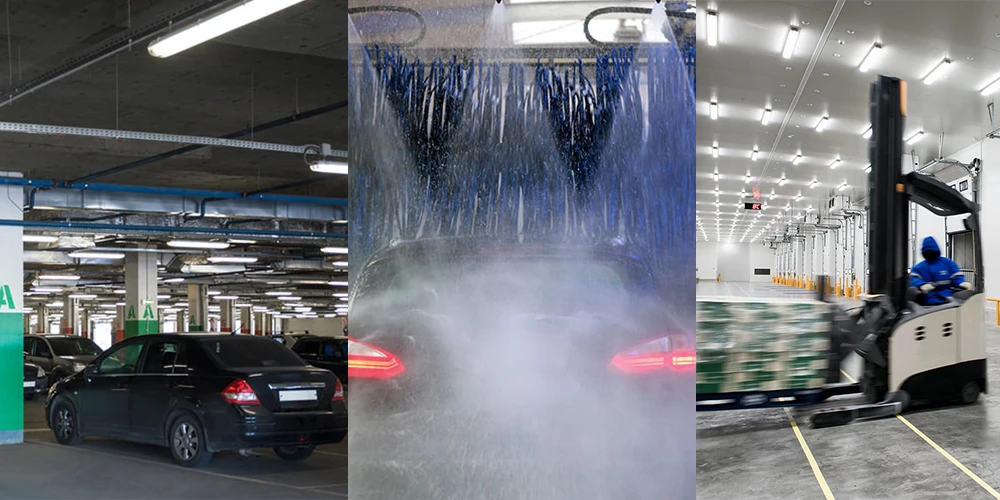
If you’re responsible for lighting environments such as a car wash or a cold storage freezer, you understand the importance of sealed, rugged lighting systems designed to withstand dust, vapor, moisture, and corrosion. These are commonly known as vapor-proof or vapor-tight lights.
However, when it comes to hazardous environments, such as paint booths, refineries, or grain silos where flammable vapors or combustible dust may be present, can we simply use vapor-proof lighting?
The short answer is no. Vapor-proof lights are not explosion-proof and are not rated for hazardous locations. These two categories of lighting are built to different safety and engineering standards.
So, what is the difference?
In this blog, we will explore the key distinctions between vapor-proof and explosion-proof lights. Understanding these differences will help you choose the right fixture to ensure complete safety and regulatory compliance in your specific environment.
What Are Vapor-Proof Lights
Vapor-proof lights, also known as vapor-tight lights, are lighting fixtures designed to prevent moisture, humidity, and non-flammable vapors from entering the fixture housing. Their primary purpose is to reduce maintenance needs and prevent premature failure caused by water damage or corrosion.
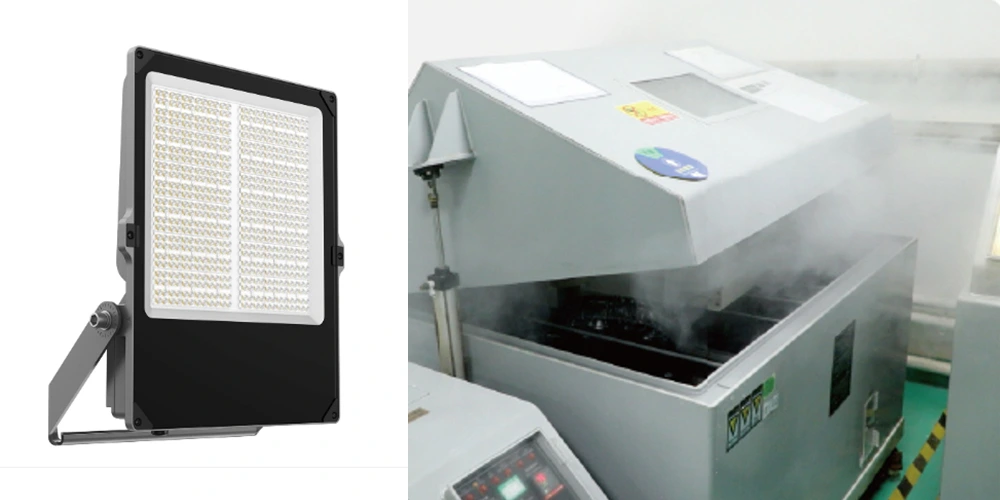
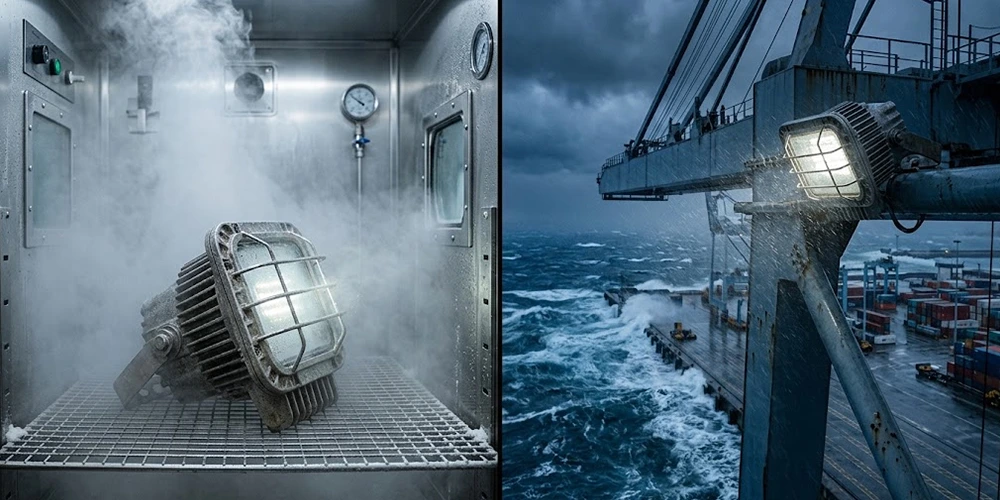
These fixtures feature sealed and gasketed enclosures that create a secure barrier, protecting internal components from corrosive atmospheres, steam, and condensation. Built with rugged, marine-grade materials, vapor-proof lights are engineered for long-lasting performance in harsh environments.
They are commonly used in car washes, food processing facilities, parking garages, and coastal locations, as well as other areas where exposure to moisture or contaminants is a concern.
What Are Explosion-Proof Lights
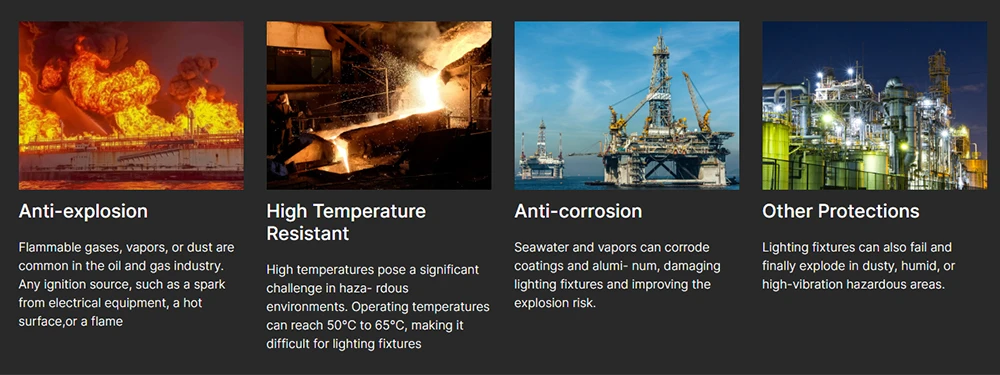
Explosion-proof lights, also known as hazardous location fixtures, are specialized lighting systems designed for environments where flammable gases, vapors, or combustible dust may be present.
It is important to understand that explosion-proof lights do not prevent explosions. Instead, they are engineered to contain any internal explosion within the fixture and prevent it from igniting the hazardous atmosphere surrounding it.
The key feature of an explosion-proof fixture is its heavy-duty construction and precisely engineered joints. If flammable gases enter the housing and ignite inside, the fixture is designed to withstand the pressure, contain the explosion, and cool the escaping gases so that ignition cannot spread to the external environment.
Explosion-proof lights are mandated by the ATEX, NEC, and certified by organizations such as UL according to specific Class, Division, and Zone ratings. These ratings ensure the fixtures meet strict safety standards required to prevent workplace explosions in high-risk locations such as chemical processing plants, refineries, and fuel storage facilities.
Vapor-Proof vs. Explosion-Proof Lights
The key difference between vapor-proof lights and explosion-proof lights is that vapor-proof lights keep elements like water and dust out, while explosion-proof lights keep internal sparks or flames in to prevent a disaster.
Below is a quick comparison between vapor-proof and explosion-proof lights.
|
Feature |
Vapor-Proof Lights |
Explosion-Proof Lights |
|
Primary Protection |
Protects against moisture, dust, and non-flammable vapors |
Contains internal explosions and prevents ignition of external flammable gases or dust |
|
Purpose |
Keeps water, vapor, and contaminants out of the fixture |
Prevents explosions from spreading to the surrounding atmosphere |
|
Construction |
Sealed and gasketed enclosure to block moisture |
Heavy-duty housing with flameproof joints to contain explosions |
|
Typical Environments |
Car washes, food processing plants, parking garages, cold storage |
Refineries, paint booths, grain silos, chemical plants, fuel storage areas |
|
Regulatory Rating |
Wet location or IP-rated |
Classified by ATEX, NEC, and UL for specific Class, Division, or Zone |
|
Explosion Protection |
Not explosion-proof |
Certified explosion containment design |
Can Vapor-Proof Lights Be Made Explosion-Proof
Technically, yes, vapor-proof lights can be made explosion-proof, but only if they are specifically designed, tested, and certified for that purpose.
Standard vapor-tight lights are built to keep out moisture, dust, and dirt, but they are not explosion-proof. Even if additional seals, clips, or covers are added, their construction can still create potential ignition risks and does not meet the safety requirements for hazardous locations.
Some modern lighting fixtures are hybrid solutions that combine the strengths of both types. These fixtures are engineered with the safety features of explosion-proof lights while also offering the environmental protection of vapor-tight designs.
For example, our HA06 Supernova is both vapor-proof and explosion-proof. It prevents the ignition of hazardous atmospheres while effectively resisting the ingress of moisture and dust.
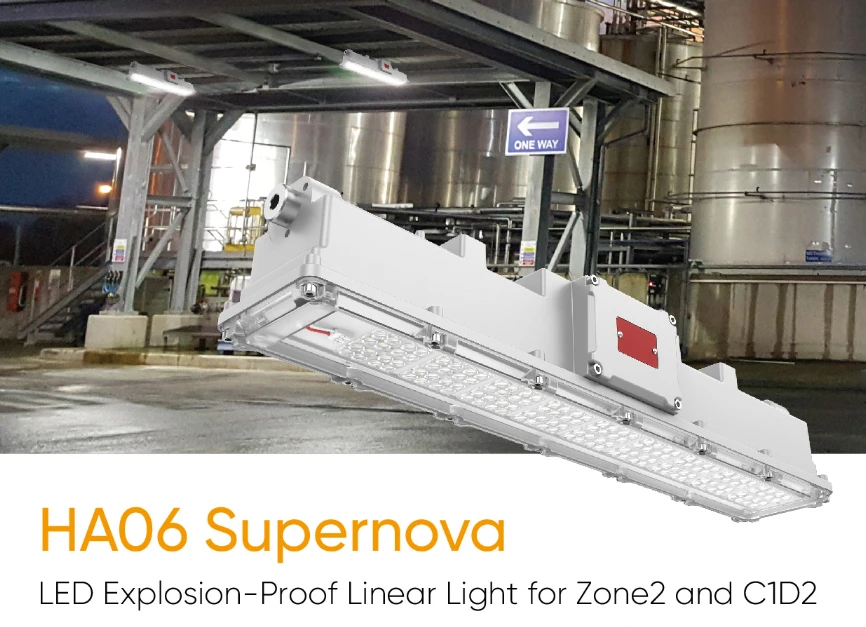
The HA06 Supernova features a sealed structure and a durable enclosure for long-term stability and protection, achieving an IP66 rating. Its fiber-reinforced plastic housing provides excellent corrosion resistance, making it suitable for marine and industrial applications. The independent cable gland design ensures high strength, corrosion resistance, and durability without cracking.
The HA06 Supernova is also fully explosion-proof certified, meeting the following international standards:
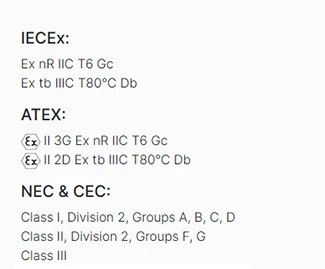
Another key advantage of the HA06 is its flexible installation options. It supports ceiling mount, trunnion mount, pendant mount, loop mount, hoop mount, and recessed mount configurations, allowing easy adaptation to various installation needs.
For more details about the HA06 Supernova or assistance in choosing the right lighting solution for your environment, please contact us.