What comes to mind when you think about coastal and marine environments?
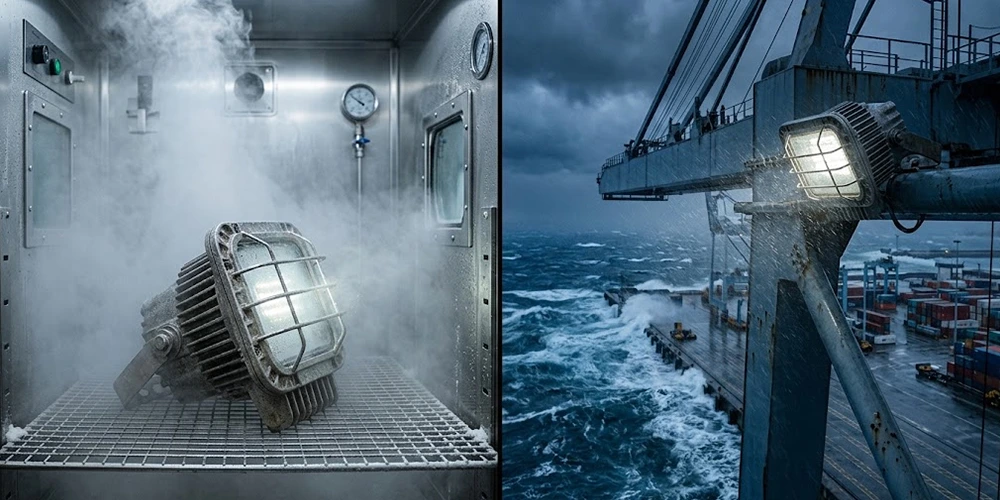
Perhaps it's the salty spray of ocean waves, constant humidity, fluctuating temperatures, and constant moisture. These harsh conditions can take a serious toll on materials, especially lighting fixtures that aren’t designed to handle them.
As the following picture shows, corrosion is serious in marine lighting.
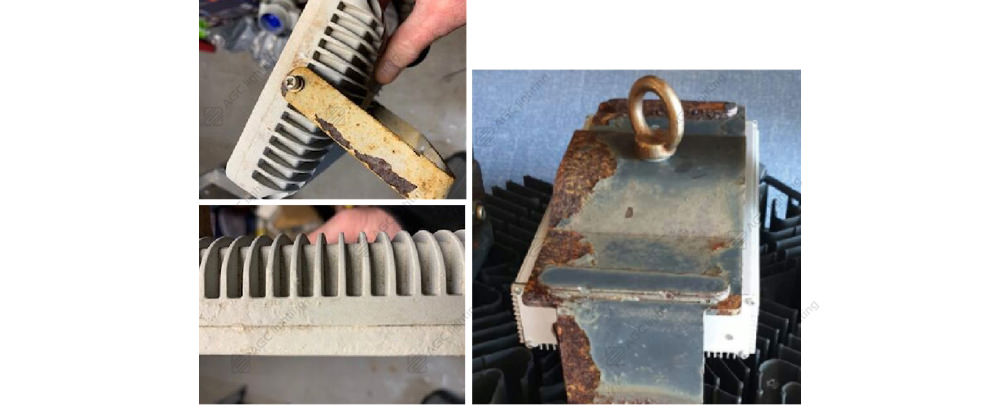
At first glance, aluminum alloys might seem like a solid option. But here’s the catch: many commercial die-casting alloys contain 2% to 4% copper (such as standard ADC12 or A380). In a marine environment, that copper becomes a major structural liability. It creates microscopic galvanic cells that accelerate internal corrosion, slowly weakening the fixture from the inside out.
So, what's a better alternative?
Low-copper aluminum alloys (<0.10% Cu) paired with multi-stage surface pre-treatments.
In this blog, we’ll explore why low-copper aluminium alloys are a smarter choice for marine lighting and how to choose the right type for long-term performance in harsh environments.
Lighting in harsh marine environments
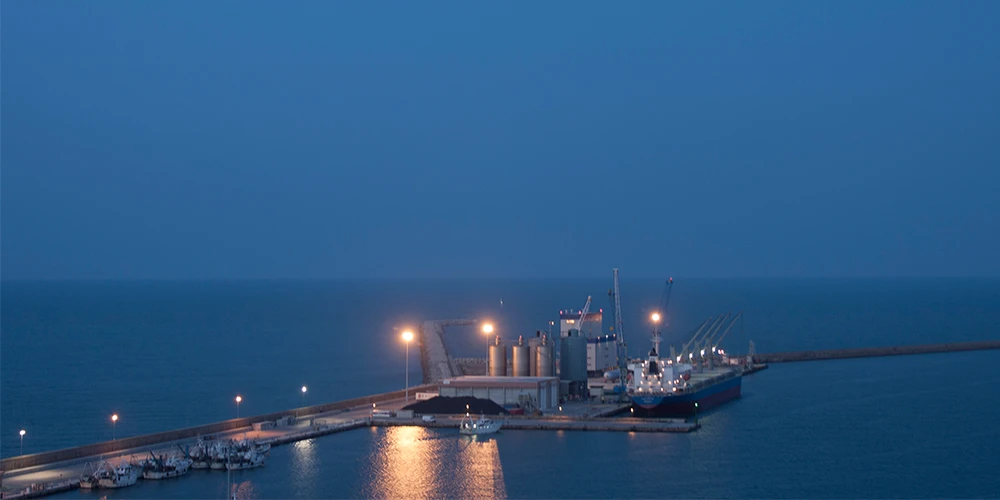
Coastal areas pose serious challenges for lighting fixtures due to saltwater, high humidity, and strong weather conditions. While most floodlights use aluminum housings for lightweight heat dissipation, salty air contains aggressive chloride ions (Cl¯) that rapidly penetrate weak coatings and pit raw metal.
Moisture and humidity speed up rust and corrosion, while UV rays from the sun and sudden temperature changes can break down materials and protective coatings. Over time, this leads to cracks, leaks, and other damage.
On top of that, waves and strong winds create vibrations and physical stress, which can wear out key components like brackets and seals.
Altogether, these conditions can rapidly damage lighting fixtures, leading to corrosion, electrical problems, and shorter lifespans without proper protection and materials.
How copper accelerates corrosion in marine aluminium
Aluminum is naturally protected by a microscopic oxide film (Al2O3). However, in copper-bearing alloys, copper particles do not blend seamlessly into the aluminum matrix at a microscopic level.
In saltwater, which acts as a strong electrolyte, aluminium alloys containing copper are prone to galvanic corrosion. Copper is more "noble" than aluminium. This difference in electrochemical potential causes a corrosive reaction: the aluminium near copper-rich areas starts to corrode much faster, while the copper remains intact.
Aluminum (Anode) ⇒ Corrodes (Pitting & Material Loss)
Copper (Cathode) ⇒ Remains Intact
In effect, the copper causes the aluminium around it to break down, leading to pitting, material loss, and, over time, structural failure.
Why low-copper aluminium is ideal for marine lighting
Understanding the corrosive forces at play, the strategic decision to use low-copper aluminium for coastal areas becomes clear.
The primary benefit lies in minimising galvanic corrosion. By reducing copper content to very low levels, these alloys eliminate the electrochemical reaction that causes aluminium to corrode rapidly in saltwater.
Beyond corrosion, low copper alloys offer several other advantages. They are easier to weld, which means manufacturers can build strong, smooth fixtures that can better handle impact and vibration. At the same time, low copper aluminium, especially those in the 5xxx and 6xxx series, offers a great balance of strength and lightness, making the fixture durable without adding unnecessary weight.
Key low-copper aluminium alloys for marine-grade lighting
Marine-grade doesn't just mean corrosion resistance. It also includes the durability to withstand harsh physical conditions such as wave impacts, salt spray, and heavy mechanical loads.
Marine-grade performance requires matching the alloy to the manufacturing process. Lighting fixtures rely on two distinct alloy types: Die-Cast Alloys (for complex main bodies and heat sinks) and Wrought/Extruded Alloys (for structural frames, sheets, and mounting brackets).
Here is a table for their main content and key features:
| Alloy Class | Alloy Grade | Main Alloying Elements | Max. Copper Content | Primary Application & Key Features |
| Die-Cast | EN AC-44300 (AlSi12) / A413 | Silicon (0.5–13.5%) | <0.10% | Main Light Housings |
| Wrought Sheet | 5052 | Magnesium (2.2–2.8%) | <0.10% | Formed Enclosures & Plates |
| Wrought Sheet | 5083 | Magnesium + Manganese | <0.10% | Heavy-Duty Structural Plates |
| Extruded | 6061-T6 | Magnesium + Silicon | <0.40% | Heat Sinks & Structural Profiles |
Surface treatment & galvanic isolation
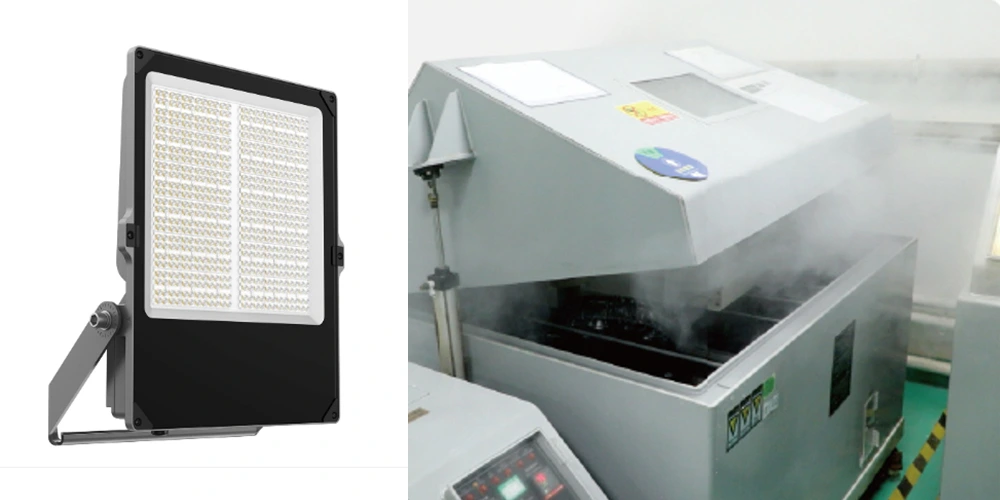
Selecting a low-copper alloy like EN AC-44300 or 5052 is only the first step. To achieve a 1,000+ Hour ASTM B117 Salt Spray Certification or ISO 12944 C5 Marine Rating, a complete system approach is required:
Multi-Stage Conversion Pre-Treatment
Before painting, cast aluminum undergoes a zirconium or chromate conversion coating. This seals microscopic surface pores and creates an impermeable bond for topcoats.
TGIC Architectural Powder Coating
A thick coating of UV-stabilized TGIC polyester powder paint shields the alloy from direct salt-fog and atmospheric chemical exposure.
Dissimilar Metal Isolation
Mounting brackets are subjected to severe mechanical loads. While 316 Stainless Steel or heavy-duty 316/5052 brackets are used, joining stainless steel directly to an aluminum housing in saltwater can trigger external galvanic corrosion.
At AGC, our marine-grade LED floodlights are engineered from the ground up for extreme coastal environments. By combining low-copper EN AC-44300 die-cast housings, 316 stainless steel external hardware, nylon galvanic isolation, and multi-stage powder coating, our fixtures easily pass rigorous salt spray testing.
If you’re looking for lighting built for harsh marine environments, get in touch with us.