
When a sudden power outage, fire, or other emergency occurs, emergency lighting becomes critical for public safety. The updated British Standard BS 5266-1:2025 introduces several important changes to emergency lighting requirements.
Published in October 2025, the revised standard is now the industry reference as we move through 2026. These updates are designed to enhance safety and compliance while providing clearer, more consistent guidance for the design, installation, and maintenance of emergency lighting systems in premises with public or communal use.
Whether you are a contractor, developer, engineer, or the responsible person for the lighting system of the premises, being aware of and compliant with these changes is essential.
- What is BS 5266?
- What’s new in BS 5226-1:2025?
- Emergency lighting now covers 3 distinct categories
- Stricter wiring resilience rules
- Photometric verification every 5 years
- Emergency lighting performance standards updated
- Emergency lighting duration requirements
- Greater emphasis on automatic test systems
- What does this mean for industrial and outdoor emergency lighting?
- Frequently Asked Questions
What is BS 5266?
BS 5266 is the UK’s code of practice for the design, installation, commissioning, and maintenance of emergency lighting systems in non-domestic premises. While the Regulatory Reform (Fire Safety) Order 2005 and, more recently, the Building Safety Act 2022 require buildings to have adequate emergency lighting, BS 5266-1 provides the practical framework that sits alongside these legal duties.
With the 2025 update, the standard is no longer focused solely on fire escape routes; it now emphasizes the broader concept of “Safety of Use.” For businesses, following this code is strong evidence of due diligence. It helps demonstrate compliance with your legal duty of care, supports insurance validity, and, most importantly, helps ensure that when the lights go out, people can move safely without injury.
What’s new in BS 5226-1:2025?
The 2025 edition is a full revision of the 2016 standard. Here are the changes that will have the most practical impact.
Emergency lighting now covers 3 distinct categories
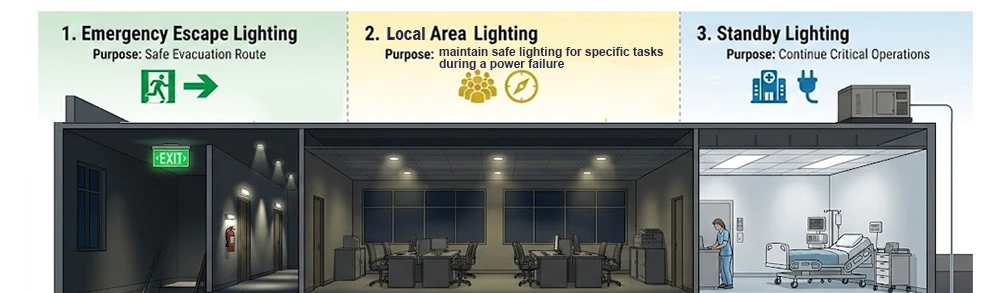
Previous editions focused mainly on emergency escape lighting. The 2025 revision formally expands the scope to include three types of emergency lighting: emergency escape lighting, local area lighting, and standby lighting.
- Emergency escape lighting: illuminate evacuation routes and exit points.
- Local area lighting: maintain safe lighting for specific tasks during a power failure, particularly where processes must be safely completed before evacuation.
- Standby lighting: provides sufficient light for normal activities to continue when the mains supply fails.
This wider scope reflects the stronger emphasis on overall safety of use, not just evacuation.
Stricter wiring resilience rules
The 2025 edition tightens requirements for how emergency luminaires are wired. It sets a clear limit that a single electrical fault on a centrally supplied circuit must not affect more than 20 luminaires.
In high-risk task areas such as production lines, server rooms, chemical handling areas, or anywhere people need time to safely stop work, a dual supply from at least two separate circuits is now required. The intent is straightforward: a single fault should never be able to plunge a critical area into complete darkness.
Photometric verification every 5 years
This is an important new requirement. The 2025 edition introduces mandatory 5-year photometric verification to confirm that actual light levels throughout the building still match the original design.
Over time, lamp degradation, layout changes, and new obstructions can reduce effective illumination. The standard now requires measured light output and distribution using calibrated equipment, with the results recorded in the logbook and confirmed to meet the original design requirements.
Emergency lighting performance standards updated
The 2025 revision updates references to align with BS EN 1838:2024 and BS EN 50172:2024, the European standards covering emergency lighting performance and system requirements.
Key design values remain clear.
- Escape routes: minimum of 1 lux across the full route width, excluding borders.
- Open areas: at least 0.5 lux at floor level.
- High-risk task areas: minimum 15 lux or 10% of normal lighting, whichever is higher, with full illumination within 0.5 seconds.
- Points of emphasis such as fire alarm call points, exit doors, firefighting equipment, and first aid posts: minimum of 5 lux vertical illumination.
Important: The standard explicitly states that borrowed light cannot be relied upon to meet emergency lighting requirements.
Emergency lighting duration requirements
Emergency lighting must operate for long enough to allow people to evacuate safely. BS 5266-1:2025 gives clear guidance on the required system duration for different types of premises.
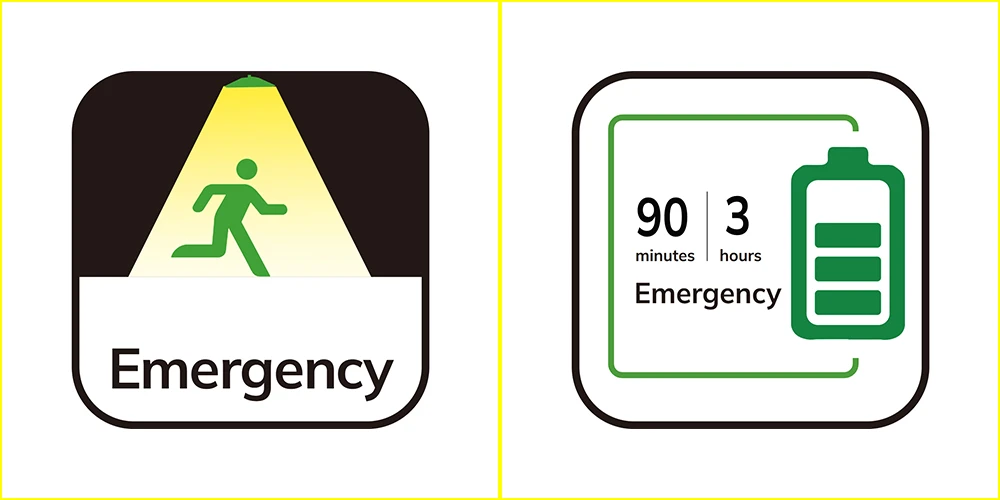
A minimum duration of 3 hours is required for buildings such as sleeping accommodation, entertainment venues, premises with phased evacuation, and any site that may be reoccupied before the batteries have fully recharged.
A one-hour duration is only acceptable where the premises are evacuated immediately when the normal supply fails, and the building will not be reoccupied until full battery capacity has been restored.
Greater emphasis on automatic test systems
BS 5266-1:2025 places a stronger emphasis on automatic test systems, particularly in premises where occupants remain on site during a mains failure. Automated testing improves reliability, reduces the risk of missed manual checks, and provides clearer audit trails for compliance.
What does this mean for industrial and outdoor emergency lighting?
BS 5266-1:2025 has a direct impact on how emergency lighting is designed and applied in industrial and outdoor environments.
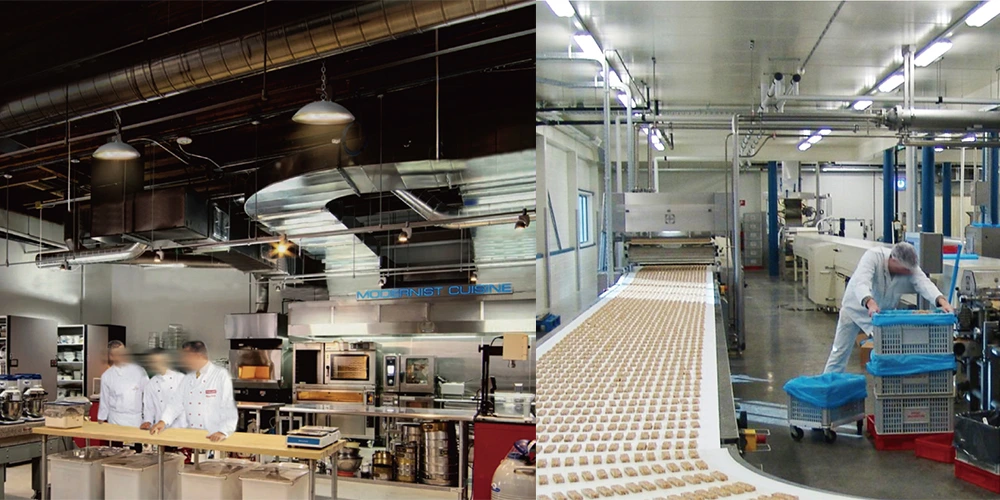
Industrial sites are often crowded with racking, machinery, and stored goods, which can easily obstruct light. Emergency escape lighting must now deliver a minimum of 1 lux across the full width of the escape route. This means emergency lighting layouts must be more carefully planned, with closer attention to luminaire output, spacing, and potential obstructions.
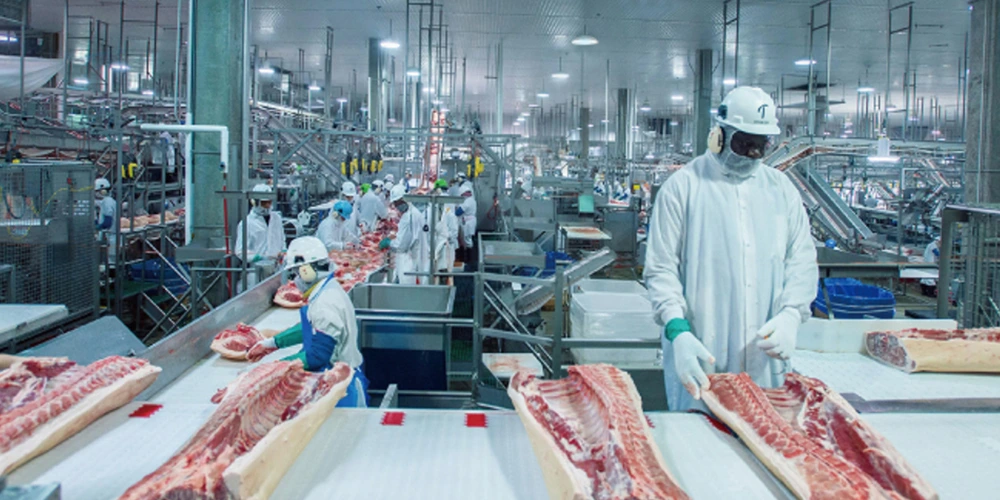
In high-risk industrial areas, emergency lighting must support safe shutdown before evacuation. Workers need enough light to make equipment safe and avoid secondary hazards. The standard requires at least 15 lux, or 10% of the normal lighting level, whichever is higher, with rapid illumination on power failure. In practice, this often requires emergency lighting rather than relying on general escape lighting alone.
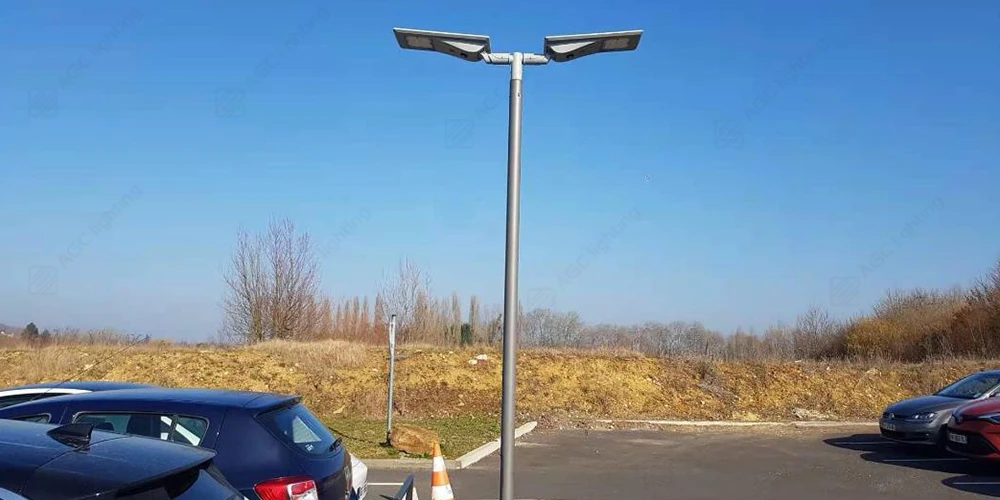
Outdoor emergency lighting is also more tightly controlled. Historically, some sites relied on borrowed light from street lighting or nearby buildings to support external escape routes. BS 5266-1:2025 makes it clear that borrowed light is not acceptable. Outdoor escape routes must be provided with dedicated, battery-backed emergency lighting designed specifically for emergency operation.
Need help making your emergency lighting compliant with BS 5266-1:2025?
AGC Lighting supports contractors, designers, and building owners with tailored emergency lighting solutions, from compliant lighting design to high-performance products. Get in touch with our team to discuss your project and ensure your next installation is fully compliant and future-ready.
Frequently Asked Questions
Does BS 5266-1:2025 replace the 2016 edition?
Yes. BS 5266-1:2025 fully replaces the 2016 edition, which is now withdrawn. Any guidance or specifications referencing the 2016 edition should be reviewed against the updated standard.
Does the standard apply to outdoor lighting?
BS 5266-1:2025 applies to any area within the scope of non-domestic premises where people may be present during a power failure or emergency, including outdoor areas that form part of an evacuation route, external assembly points, and areas where work may be ongoing.
How often must emergency lighting be tested under the new standard?
Monthly functional tests and annual full-duration tests remain the baseline. The significant new addition is photometric verification, which is now required every five years. This goes beyond switching lights on to confirm that actual illuminance levels in the building match the original design.
Are automatic test systems mandatory?
Not mandatory, but strongly recommended, particularly in premises where occupants remain on site during a mains failure.