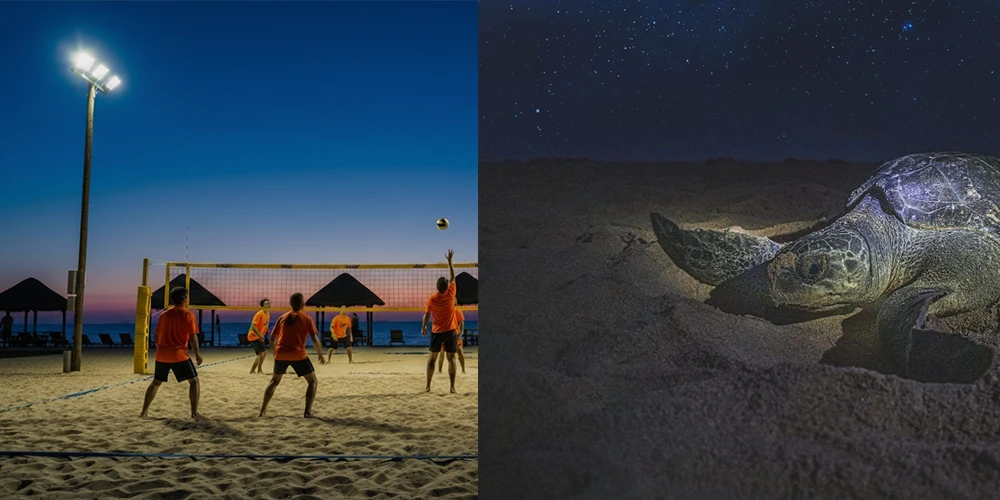
The shoreline at night, lit by bright artificial lights, reflects a clear contrast between human use and wildlife needs. Beachfront properties increasingly rely on lighting for safety, security, and nighttime activities. For people, the beach becomes a welcoming place for recreation, such as late-night volleyball games or a peaceful walk along the boardwalk.
For wildlife, especially sea turtles, the beach serves a very different purpose. It is a vital nesting area where survival depends on natural conditions. Nesting turtles and their hatchlings rely on the faint glow of the moon over the ocean to guide them safely to the water. Artificial lights can disrupt this natural signal, confusing hatchlings and leading them away from the sea.
This contrast raises an important question: can people continue to enjoy the beach at night while also protecting the sea turtles that depend on darkness for survival?
Conflict Between Human Needs and Sea Turtle Conservation
Sandy beaches have become places of conflict, where human activity and sea turtle conservation collide under the glow of artificial light. On one side, lighting is essential for nighttime activities, public safety, and economic development. On the other hand, sea turtles face a serious threat from that very light.
For people, light represents safety, connection, and the ability to extend daily life into the night. For coastal resorts and local communities, lighting the beach is often seen as a public necessity. Well-lit boardwalks help prevent accidents, sports lighting supports community recreation through nighttime games, and ambient lighting for beachfront restaurants boosts local economies. From a human perspective, a bright beach feels active, welcoming, and alive.
For sea turtles, however, the same lighting creates a dangerous disruption. Artificial white light, which contains strong blue and green wavelengths, spills onto the dunes and creates a false moon effect. Hatchlings instinctively move toward the brightest horizon, believing it to be the ocean. When artificial lights overpower natural moonlight, hatchlings become disoriented and crawl inland instead, often toward roads or predators. In some regions, artificial lighting contributes to the loss of thousands of hatchlings each season, a devastating impact on a species where only about one in a thousand survives to adulthood.
A night volleyball game offers a clear example of this imbalance. Recreational play typically requires around 200 lux to ensure visibility and safety. By comparison, a full moon on a clear night provides only about 0.1 to 0.3 lux. This extreme difference explains why artificial lighting easily overwhelms natural cues and misleads sea turtles away from the sea.
Three Golden Rules of Coastal Lighting Management
Can the conflict between human safety and wildlife protection be solved simply by dimming the lights? Unfortunately, no. Lighting that is too dim cannot provide adequate visibility or ensure human safety. At the same time, it is impossible to illuminate sandy beaches without causing any impact on sea turtles.
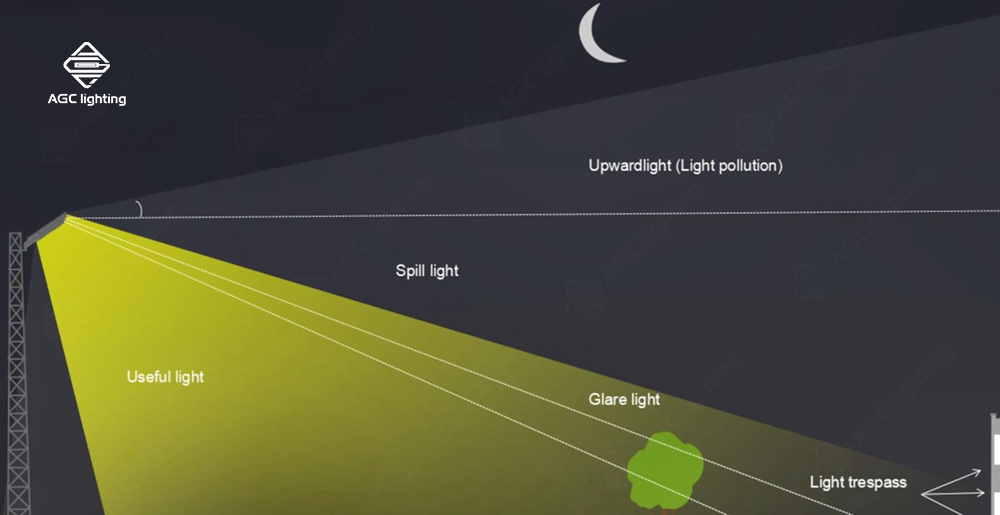
What is possible, however, is minimizing those impacts. Achieving this requires a coastal lighting management that carefully controls where light is directed, how much light is used, and what color (wavelength) the light emits.
To support these goals, the Florida Fish and Wildlife Conservation Commission (FWC) has developed turtle-friendly lighting guidelines designed to reduce negative effects on coastal wildlife while maintaining necessary illumination for people.
According to the FWC, the three golden rules of coastal lighting are:
Keep it Low, Keep it Shielded, and Keep it Long
|
|
Light management strategy |
Methods |
|
1 |
Keep it low |
Lower fixture mounting heights and reduce light intensity to the minimum required for safety |
|
2 |
Keep it shielded |
Use fully shielded or full cut-off fixtures to prevent light from spilling toward the beach or ocean |
|
3 |
Keep it long |
Use long-wavelength light sources, such as amber or red, which are minimally visible or non-attractive to sea turtles |
Solutions for Balancing Nighttime Activities and Sea Turtle Conservation
At AGC Lighting, we have extensive experience in designing wildlife-friendly lighting solutions. Our products and designs comply with FWC turtle-friendly lighting guidelines and other relevant regulations, tailored to meet specific customer and site requirements.
Keep It Long
Sea turtles are highly sensitive to short-wavelength light in the blue and white spectrum. In contrast, they show minimal response to long-wavelength light, such as amber and red. By using these wavelengths, lighting systems can significantly reduce hatchling disorientation and nesting disturbance.
We offer both amber and red lighting solutions, which have proven effective in eliminating the vast majority of hatchling disorientation incidents while still supporting safe nighttime human activities.
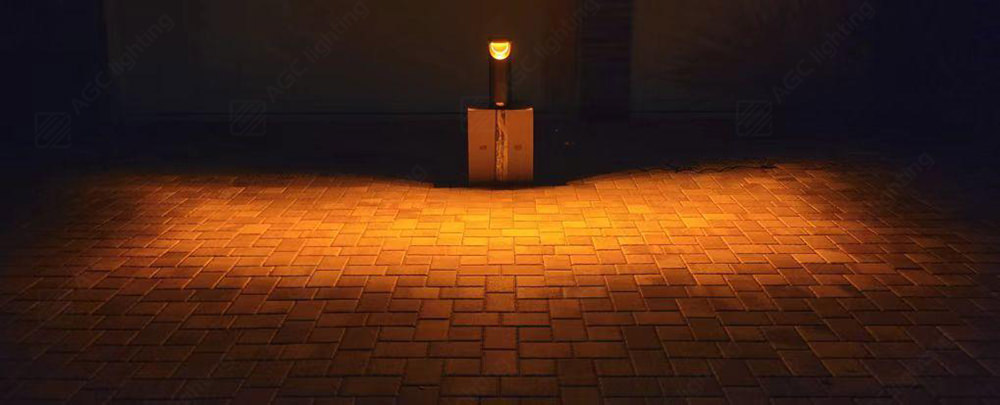
Project 1: Amber Bollard Lighting for Coastal Walkways
In this project, the client required amber bollard lights for installation in a coastal environment. These bollards were designed to illuminate pedestrian walkways used for evening strolls.
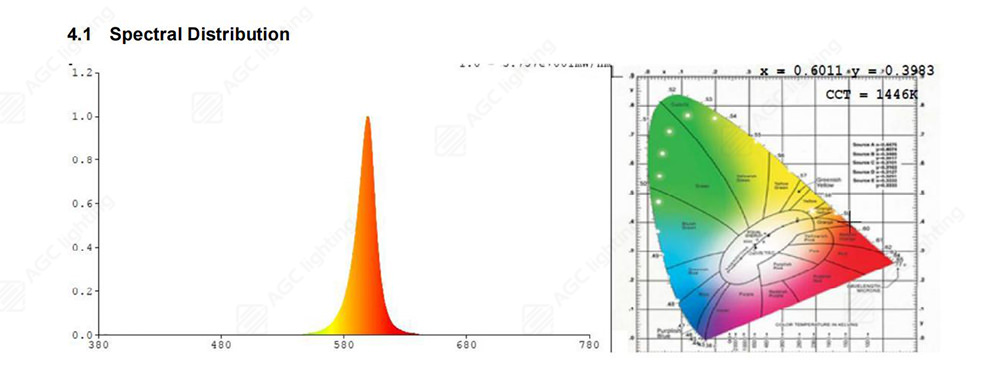
For this application, we used 20 x 20 Lumileds amber LED chips, which produce true amber light, as confirmed by the spectral distribution graph. This ensures compliance with turtle-friendly lighting requirements and avoids the use of filtered white light, which can still emit disruptive wavelengths.
Amber light provides a warm, calm, and relaxing atmosphere while delivering sufficient visibility for pedestrians. As shown in the project images, this solution successfully balances aesthetic appeal with functional safety.
Project 2: Red Solar Bollard Lighting for Enhanced Sustainability
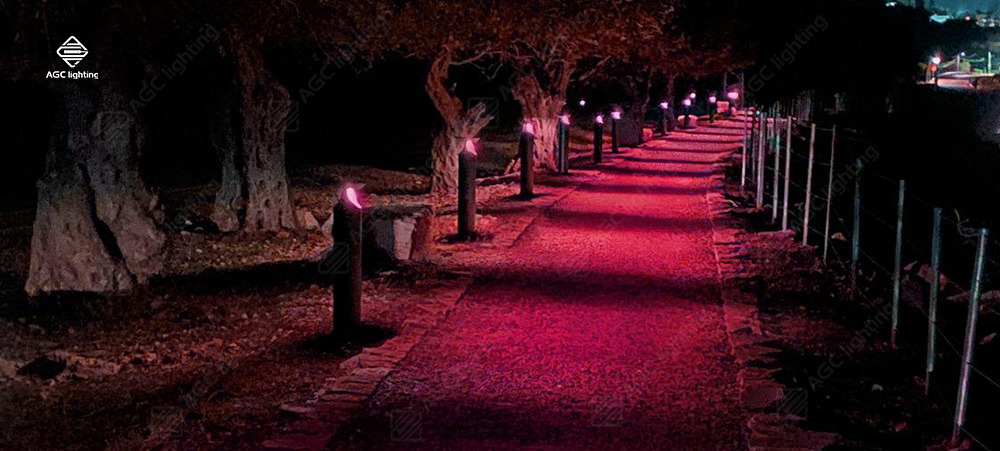
In another project, the client requested a red lighting solution for a beachside walkway to further reduce impacts on sea turtles. In addition to environmental protection, the client prioritized sustainability and cost efficiency.
To meet these goals, we recommended a solar-powered bollard light with a customized red wavelength. This solution minimizes energy consumption, reduces operational costs, and eliminates the need for underground wiring, ideal for sensitive coastal areas.
Unlike warm amber lighting, red light creates a more vivid and visually distinctive nighttime atmosphere, adding character to the space while maintaining compliance with sea turtle conservation guidelines.
Keep It Low and Keep It Shielded
Long-wavelength lighting is the best option for protecting sea turtles. However, in some situations, white light is still necessary. As mentioned earlier, it is not possible to light sandy beaches without any impact on sea turtles. The goal is to reduce that impact as much as possible.
During the hot summer months, many people visit the beach at night to enjoy cooler temperatures. Beach properties also use artificial lighting to extend operating hours and support nighttime activities, which brings economic benefits.
Beach volleyball is a good example. Sports activities on sand usually require LED floodlights to provide clear visibility and ensure player safety. Amber and red lights do not offer enough brightness or visual clarity for fast-moving sports and may increase the risk of accidents. In these cases, white light is required.
When white light must be used, two principles are especially important: keep it low and keep it shielded.
High-powered floodlights should be installed in carefully selected locations and aimed precisely at the sandy activity area. Proper beam control helps remove backlight and side spill and ensures that no light is directed toward the ocean. This approach greatly reduces disturbance to marine life.
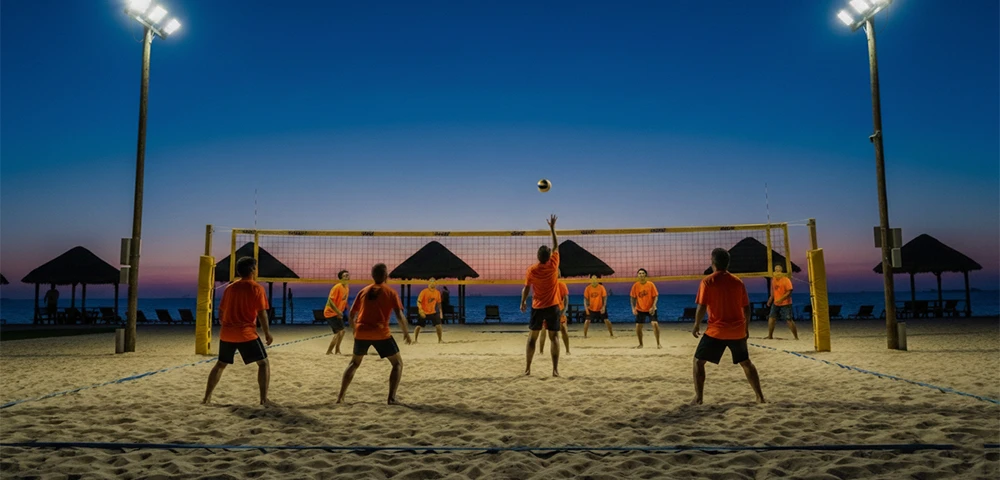
This is where our team can help. With over 120 R&D engineers and more than 1,000 private optical designs, we are able to provide effective and efficient lighting solutions. We recommend suitable lighting fixtures for different activities and select the correct beam angle, installation position, and aiming direction. Through careful lighting simulation, we also achieve the best lighting results while minimizing impact on marine life and the environment.