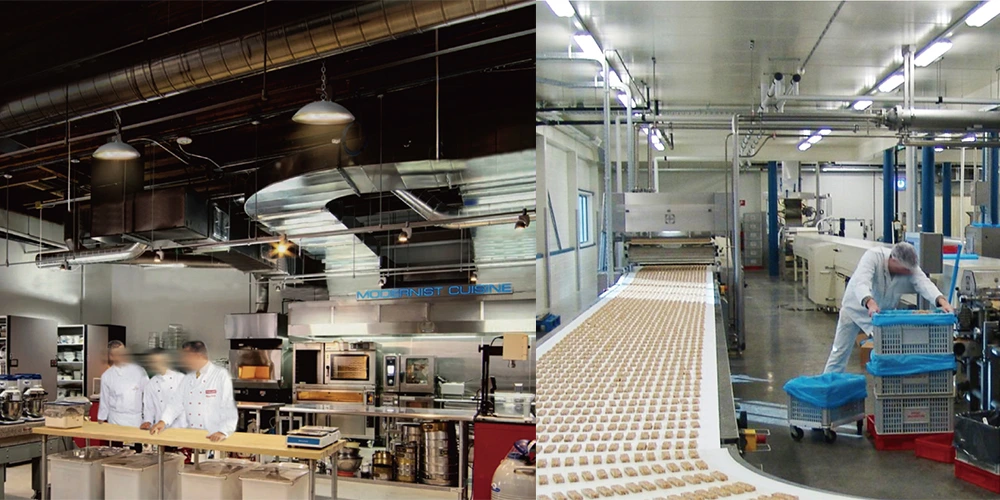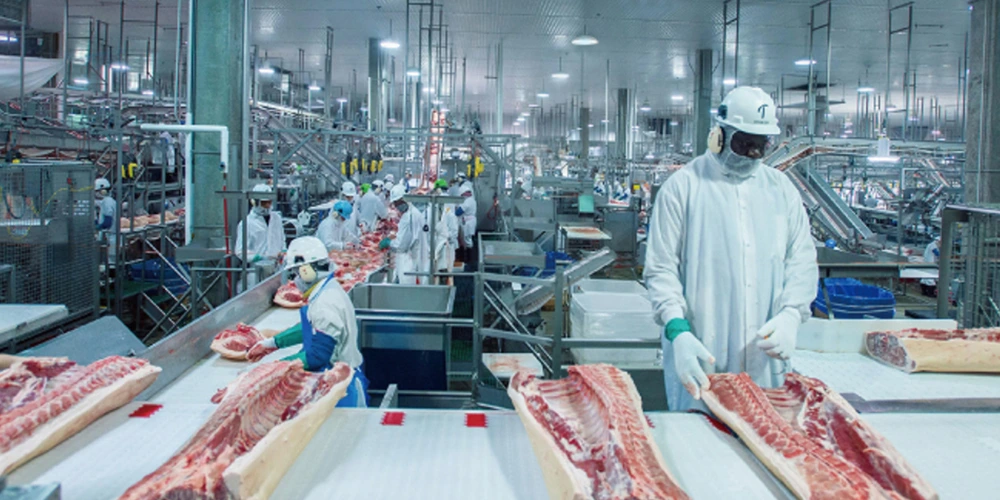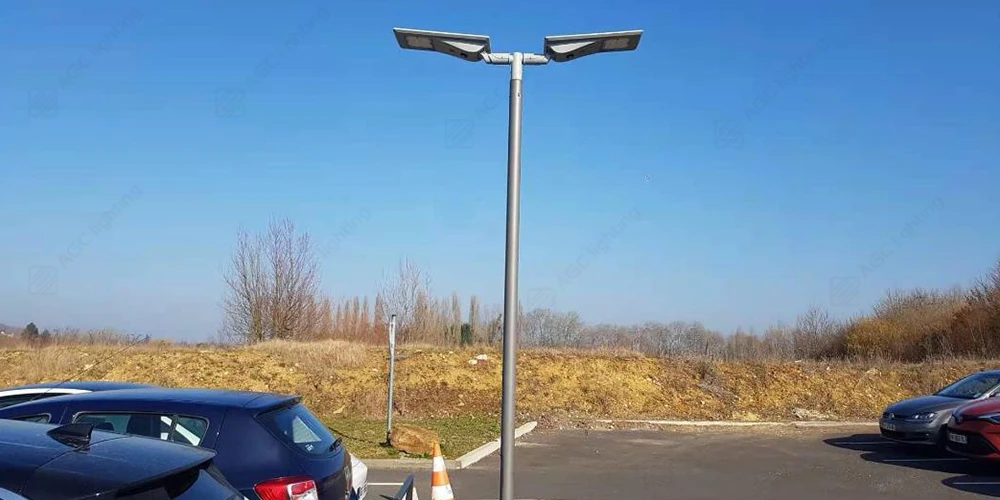
Metallurgical factories are a collection of very different spaces, each with its own hazards. Getting the lighting wrong in any one of them means frequent fixture failures, higher maintenance costs, and potential safety risks. This guide walks through five workshops that require special attention and explains what to look for when selecting luminaires.
Why Metallurgical Factory Lighting Deserves Careful Planning
Most industrial lighting projects can follow a straightforward process: determine the required illuminance level, select an appropriate fixture, done. Metallurgical factories are different.
Beyond meeting illuminance targets (which are set by local standards such as ISO 8995-1), the environment itself can shorten fixture life dramatically or create safety hazards if the wrong product is installed.
The main environmental stressors across a steel or metal processing facility include:
- High ambient temperature: particularly near furnaces and casting areas
- Corrosive atmosphere: electrolytes, acid mist, and process chemicals degrade standard housings quickly
- Dust and particulates: raw material handling generates fine dust that clogs vents and coats optics
- Moisture and steam: heat treatment and quench processes generate high-pressure steam
- Power reliability requirements: transformer rooms and control areas need emergency backup lighting
Quick Reference: Five Workshops at a Glance
| Workshop | Primary Hazards | Key Fixture Requirements |
|---|---|---|
| Smelting | High temperature, radiant heat | Rated for ambient temps ≥60°C, thermal management design |
| Electrolysis | Corrosive atmosphere, acid mist | Corrosion-resistant housing, IP65 or higher |
| Transformer Room | Power criticality, Possible moisture | Emergency backup (≥30 min), moisture-proof if underground |
| Heat Treatment | High temperature, Acid/base corrosionSteamDust | High IP rating + high-temp rating + corrosion resistance |
| Raw Material Stacking | High dust density | High IP rating, smooth housing to prevent dust accumulation |
Smelting Workshop
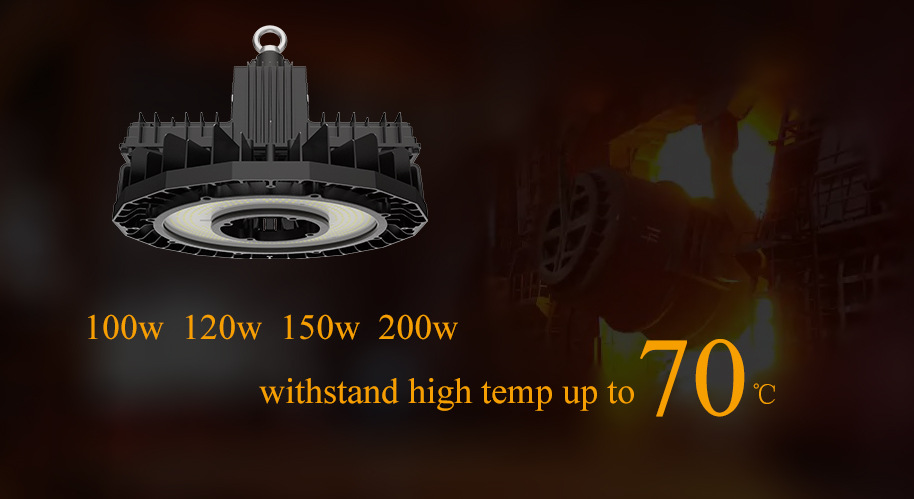
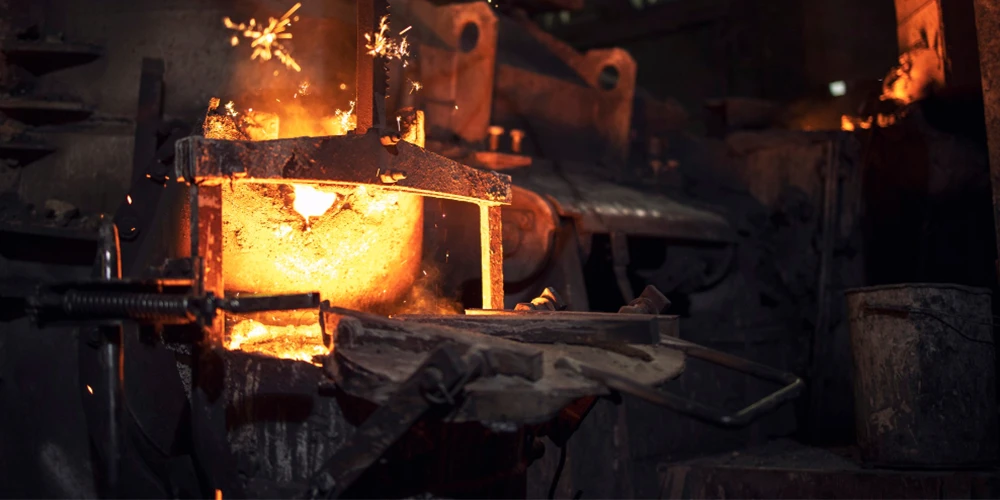
The smelting workshop, the area where the smelting furnace operates, is used in pyrometallurgy to extract metals from ore at elevated temperatures. Ambient temperatures near active furnaces regularly exceed what standard LED drivers and thermal management systems are designed for.
The practical problem: LED junction temperatures are already elevated under normal operation. Add a high ambient temperature from the furnace environment, and the driver or the LED module degrades faster than expected. You end up with fixtures failing well short of their rated lifespan.
When specifying fixtures for a smelting workshop, confirm the ambient temperature rating, not just the ingress protection rating. A fixture rated for Ta=45°C is not appropriate here. Look for products rated for continuous operation at Ta=60°C or higher, with validated thermal testing, not just a spec sheet claim.
Fixture requirements
- LED high bay rated for high-temperature ambient environments (Ta ≥ 60°C)
- Robust thermal management, heat sink design validated for sustained high-temp operation
- Avoid plastic housings; die-cast aluminum preferred
Electrolysis Workshop
Electrolysis is used to purify and refine metals. The workshop contains electrolytic cells, electrolyte solution, circulating pipework, pumps, ventilation equipment, and electrical bus bars. The environment is typically acidic; in copper refining, for example, sulfuric acid electrolyte is used. Over time, acid mist and vapors will attack unprotected fixture housings, corrode mounting hardware, and degrade wiring connections.
Standard aluminum housings offer limited protection without additional treatment. Fixtures installed in electrolysis workshops should use materials and coatings specifically designed for acid-resistance; anodized or powder-coated aluminum is not sufficient on its own if the coating is not chemical-resistant. Polycarbonate or glass lenses outlast standard acrylic in this environment.
Ingress protection should be IP65 at a minimum. In workshops with active spray or direct contact with electrolyte, IP66 is more appropriate.
Fixture requirements
- Corrosion-resistant LED lights with anti-corrosion housing treatment
- IP65 minimum (IP66 where electrolyte contact or direct spray is possible)
- Stainless steel or corrosion-resistant mounting hardware
- Glass or polycarbonate lens, avoid standard acrylic
Transformer Room
The transformer room houses the step-down equipment that converts the incoming high-voltage supply to the working voltage for the plant. It is the electrical backbone of the facility. Typically, it is sited close to the power supply intake, away from dust, process chemicals, and vibration, but this is not always possible in practice.
The primary lighting requirement here is reliability. If the main supply fails, the transformer room still needs to be safely illuminated for maintenance personnel. Emergency backup lighting is not optional; most national codes and factory safety standards mandate it. The minimum emergency duration is generally 30 minutes, though site-specific risk assessments may require longer.
If the transformer room is located below grade, moisture ingress becomes a secondary concern, and moisture-proof fixtures (IP44 or higher) should be specified accordingly. In above-grade, dry transformer rooms, a standard industrial fixture with integrated emergency backup is sufficient.
Fixture requirements
- Industrial LED fixture with integrated emergency backup battery
- Emergency duration ≥ 30 minutes (verify against local code requirements)
- If underground or in humid locations: IP44 or higher (triproof LED with emergency backup)
Heat Treatment Workshop
Heat treatment is applied after forging. The process involves heating metal parts to specific temperatures and then quenching them, either in water, oil, or polymer solutions, to achieve the desired mechanical properties. The workshop also handles cleaning, spraying, and rework operations.
The combination of stressors is substantial: elevated ambient temperatures from furnaces, high-pressure steam from quench operations, acidic and alkaline cleaning solutions, and significant airborne dust from scale and particulates.
Fixture requirements — all four must be met
- High IP rating (IP65 or IP66) for dust and steam ingress protection
- High-temperature ambient rating (Ta ≥ 55°C depending on furnace proximity)
- Corrosion-resistant housing for acid/alkali environments
- Verified resistance to high-pressure steam wash-down where applicable
Raw Material Stacking Area
Raw material areas, where ore, coal, coke, limestone, and other inputs are received and stored, generate consistently high dust levels. Dust monitoring reports from steel mills show particulate concentrations in these areas significantly higher than in other parts of the plant.
The obvious implication is IP rating. A fixture with an IP54 rating that is appropriate for a general warehouse is not adequate here. IP65 is a reasonable floor; IP66 provides a meaningful additional margin.
There is a second consideration that is often overlooked: housing geometry. Fixtures with flat horizontal surfaces, deep lens recesses, or complex housing geometry accumulate dust quickly. This reduces light output over time and increases cleaning frequency. A fixture with a smooth and curved housing, fewer horizontal ledges and recesses, sheds dust more effectively, and maintains output longer between cleaning intervals.
Fixture requirements
- IP65 or IP66 rated for reliable dust exclusion
- Smooth, rounded housing geometry to minimize dust accumulation
- Easy-access cleaning design where fixture height allows maintenance access
Metallurgical factory lighting is not complicated, but it does require discipline.
Match the fixture specification to the actual environment in each workshop: high-temperature ratings where furnaces operate, corrosion resistance where electrolytes or process chemicals are present, adequate IP ratings throughout, and emergency backup where electrical reliability is critical.
For specific product recommendations, lighting calculations, or to request a lighting design consultation, contact AGC Lighting.