Padel and pickleball courts are opening in clubs, parks, hotels, and residential developments. The lighting often comes last in the considerations, as attention goes to the surface, the walls, and the net. But lighting decides whether a court is used after sunset and whether players want to come back.
Padel and pickleball are played in a small space at high speed. In padel, the ball bounces off the walls as well as the floor, and the background behind the ball keeps changing. Players also look up for lobs.
The lighting has to deal with all of that, then survive the weather and the balls, and still be affordable to run.
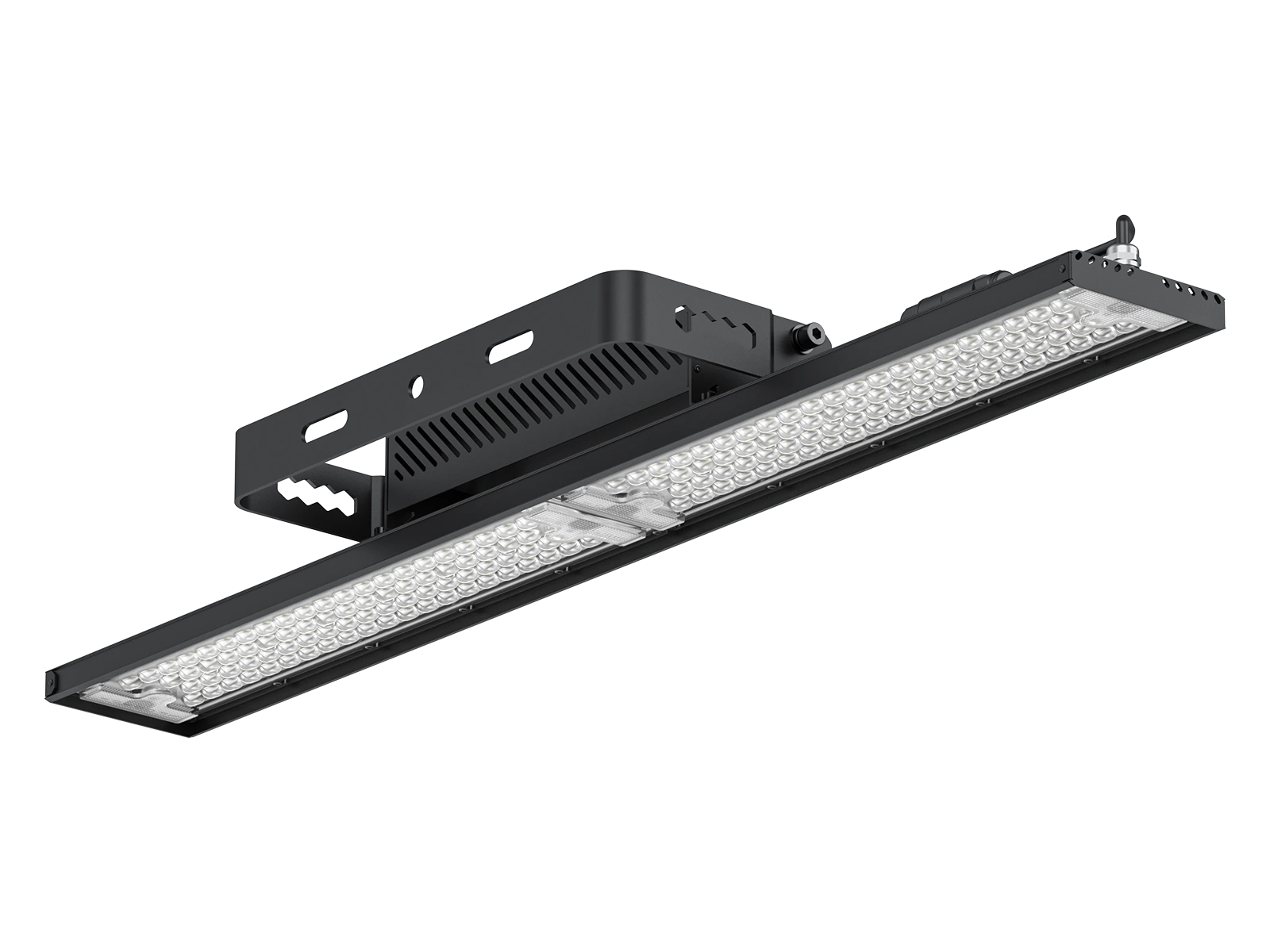
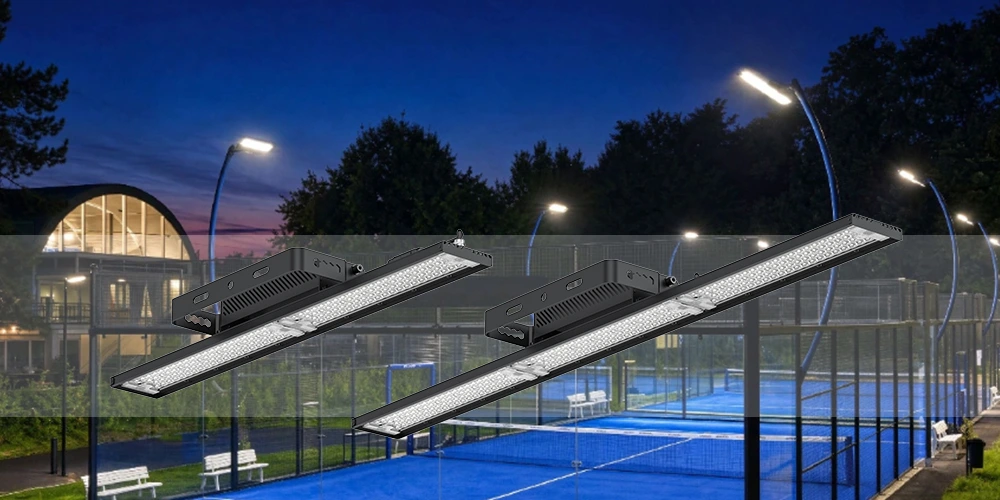
We developed the SP30 LED sports light for padel and pickleball courts.
Why are padel and pickleball courts hard to light?
Because the game moves fast in a small space.
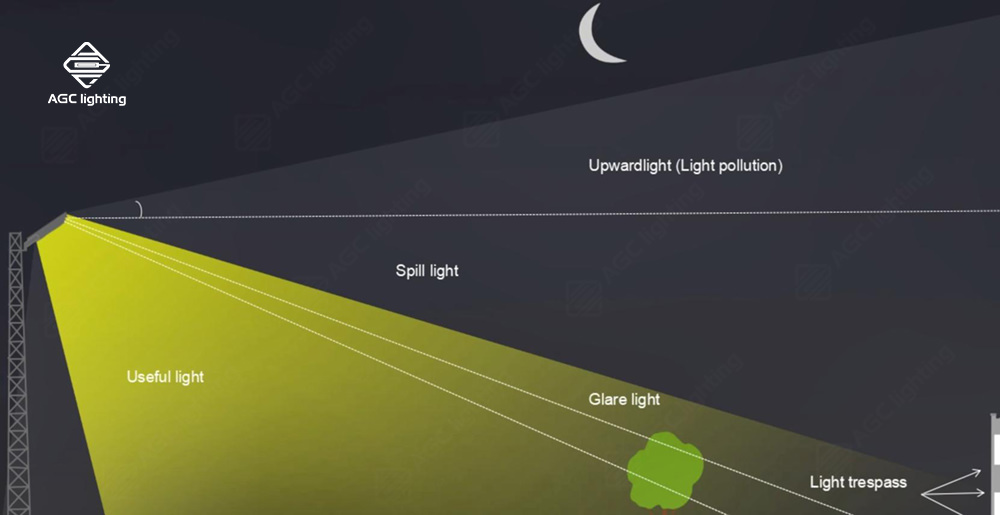
A padel ball bounces off the floor and the walls, so it can come at a player from any direction. The background keeps changing as players turn. Lobs send their eyes upward, which means a fixture that is fine to look at from the side can become a glare problem when you look up.
So brightness alone is not the goal. A court that is bright in the middle and dim at the corners makes the ball harder to track. What players notice is evenness: the same clear light at the net, at the back wall, and in the corners. That is why professional guidance on court lighting talks about uniformity as much as light level, and why standards such as EN 12193 set requirements for both.
Need an EN 12193-compliant lighting design?
Contact our engineering team for a customized DIALux simulation report.
What does a court owner worry about?
For court lighting, the owner usually worries about the weather stresses, ball impact, running costs, and a tight budget.
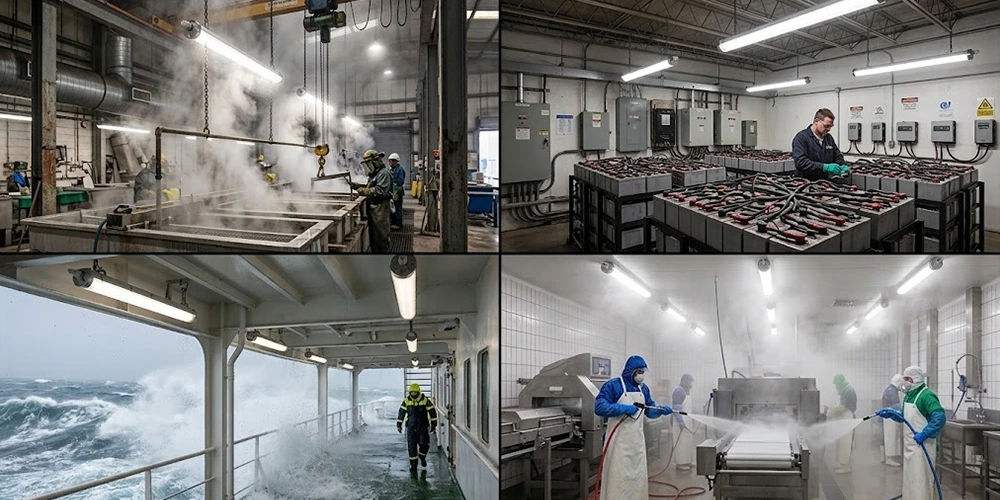
- Weather: Many courts are open-air. Rain, dust, heat, and cold all reach the fixtures. Coastal courts add salt air, and indoor halls add humidity.
- Ball impact: Fixtures sit close to the action. A ball will hit one eventually, and it should mean a broken fixture and a dark court.
- Running Cost: Many courts are busiest in the evening. A light that wastes energy shows up on the bill every month,
- Budget: Many owners are building several courts at once. They need good lighting at a price that makes the project work.
Where does the SP30 fit?
The SP30 was built around those concerns.
It is made for padel and pickleball.
It is not a general floodlight adapted for a court. The design aims at the even, controlled light these courts depend on. The advanced asymmetrical 30° lens is specifically designed for these courts, providing precise lighting coverage across the entire playing area with exceptional illuminance uniformity
It is light to handle and mount.
Upgrade mounting bracket reduce weight without compromising strength. The 200W model weighs only 4.0 kg. No matter retrofits or new builds, it makes the installation and maintenance significantly easier and faster.
It is made to be durable.
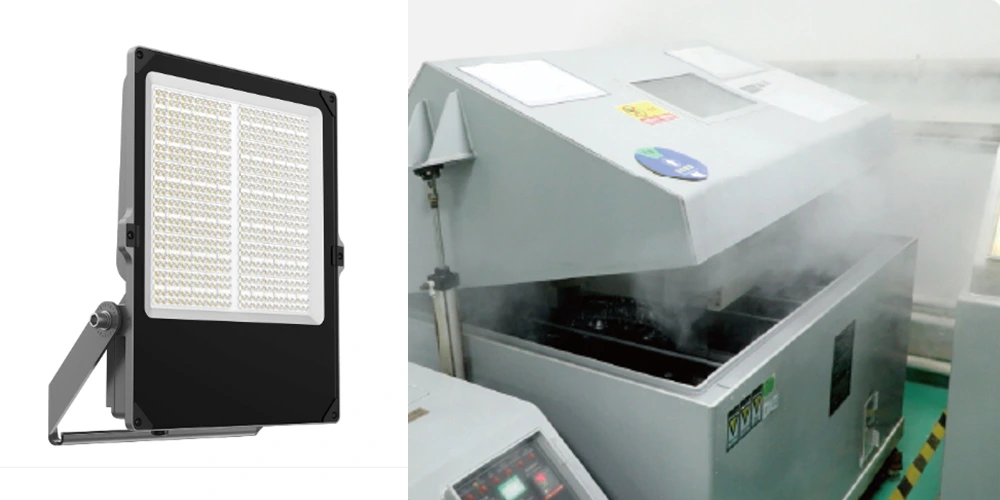
The SP30 is rated for dust and water, impact, and corrosion, so it can serve open courts, coastal sites, and humid halls.
Die-cast aluminium housing with advanced fin-based thermal management, IP66, IK08, and C5 anti-corrosion coating ensures long-term performance in harsh outdoor environments.
It is efficient and controllable.
High efficacy up to 170 lm/W keeps energy use down during long evening sessions, and 0-10V control lets operators dim the lights when a full competition level is not needed.
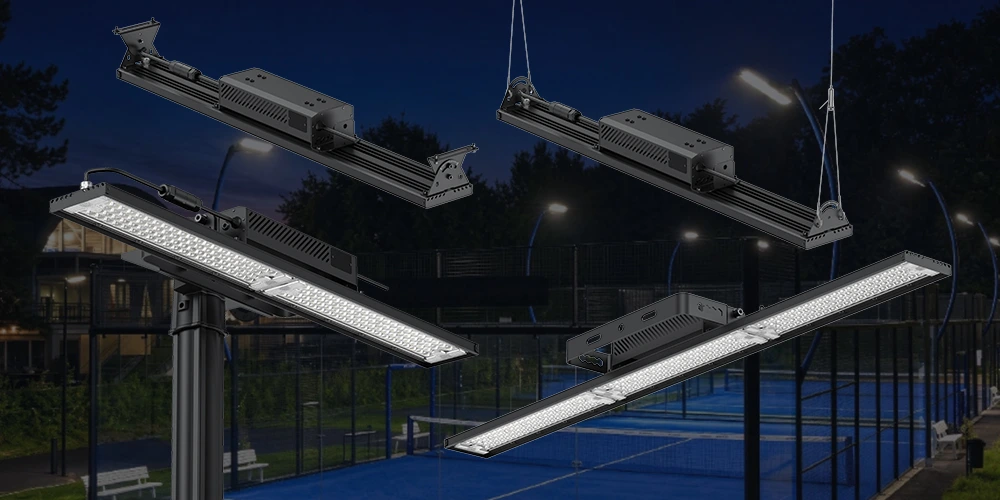
Talk to us about your project, and we will show you how SP30 would perform on your court.