Walk into most pig barns, and you will see lights doing their job, helping farmers see and carry out daily tasks. For many, lighting has always been treated as a basic necessity, just like food or water. As long as the barn was lit and the electricity bill stayed under control, that seemed good enough. There is also a common belief that brighter light automatically means better results.
But lighting is about more than just how bright it is. It also includes the light spectrum, timing, and how evenly the light is distributed. These elements have a direct impact on pig behavior, physiology, and performance. If you are focused on growth rates, feed conversion, and herd health, lighting deserves more attention than it often gets.
In this blog, we will explore how to improve animal welfare, productivity, and overall profitability with proper lighting management.
The Hidden Downsides of Relying on Just Bright Lights
Flooding a pig barn with bright light might seem like a simple way to improve visibility, but it can actually do more harm than good. This approach overlooks the specific needs of swine physiology and behavior.
For example, constant exposure to intense light without adequate periods of darkness can disrupt a pig’s natural circadian rhythm. Over time, this disruption may lead to chronic stress, weakened immune responses, and greater vulnerability to disease.
It is also important to understand that bright light does not always mean good light. Many lighting systems produce flicker that can be highly irritating to pigs. Because pigs are more sensitive to rapid changes in light, this flickering can cause neurological stress, often expressed through increased aggression, tail biting, and general restlessness.
Another issue arises when the lighting is uneven. Sharp contrasts between overly bright areas and deep shadows can create confusion and anxiety for pigs. This can result in uneven use of the pen space and reluctance to approach feeders or drinkers, impacting growth and welfare.
How Do Pigs Perceive Light?
Want to optimize lighting for pigs? It’s essential first to understand how they perceive light.
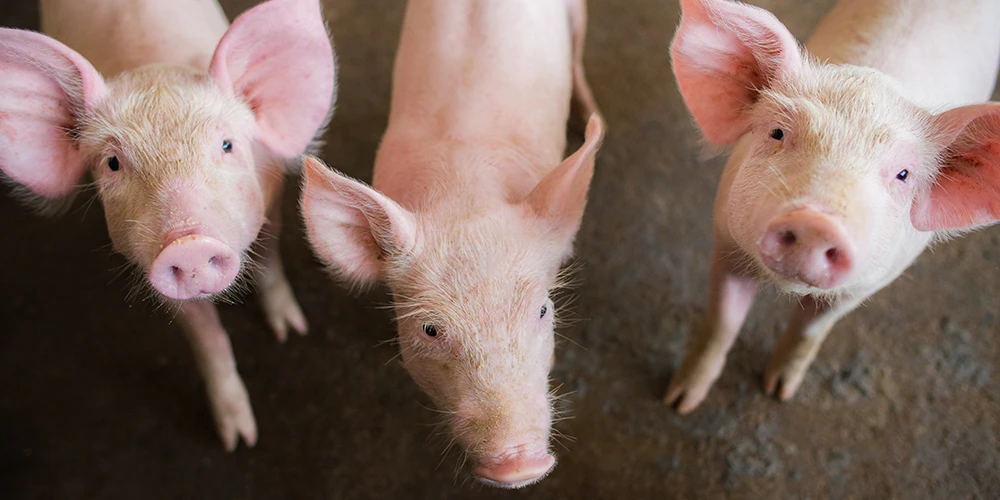
Unlike humans, pigs have dichromatic vision. This means their eyes are mainly sensitive to light in the blue and green wavelengths, with limited ability to detect red. So while a red light may look bright to us, it may appear much dimmer or even invisible to pigs.
Pigs also rely on specialized cells in their eyes called intrinsically photosensitive retinal ganglion cells, or ipRGCs, to detect overall light levels and help regulate the pig’s internal clock. When light levels are high during the day, melatonin production is suppressed, which keeps pigs alert, encourages feeding, and supports metabolic activity. As light levels decrease, especially with warmer, red-shifted tones in the evening, melatonin production rises, promoting rest and supporting immune function.
So, can pigs see LED lights? Yes, they can. But this raises an important consideration for lighting in pig barns. Pigs are more sensitive to light flicker than humans. While flicker may not be visible to us, pigs can perceive it clearly. This can cause neurological stress, which may lead to anxiety, increased aggression, and even weakened immune responses.
Key Lighting Parameters Beyond Just Brightness
Creating a healthy and productive environment for pigs takes more than simply turning on a bright light. To truly support their well-being and performance, while also reducing your costs, it’s important to consider five aspects of lighting: intensity, spectrum, uniformity, duration, and proper lighting fixtures.
Light Intensity
Let’s focus on light intensity for a moment. Bright light isn’t always the best light. What really matters is how well the lighting meets the actual needs of pigs at different stages of their development.
Several organizations have established guidelines to help with this. The Council of the European Union recommends that pigs should be exposed to light levels of at least 40 lux for a minimum of eight hours each day. The World Organization for Animal Health supports this recommendation as well, pointing out that maintaining this level can help reduce aggressive behavior in pigs.
In the United States, the American Society of Agricultural and Biological Engineers provides even more detailed guidance. Pigs in the breeding and gilt stage typically need more than 100 lux. Gestating sows require light levels above 50 lux. Farrowing areas benefit from lighting between 50 and 100 lux. For nursery pigs and the grow-finish stage, around 50 lux is usually appropriate.
|
Type of housing |
Illuminance (lux) |
|
Breeding/gilts |
>100 |
|
Gestation |
>50 |
|
Farrowing |
50-100 |
|
Nursery |
50 |
|
Grower-finisher |
50 |
Light Spectrum
Pigs don’t see the world the way we do. Their vision is limited to just two main colors: blue and green. Among these, they’re most sensitive to green light. On the other hand, they have a poor perception of red light, which can appear almost like darkness to them.
What color lights do pigs need? Different stages of pig development respond better to different types of light. In farrowing and nursery areas, softer, warmer lighting tends to work well. It helps keep sows calm and reduces stress for newborn piglets. Because pigs don’t see red light clearly, it’s often used during nighttime checks to avoid disturbing the animals while still allowing human visibility.
During the gestation and breeding phases, light that’s richer in blue wavelengths can help stimulate reproductive hormones and encourage more activity. This type of lighting can support better breeding outcomes and general health.
For pigs in the growing and finishing stages, a well-balanced white light, especially one with a bit of green, can help promote movement, increase feed intake, and support healthy growth.

Photoperiod
Pigs, like many animals, rely on a consistent rhythm of daylight and darkness to stay healthy and perform well.
A longer period of light, around 14 to 16 hours per day, can support better growth and stronger nursing behavior in piglets. On the other hand, slightly shorter light periods may help trigger puberty and improve fertility in breeding animals.
So, do pigs need light at night? In most cases, pigs do not need light at night.
In fact, they benefit from true periods of darkness. Darkness is critical for the natural production of melatonin, a hormone that supports restful sleep, a strong immune system, and overall health. When pigs are exposed to constant light, their circadian rhythm becomes disrupted, which can lead to stress, poor rest, and abnormal behaviors.
Light Uniformity
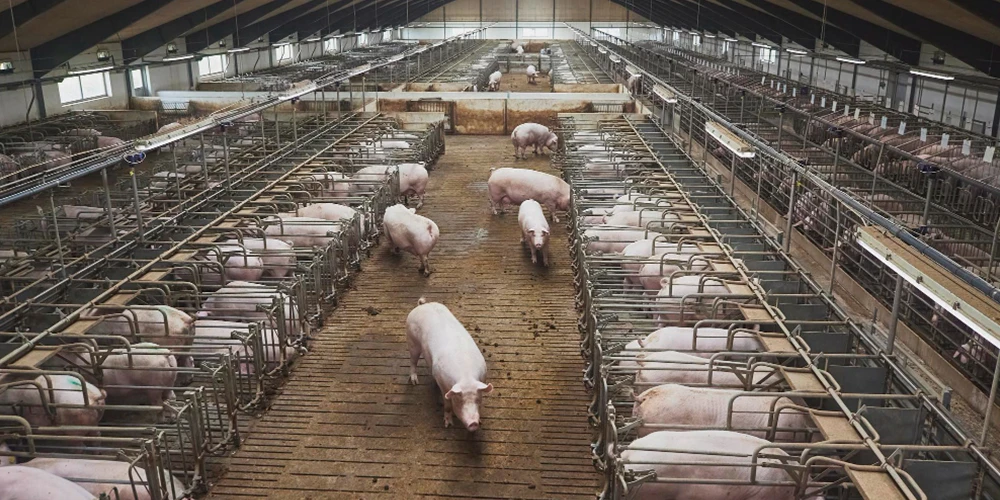
Even lighting plays an important role in maintaining a calm and comfortable environment for pigs.
Uneven lighting often leads to certain areas becoming more attractive for resting or feeding, which can trigger competition or even aggression among pigs. To avoid this, it's important to choose lighting fixtures that offer good light distribution and to position them in a way that ensures the entire barn is evenly lit.
Proper Lighting Fixtures
Lighting fixtures must withstand the demanding conditions found in pig barns. Moisture, ammonia, dust, and regular high-pressure cleaning all put stress on lighting fixtures, so durability is essential.
Lighting fixtures with an IP69K rating are well suited for this environment. They ensure that the lights are completely sealed against dust and can handle intense wash-downs, even at high temperatures or pressures.
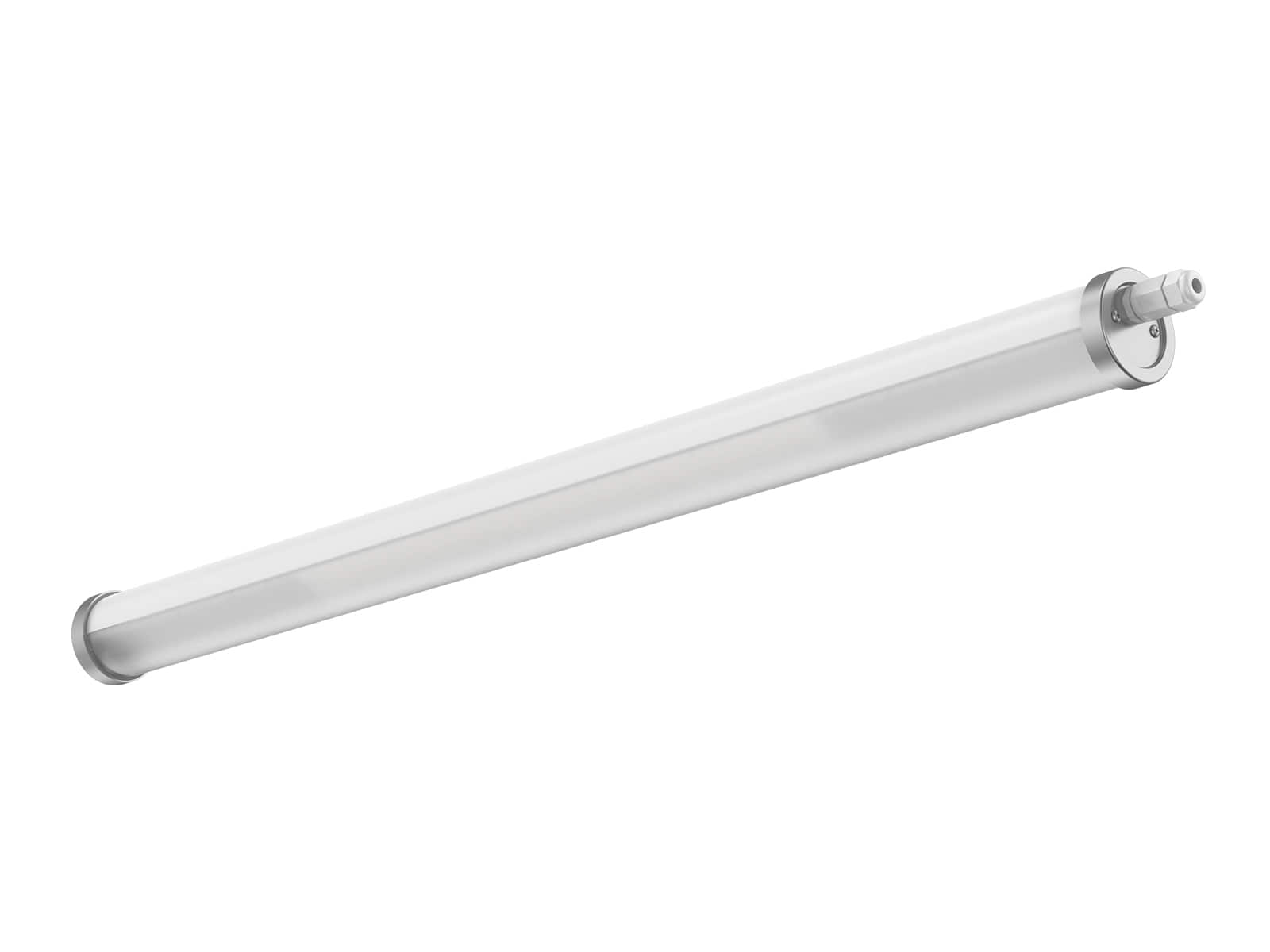
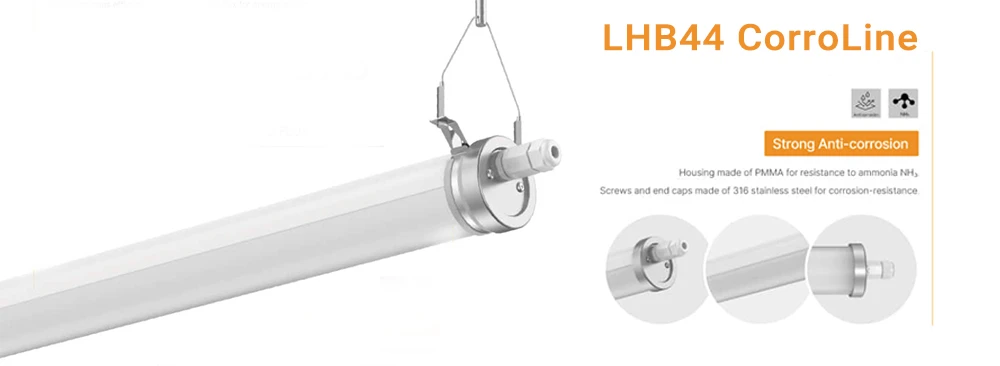
The materials used in the fixtures also matter. Ammonia is highly corrosive, so using lighting built with resistant materials is important for long-term reliability. For example, our LHB44 CorroLine is designed with a PMMA housing and 316 stainless steel send caps, offering strong resistance to ammonia and corrosion.
Another important consideration is flicker. Pigs are sensitive to light flicker, as it can create stress and disrupt their behavior. So, high-quality, flicker-free lighting is crucial to maintaining a calm and healthy environment for pigs.