When you're planning outdoor lighting, whether it’s for a street, pathway, or parking lot, how the light spreads matters more than you might think. The right lighting pattern improves visibility, keeps people safe, saves energy, and avoids lighting up places that don’t need it.
To help with this, the Illuminating Engineering Society of North America (IESNA) has outlined five main types of lighting distribution: Type I through Type V. Each one is suited to a specific kind of space. Once you understand how they work, choosing the right one becomes much easier.
Let’s walk through each type, what it does, and where it works best.
Why the Way Light Distribution Is Important
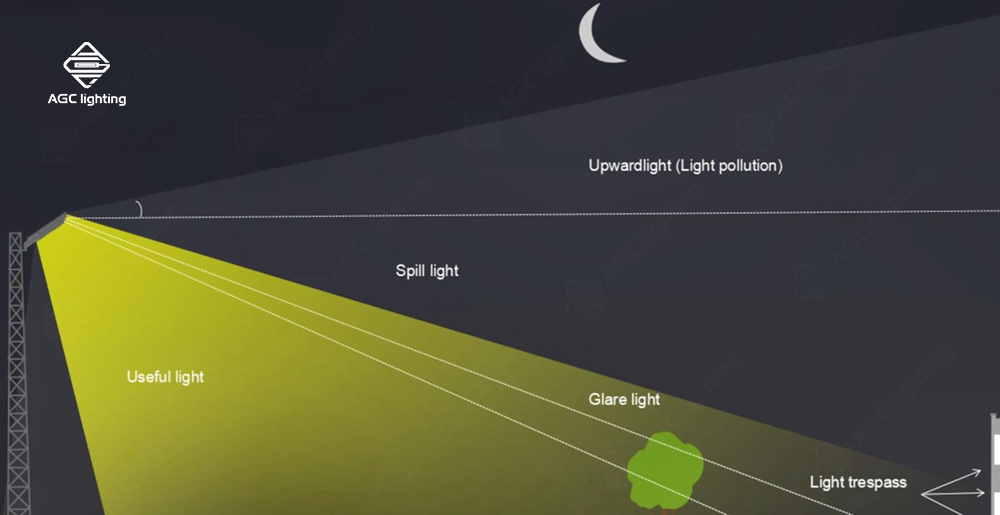
If you are trying to light a narrow sidewalk with a fixture that’s meant for a big, open plaza. You’d end up with lots of wasted light and uneven coverage. That’s why the shape of the light distribution is so important. It helps ensure that light goes where it’s needed, not where it’s wasted. It also helps reduce glare, keeps the night sky darker, and makes sure your lighting meets safety and environmental standards.
5 Types of Light Distribution
Type I
Type I spreads light in a narrow, straight line, perfect for paths and sidewalks where the fixture is placed right above the center. It’s typically mounted 3 to 6 meters (10 to 20 feet) high.
Type II
This type is a little wider than Type I and works well for alleys or narrow streets. Fixtures are usually mounted on the side of the path, around 4 to 7 meters (13 to 23 feet) high.
Type III
Type III casts light out wider and farther forward, which makes it great for streets and the edges of parking lots. You’ll usually see it mounted between 7 and 12 meters (23 to 40 feet).
Type IV
Need to light a large area from one side, like along a wall or the edge of a parking lot? Type IV pushes light outward in one direction while minimizing spill behind the fixture. It works well at heights between 8 and 14 meters (26 to 46 feet).
Type V
Type V spreads light in all directions equally, either in a circular or square shape. It’s ideal for open spaces where the fixture is placed in the middle, like plazas, roundabouts, or large intersections. These fixtures are usually mounted 8 to 15 meters (26 to 50 feet) high.

Here is a video about the light distribution of street lights.
How to Pick the Right One
Not sure which type you need? Here’s a quick way to think about it:
- For narrow paths or sidewalks, Type I or II works best.
- For wider roadways or parking lot edges, go with Type III.
- Lighting a space from the edge? Type IV is your friend.
- Lighting a large open area from the center? Type V is the way to go.
Still unsure? We're here to help. Reach out to our team for expert advice, or explore our selection of LED street lights to see what’s possible.
You can go even further by using full-cutoff designs that prevent light from going upward, choosing warmer light colors in residential areas, and adding motion sensors to cut energy use when spaces are empty.