Unlike offices or warehouses, indoor sports halls expose luminaires to fast, high-energy impacts that would shatter a fixture. That’s why the impact resistance of lighting fixtures is critical in these environments.
When you select sports lights, you will find the lighting industry is filled with terms like “impact resistance” and “shatterproof,” but there is a more relevant concept: ballproof lighting.
So, what does ballproof actually mean when referring to luminaires? What exactly makes a luminaire “ballproof”?
A ballproof luminaire is specifically designed to withstand repeated, high-energy impacts without being damaged or dislodged. Ballproof luminaires are often tested to rigorous standards, such as DIN 18032-3 and DIN 57710-13.
What Is a Ballproof Luminaire?
A ballproof luminaire is a type of light fixture made to handle strong impacts from sports balls. These lights are often used in gyms, sports halls, and other indoor areas where games like basketball, soccer, or volleyball are played.
The term “ballproof” means the light can take a hit from a fast-moving ball without breaking or falling. These lights are made with strong materials, like a shatterproof cover and a tough outer shell, to keep them safe and working even during intense games.
Using ballproof luminaires helps keep athletes safe and makes sure the lights stay on during play.
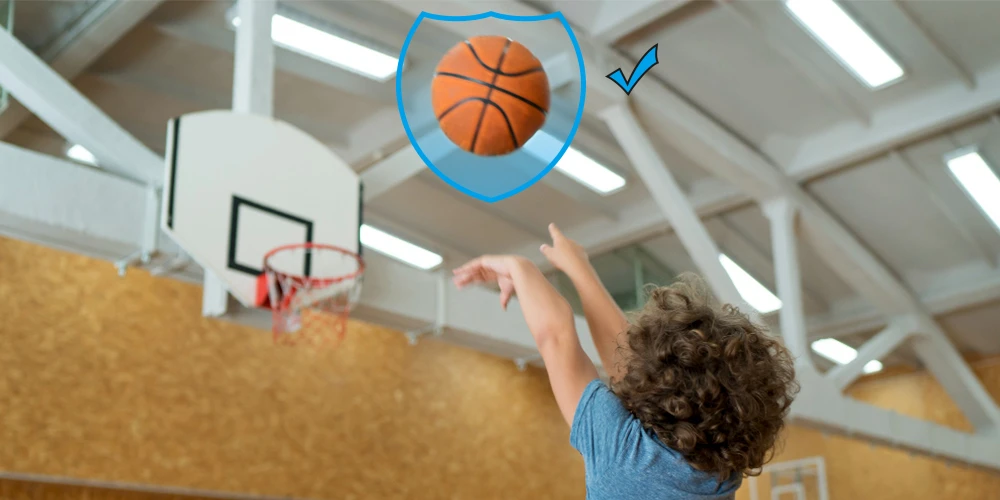
Core Testing Standards: DIN 18032-3 and DIN 57710-13
In the development of luminaires for sports halls, two primary standards define the requirements for ball-impact resistance: DIN 18032-3 and DIN 57710-13.
DIN 18032-3, titled "Sports Halls: Halls for Gymnastics, Games, and Multi-Purpose Use, Testing for Ball Impact Safety," sets the general framework for ensuring that all permanently installed components in sports facilities, such as walls, ceilings, and fixtures, can withstand repeated ball impacts. This standard outlines the principles behind testing procedures and defines the minimum performance criteria that must be met to ensure safety during use.
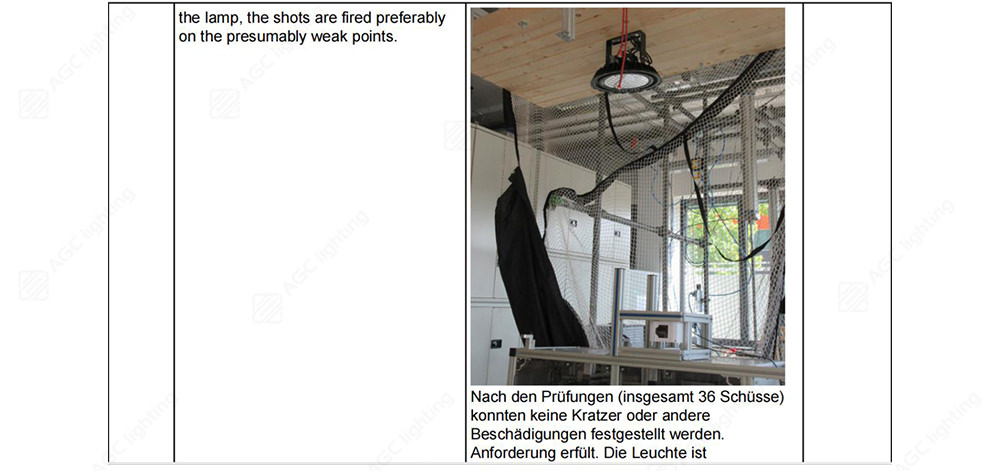
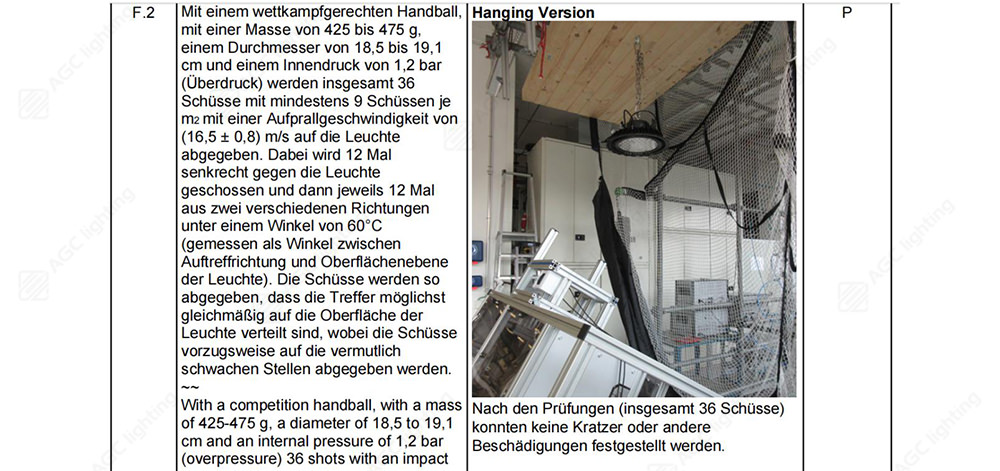
DIN 57710-13, "Luminaires Operating Below 1000V, Ball Impact Resistance Requirements," focuses specifically on luminaires. It defines a demanding testing method in which the luminaire must withstand a total of 36 impacts from a calibrated handball, projected from three different directions at speeds of up to approximately 60km/h. For a luminaire to be certified as ballproof under this standard, it must continue to function correctly after testing, show no signs of breakage or component detachment, and maintain its original IP rating.
DIN 57710-13 vs. IK ratings
Now, there’s a lot of confusion between different impact standards. You might have heard of IK ratings, like IK08 and IK10. However, a luminaire might achieve IK08 or even IK09 ratings yet fail the ballproof test, because the impact dynamics are entirely different.
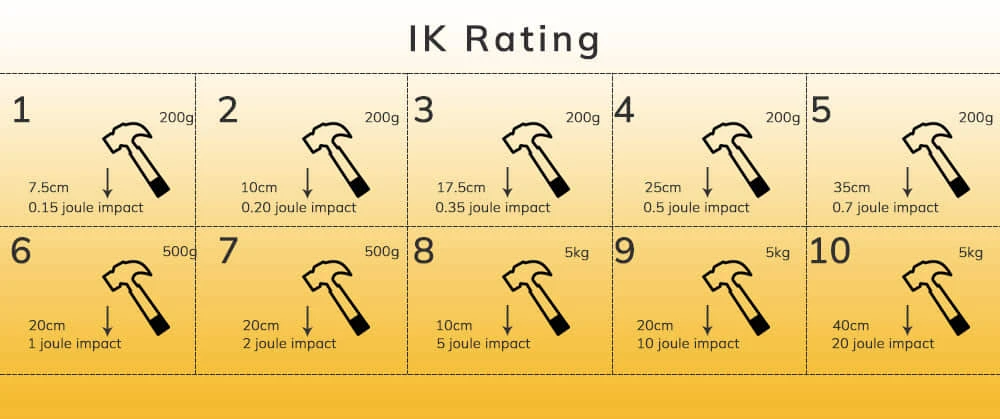
IK codes, defined by IEC 62262, measure resistance to mechanical impact using standardized steel balls or hammers dropped from specific heights. The testing involves static impacts at predetermined energy levels, ranging from 0.15 joules (IK01) to 50 joules (IK10). However, IK testing doesn't account for the unique characteristics of sports ball impacts, horizontal velocity, spin, bounce angles, and the specific materials and densities of athletic balls.
DIN 57710-13 tests simulate real-world collisions, 36 handball strikes from three different directions at around 60 km/h, reflecting the unique demands of sports facilities. The criteria for passing are also more stringent, demanding not just structural integrity but also preventing any parts from detaching or the luminaire from losing function
|
Feature |
IK rating (IEC 62262) |
DIN 57710-13 |
|
Impact |
Static vertical drop |
Sports balls strike from three different directions |
|
Test object |
Steel hammer or sphere |
Standardized handball |
|
Energy levels |
Up to 50 joules |
60km/h,36 impacts |
|
Outcome requirements |
No major deformation |
No damage, detachment, IP loss |
Core Components That Make a Luminaire Ballproof
So, what goes into making a luminaire that can take a beating and keep on shining? Here are the key components.
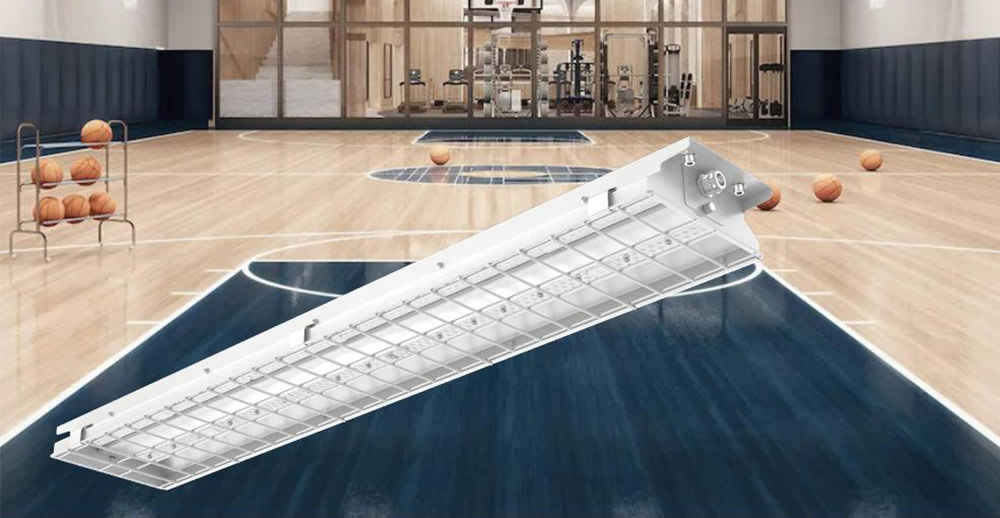
A protective grid system can be the first layer of defense. A grid, often made from stainless steel or impact-resistant polymer, is placed over the light. It is designed to block the ball flying at full speed without blocking too much light. The grid helps spread out the force of any impact and protects the luminaire.
Durable housing makes the luminaire body tough. Materials like die-cast aluminum are ideal because they hold their shape under pressure and resist corrosion over time. This solid construction also keeps the internal part safe.
A reliable mounting system is critical but is often overlooked. A strong fixture still needs to stay out. The luminaire should be securely attached to the ceiling or wall and hold up under repeated movement or vibration. Shock-absorbing features help reduce wear and protect the electrical parts from damage or exposure.
Lens, the part that actually lets the light through, should be clear and impact resistant. Thick, layered polycarbonate lenses can resist cracking or shattering. They also keep out dust and moisture thanks to tight sealing systems, so the sports lighting stays consistent and safe over time.
Why DIN 57710-13 Ball Test Certification Matters for Sports Lighting
While DIN 57710-13 Sports Hall Ball Impact Testing isn’t a legal requirement, it offers something just as important: peace of mind. For architects, facility managers, and end-users, it’s a clear signal that the lighting being used is safe, durable, and built to a high standard. And for you, it can mean winning projects faster and standing out in competitive bids.
At AGC Lighting, we offer sports lighting solutions that meet the DIN 57710-13 ball test standard, giving you a powerful advantage when working on sports halls or gym projects.
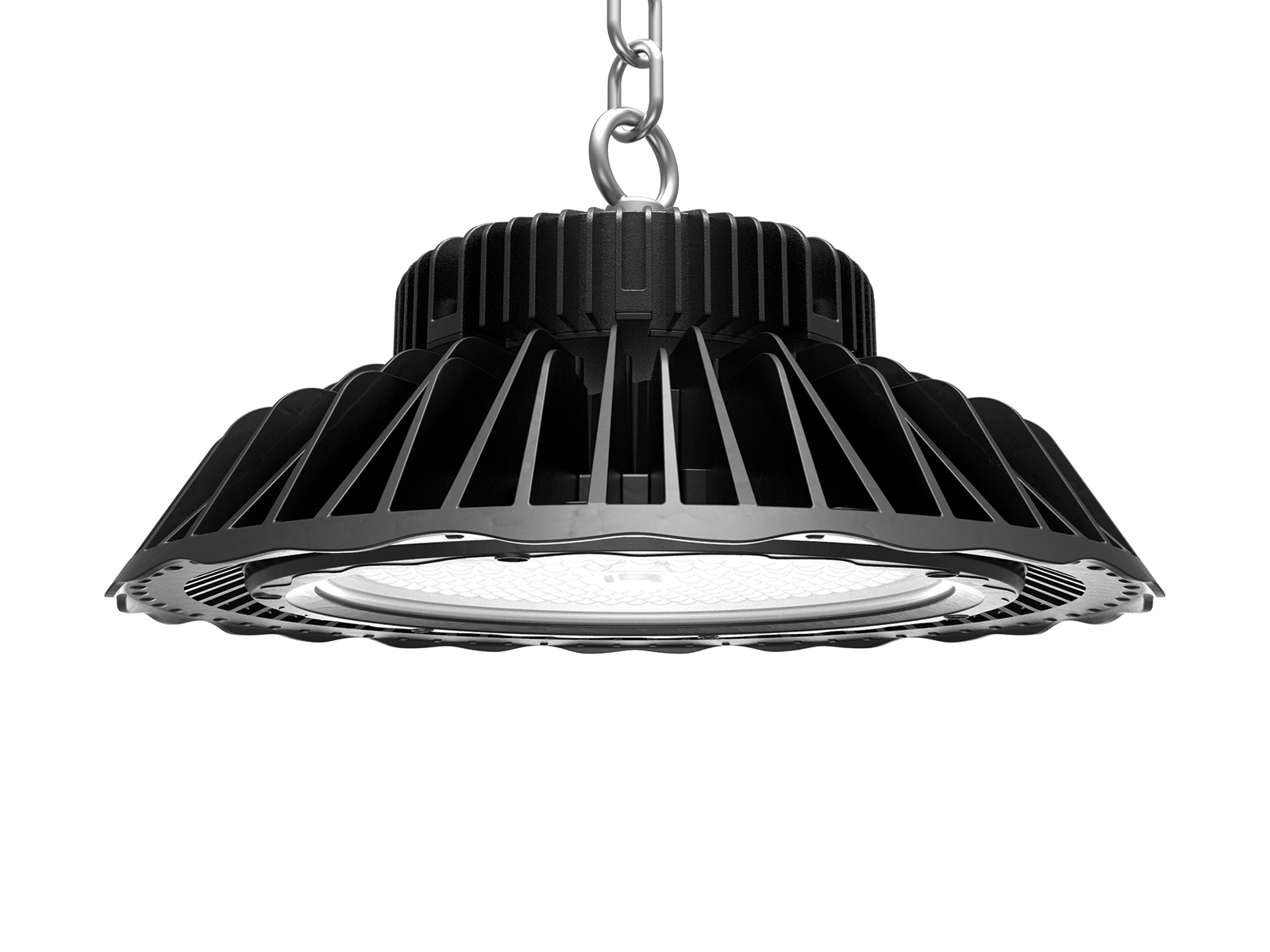
Take our HB01 HiCloud high bay light, for example. It’s fully certified with the DIN 57710-13 ball impact test and can be either surface-mounted to the ceiling or suspended, making it a versatile choice for many types of sports facilities.
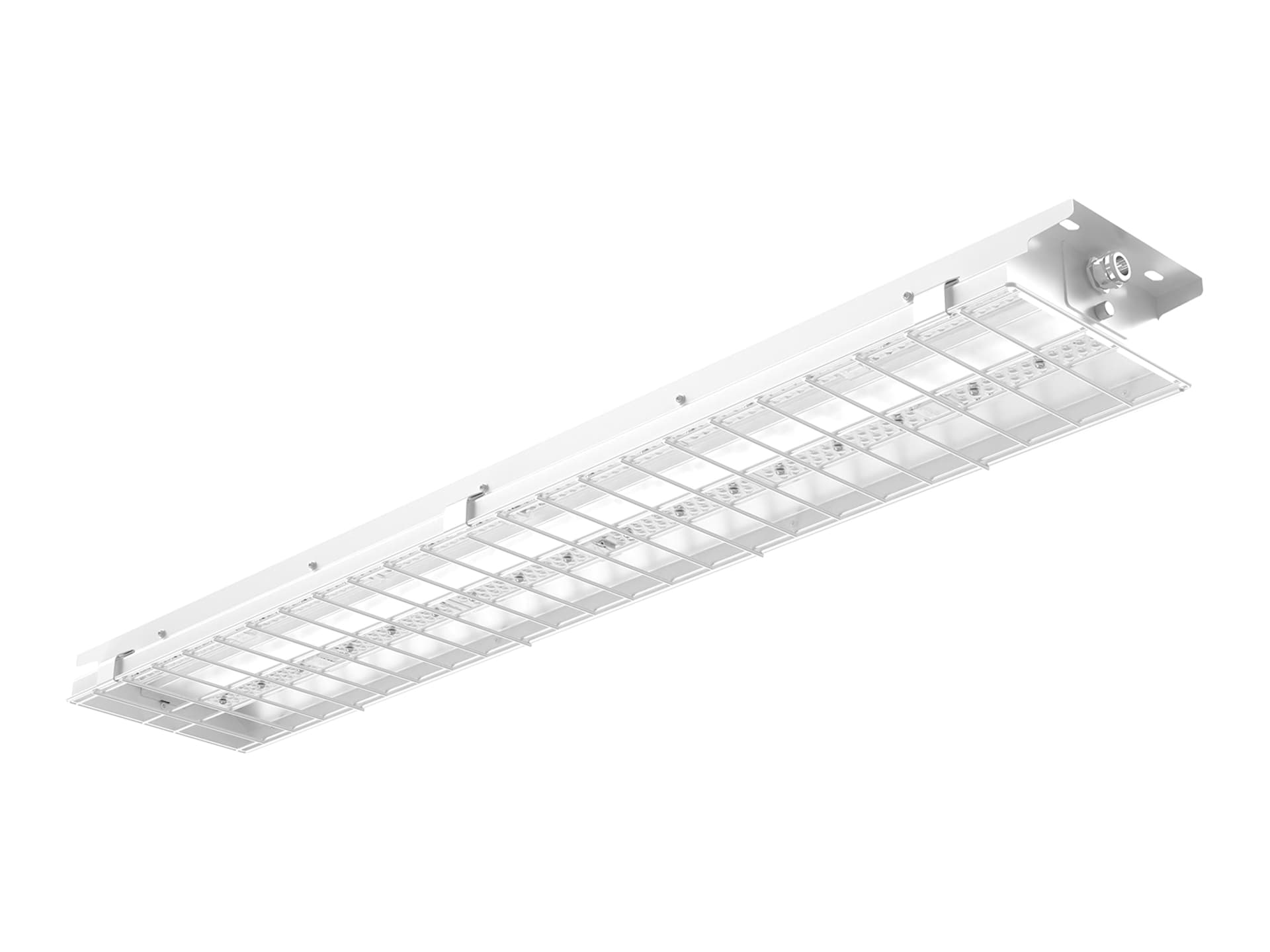
Need a linear solution? Our SP07 linear high bay delivers the same level of durability and performance for indoor sports halls. It is IK10 rated and complies with the ballproof test standards, guaranteeing safety without compromising on visual comfort or aesthetics.