Every LED lighting system comes with a photometric code, a six-digit identifier that reveals key performance traits. But what do these numbers actually mean?
What Is a Photometric Code?
The photometric code is a standardised way to describe an LED’s colour quality and performance over time.
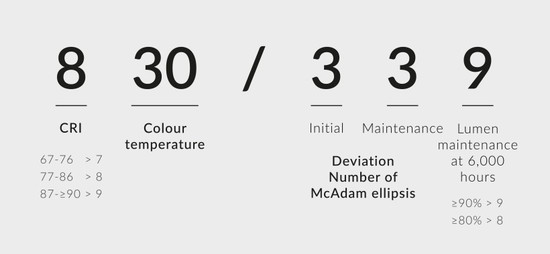
An LED’s photometric code consists of 6 numbers, divided into two by a ‘/’.
On the left, the 3 numbers indicate the light’s colour:
- The CRI( Colour Rendering Index) is expressed by a number between 0 and 9
- The correlated colour temperature, given in degrees Kelvin divided by 100
On the right, the 3 numbers indicate how well the light is maintained over time:
- The initial colour deviation, in the number of McAdam ellipses
- Its deviation after 6,000 hours
- The lumen maintenance value at 6,000 hours
Here is an example:
Usages of Photometric Code
The photometric code has three uses:
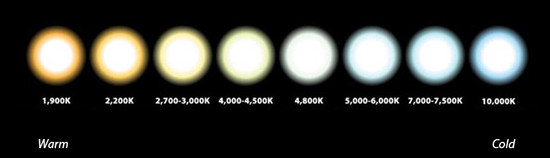
- It indicates the white colour temperature: cold (bluish white) or warm (yellowish/reddish white)
- It defines the ability to render different colours (CRI).
- It guarantees the manufacturer’s claims are consistent, reliable and accurate.
So, how can we elevate the lighting performance through photometric code?
- The perfect photometric code for public LED lighting: 7 to 9
- Temperature in degrees Kelvin: 30 to 50
- Initial deviation: 3 for a temperature of up to 5000K
- Maintenance: 3
- At 6,000 hours: 9 and never less!
What LED Photometric Codes Don’t Tell You
The photometric code is a standard way to describe how a light performs. It covers things like colour, brightness, and how well the light keeps these qualities over time. This makes it easier to compare products from different manufacturers.
In public LED lighting, the numbers in the code can sometimes be confusing. For example, you might see results listed at 6,000 hours of use even though LEDs can last 50,000 hours or more. The 6,000-hour figure is just an early checkpoint. It is used to predict how the light will perform in the long run, not to suggest that the LED will stop working after that time.
It is also important to remember that LEDs can behave differently at different temperatures. Heat, cold, and other environmental factors can change their performance. This is why it is always best to check the manufacturer’s datasheet for the full details.
The photometric code is a good starting point, but it does not tell the whole story. We go further by tailoring our lighting systems to each project’s needs. This ensures that the light is the right fit for its location and purpose. Contact us for more details.