Studies estimate that, on average, nearly 30% of the energy consumed by commercial buildings is wasted or used inefficiently (U.S. EPA, Integrity Energy). Common examples include lights running 24/7 or being left on in unoccupied corridors, storage rooms, and parking structures. These issues cost organisations significant money each year and unnecessarily increase their carbon footprints.
Rising energy costs and growing sustainability expectations are accelerating the demand for smarter lighting systems. Many of our customers are seeking solutions that integrate sensors into lighting fixtures to reduce energy waste and create safer and more responsive environments.
Among these technologies, motion sensors are one of the most widely adopted options. In this post, we will explain the main types of motion sensors and introduce our solutions for integrating them into lighting fixtures.
What Are Motion Sensors and How Do They Work?
A motion sensor, often referred to as an occupancy sensor, is an electronic device that automatically controls lighting based on whether a space is occupied. Its primary purpose is to support energy efficiency by turning lights on when someone enters a space and turning them off when the area is vacant.
The most common type is the passive infrared (PIR) sensor, which detects heat signatures from people or objects moving through its field of view. PIR sensors work best in smaller spaces with clear sightlines and are well-suited for offices, restrooms, and storage areas.
Microwave sensors operate by emitting low-power microwave signals and measuring changes in the reflected signal caused by movement. These sensors are highly sensitive, able to cover larger areas, and unaffected by temperature. They work especially well in wide indoor spaces or outdoor environments.
Normal motion sensors are typically analog and operate on a basic relay system, so they only support simple ON/OFF control or 0–10V dimming. For projects that require more advanced features, such as dynamic dimming, scene setting, or grouping, sensors with digital communication capabilities are essential. This includes wired sensors that use the DALI protocol or wireless sensors compatible with Zigbee or Casambi.

How to Integrate Motion Sensors with Fixtures
There are several methods to integrate motion sensors to fixtures, from built-in motion sensors, to fixtures with plug-and-play sensor ports, to external ports; each method is effective and helps achieve smart control and energy savings.
Built-in Motion Sensors
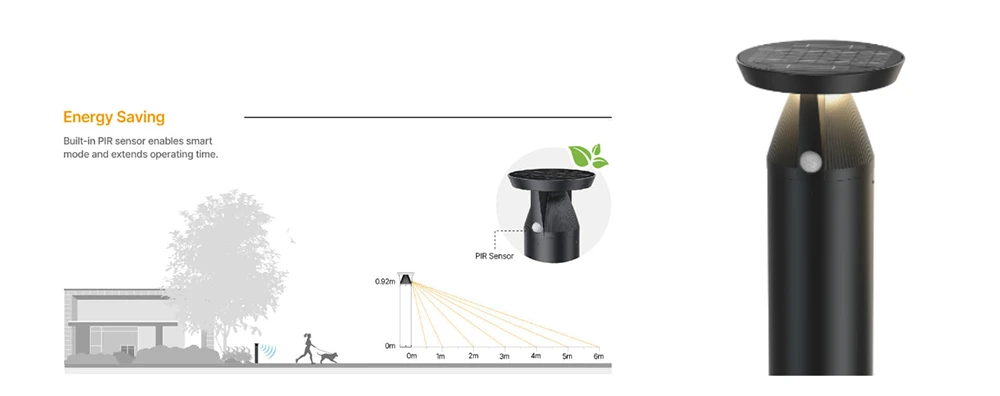
Built-in PIR or microwave sensors are integrated directly into the fixture housing, with only the sensor lens or antenna exposed. This approach is common for high bays, streetlights, and area lights, and aligns with the industry trend toward sensor-enabled LED systems.
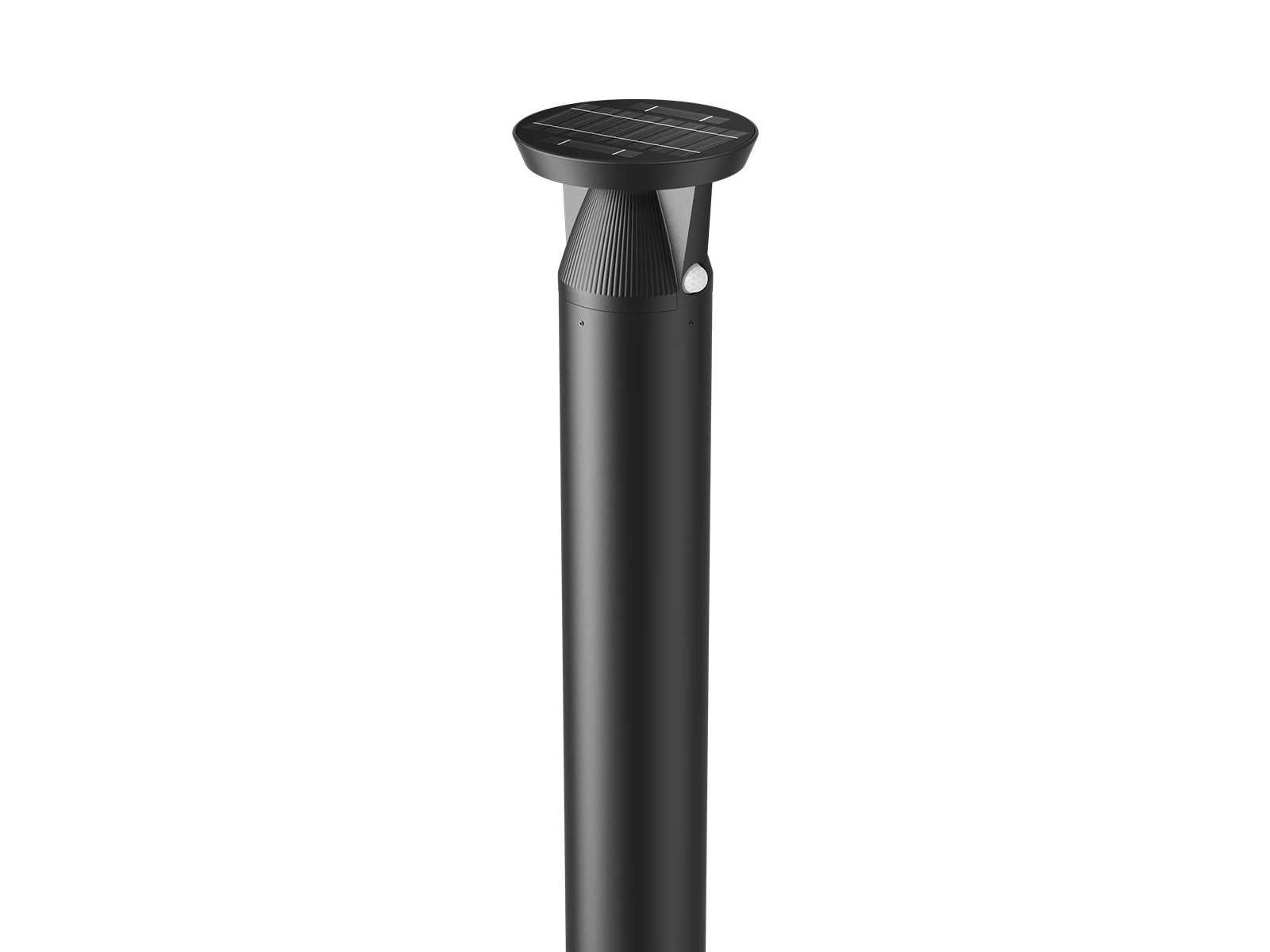
For example, our SL73 ZoneSola, a modern solar bollard light, features a built-in PIR sensor. This design enables smart operating modes that optimise energy use, extend runtime, and reduce overall operating costs.
Plug-and-Play Sensor Ports
Many of our products are designed with standardised sensor interfaces such as Zhaga and NEMA, which allow plug-and-play installation of motion sensor modules. Twist-lock sensor modules make it possible to add or upgrade sensors without redesigning the fixture, offering flexibility for different project requirements.
This integration method is widely used in municipal outdoor lighting, parking lots, and industrial campuses. Whether the application requires PIR or microwave sensing, the plug-and-play approach ensures fast, easy, and reliable installation.
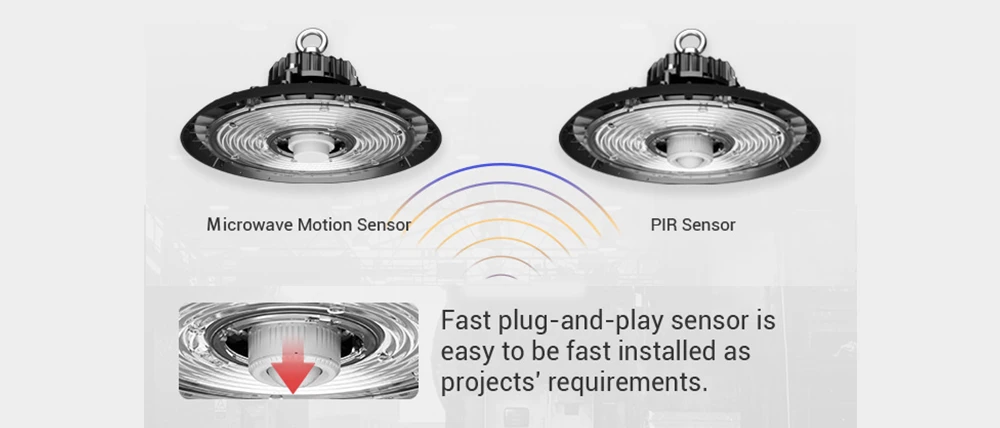
External Sensor Pods
External sensor pods are typically used when there is not enough space inside the fixture for a built-in sensor or when the sensor must be positioned independently to achieve wider detection ranges or directional sensing.
These pods are not simple add-ons. They are engineered components designed to match the fixture’s aesthetics, materials, and performance requirements. This is exactly what we provide: customized solutions that meet project specifications, support your product development, and help you win more business.
In many cases, LED floodlights do not include built-in motion sensors or plug-and-play sensor ports. So how can a motion sensor be added to a floodlight?
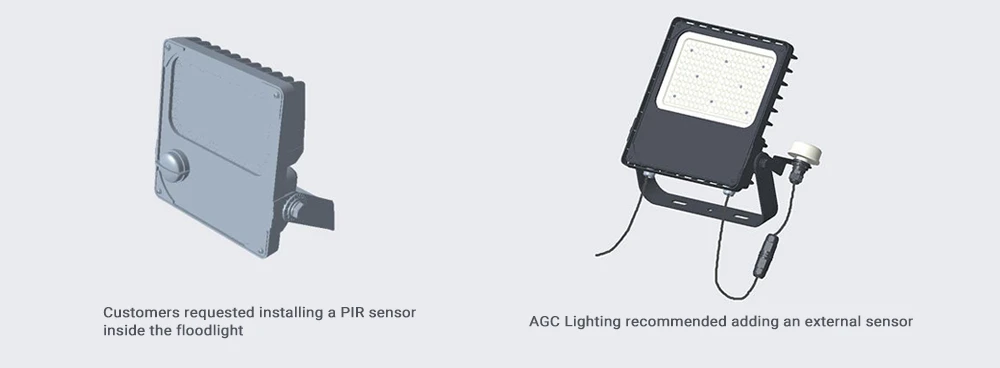
One of our customers requested installing a PIR sensor inside the floodlight, positioned near the glass and close to the LED chips. We advised against this because PIR sensors detect motion based on changes in heat signatures. If the sensor is placed too close to the LEDs, which generate heat during operation, it can cause inaccurate detection and unnecessary energy consumption.
Instead, we recommended adding an external sensor pod to the fixture, as shown in the photo. This approach allows the sensor to detect motion accurately without interference from the LED heat, while still meeting the customer’s installation goals.
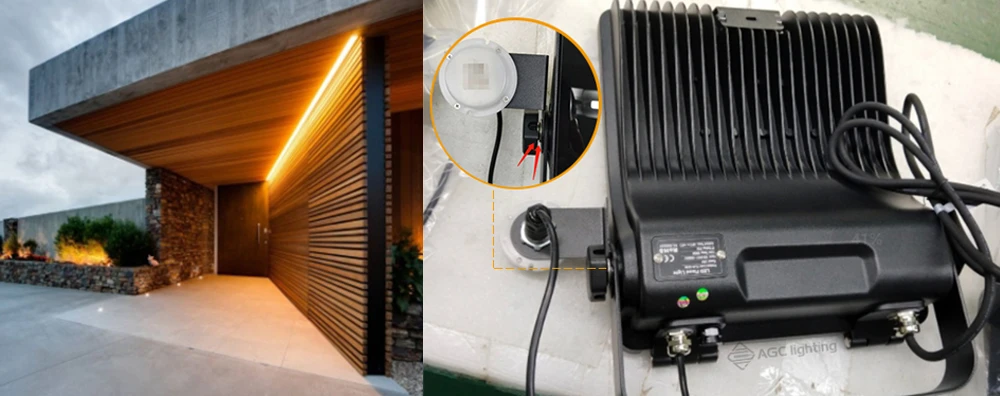
Another case involved a customer who needed a solution for a building entrance. Their end user required a floodlight that would turn on automatically whenever someone approached or exited the building, ensuring safe illumination while saving energy when the area was vacant.
We provided a floodlight equipped with an external motion sensor mounted on an adjustable bracket. This design preserved the fixture’s IP66 outdoor rating and allowed the sensor to remain pointed downward regardless of the floodlight’s aiming angle, ensuring reliable detection in both directions of travel.
If you have a project requiring sensor integration, we are ready to provide a tailored solution.