Stepping into a dark or poorly lit horse arena can feel uncomfortable and even unsafe. Shadows can confuse both the horse and rider, jumps may look strange or hard to judge, and uneven ground can be hard to see, raising the risk of slips, missteps, or serious injury. Whether you're riding indoors or trying to finish a training session after sunset outdoors, poor lighting can make it harder to ride well and stay safe.
In this blog, we’ll share effective lighting tips to help you improve visibility in your horse arena. We’ll look at what to consider for both indoor and outdoor arenas, so you can create a safer and more comfortable space for both horse and rider.
How Lighting Affects Horse & Rider
Horses see the world differently from humans. Their eyes are set on the sides of their head with wide, horizontal pupils, giving them almost 350 degrees of vision. However, they process light and shadows differently than we do.
Poor lighting can create harsh shadows and uneven brightness, which may trigger a horse’s natural flight response. Horses also take much longer than humans, about 20 to 30 minutes, to adjust to major changes in light. Sudden shifts between bright and dark areas can disrupt their depth perception, causing hesitation, refusals at jumps, or unexpected spooking.
For riders, poor lighting affects more than just eyesight. It makes it harder to judge distances and stay aware of surroundings. It also affects confidence. Riders feel more secure and focused in well-lit arenas, allowing them to concentrate on their technique instead of worrying about what they can't see. This sense of calm and confidence is picked up by the horse through subtle body language, creating a positive feedback loop that benefits the entire training session.
Indoor Horse Arena Lighting Tips
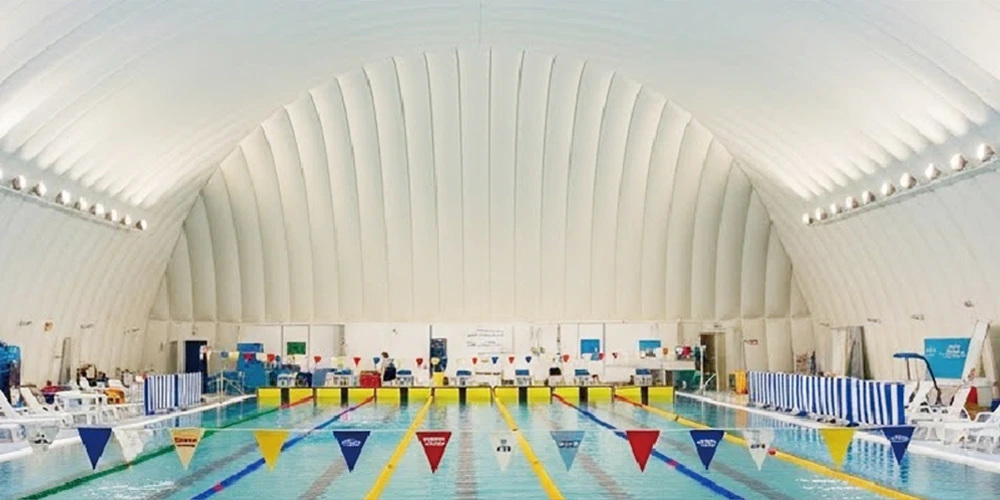
An indoor horse arena is enclosed and covered, providing a controlled environment for riding, training, and equestrian activities regardless of the weather. Proper lighting ensures a safe and comfortable environment.
Here are some key tips for lighting an indoor horse arena:
Choose Durable LED High Bay Lights
Indoor horse arenas vary in size depending on their intended use. While a standard dressage arena measures 20x60 meters, general-purpose arenas can be much larger. To illuminate these expansive areas effectively, robust LED high bay lights are essential.
Horse riding generates considerable dust, and arenas often experience high humidity. Lighting fixtures must be able to withstand these challenging conditions without compromising performance or safety. Look for LED fixtures with a high Ingress Protection rating, IP65 or above. Vapor-proof and shatterproof LED lights are ideal for indoor riding arenas. These features help prevent accidents and provide a safer environment for both horses and riders.
Provide Sufficient Lighting
Proper lighting is essential for ensuring clear visibility for both horses and riders. The required brightness levels can vary depending on the type of activity. For example, dressage typically needs lower light intensity, while show jumping and similar events demand higher brightness to ensure safety and performance.
Below are general lighting recommendations for indoor horse arenas.
Please note: These are general guidelines. For precise lighting design tailored to your specific needs, feel free to contact us. Our team is always ready to provide customized lighting solutions.
|
Purpose |
Average lux level |
|
|
Dressage |
Show jumping |
|
|
Training |
200 |
400 |
|
Intermediate competition |
300 |
500 |
|
Top-level competition |
500 |
700 |
High Color Rendering Index (CRI)
CRI plays a key role in how accurately colors are perceived under artificial lighting. According to ASABE (American Society of Agricultural and Biological Engineers) in their standard ASAE EP344, Lighting Systems for Agricultural Facilities, a CRI of 80 or higher is recommended in areas where inspections take place. This is especially important in settings where evaluating the horse’s condition is critical.
In horse arenas, particularly in sporting contexts, a CRI of 80 or higher is also beneficial. It allows horses, riders, trainers, and judges to perceive their surroundings better, as well as the horse’s movement, behavior, and overall condition.
Reduce Glare and Shadow
Glare and shadows can lead to eye strain and, in some cases, even accidents in the arena. These issues are often caused by improper fixture placement, installation height, or poor light distribution. Achieving uniform illumination is essential to minimizing both glare and shadows.
Except for strategic fixture positioning and correct installation height, we also use accessories such as reflectors to help enhance light quality and distribution.
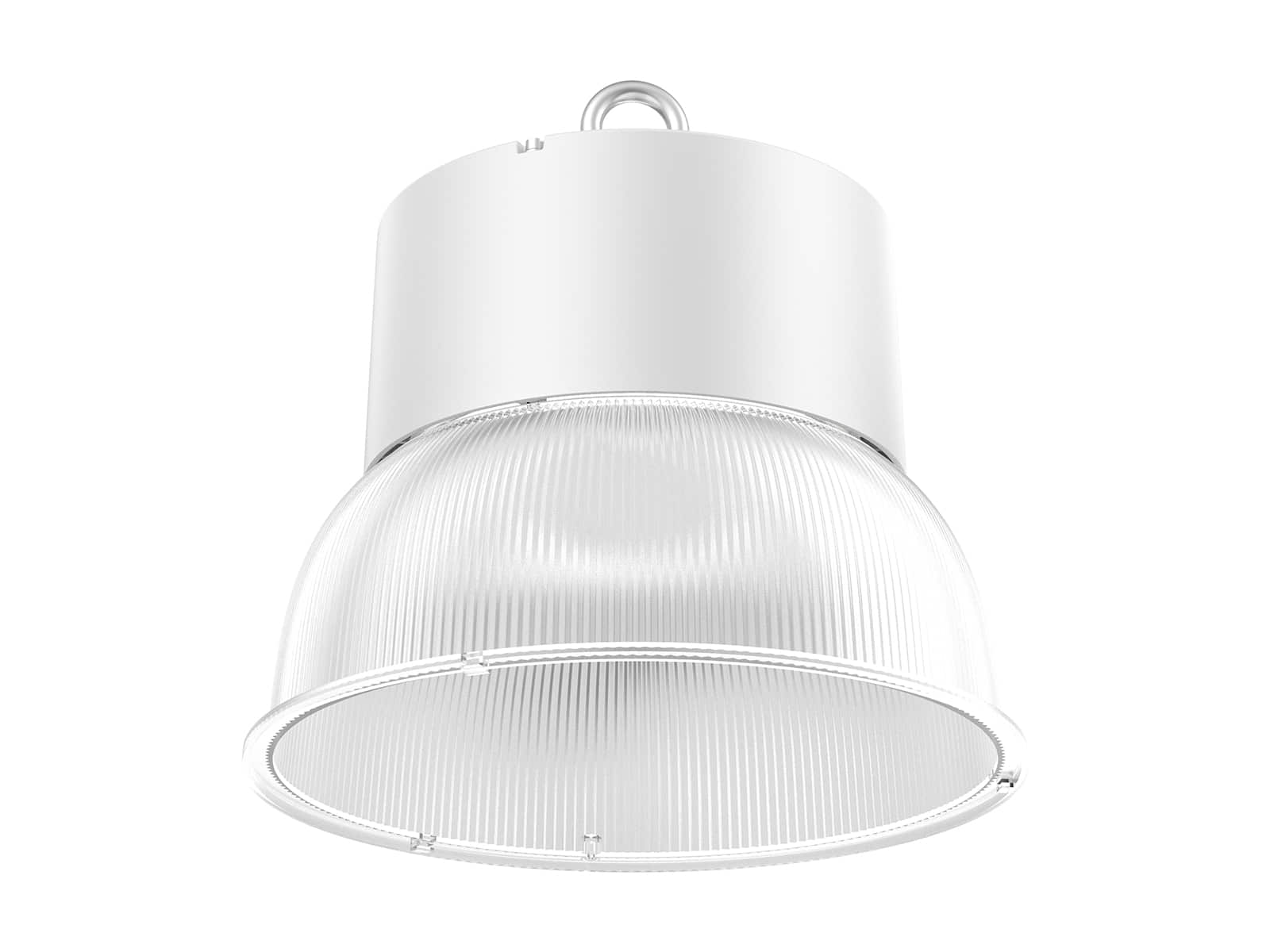
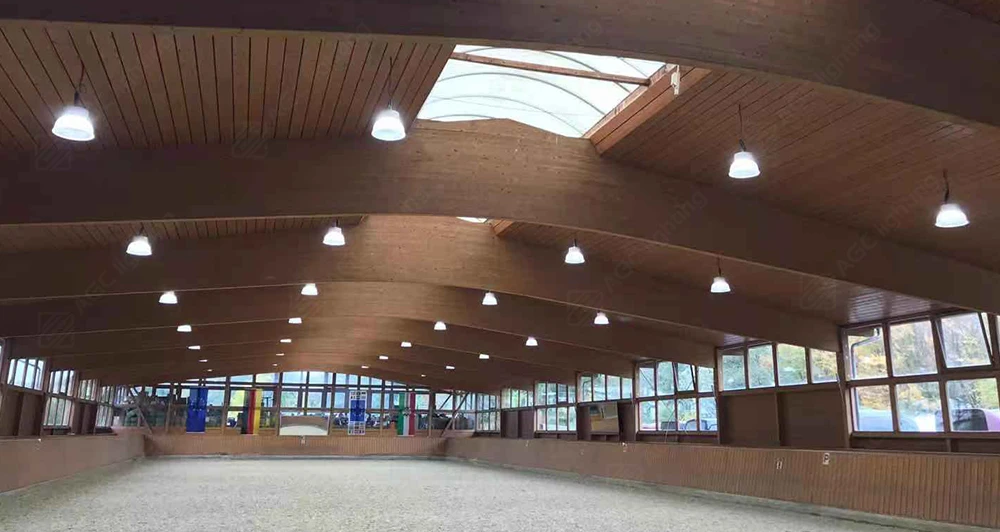
For example, our HB18 high bay lights are specifically designed to address these concerns. Featuring PC reflectors and precision optics, they provide soft, evenly distributed lighting throughout the arena, improving visibility, comfort, and safety for both horses and riders.
Outdoor Horse Arena Lighting Tips
While outdoor horse arenas allow training and competitions to continue after dark, they face more demanding environmental conditions compared to indoor arenas. Exposure to rain, high temperatures, and direct sunlight can pose significant risks to lighting fixtures.
To ensure reliable, long-term performance, it's essential to use durable LED flood lights designed to withstand harsh outdoor elements. Additionally, these lights need to be powerful enough to provide consistent, wide-area illumination across large arenas, ensuring safety and visibility for both horses and riders.
Set the Right Brightness Level
Similar to indoor horse arenas, the light levels of outdoor riding arenas also depend on the activities and competition levels.
Below are general lighting recommendations for outdoor horse arenas.
Please note: These are general guidelines. For precise lighting design tailored to your specific needs, feel free to contact us. Our team is always ready to provide customized lighting solutions.
|
Purpose |
Average lux level |
|
|
Dressage |
Show jumping |
|
|
Training |
100 |
150 |
|
Intermediate competition |
200 |
300 |
|
Top-level competition |
500 |
500 |
Strategic Pole Placement and Height
The placement and height of light poles play a critical role in controlling glare, ensuring uniform illumination, and managing overall project costs.
Light poles should be installed symmetrically around the perimeter of the horse arena. The number of poles needed depends on the arena’s size. For a standard 20m x 40m arena, 4 to 6 evenly spaced poles are typically sufficient for balanced lighting. Larger arenas or competition venues may require 6 to 8 poles to achieve the desired coverage.
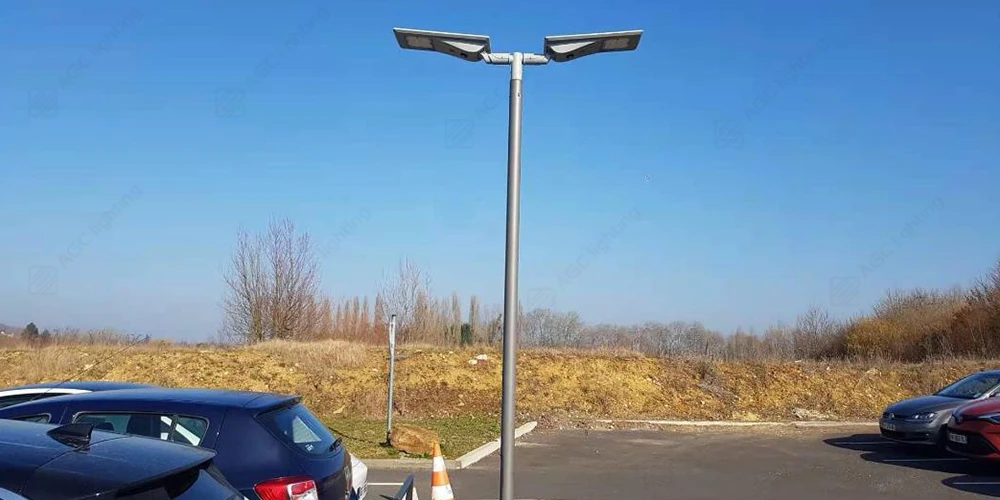
Pole height is equally important. Poles that are too short can create harsh hotspots and deep shadows. For a 20m x 40m arena, a recommended pole height ranges from 6 to 9 meters. Taller poles allow for wider spacing and more even light distribution, which helps reduce the number of fixtures needed. Although they may come with a higher upfront cost, taller poles often lead to lower overall expenses by minimizing glare and improving lighting efficiency.
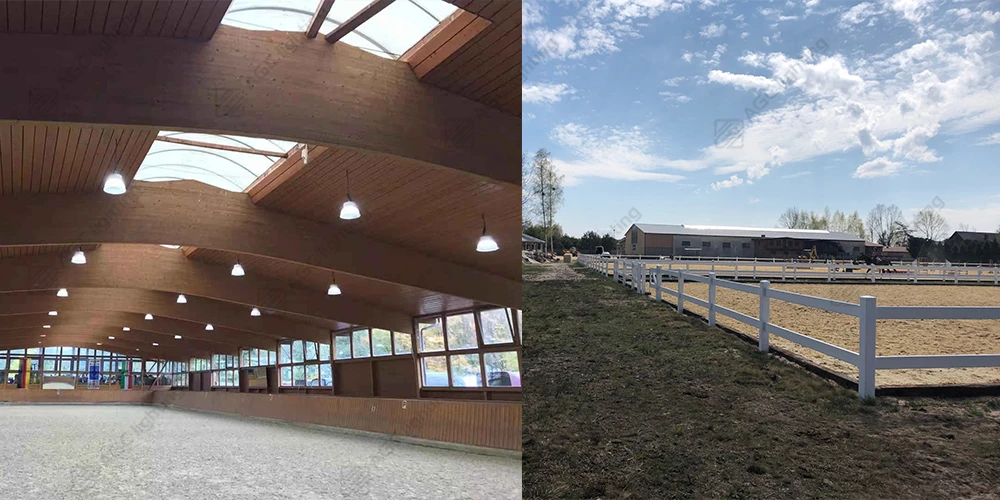
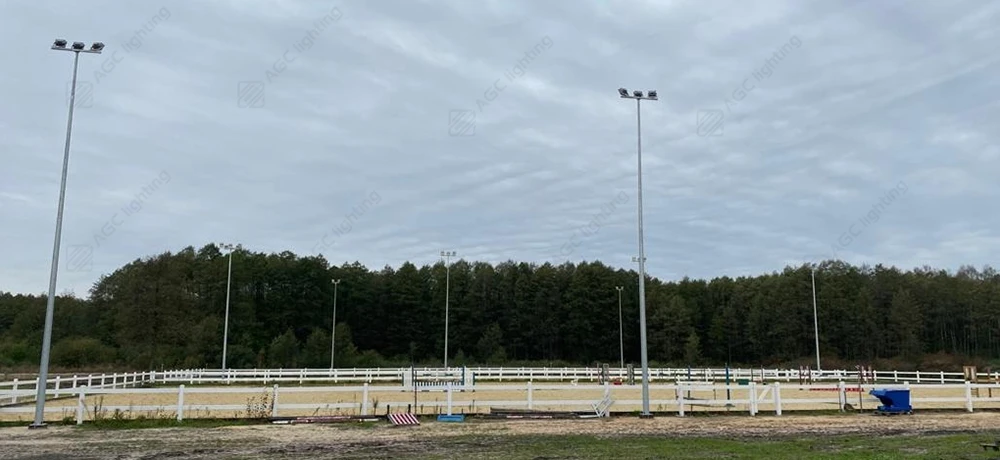
AGC Lighting specializes in lighting design. One of our case studies showcases a tailored lighting solution for an outdoor horse arena. Each floodlight is strategically positioned at the optimal height and angle to ensure bright, even illumination across the entire space, minimizing glare while maximizing visibility and comfort.
Consider Weather Resistance
As mentioned, outdoor horse arena lighting must withstand various weather conditions such as rain, high temperatures, direct sunlight, and strong winds. It’s essential to choose LED floodlights with a waterproof rating of IP66 or higher to ensure reliable performance in exposed environments. A die-cast aluminum housing offers excellent corrosion resistance, while impact-resistant lens materials, like tempered glass, provide added protection against both physical impact and harsh weather.
Minimize Light Pollution
Outdoor arena lighting should help riders see clearly without disturbing the surrounding area. To do this, lights need to be carefully aimed so they shine only on the riding area and not outside of it. Many towns and cities now have rules to reduce light pollution, so it’s important to use full-cutoff fixtures that don’t let any light shine upward.
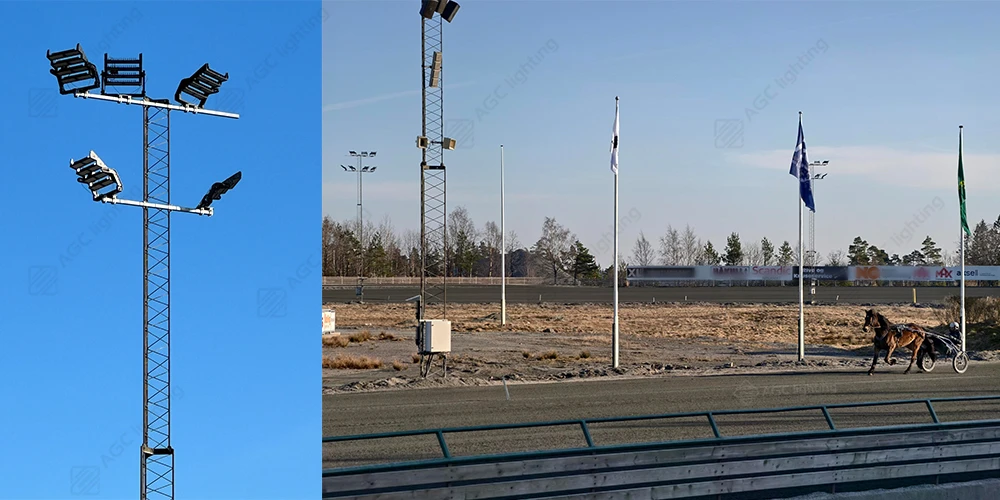
AGC provides high-quality lighting solutions not just for horse arenas, but also for horse racing tracks. Lighting a horse track is more complex because of the large area, the high speed of the races, and the need for clear visibility over long distances.
We understand these challenges and design each lighting system carefully to meet them. Our floodlights are placed at the right height and angle to give even, bright lighting across the entire track. This helps improve safety, visibility, and the overall experience for horses, riders, and spectators.
If you're working on a lighting project and need support, feel free to reach out to us. We're here to help you find the right solution.