01
Football Class III
75 lux
Annual energy saving€5,928
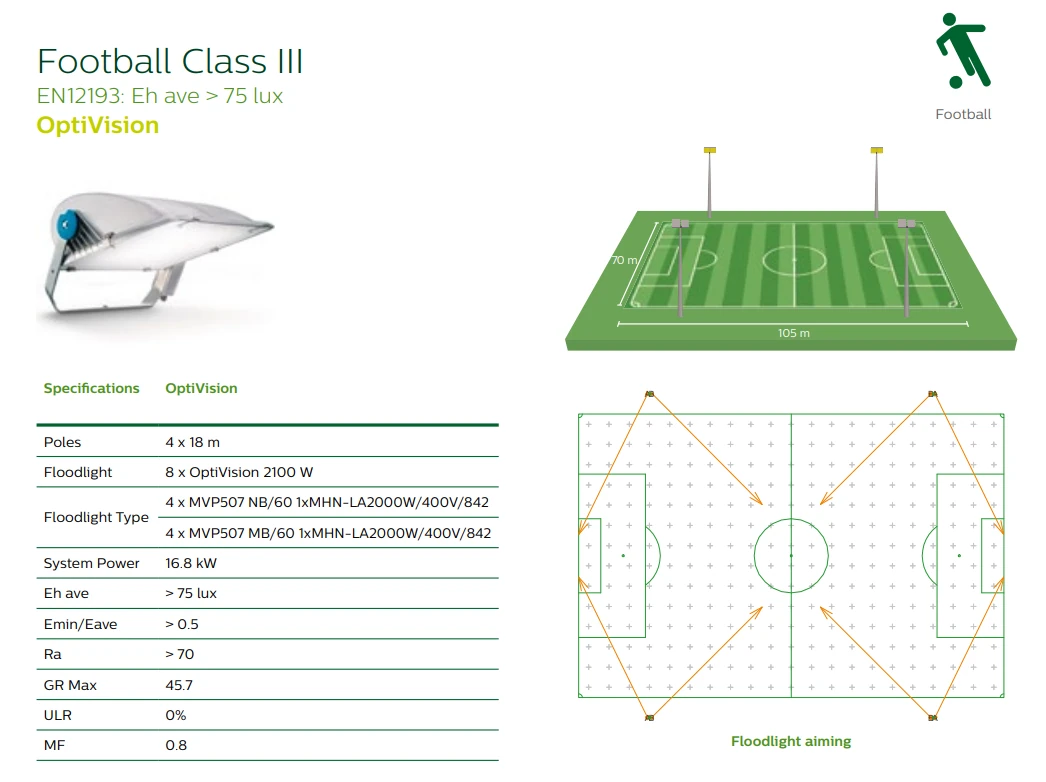
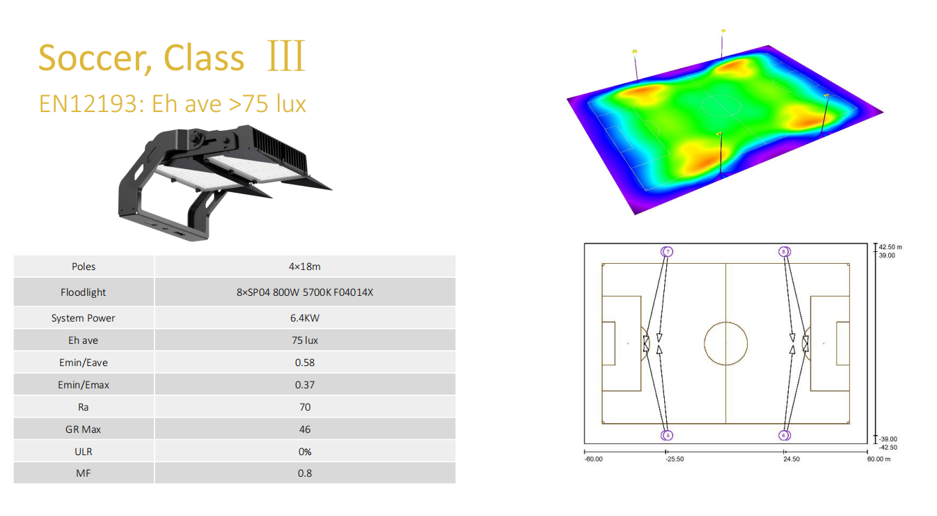
Replacement8 × 2100 W HID → 8 × 800 W SP04 LED
System power16.8 kW → 6.4 kW
Load saved10.4 kW
Annual saving€5,928
A direct, engineered path from Philips MVP507 HID to high-efficiency LED—with lower power, less wind load and dramatically longer service life.
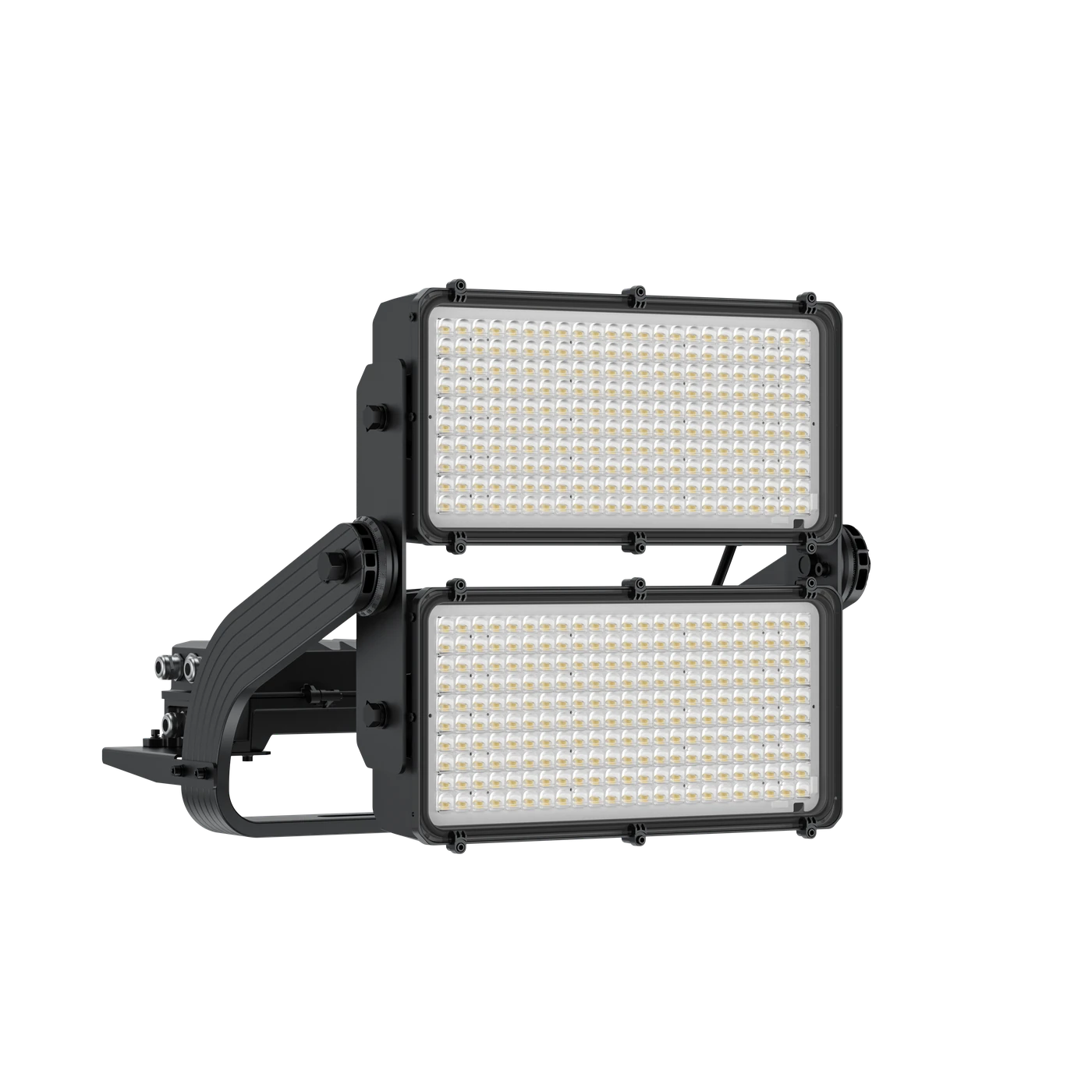
400 / 600 / 1200 / 1800 W
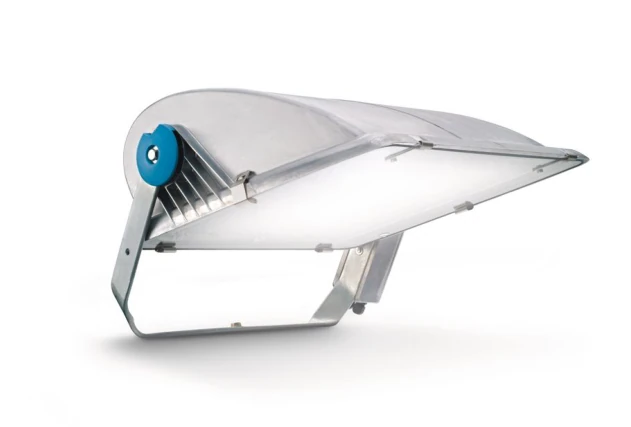
600 / 1000 / 2000 W
SP04 G3.0 delivers up to twice the system efficacy of the installed HID platform while improving ingress protection and reducing routine relamping.
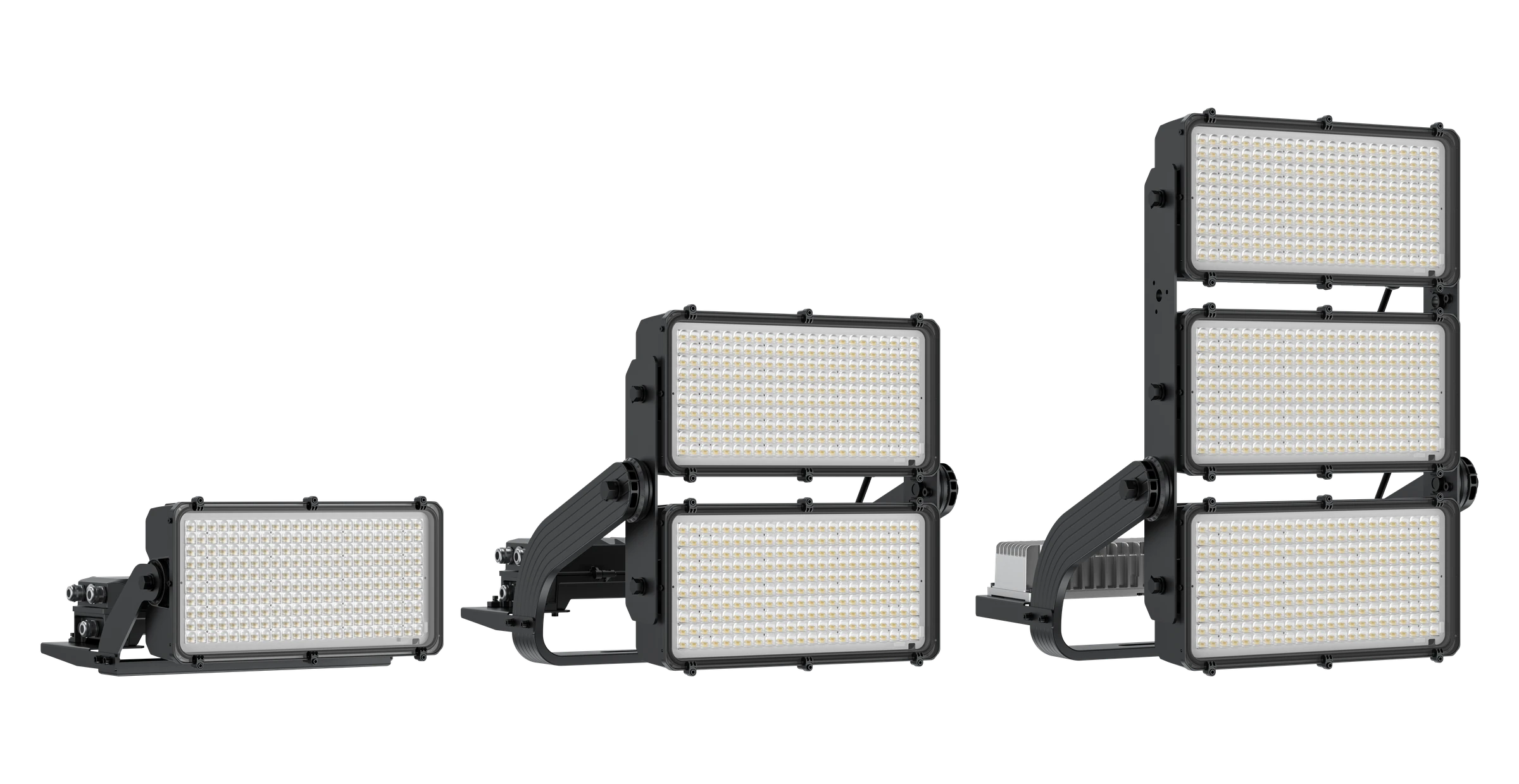
| Parameter | SP04 G3.0 | MVP507 |
|---|---|---|
| Power range | 400 / 600 / 1200 / 1800 W | 600 / 1000 / 2000 W |
| Luminaire efficacy | 146–152 lm/W | 75–106 lm/W |
| Net weight | 9.8 / 11.8 / 22.5 kg | 17.2 kg |
| Wind area | 0.08 m² | 0.127 m² |
| Protection | IP66 / IK08 | IP65 / IK08 |
| Light-source life | 100,000 h L90B10 | 6,000–16,000 h |
146–152 lm/W system efficacy cuts connected load by 38–45% across the direct replacement range.
100,000 h L90B10 LED life replaces HID sources typically rated for 6,000–16,000 hours.
Fewer relamping cycles reduce access work, planned shutdowns and disruption around the field.
Instant restart, Ra70+ and 5700 K support modern sports use without HID warm-up time.
The SP04 range covers the legacy wattage classes with a smaller wind area, helping retrofit teams retain the existing pole strategy subject to project verification.
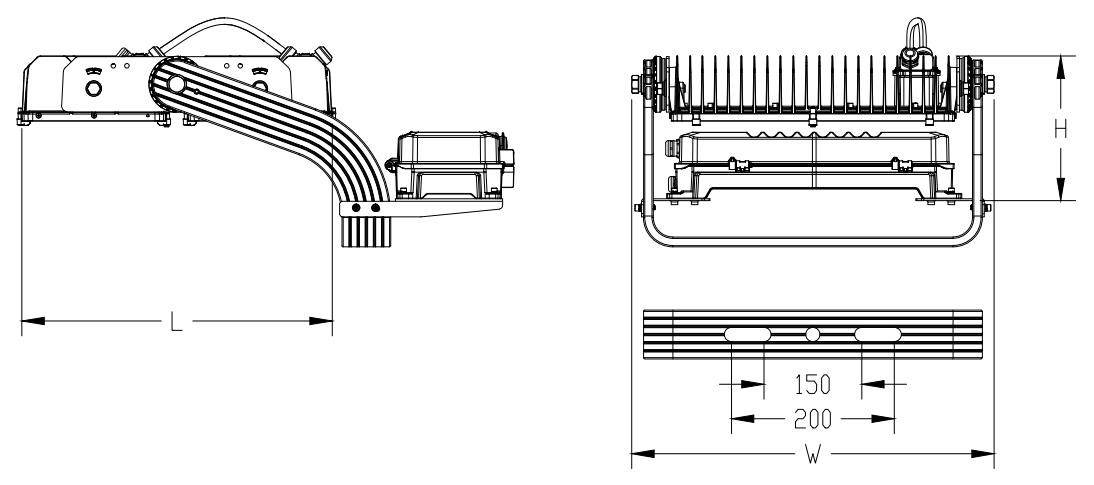
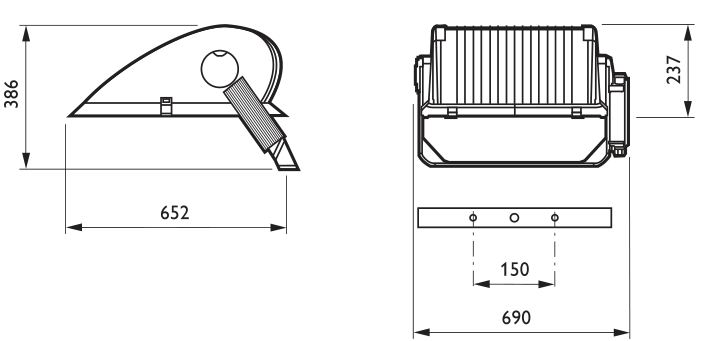
MVP507 0.127 m²
SP04 G3.0 0.08 m²
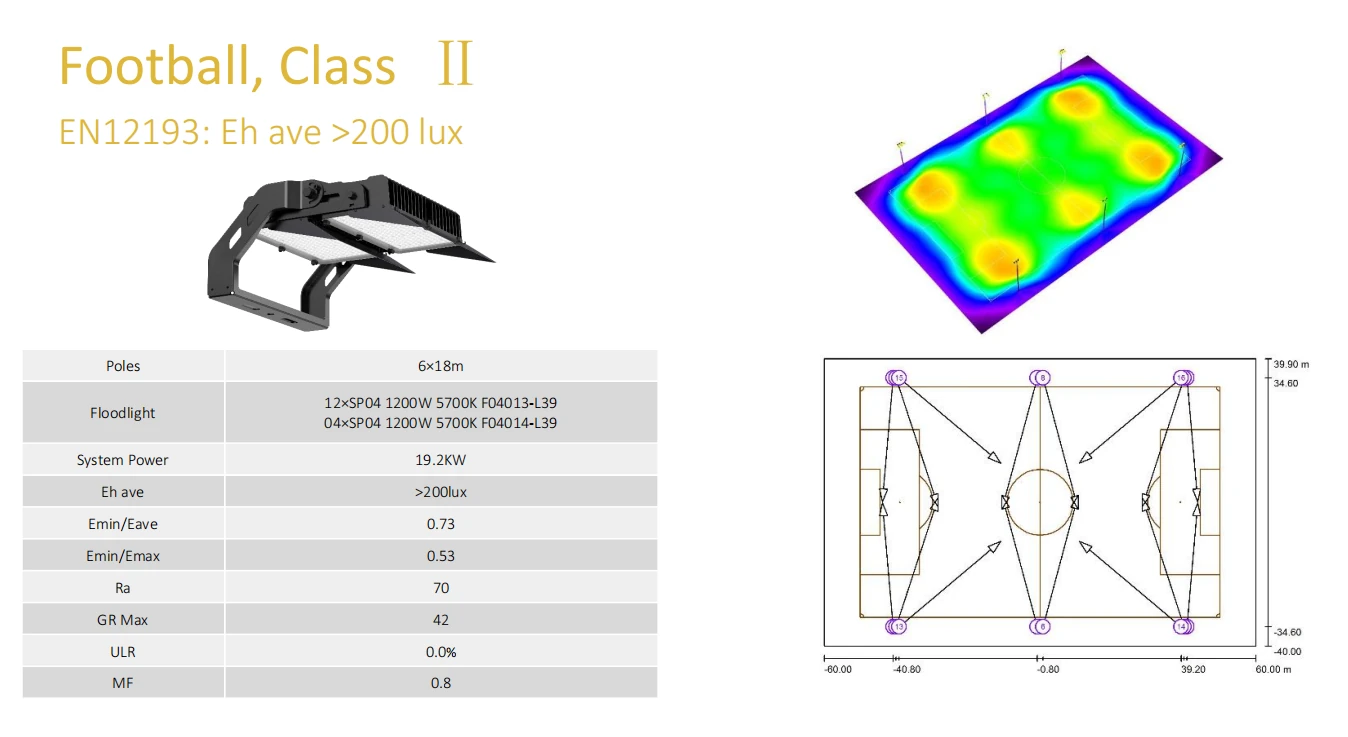
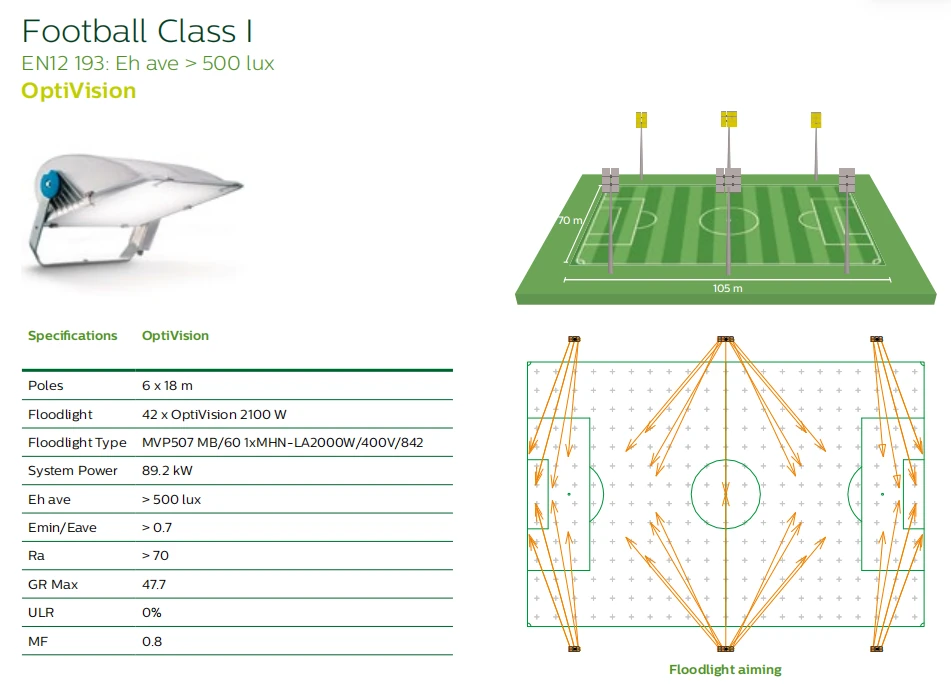
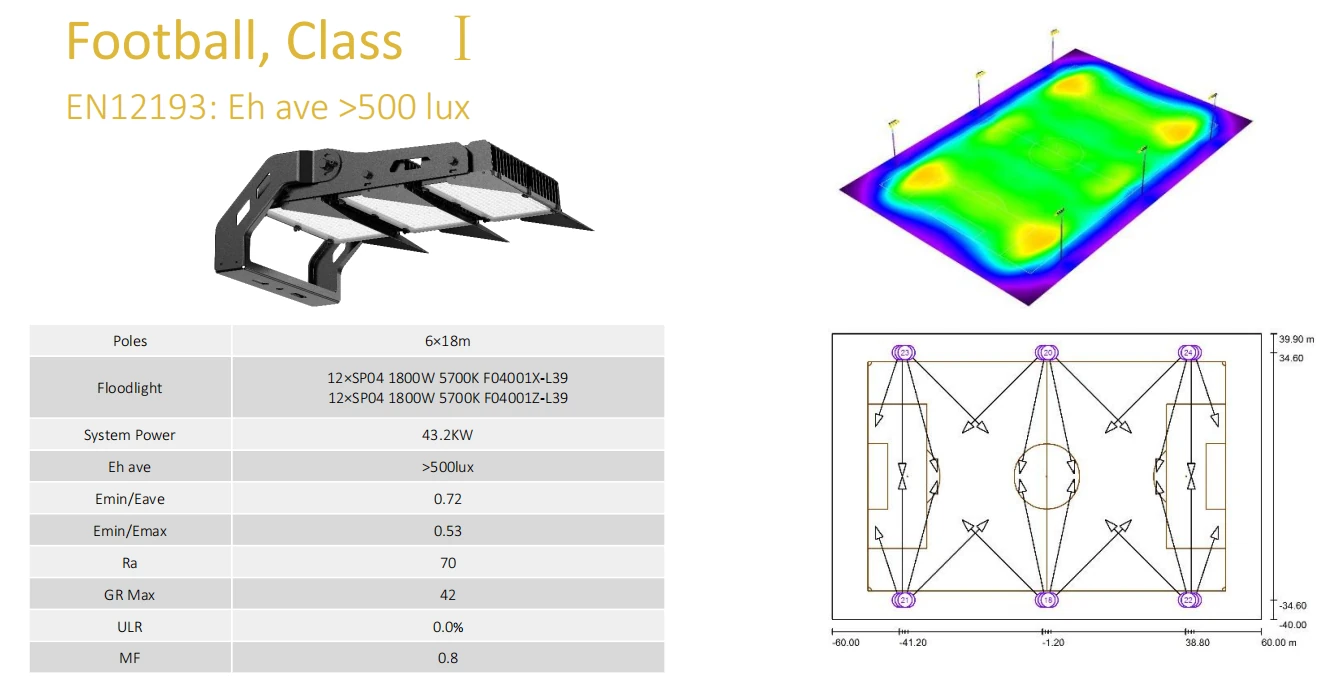
Three EN 12193 design targets compare the installed HID approach with SP04 LED using the same operating and electricity-cost assumptions.
Football Class III
Football Class II
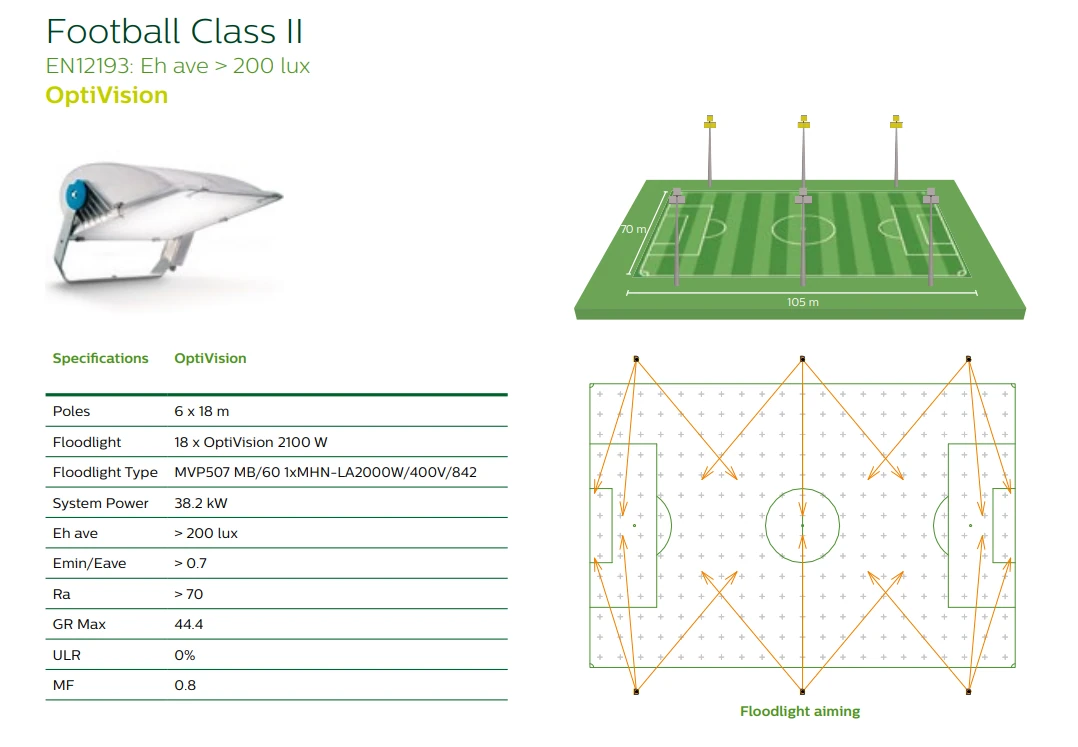
Football Class I
Power difference × 3,000 h/year × €0.19/kWh
Electricity-cost assumption: EU non-household average, Eurostat 2025.
Send the pole layout, target illuminance and existing luminaire schedule. AGC’s lighting team will evaluate the replacement and simulation path.
MVP507 Philips OptiVision specification (2011), Philips MVP507 official IES files, SP04 G3.0 AGC specification V1.1, AGC photometric tests, IES LM-63-2002 files and Eurostat 2025 non-household electricity-price assumption. Project results are simulations and must be verified against final site inputs.