Insufficient brightness
Low lumen packages leave dark transitions when mounting height, road width or lane count increases.
ST71 Nexus · 300W High-Output Configuration
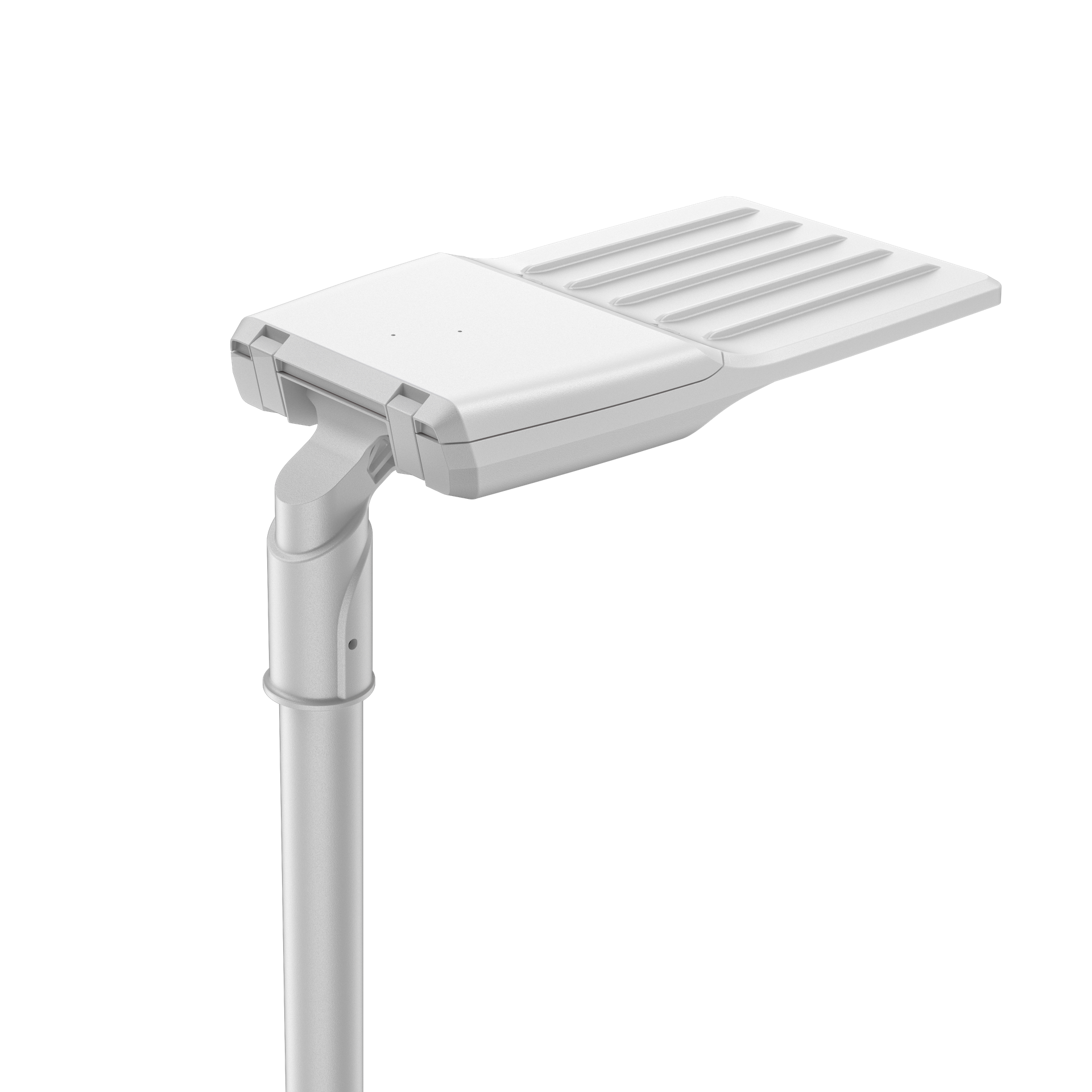
ST71 Nexus 300W delivers powerful, efficient and reliable illumination for highways, industrial roads, ports and large outdoor areas.
Engineered for project teams that need more usable light from high mounting positions—not a conventional city-street solution.
The scale problem
Lower-output luminaires can work well on local roads. Stretching them across high poles, wide carriageways and long truck routes changes the project economics.
Low lumen packages leave dark transitions when mounting height, road width or lane count increases.
Shorter spacing may be needed to recover coverage, multiplying foundations, cabling and controls.
Every additional point adds civil work, electrical infrastructure, commissioning and project coordination.
More assets and high mounting positions increase inspection time, access-equipment demand and disruption.
Application-led selection
ST71 300W is most relevant where long operating hours, high mounting positions and broad roadway geometry demand a larger lumen package.
Application 01
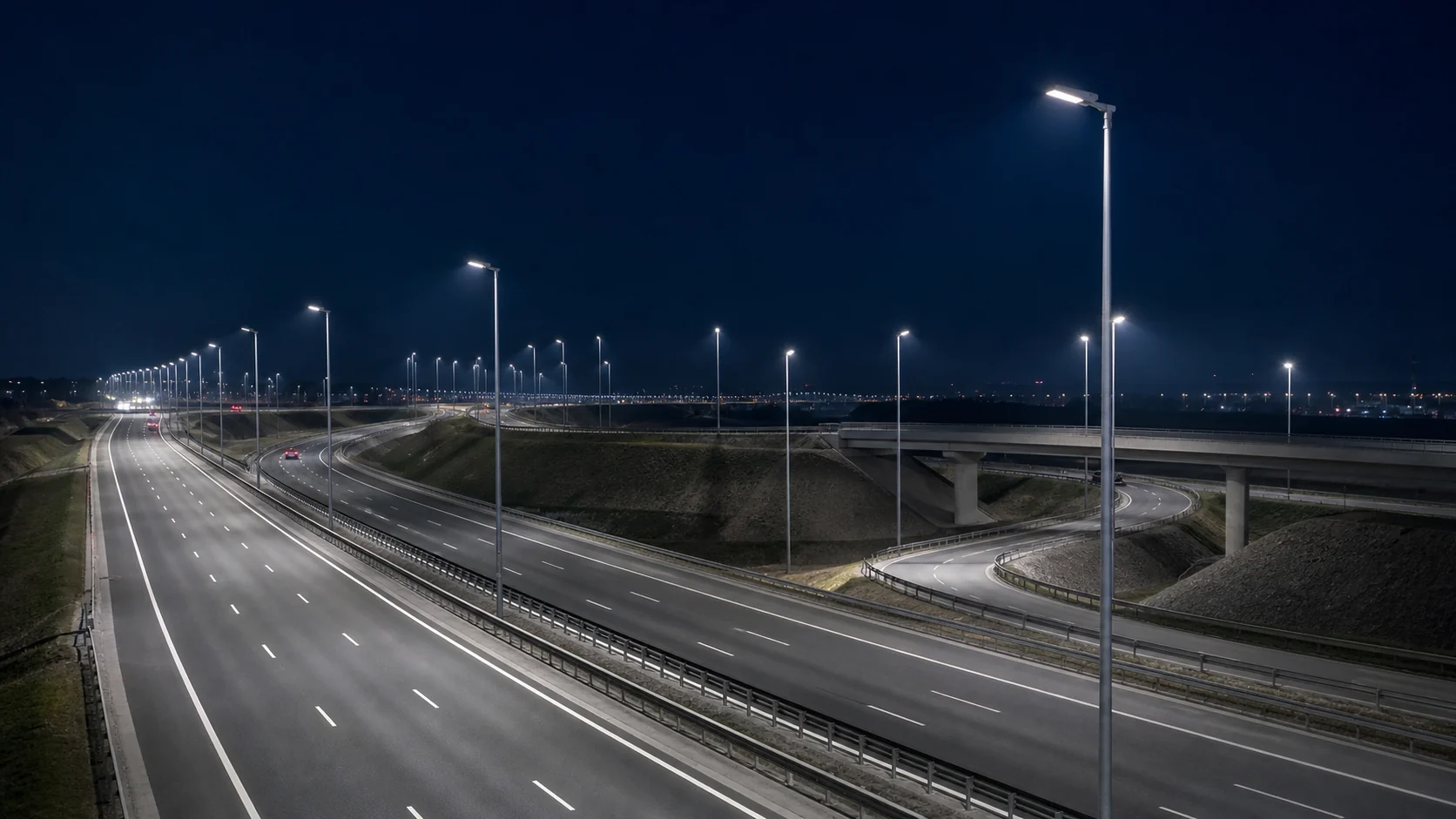
High-output roadway optics support design studies for long, multi-lane corridors and complex decision zones.
Application 02
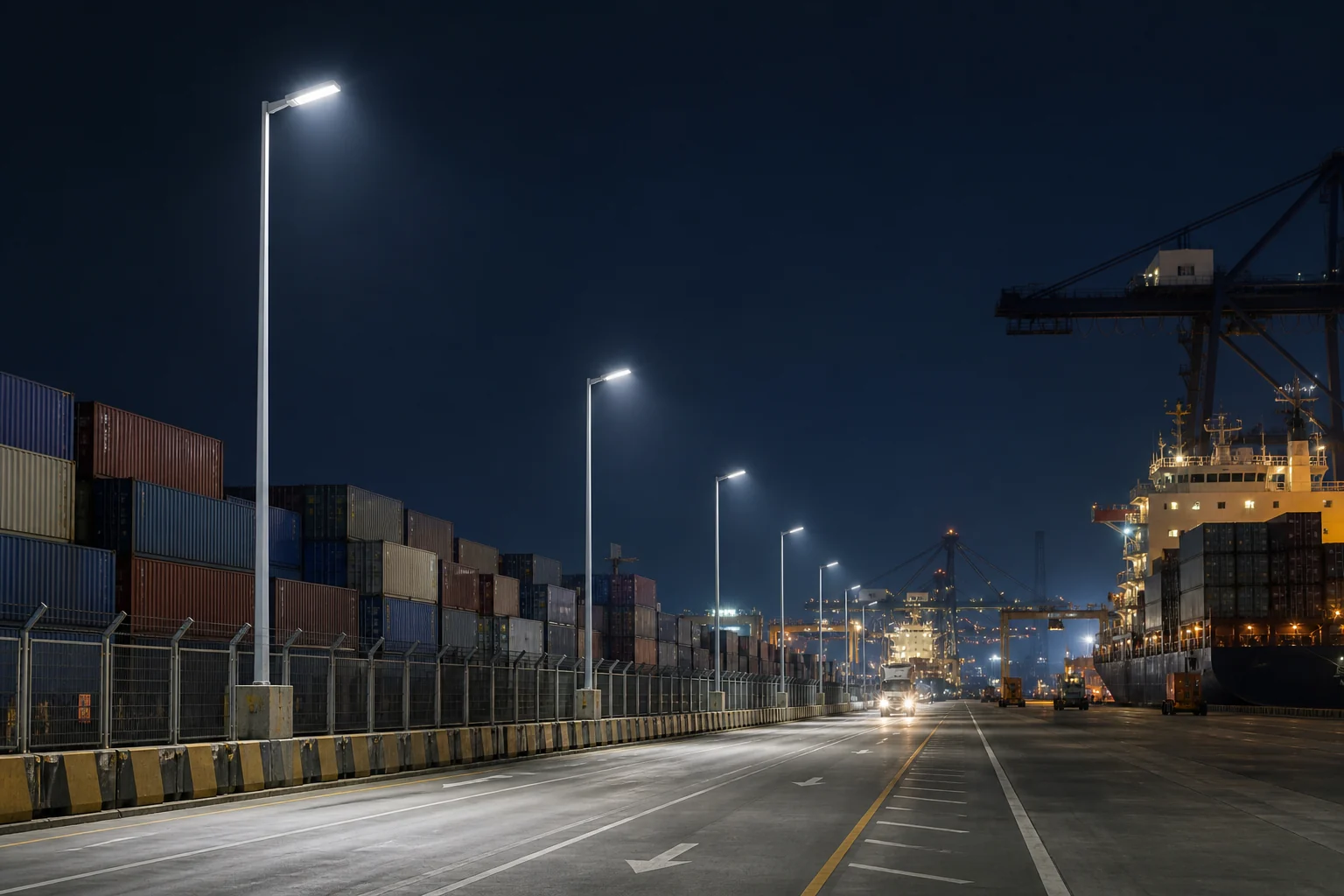
Broad truck routes, long operating hours and exposed maritime conditions require durable, controlled roadway illumination.
For coastal projects, confirm the required corrosion category and coating specification against the exact project environment.
Application 03
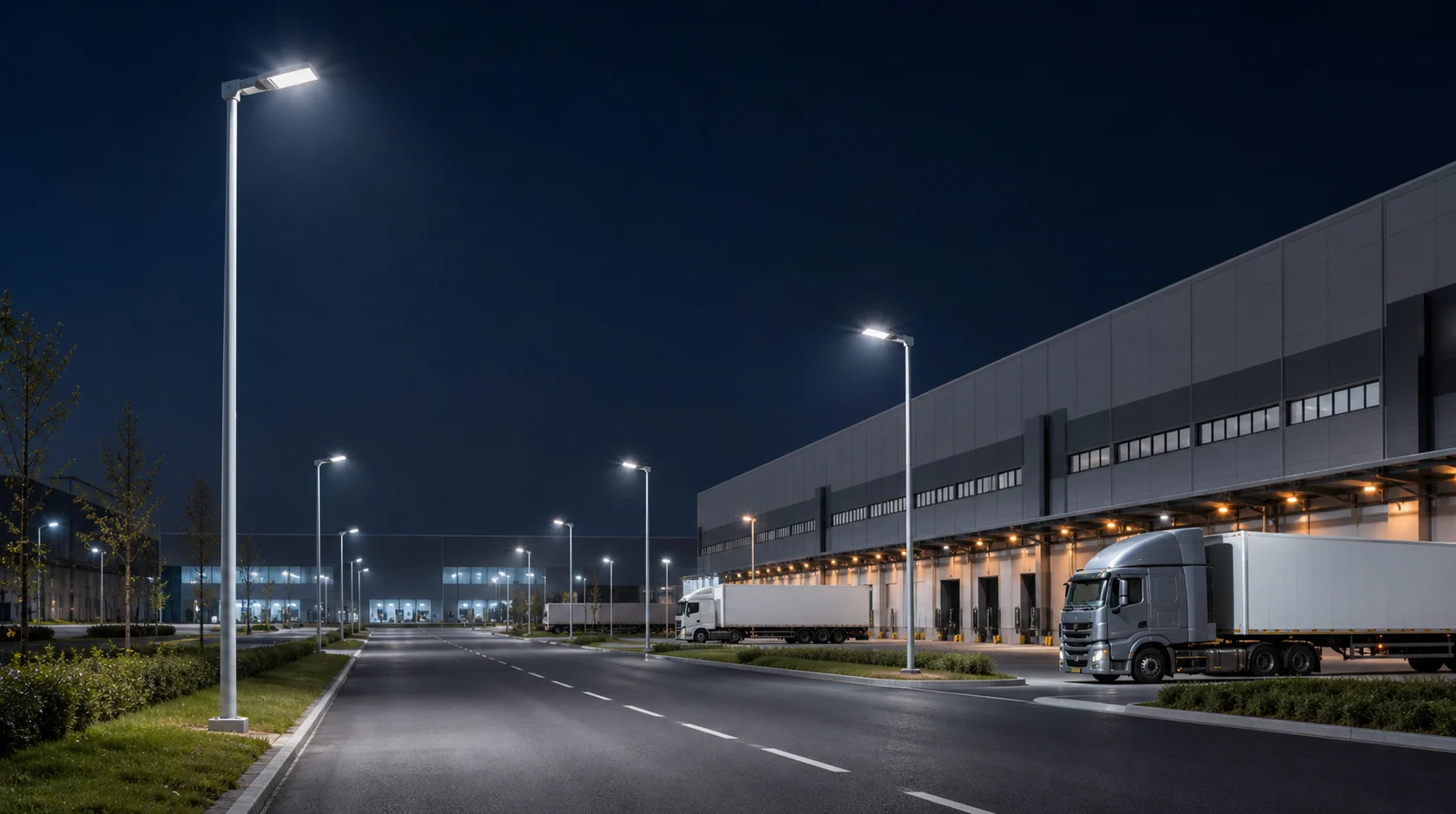
Maintain clear routes between factories, loading areas and distribution buildings without treating the site like a residential street.
Application 04
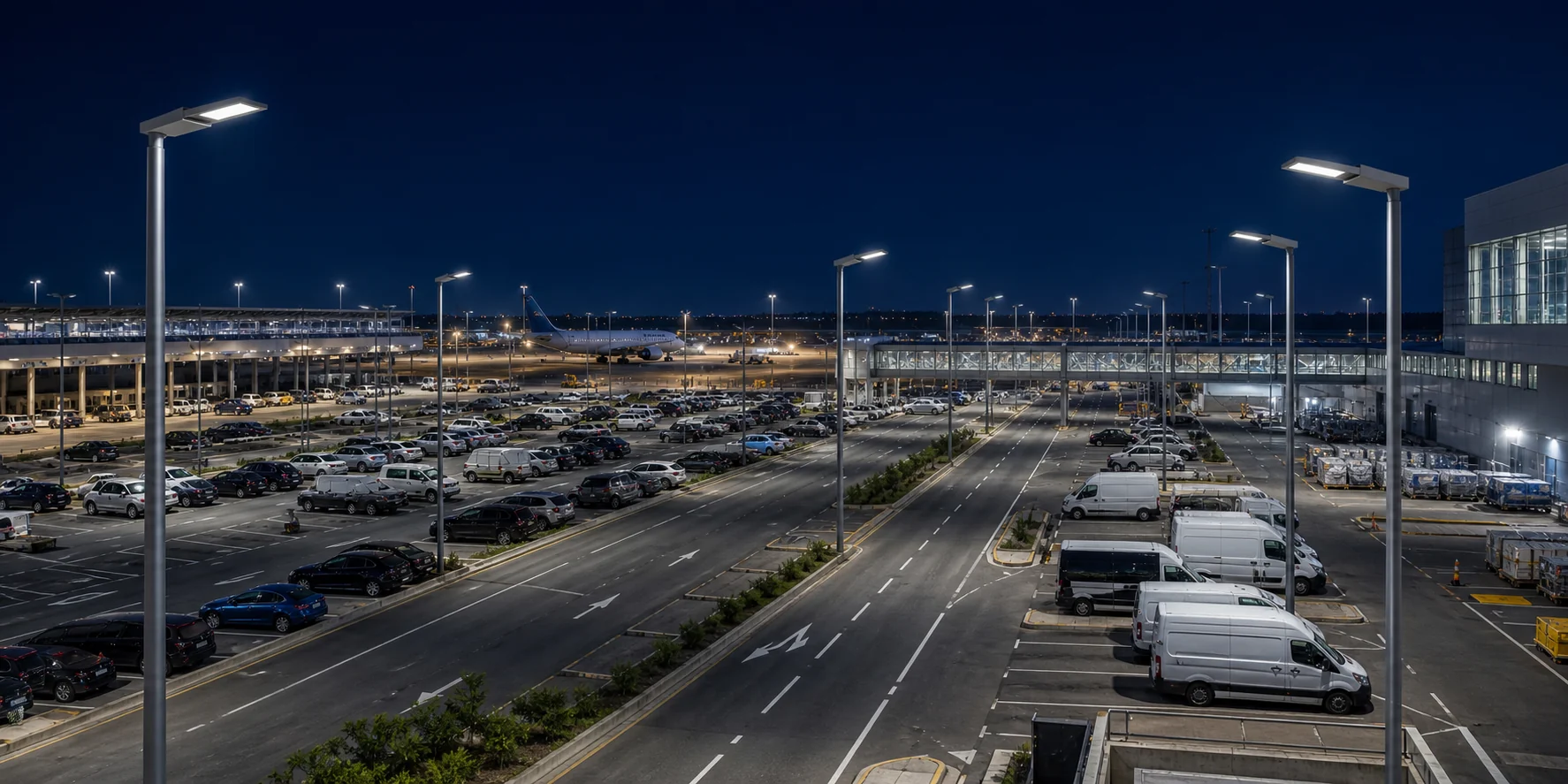
Use a high-output roadway platform to study vehicle circulation and large parking zones around transport infrastructure.
Power with a purpose
Power is a starting point—not a substitute for photometric design. Use this table to screen applications before detailed simulation.
| Application | Recommended Power | ST71 300W Advantage |
|---|---|---|
| City road | 80–150W | Too large |
| Main road | 150–200W | Higher safety margin |
| Highway | 250–300W | Ideal |
| Port | 250–400W | Ideal |
| Industrial area | 200–300W | Ideal |
Configuration clarity
ST71 is a broad product family. The high-output 300W model and the highest-efficacy connected variants are different configurations.
300W focus
ST71 family options
From wattage to a working layout
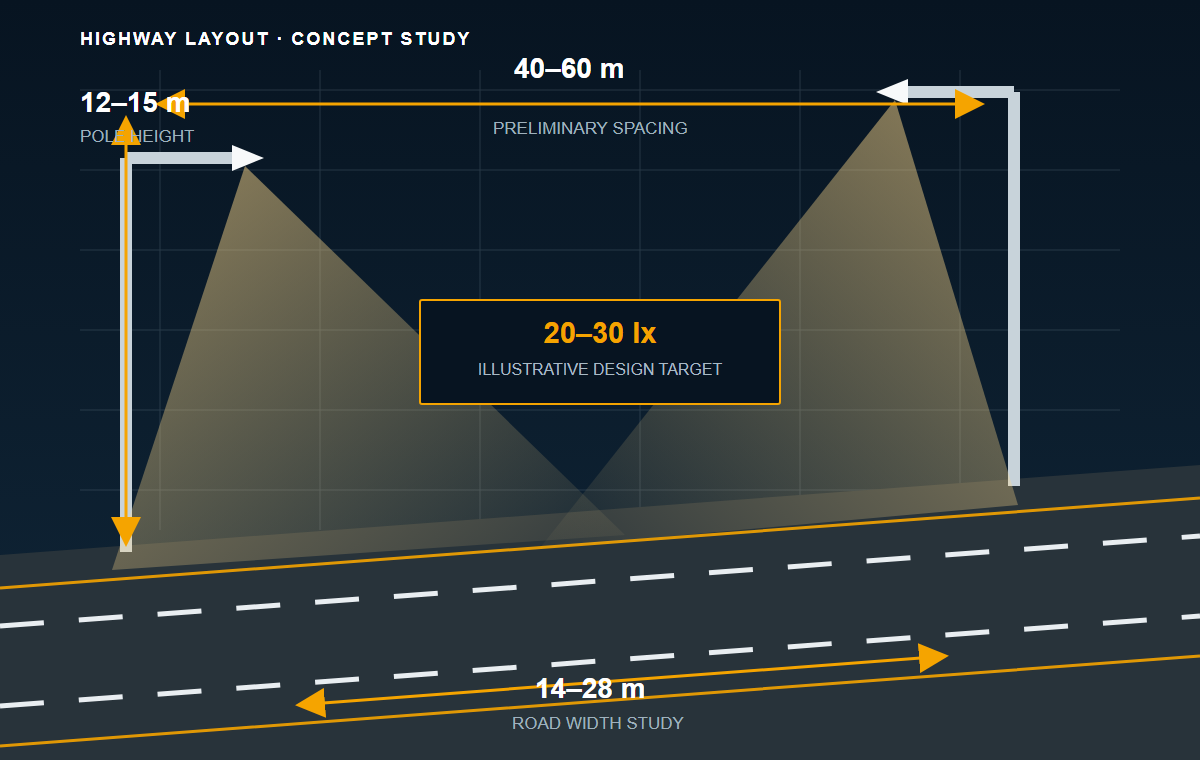
A representative highway study can begin with 12–15 m poles, 40–60 m spacing and an illustrative 20–30 lx target. Optics, overhang, tilt and road class determine whether the layout works.
Illustrative design inputs only. Final average/minimum values, uniformity, glare and luminance must be verified in DIALux, Relux or equivalent software using the selected IES/LDT file and the applicable local standard.
Project-screening ROI
Where a photometric study confirms equivalence, moving from a nominal 1000W legacy source to a 300W LED system can materially reduce operating energy and maintenance exposure.
This is not a guaranteed one-for-one replacement claim. Existing ballast losses, pole layout, optics, maintained light levels and local requirements must be assessed.
Lower energy demand reduces annual consumption and upstream electrical load.
Less routine relamping reduces lift access, traffic control and service interruptions.
Tool-free access simplifies planned inspection and internal component service.
Bring us the road geometry
Share pole positions, mounting height, road width, target standard and operating profile. AGC can support optic selection and lighting simulation.